
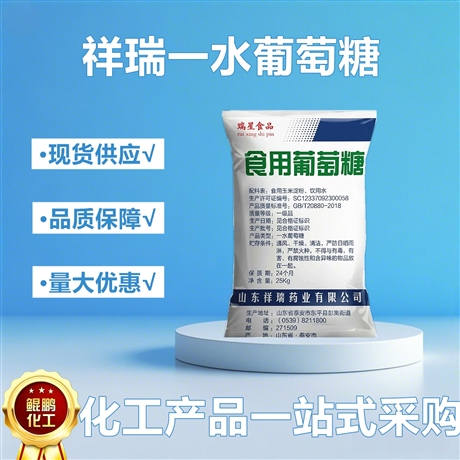

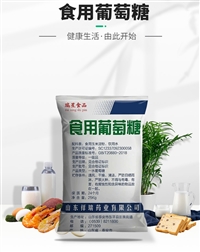
Food grade edible glucose powder, Xiangrui brand high-purity sweetener, baking beverage raw materials, food additives, sewage treatment agents, carbon source
Category:
chemical industry/carbohydrate/glucose
Model:
twenty-five
Brand:
auspicious sign
purity:
≥99.5%
moisture:
≤10.0%
PH value:
4.0-6.0
sulfated ash:
≤0.1%
solubility:
soluble in water
appearance:
White crystalline powder
execution standard:
GB/T 20880
Packing Specification:
25kg/bag
Retail Price
10,000,000.00USD
重量
kg
- Product Description
-
purity ≥99.5%
moisture ≤10.0%
PH value 4.0-6.0
sulfated ash ≤0.1%
solubility soluble in water
appearance White crystalline powder
execution standard GB/T 20880
Packing Specification 25kg/bag
Description :
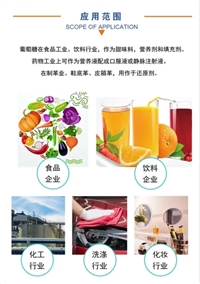
Edible glucose is a monosaccharide mainly composed of D-glucose, widely used in food processing, pharmaceutical manufacturing, and fermentation industry. As a basic sweetener and energy supplement, it can effectively improve the taste of food and provide a fast source of energy. In the production of baking, beverages, candies, etc., consuming glucose not only plays a role in sweetness, but also participates in the Maillard reaction, giving products their unique color and flavor. For food systems that require control of sucrose intake or pursuit of specific texture, edible glucose is an ideal alternative or auxiliary raw material, suitable for various working conditions that require rapid dissolution and absorption.
This product usually appears as a white crystalline powder or granules, odorless and tasteless, with a refreshing sweet taste that is about 70% -80% sweeter than sucrose. The execution standard generally complies with the national standard GB/T 20880 "Edible Glucose", with a purity usually above 99% and a low moisture content controlled to ensure stability. The physical and chemical indicators include neutral pH value and extremely low sulfuric acid ash content, ensuring no impurity interference. The production process often uses corn amylase hydrolysis method, which goes through liquefaction, saccharification, refining, concentration, crystallization, drying and other steps to ensure product hygiene and safety. The packaging is mostly 25kg or 50kg woven bags lined with plastic bags, which meet the requirements of food grade packaging and are easy to store and transport.
When selecting, it is necessary to distinguish between edible glucose and industrial glucose, anhydrous glucose, and monohydrate glucose. Edible glucose must comply with food safety standards and is strictly prohibited from being used for non food purposes; However, industrial glucose contains more impurities and is only used for water treatment or as a concrete additive. If used for high-end beverages or injections, it is necessary to choose specifications with higher purity and lower endotoxin levels; Conventional food grade specifications can be used for ordinary baking or candy production. Note that edible glucose has strong hygroscopicity and is prone to clumping in high temperature and high humidity environments. When selecting, packaging sealing and storage environment should be considered. If a low glycemic index scheme is required, it should be used in combination with other sugar substitutes instead of relying solely on glucose.
During use, edible glucose is easily soluble in water and has a fast dissolution rate. It is recommended to confirm complete dissolution before use to avoid excessive local concentration affecting product uniformity. When storing, it should be placed in a cool, dry, and ventilated place, avoiding direct sunlight and moisture. After opening, it should be used as soon as possible and sealed to prevent moisture absorption, clumping, or microbial growth. Common faults such as clumping can be treated by crushing and sieving, but if there is an odor, discoloration, or mold, it indicates that it has deteriorated and is strictly prohibited from use. In the fermentation industry, it is necessary to control the amount of additives to avoid inhibiting the activity of bacterial strains; In baking, attention should be paid to the impact of its reducibility on pigment stability, and the formula ratio should be adjusted reasonably to achieve the best effect.
AfterSalesService :
Key words:
More Products