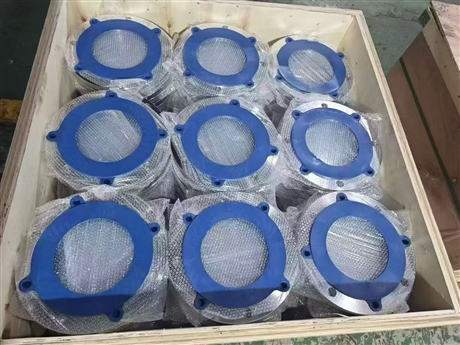

304/316L stainless steel flange corrosion-resistant high-pressure pipeline connector chemical food grade flange
Category:
building materials/Pipe fittings/flange
Model:
304/316L
Brand:
Stainless Steel
Material:
304/316L stainless steel
Execution Standard:
GB/T 9119-2010, ASME B16.5
pressure rating:
PN10-PN40 (Class150-Class300)
Type of sealing surface:
RF (convex surface)/MFM (concave convex surface)
connection method:
Welding/bolted connection
Operating temperature:
-196 ℃ to 800 ℃
Surface Treatment:
Acid pickling passivation/sandblasting
Detection method:
Spectral analysis/ultrasonic testing
Retail Price
10,000,000.00USD
重量
kg
- Product Description
-
Material 304/316L stainless steel
Execution Standard GB/T 9119-2010, ASME B16.5
pressure rating PN10-PN40 (Class150-Class300)
Type of sealing surface RF (convex surface)/MFM (concave convex surface)
connection method Welding/bolted connection
Operating temperature -196 ℃ to 800 ℃
Surface Treatment Acid pickling passivation/sandblasting
Detection method Spectral analysis/ultrasonic testing
Description :
Stainless steel flange is a disc-shaped component used for connecting pipes, valves or equipment, mainly to solve the sealing and fixing problems under high pressure, high temperature and corrosive medium conditions. The figure shows a stainless steel flange with neck flat welding or butt welding structure, which is fastened to the matching flange through bolt holes and sealed with a gasket added in the middle. This product is widely used in industries such as petroleum, chemical, natural gas, pharmaceuticals, and food processing. It can effectively resist the erosion of media such as acid, alkali, and salt, ensuring the long-term stable operation of pipeline systems. It is an indispensable key connecting component in industrial pipeline systems.
The main material of the stainless steel flange is usually 304 or 316L austenitic stainless steel, which has excellent corrosion resistance and mechanical strength. The flange sealing surface is mostly raised (RF) or raised (MFM), and the surface has been precision machined to meet the roughness requirements of HG/T 20592-2009 or ASME B16.5 standards, ensuring a tight seal without leakage. The welding between the flange neck and the pipe wall adopts argon arc welding technology, and the weld seam is uniform without pores, and stress is eliminated through solution heat treatment. The product complies with GB/T 9119-2010 or American standard ANSI B16.5, with pressure ratings ranging from PN10 to PN40 (Class150-Class300) and size ranges from DN15 to DN2000, meeting the supporting requirements of various national, American, and German standard pipeline systems.
When selecting, the material and pressure rating should be determined based on the characteristics of the medium, working pressure, and temperature. 304 material is suitable for general corrosive media and room temperature environments, with high cost-effectiveness; If the medium contains chloride ions or is in a marine atmospheric environment, it is recommended to use 316L material containing molybdenum to enhance its resistance to pitting corrosion. Pay attention to distinguishing the structural differences between flat welding flanges (PL), butt welding flanges (WN), and blind flanges (BL): Flat welding flanges are easy to install but have lower pressure resistance, while butt welding flanges have a smooth transition at the neck and can withstand higher pressure and temperature fluctuations. When purchasing, it is necessary to check whether the center distance, diameter, and quantity of bolt holes are consistent with the matching valve or pipeline standards, in order to avoid installation failure due to the mixing of standard systems (such as national and American standards).
Before installation, it is necessary to clean the oil stains and rust on the flange sealing surface and bolt holes, and check for scratches or dents on the sealing surface. During installation, bolts should be tightened diagonally and evenly to avoid flange deflection and leakage caused by unilateral force. For high-temperature conditions, it is recommended to perform hot tightening operations during the initial operation. During daily maintenance, it is necessary to regularly check the corrosion of bolts and the aging degree of gaskets. If leaks are found, gaskets should be replaced or re tightened in a timely manner. If there are slight rust spots on the surface of the flange, it can be wiped and passivated with stainless steel special cleaning agent; It is strictly prohibited to use carbon steel wire brushes for cleaning, in order to prevent iron ion pollution from exacerbating subsequent corrosion and extending the service life of stainless steel flanges.
AfterSalesService :
Key words:
More Products