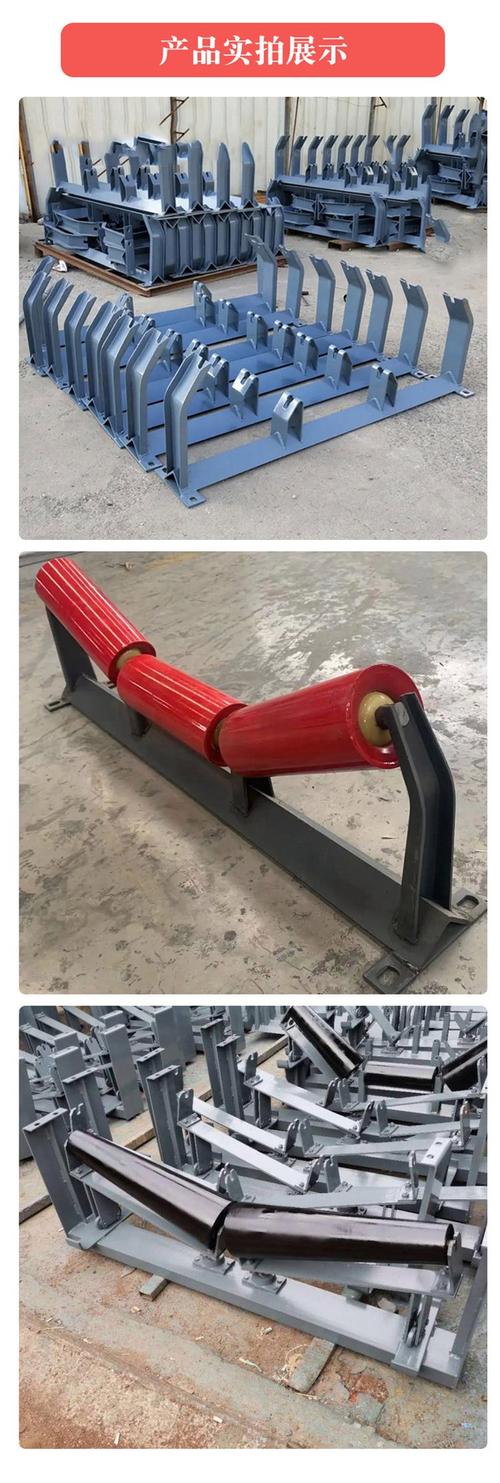

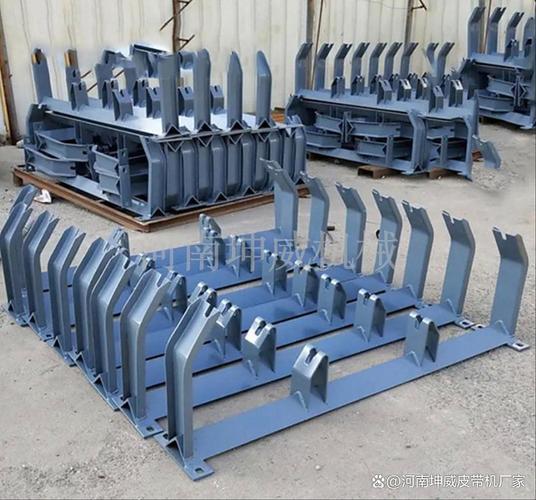
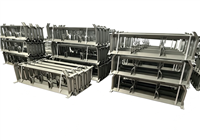
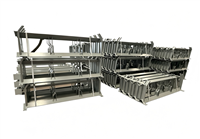
B500-B2400 groove belt conveyor roller bracket made of carbon steel material is stable and durable, suitable for various bandwidth conveying conditions
Category:
hardware/General Hardware Accessories/Carrier roller
Model:
B500/B650/B800/B1000/B1200/B1400/B1600/B1800/B2000/B2200/B2400
Brand:
Confluence
Applicable bandwidth:
B500-B2400mm
Material:
Q235B Carbon Steel
Surface Treatment:
Spray painting/galvanizing/spray painting
structural form:
slot type
Supporting roller diameter:
φ89/φ108/φ133/φ159mm
Installation Method:
Bolt Fixation
Reference Standard:
DTII Type Belt Conveyor Specification
Application Fields:
Metallurgy/Mining/Port/Electricity/Building Materials
Retail Price
10,000,000.00USD
重量
kg
- Product Description
-
Applicable bandwidth B500-B2400mm
Material Q235B Carbon Steel
Surface Treatment Spray painting/galvanizing/spray painting
structural form slot type
Supporting roller diameter φ89/φ108/φ133/φ159mm
Installation Method Bolt Fixation
Reference Standard DTII Type Belt Conveyor Specification
Application Fields Metallurgy/Mining/Port/Electricity/Building Materials
Description :
The groove type roller support is a key supporting component in the belt conveyor system, mainly used to carry the weight of the conveyor belt and materials, and maintain the stable shape of the conveyor belt during operation. This series of products is designed specifically for belt conveyors with different bandwidths from B500 to B2400, which can effectively solve problems such as belt deviation and sagging during long-distance transportation. By designing reasonable groove angles, the contact area between materials and belts can be increased to prevent scattering, making it particularly suitable for continuous conveying of bulk materials in mines, ports, power plants, and other areas, ensuring efficient and stable operation of the conveying system.
This groove type roller bracket is usually made of high-quality Q235B carbon structural steel, which has undergone cutting, welding, polishing, and anti-corrosion treatment (such as spraying or galvanizing), and has good mechanical strength and corrosion resistance. The bracket structure includes beams, legs, and connectors, with dimensions strictly corresponding to the national standard bandwidth specifications. Standard hole positions are designed from B500 to B2400 for easy on-site installation and adjustment. The execution standard refers to the DTII type belt conveyor design specifications, with smooth welds without virtual welding, high overall rigidity, and the ability to withstand dynamic load impacts, adapt to harsh outdoor environments, and ensure long-term dimensional stability and structural safety.
When selecting, the specific specifications and reinforcement level of the bracket should be determined based on the actual bandwidth, belt speed, material density, and conveying capacity of the belt conveyor. B500-B1000 is suitable for small and medium capacity scenarios, while B1200 and above require attention to the leg thickness of the bracket and the cross-sectional size of the crossbeam to cope with larger loads. If there are significant impact forces or corrosive media in the working conditions, it is recommended to choose thickened steel or models with special anti-corrosion treatment. Compared with ordinary flat brackets, groove brackets are more capable of gathering materials and are suitable for upward inclined conveying; When selecting, it is necessary to confirm whether the groove angle (usually 35 ° or 45 °) matches the existing roller set to avoid installation interference.
When installing groove type roller supports, it should be ensured that the centerline of all supports coincides with the longitudinal centerline of the conveyor, and the error should be controlled within the allowable range to prevent belt deviation. Regularly check the tightening of bracket bolts to prevent structural instability caused by vibration loosening. During daily maintenance, attention should be paid to observing whether the anti-corrosion layer on the surface of the bracket is damaged, and timely repainting should be carried out to prevent rusting and expansion. If deformation of the bracket or cracking of the weld seam is found, the machine should be stopped immediately for replacement to avoid affecting the operation of the entire line. Keeping the bracket clean and avoiding material accumulation and corrosion of the base can significantly extend the service life of the groove roller bracket and reduce maintenance costs.
AfterSalesService :
Key words:
More Products