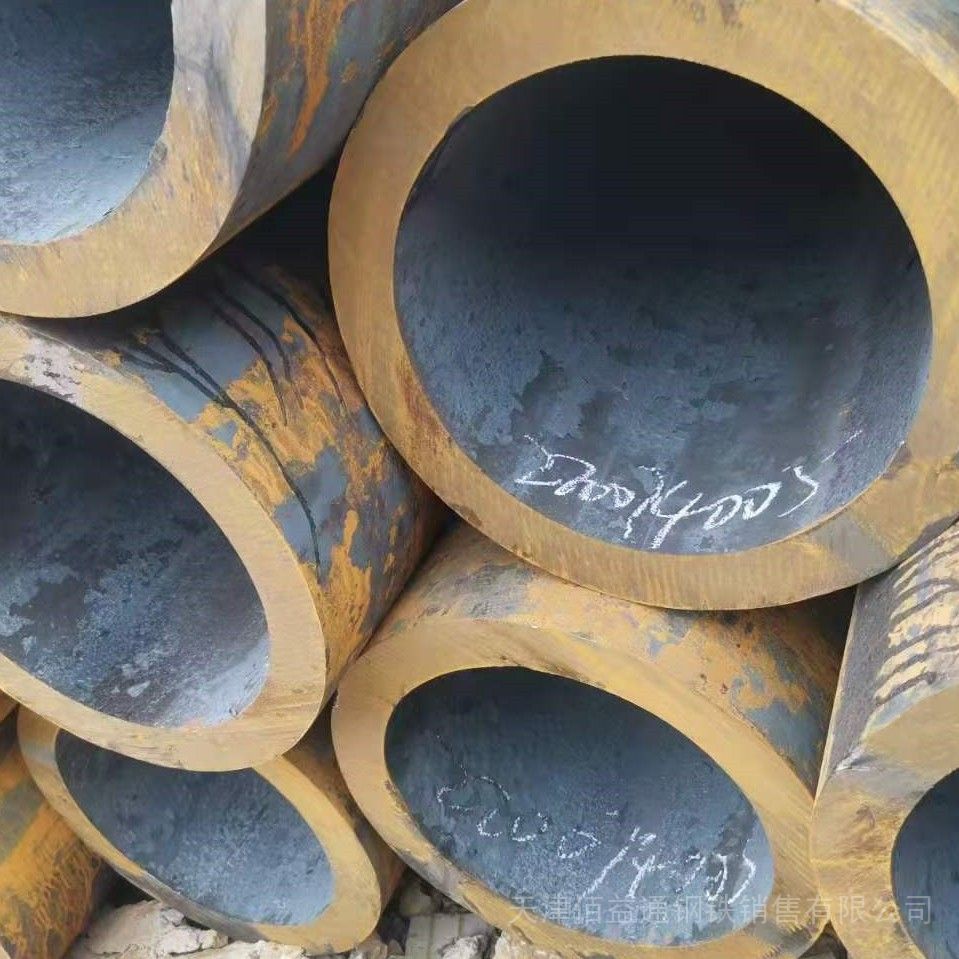

Fluid transport pipelines for hot-rolled and cold drawn structures of seamless carbon steel pipes
Category:
building materials/Pipe fittings/seamless steel tube
Model:
48-457
Brand:
Luli
Material:
20# /
production process:
Hot rolling/cold drawing
Execution Standard:
GB/T 8163
Outer diameter range:
48mm - 457mm
Wall thickness range:
3mm - 30mm
length:
Fixed length/random
Surface Treatment:
Black paint/galvanized/bare pipe
Application Fields:
Fluid transportation/mechanical structure
Retail Price
10,000,000.00USD
重量
kg
- Product Description
-
Material 20# /
production process Hot rolling/cold drawing
Execution Standard GB/T 8163
Outer diameter range 48mm - 457mm
Wall thickness range 3mm - 30mm
length Fixed length/random
Surface Treatment Black paint/galvanized/bare pipe
Application Fields Fluid transportation/mechanical structure
Description :
Carbon steel seamless pipe is a long strip of steel with a hollow cross-section and no seams around it, mainly used for transporting fluid pipelines or as structural components. This product is made through perforation technology and has stronger pressure bearing capacity and better overall uniformity compared to welded steel pipes. It can effectively solve the risk of leakage under high pressure and high temperature conditions. In the petroleum, chemical, power, and machinery manufacturing industries, carbon steel seamless pipes are the fundamental and critical raw materials, suitable for engineering scenarios that require high strength and reliability, ensuring the safe and stable operation of the system.
This category usually complies with national standards such as GB/T 8162 (for structural use) or GB/T 8163 (for fluid transport), and the materials commonly used are 20 #, 45 # steel, or Q345B. The production process is mainly divided into two types: hot rolling and cold drawing. The outer diameter of hot rolled pipes is generally greater than 32mm, with a wall thickness of 2.5-75mm; the outer diameter of cold drawn pipes can be as small as 6mm, with a wall thickness of up to 0.25mm and higher surface smoothness. The product needs to undergo quality testing such as hydrostatic testing, eddy current testing, or ultrasonic testing to ensure that there are no defects such as cracks, folds, or delamination, and the dimensional deviation is controlled within the allowable range of national standards to meet various precision machining needs.
When selecting, it is necessary to clarify the usage scenario. Seamless pipes for structural use focus on mechanical strength and processing performance, and do not require mandatory hydrostatic testing; Seamless pipes for fluid transportation must ensure sealing and undergo strict water pressure or non-destructive testing. If the working conditions involve corrosive media, it is necessary to consider whether to use alloy steel or carry out anti-corrosion treatment. Ordinary carbon steel seamless pipes are not suitable for strong acid and alkali environments. Compared with welded pipes, seamless pipes have higher prices but better performance. When purchasing, a comprehensive balance should be made based on design pressure, temperature, and budget to avoid excessive configuration or insufficient performance.
Before installation, it is necessary to check the surface quality of the pipe and the flatness of the ports. It is recommended to use mechanical cutting or plasma cutting during cutting to avoid excessive heat affected zone affecting material properties. When welding, matching welding materials should be selected and preheated and post heat treated to prevent welding cracks. Regular inspections of pipeline wall thickness corrosion and support stability should be carried out during daily maintenance, especially in high-temperature and high-pressure environments where creep deformation needs to be monitored. When storing, it should be kept ventilated and dry to avoid surface corrosion caused by rainwater accumulation. It is recommended to apply anti rust oil or cover with rainproof cloth for long-term storage.
AfterSalesService :
Key words:
More Products