Dimensions of Composite Steel Platform
Category:
Transportation/Warehousing equipment/Shelves
Model:
Brand:
Hengya shelves
Retail Price
1,750.00USD
重量
kg
- Product Description
-
Description :
Generally, ordinary operating platforms are composed of main beams, small beams, and planks due to their low load-bearing capacity and lack of equipment support. Steel platform beams are mainly made of hot-rolled ordinary section steel. When the span is large, section steel or welded I-beam composite beams can also be used, and they can be supported on the factory building and other structures with triangular frames, support brackets, or directly supported.
Heavy duty operating steel platforms have large loads, frequent operations, large platform areas, and large, medium, and small vibration loads directly placed on the steel platform. Their structure usually consists of independent column grids, main beams, secondary beams, small beams, and planks. The steel platform structure has an independent support system, which is connected laterally to the structural framework columns of the factory building to ensure the integrity of the steel platform structure.
Steel structure platform structure columns and inter column supports
Steel platform columns are generally designed as equal section columns. The commonly used forms of solid web columns include hot-rolled ordinary steel sections, I-beams reinforced with plates, or steel pipes with flanges. If necessary, it can also be designed as a combined column form composed of two channel steels.

Characteristics of Steel Platform Structure
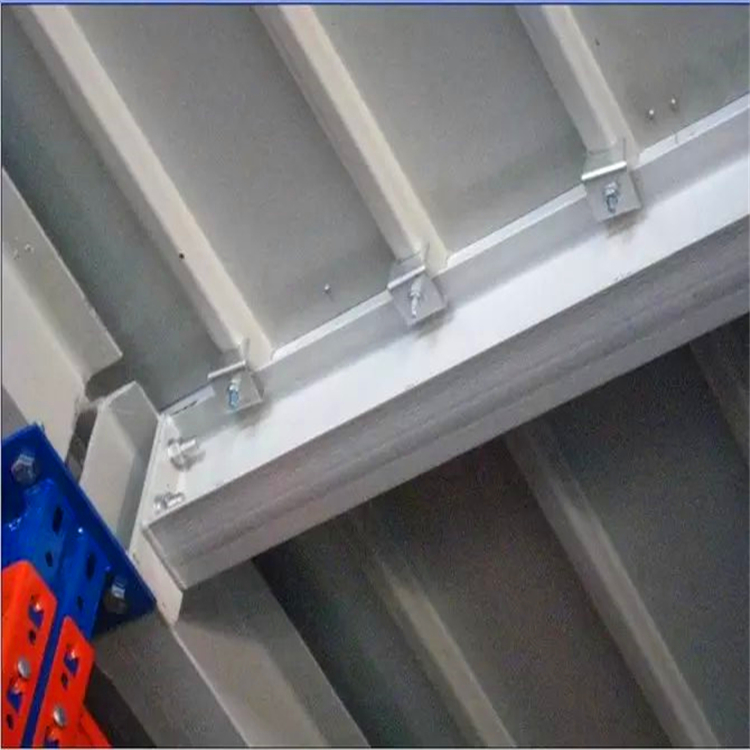
1. The steel platform produced by the shelving factory is assembled as a whole without the need for on-site welding. It is usually composed of beams, columns, plates, and other components made of steel sections and plates, and connected by screws or rivets between each part. This steel platform has fast construction, moderate cost, easy installation and disassembly, and can be reused in a new location. Its structure is novel and beautiful.
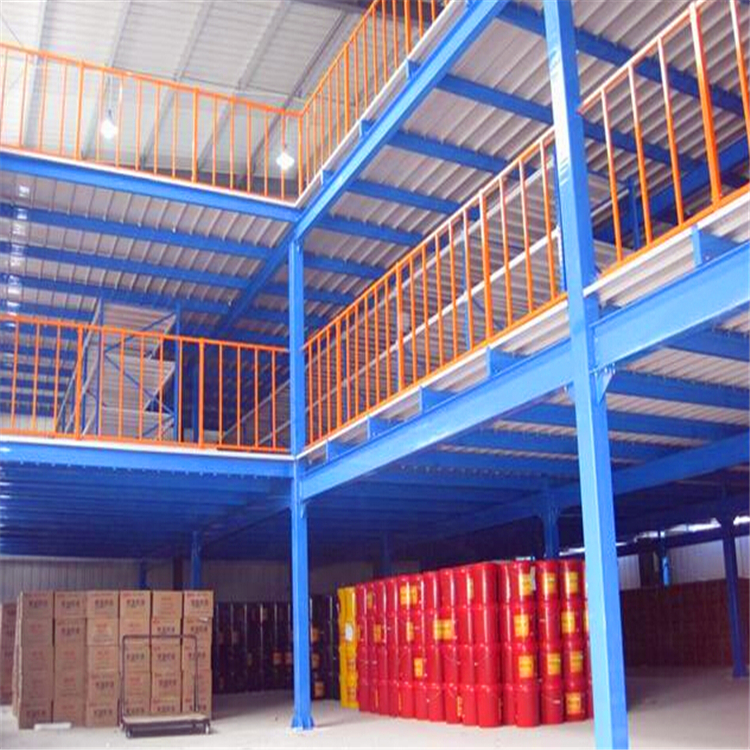
2. The structure of steel platform shelves mainly consists of main beams, columns, floor slabs, railings, and stairs; The overall structure adopts a modular design, without the need for on-site welding. The floor bearing capacity of a typical steel platform can reach 200kg~1000kg/square meter.
3. The supporting columns of the steel platform are made of pipes with strong bearing capacity and low steel consumption. The main beam is made of H-beam or I-beam, and the secondary beam is made of buckle crossbeam produced by Korisen Storage Shelf Factory. This type of crossbeam has the advantages of strong bearing capacity, light structure, and low cost.
4. The floor planks are made of cold-formed patterned steel plates or hollow boards produced by Korisen Storage Shelf Factory. The planks are connected by a buckle plate structure, which is rigidly fixed to the main and secondary beams. The overall structure of the platform is strong, and different floor panels can be selected according to the actual use of the customer to meet the requirements of fire protection, dust prevention, and small item falling prevention.
5. The steel platform can be equipped with elevators and lifting platforms for easy loading and unloading of goods. Goods are transported to the second and third floors by forklifts or lifting platforms, and then transported to the designated location by small cars or pallet trucks. Warehouse management personnel operate it easily, quickly, and efficiently.
6. All materials are carbon structural steel, and the surface is treated with shot blasting, phosphating, and spray coating for corrosion resistance. It has superior load-bearing performance, simple and elegant appearance, and can meet the storage needs of various industries and large items or whole pallets of goods.
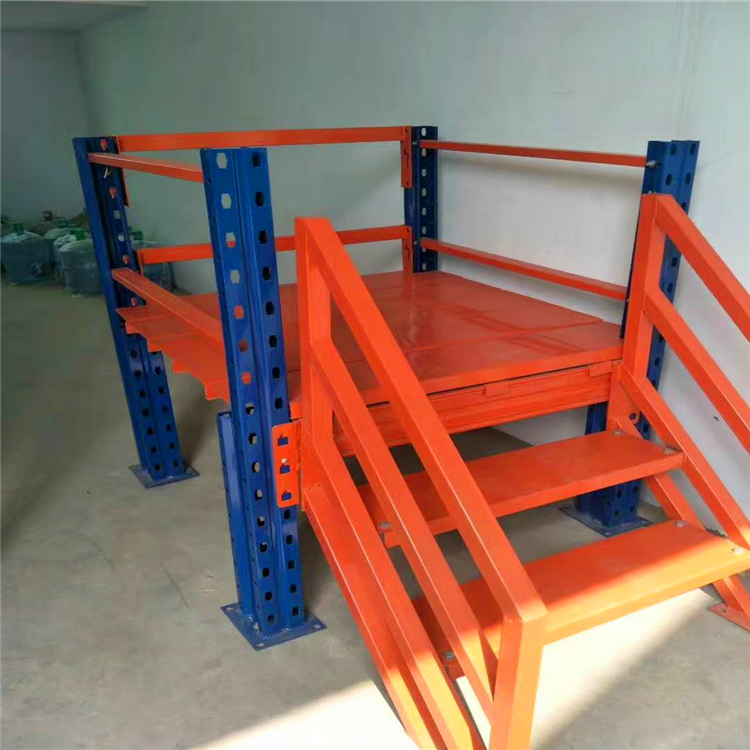
Steel platform columns are generally designed as axial compression members. The aspect ratio of the column should not exceed 150, and the overall length can be assumed to be between 80-120. The upper and lower ends of the column are generally designed as hinged joints. For platform columns that bear large loads, the upper end should be designed as hinged joints and the lower end as rigid joints. The thickness of the column base plate is determined by calculating the bending moment generated by the back pressure of the column foundation on the base plate, but it should not be less than the small thickness of the column limb and 10mm. For workshops with obvious corrosion, it should be appropriately thickened. The stability of independent steel platform structures is generally ensured by the support between columns. The support should be arranged in the middle of the column.
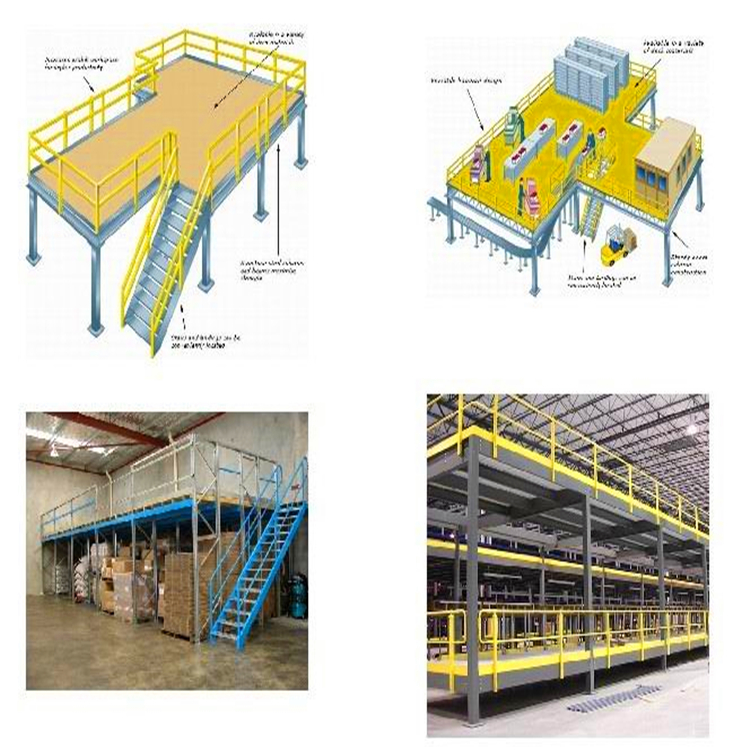
Layout of platform structure
1. Meet the requirements of process production operations and ensure clearance for passage and operation. The general clear height for passage should not be less than 1.8m, and protective railings should generally be installed around the platform, with a height of 1M. When the platform height is greater than 2M, a skirting board with a height of 100-150mm should also be installed under the protective railing. The platform should be equipped with a ladder for up and down passage, and the width of the ladder should not be less than 600mm.
2. When determining the plan size, elevation, beam grid, and column grid layout of the platform structure, in addition to meeting the usage requirements, the layout of beams and columns should also consider the location of equipment loads and other large concentrated loads on the platform, as well as the hanging of large-diameter industrial pipelines;
3. The layout of the platform structure should strive for economic rationality and clear transmission of power. The arrangement of the beam grid should be adapted to its span. When the span of the beam is large, its spacing should also be increased. Fully utilize the allowable span of the pavement and arrange the beam grid reasonably to achieve better economic results.
AfterSalesService :
Key words:- Dimensions of Composite Steel Platform
More Products