
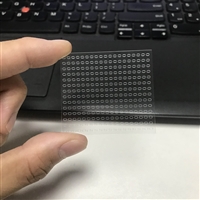
Dongguan Huangjiang Thick Glass Laser Cutting Process Tempered Glass Cutting Wholesale
Category:
chemical industry/Glass Machinery/Glass cutting machine
Model:
JH-153
Brand:
Jianhong Electronics
Retail Price
10.00USD
重量
kg
- Product Description
-
Description :
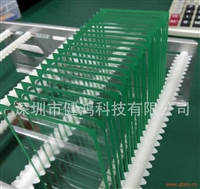
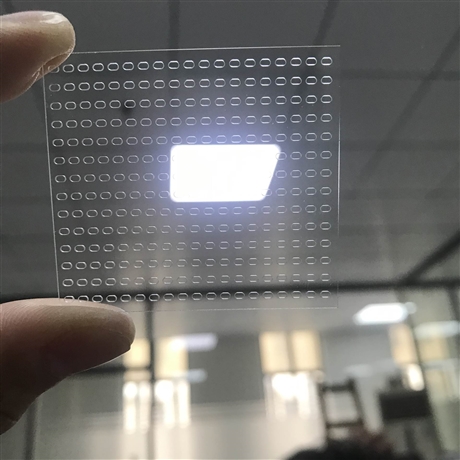
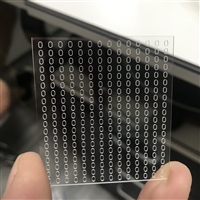
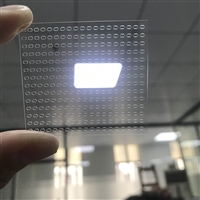
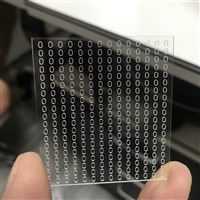
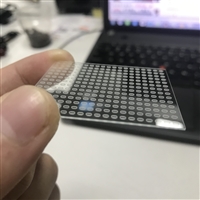
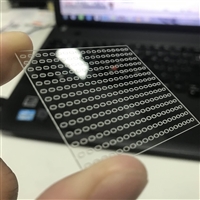
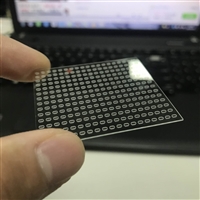
At present, with the continuous updating and replacement of mobile phones, the demand for mobile phone camera covers and LED glass covers is also increasing, and the production process is also improving. Compared with traditional mechanical processing methods, laser processing efficiency is relatively high, which can save multiple programs, labor costs, production cycles, and laser technology is easy to automate and has a high degree of integration.Glass laser cuttingThe application of machines in optical glass is gradually becoming popular. Due to the thickness of the camera glass, laser cutting cannot be directly split, and chemical etching is required to perform splitting. Therefore, our company has specifically developed etching for glass after laser cutting to meet this demand, while also chamfering the edges of the glass to repair micro cracks at the edges.
Our company's laser cutting uses a high-power density laser beam to irradiate the material being cut, which quickly heats the material to the vaporization temperature and evaporates to form holes. As the beam moves on the material, the holes continuously form narrow (such as about 0.1mm) cuts, completing the cutting of the material. Laser cutting is the use of a focused high-power density laser beam to irradiate a workpiece, causing the irradiated material to quickly melt, vaporize, burn, or reach the ignition point. At the same time, high-speed airflow coaxial with the beam is used to blow away the molten material, thereby achieving the cutting of the workpiece. Laser cutting is one of the thermal cutting methods.
Unlike traditional mechanical cutting tools, the energy of laser beams cuts glass in a non-contact manner. This energy heats the designated part of the workpiece to a predefined temperature. The rapid heating process is followed by rapid cooling, which creates a vertical stress band inside the glass, and a crack without debris or cracks appears in that direction. Because cracks only occur due to heat, not mechanical reasons, there will be no debris or microcracks. Therefore, the intensity of laser cutting edges is stronger than that of traditional scratching and segmentation methods. The need for precision machining has also been reduced or eliminated altogether. Additionally, the occurrence of glass fragments can be completely avoided. For laser engraving, under the heating and subsequent cooling process of the laser beam, a depth of approximately 10mm (about 10% of the glass thickness) is drawn on the glass surface. The glass can then be divided along the direction of the engraving. Because this technology does not produce any glass fragments, the common burrs and low strength on cutting edges are avoided, and subsequent polishing and grinding processes are no longer required. More importantly, compared to glass segmented by traditional methods, the glass processed by this method has a crush resistance of up to three times higher. For glass with a thickness between 5mm and 1mm, it is possible to complete the overall cutting in just one step. The segmentation and subsequent steps such as polishing, grinding, and rinsing are no longer necessary. The strength of the cutting edge can be measured through the standardized four point bending test from DIN-EN 843-1. A piece of glass is fixed on two rollers, and on the surface of the glass, two other rollers are used to generate the required bending force, under which the glass can be split into two parts. This test was repeated approximately 100 times to obtain reliable statistical values regarding the likelihood of segmentation. In most cases, laser marking and cutting are the choices for large-scale processing. Its advantages lie in high processing speed, high precision, and simple parameter settings. However, overall cutting is a more attractive method when cutting many different lines and with sufficient processing time, as it has a dry cooling method and no additional cutting steps. In both cases, high-quality cutting edges will be produced. It can be seen that if laser cutting glass is used, it can completely improve the processing quality while saving time.
Glass processing

Laser processing has this obvious advantage overall! The advantages of laser processing are evident in terms of precision, speed, and cost. Moreover, it is much easier to modify graphics compared to other processing methods. From this perspective, laser processing is an indispensable and essential processing technique in modern industrial production.
AfterSalesService :
Key words:- Glass laser cutting