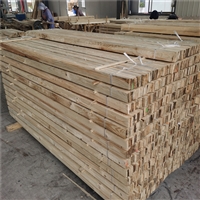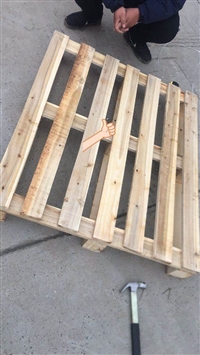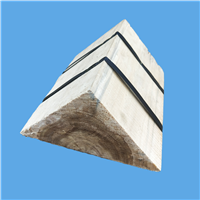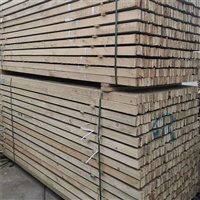




Huai'an Oil immersed Sleeper Junsheng Wood Industry Construction Wood Square Wood Processing Factory
Category:
building materials/Wooden materials/Solid wood board
Model:
Brand:
Zhantu Wood Processing Factory
Retail Price
1,000.00USD
重量
kg
- Product Description
-
Description :

The cement sleepers sold by our company have always been well liked and praised by customers. Next, I will lead everyone to carefully understand this type of product;
Cement sleepers, also known as concrete sleepers or concrete sleepers. Composed of concrete, steel bars, and a combination, it has a hard exterior and a long service life
Firstly, let me explain the classification of cement sleeper rails to everyone;
Cement sleepers can be divided into U-shaped ring and bolt pressing plate types according to installation methods
The installation of cement sleepers with U-shaped rings is convenient. Simply place the steel rail between two U-shaped rings, and place a rubber pad under the Huai'an Oil immersed Sleeper Junsheng Wood Building Wood Processing Plant. Then, use a sledgehammer to press down the U-shaped ring on the steel rail. The cement sleeper bolt pressing plate is fixed on the rail by inserting T-shaped bolts from the reserved holes under the sleeper to fix the pressing plate pressing the rail. One sleeper requires 4 sets of bolts, 4 pressing plates, and 2 rubber pads. This type of sleeper is easy to maintain and can be reused
Cement sleepers require steam demolding for one-time molding, with a smooth appearance, a hard interior, and multiple threaded steel bars.
Cement sleepers have a wide range of material sources, the same specifications, uniform elasticity, good insulation, high stability, and are not affected by external conditions such as weather and temperature. They do not rot and have a long service life.
Prestressed concrete sleepers not only save a lot of steel, but also have the advantages of long service life, good track stability, and can meet the requirements of high speed and large capacity.
1. Ordinary sleepers: width 220mm; thickness 160mm; length 2500mm;
2. Switch sleeper (ordinary): width 220mm; thickness 160mm; Length range of 2600~4850mm, rounded up to 150mm, totaling 16 length specifications;
3. Switch sleepers (standard): width 240mm; thickness 160mm; length 2600-4800mm, rounded up to 200mm, totaling 12 length specifications;
4. Bridge sleepers: width 220mm; thickness 240mm, 260mm, 280mm, 300mm; length 3000mm;
Concrete sleepers, also known as sleepers, are a type of railway accessory. However, the materials used now are not just wood, so calling sleepers is more scientific. Don't be fooled by the monotonous and uniform appearance of the rail sleeper, its role is not insignificant. Sleepers not only support the steel rails, but also maintain their position and transmit the enormous pressure transmitted from the rails to the track bed. It must have a certain degree of flexibility and elasticity, neither hard nor soft. When the train passes by, it can deform appropriately to buffer pressure, but it still needs to be restored to its original state as much as possible after the train passes.
Long service life, high stability, low maintenance workload, and much lower damage and scrap rates than wooden pillows. On seamless tracks, reinforced concrete sleepers have an average stability improvement of 15-20% compared to wooden sleepers, making them particularly suitable for high-speed passenger lines. It is installed on highways such as Japan's Shinkansen and Russia's. Of course, reinforced concrete sleepers also have their drawbacks, especially as they are much heavier than wooden sleepers. For example, the reinforced concrete sleepers in the UK weigh 285 kilograms each, the ones in the US weigh 280 kilograms, and the lighter ones in Germany weigh 230 kilograms. Therefore, it is not advisable to use it in unstable roadbeds and newly filled roadbeds; In areas with frost heave in winter, it is generally not allowed to use it; Do not use in areas where coal and ore are transported in large quantities and where the roadbed is severely dirty.
The spacing between sleepers should be determined based on factors such as traffic volume, driving speed, and type of track bed. When the spacing is small, the forces acting on the roadbed, track bed, rails, and sleepers themselves are small. However, if the spacing is too small, it will increase the project cost and affect the compaction operation of the track bed. The spacing between sleepers is generally 52-62 centimeters. Chinese railways generally indirectly display the spacing between railway sleepers by the number of sleepers laid per kilometer=
AfterSalesService :
Key words:- Oil immersed sleepers
More Products