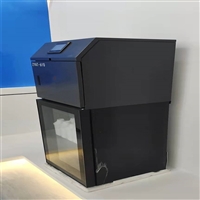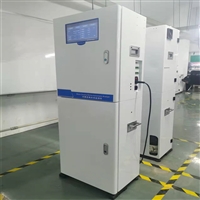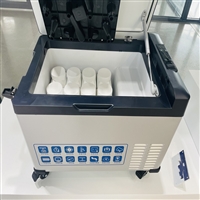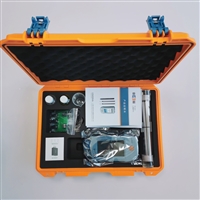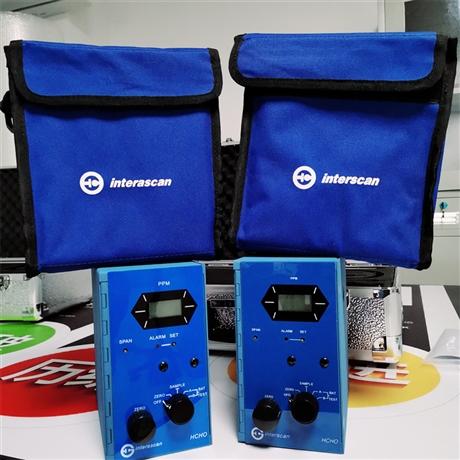



Domestic indoor portable formaldehyde detector without water injection
Category:
Instrumentation/Environmental testing instruments/Ozone detection instrument
Model:
4160-2
Brand:
Thermal Holding Environmental Protection
model:
4160-2
type:
portable
measurement object:
formaldehyde
measurement range:
0.01-19.99 ppm
accuracy:
± 2.0% full-scale digital display: ± 2.0% reading
repetitiveness:
± 0.5% full scale
Minimum detectable quantity:
1.0% full scale
power supply:
5V
Processing & Customization:
No
Overall dimensions:
177 x 103 x 226 mm
weight:
2.0 kg linearity: ± 1.0% full-scale
Place of Origin:
Qingdao
manufacturer:
Thermal Holding Environmental Protection
Retail Price
Negotiable
重量
kg
- Product Description
-
model 4160-2
type portable
measurement object formaldehyde
measurement range 0.01-19.99 ppm
accuracy ± 2.0% full-scale digital display: ± 2.0% reading
repetitiveness ± 0.5% full scale
Minimum detectable quantity 1.0% full scale
power supply 5V
Processing & Customization No
Overall dimensions 177 x 103 x 226 mm
weight 2.0 kg linearity: ± 1.0% full-scale
Place of Origin Qingdao
manufacturer Thermal Holding Environmental Protection
Description :
1、 4160-2 Formaldehyde Detector Product Introduction:
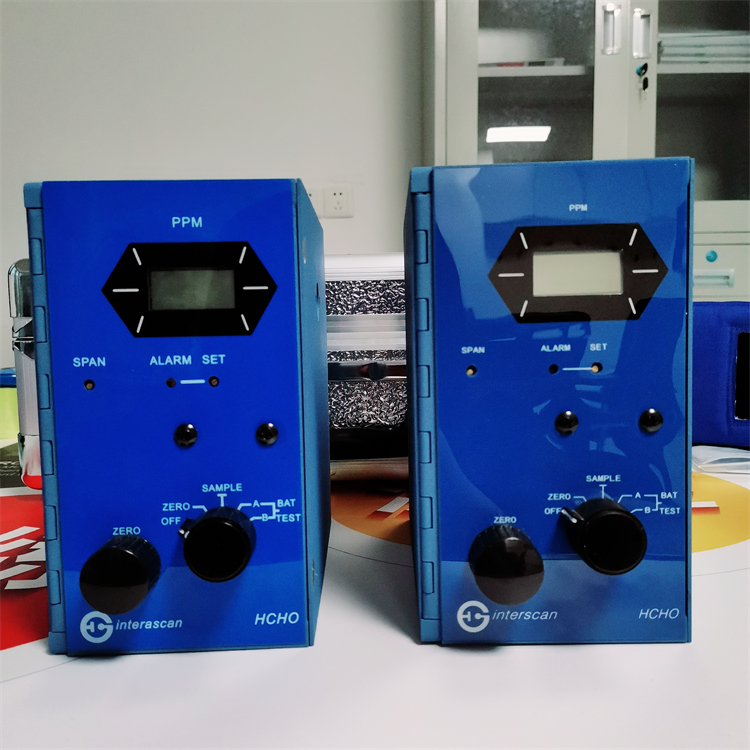

The new 4160-2 formaldehyde analyzer is composed of a highly sensitive formaldehyde electrochemical sensor imported from the United States and a central processing unit. Its sensitivity is 20-200 times higher than that of a diffusive sensor, and it is very sensitive to detecting low concentrations of free formaldehyde gas in indoor ambient air. It can detect very low volatile formaldehyde in indoor air.
The domestically produced 4160-2 formaldehyde gas analyzer from Qingdao Thermal Holding Environmental Protection adopts a 3800mA large capacity lithium-ion rechargeable battery, which is easy to operate, accurate in detection, and has excellent performance.
IInew modelThe main applications of 4160-2 formaldehyde detector are:
It can be widely used for indoor environmental formaldehyde detection, formaldehyde emission measurement in furniture, indoor environmental quality, environmental decoration, chemical plants, scientific research and teaching, environmental monitoring departments, formaldehyde detection in inspection and quarantine, indoor formaldehyde content detection in civil buildings, formaldehyde detection in building materials, and formaldehyde detection in public places.
IIInew modelPerformance parameters of 4160-2 formaldehyde detector:
Accuracy simulation indication: ± 2.0% full-scale digital display: ± 2.0% reading
Reproducibility: ± 0.5% of full scale
Minimum inspection line: 1.0% full range
Range: 0.01-19.99 ppm
Zero drift: ± 1.0% full-scale (24 hours)
Full reading drift: less than ± 2.0% of full scale (24 hours)
Rise time: less than 1 second
Size: 177 x 103 x 226 mm
Weight: 2.0 kg Linearity: ± 1.0% Full Scale
4new model4160-2 Formaldehyde Detector Instrument Configuration List:
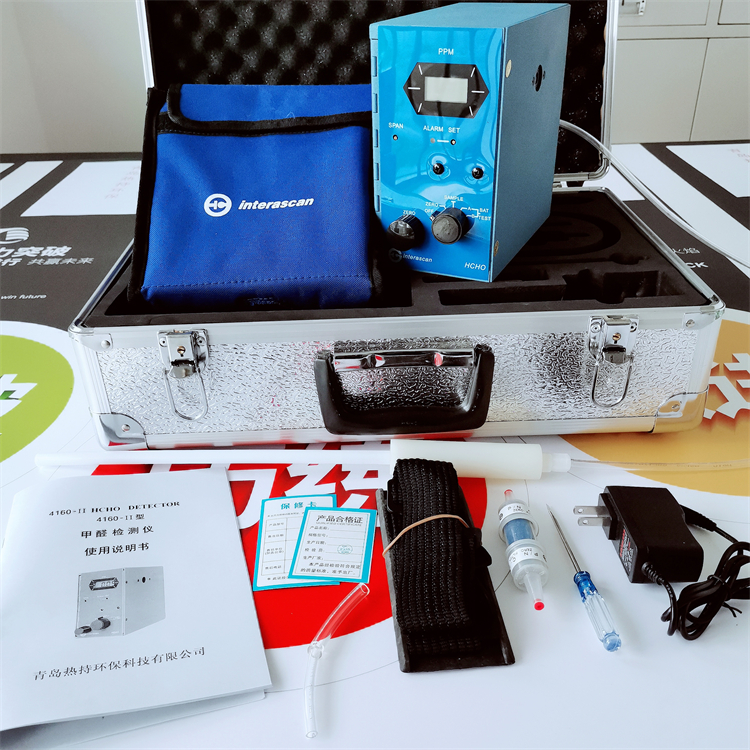
One host
One portable backpack
One user manual (in Chinese)
One C-12 filter tube
One piece of connecting hose
A set of sampling handles
A plastic syringe
One charger
Calibrate one screwdriver
Five:new model4160-2 Formaldehyde Detector Remarks:
Working Principle:
The sensor of this instrument is a two electrode sensor, which has a series of advantages that are not present in three electrode sample extraction sensors and diffusion sensors.
The electrolyte of the sensor is inactive, similar to the electrolyte in flashlights and nickel cadmium batteries. No need to consider battery damage or acid damage to the instrument. The sensor has a sealed air storage chamber, which not only prolongs its lifespan but also eliminates the possibility of reference electrode contamination, eliminating the disadvantage of three electrode sensors requiring air for operation and making it suitable for anaerobic environments. Sample extraction sensors are highly sensitive detectors, with sensitivity 50-200 times greater than diffusion sensors depending on the type of gas. This is a crucial condition for measuring low concentration gases.
Conversion relationship between formaldehyde mg/m3 and ppm:
ppm=mg/m3×B/M In the above equation:
B: The molar volume of gas under standard conditions (at 0 degrees, B=22.4; 250C=24.46 liters)
M: The molecular weight of the tested substance (formaldehyde HCOH M=30)
Namely: ppm=mg/m3 × 22.4/30=mg/m3 × 0.74666
The formaldehyde concentration index in public places is 0.12mg/m3. According to the formula, the relationship between mg/m3 and ppm is calculated as follows: 0.12mg/m3 at 0 degrees Celsius=0.0896ppm, 0.12mg/m3 at 250C=0.0978ppm
Note: 1000ppb=1ppm
AfterSalesService :
Key words:- domestic
More Products