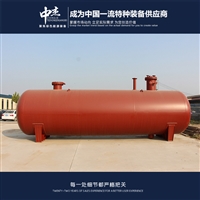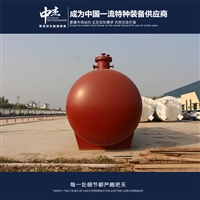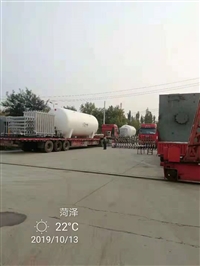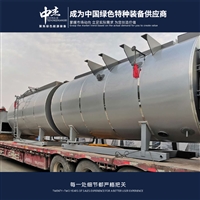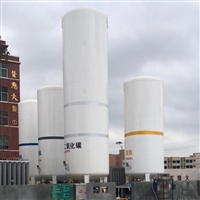
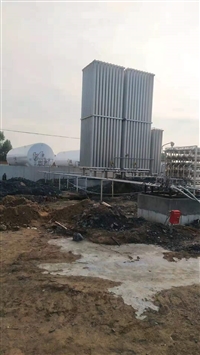


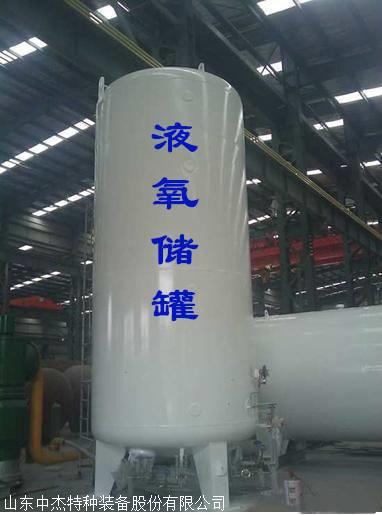
Low temperature storage tank oxygen nitrogen argon storage tank application 10 cubic vertical low-temperature storage tank price
Category:
mechanical equipment/Storage and transportation equipment/storage tank
Model:
Brand:
Zhongjie Special Equipment
Retail Price
115,000.00USD
重量
kg
- Product Description
-
Description :
The advantages of storage tanks at Shandong Zhongjie Special Equipment Co., Ltd. are as follows: 1. Our company conducts annual quality evaluations on all suppliers to ensure their quality; 2、 The main compression materials are made of customized steel plates from Jigang and Angang, and the thickness deviation of the steel plates is all higher than the national standard. 3、 The customized steel plates purchased need to undergo ultrasonic re inspection before production in the production workshop to ensure the quality of the steel plates and produce better products. 4、 The product is produced on an assembly line with standardized operations. Improved efficiency, ensured the normal operation of the quality system, and guaranteed product quality. 5、 The main body of the product is welded using internal and external automatic welding to ensure welding forming and internal quality. 6、 All pressure bearing parts are welded using a full penetration structure to ensure welding strength. 7、 All liquefied petroleum gas storage tanks undergo overall stress relief heat treatment. The company has two gas-fired overall heat treatment furnaces with a single processing capacity of 300 cubic meters of storage tanks (DN ≤ 4000mm, L total ≤ 25000mm). It plays a significant role in the service life and safety quality of the product. It is also a major highlight of our company's external sales. Inspection (each inspection point) 8. During the product manufacturing process, from raw materials to the factory to product supervision and delivery, set up various stopping inspection points to effectively control product quality; 9、 All main body welds undergo X-ray inspection, as well as surface flaw detection for Class C and D welds on connecting pipes and flanges, to ensure welding quality. The company has established a non-destructive testing room and has certified testing personnel at all levels; 10、 Conduct water pressure tests one by one to ensure the strength and safety of the equipment; Conduct air tightness tests one by one to ensure the sealing performance of the equipment. After the hydrostatic test, the internal air is blown and cleaned; 11、 The company has two sandblasting rooms, and all storage tanks use pneumatic steel shot sandblasting and rust removal technology, ensuring the appearance quality and paint quality. After sandblasting and rust removal as a whole, the service life of the paint can be greatly extended. Spraying two coats of anti rust primer, then two coats of topcoat, and four coats of paint can ensure that the tank will not peel off for five to ten years. Good maintenance can guarantee that it will not need to be repainted for twenty years. 12、 Large output, users can see real products at the company. Regular products can be supplied, allowing customers to shorten the construction period and make money in advance.
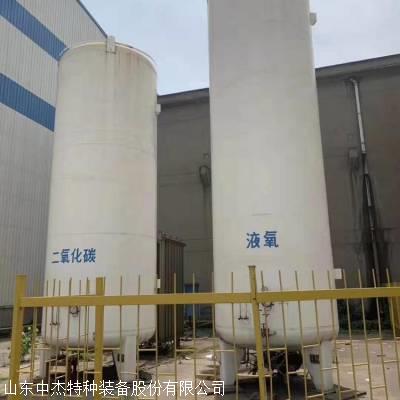
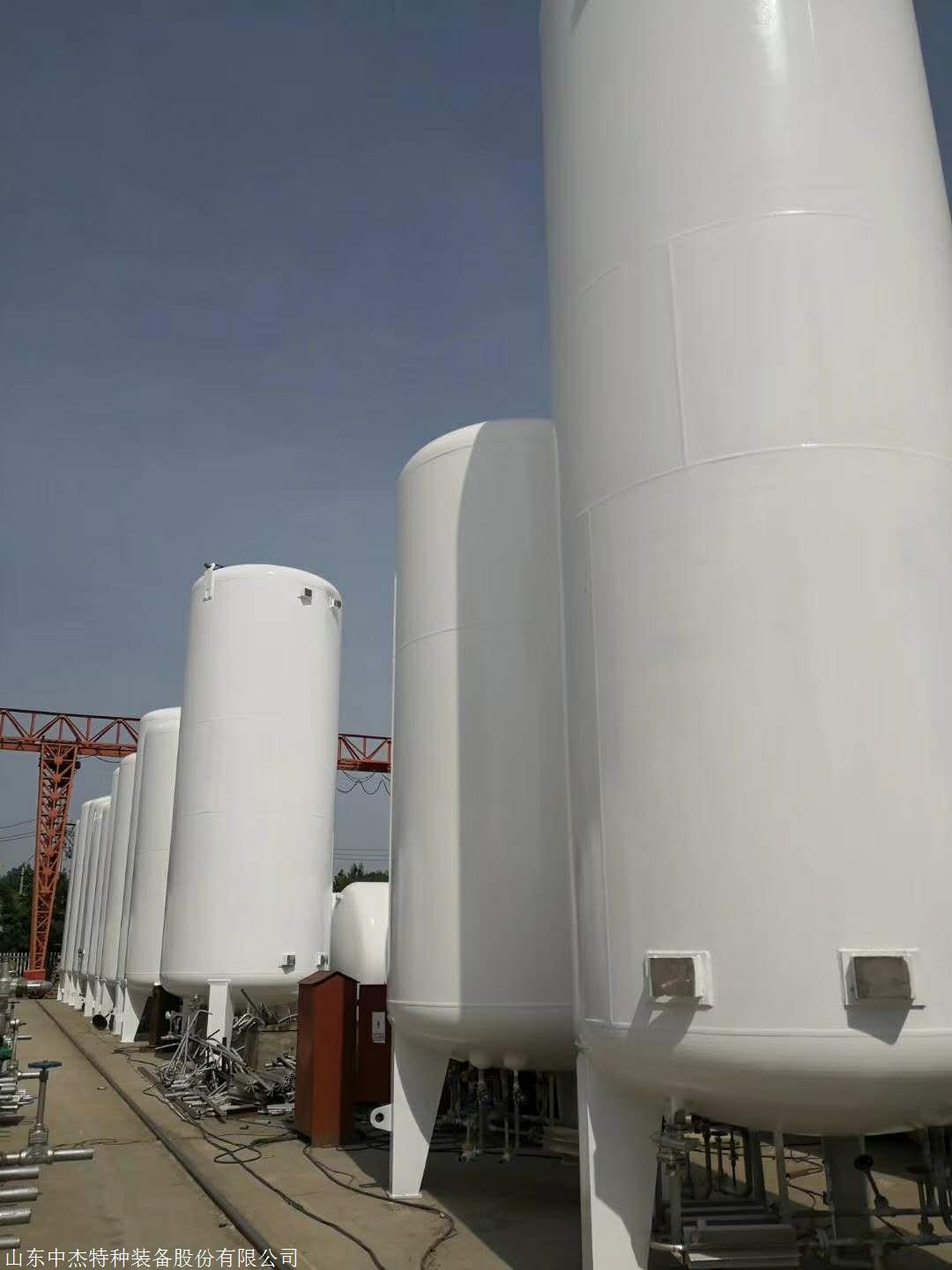
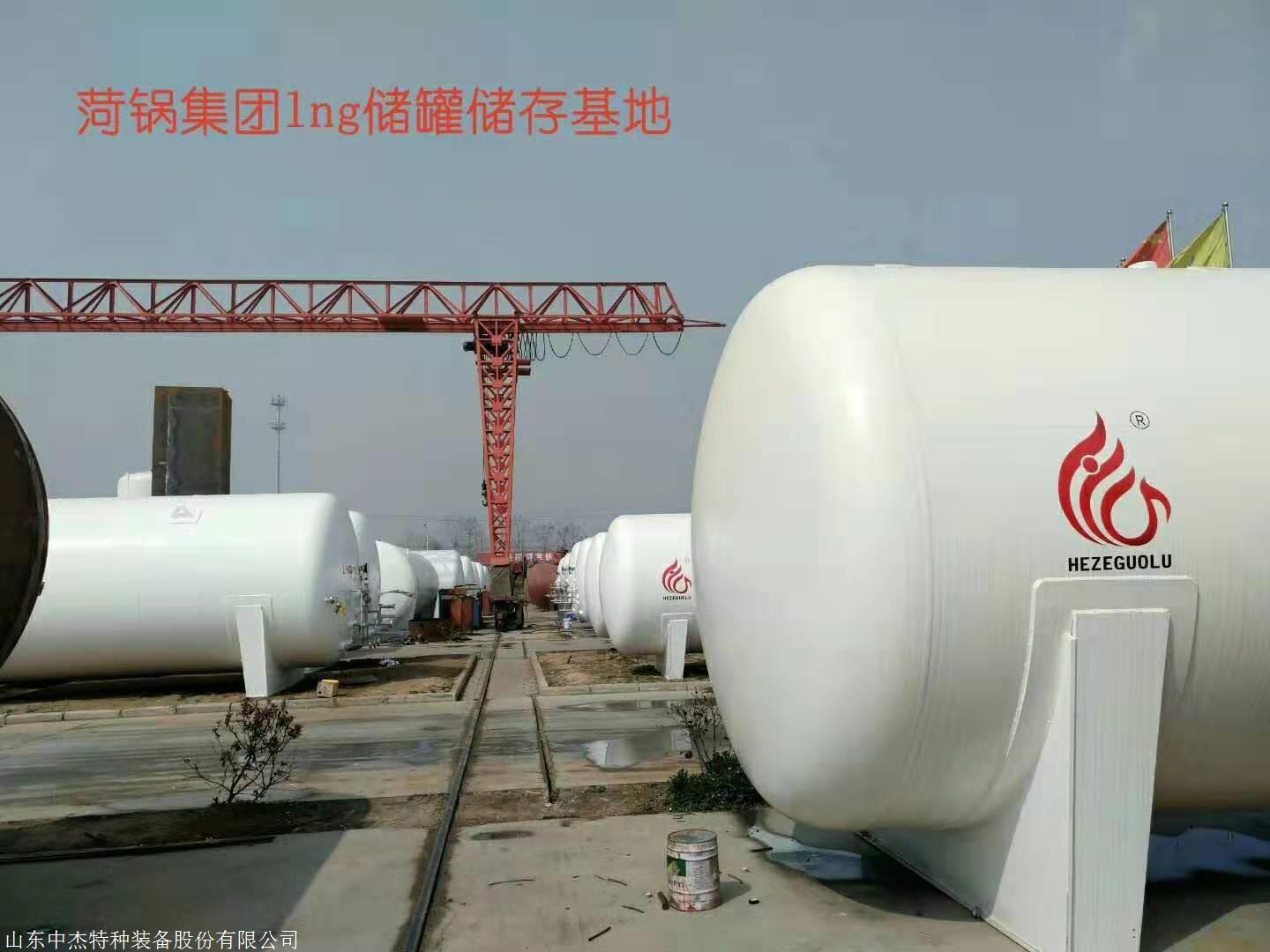
Subsequently, automatic welding will be applied to 9Ni steel LNG storage tanks. So far, the application of 9Ni steel in LNG equipment has a history of more than 40 years. With the continuous development of large-scale LNG storage tanks, effective welding of 9Ni steel as the inner wall material of LNG storage tanks is crucial for their reliability. Before 1960, 9Ni steel could only be welded with ferritic welding rods and required post weld stress relief heat treatment, which was a challenge for manufacturing large tanks. In October 1960, 9Ni steel was successfully welded using Inconel nickel type welding rods and passed the pressure test at liquid nitrogen temperature. The Double Normalized Tempered (NNT) heat treatment process and Quenched and Tempered (QT) heat treatment process of the later developed 9Ni steel eliminate the need for post weld stress relief heat treatment during welding. The main function of LNG storage tanks is to fill and store low-temperature liquids. The safety requirements for the use of LNG storage tanks should comprehensively consider the gas hazard characteristics, low-temperature protection effects, surrounding environmental conditions, pressure vessel characteristics, etc. Corresponding technical management measures should be taken to ensure safe operation. The operator of a 1LNG storage tank should have a detailed understanding of the structural characteristics of the equipment and its piping and valve system, be familiar with the hazardous characteristics of low-temperature liquids, strictly control the surrounding environmental conditions, and follow the safe operating procedures for LNG storage tanks. Operators must undergo training and pass the assessment by the quality and technical supervision department at or above the municipal level, and hold a pressure vessel operation manual before they can start working. Before starting the homework, the workers should take labor safety protection measures according to regulations. The use of LNG storage tanks should strictly comply with the "Safety Rules for the Use of Low Temperature Liquid Storage and Transportation Equipment" (JB6898-1997), and strengthen daily safety management. When storing low-temperature liquids, the filling rate should not exceed 0.95, and excessive filling is strictly prohibited. In working condition, the inner tank is an internal pressure container, and the outer tank is a vacuum external pressure container. The volume of a spherical tank is generally 200~1500m 3, and the working pressure is 0.2~1.0MPa. An underground storage tank is a type of tank where the liquid level of LNG stored in the tank is below ground level, and the tank is located on an impermeable and stable bottom layer. The underground storage tank adopts a cylindrical metal tank with a reinforced concrete outer tank on the outside. Due to the high investment and long delivery cycle of underground storage tanks, they are generally not selected in the design. The full containment tank consists of an inner cylinder, an outer tank, and a top cover, and it has a double-layer containment capacity for LNG and its evaporated gas. The design pressure of the full capacity tank can reach 0.029MPa, the design temperature is -196~60 ℃, the seismic design friction coefficient is generally 0.3~0.6, and the distance between the inner and outer tanks cannot exceed 2m. Compared with single or double capacity tanks, its cost is * * *, but its safety and reliability are * * *, so its application in receiving stations is extremely common. The membrane tank adopts stainless steel and concrete tank outer walls.
AfterSalesService :
Key words:- Oxygen
- nitrogen
- and argon storage tanks
More Products