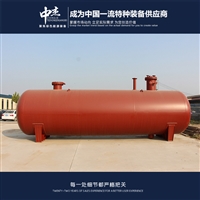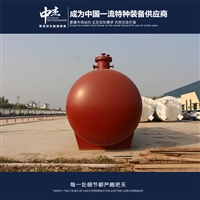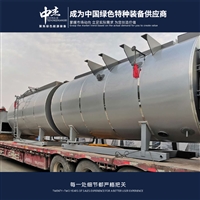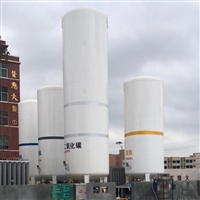
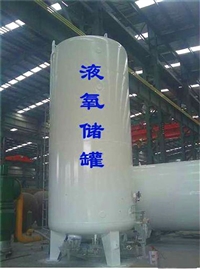
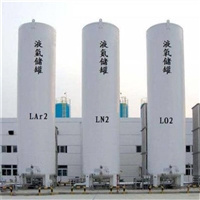


10 cubic liquid oxygen storage tank manufacturer 10 cubic liquid oxygen storage tank price Shandong Zhongjie
Category:
mechanical equipment/Storage and transportation equipment/storage tank
Model:
CFL10-0.8
Brand:
Zhongjie Special Equipment
Retail Price
108,000.00USD
重量
kg
- Product Description
-
Description :
Safety operating procedures for liquid nitrogen storage tanks:
1. Preparation work
Before being put into use, liquid nitrogen storage tanks should undergo airtightness tests, blow off treatment, and inspection of valves and instruments.
1.1 Air tightness test
After the installation of the liquid nitrogen storage tank is completed or the inner cylinder is restored to room temperature, a system airtightness test should be conducted before filling with low-temperature liquid. The test pressure should be the maximum working pressure of the storage tank, and the test gas should be oil-free dry air or dry nitrogen gas. The test time should be determined according to the size of the storage tank, but not less than 4 hours.
1.2 Blow off treatment
After passing the airtightness test, the inner cylinder system of the liquid nitrogen storage tank needs to be blown away with oil-free dry air or dry nitrogen to remove humid air. After the system is blown away with dry air or dry nitrogen, it should also be blown away with product gas. During the blowing process, lighter gases than air are added from the top of the storage tank through a vent valve, and the bottom is discharged through a liquid inlet and outlet valve. In order to accelerate the removal of moisture from the tank, the blown gas can be heated to 80-1000C. Each pipe valve should be blown separately, especially the liquid level gauge and pressure gauge. Gas should be removed from the joint to remove moisture from the pipeline until the dew point of the exhaust gas from the inner cylinder system meets the requirements before filling can begin.
1.3 Inspection of valves and instruments
Before filling with low-temperature liquid, it is necessary to carefully check whether the valve is in the correct position, whether the instrument is flexible and reliable, and whether the connection of the liquid level gauge is unobstructed.
2. Liquid filling: divided into liquid filling and supplementary liquid filling.
2.1. Liquid filling (referring to the filling of the inner cylinder when it is in a hot state). The steps are as follows:
2.1.1 Connect the filling pipeline.
2.1.2 Blow off the filling pipeline (before each filling), and before the upper liquid inlet and outlet valves are opened, a small amount of liquid should be discharged into the output liquid pipe through the liquid source discharge valve. At the same time, open the residual liquid vent valve of the pipeline and clean it to remove moisture and dust impurities from the pipeline.
2.1.3. Open the inner pipe vent valve and pressure gauge valve, and start the liquid level gauge at the same time.
2.1.4. Open the upper inlet valve and allow liquid to enter from the upper part. At this time, as the inner cylinder is in a hot state, the opening of the upper inlet valve should be small to allow the pipeline and inner cylinder to slowly and stably cool down to the temperature of the low-temperature liquid being filled. When the inner cylinder vent valve stabilizes and exhausts, the upper inlet valve can be opened to increase the filling speed.
2.1.5 When the liquid level gauge indicates a liquid level, open the liquid inlet and outlet valves, close the upper inlet valve, and switch from upper inlet to lower inlet.
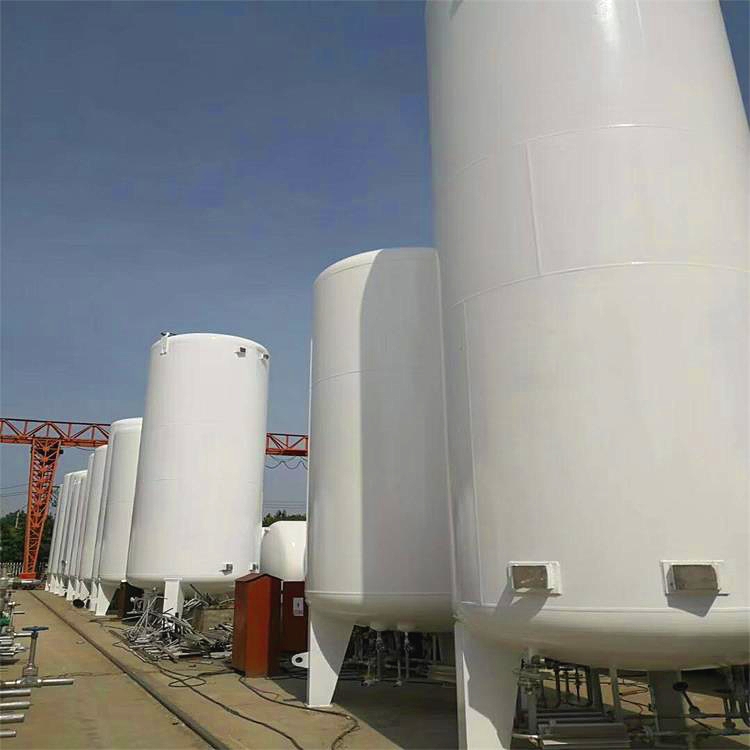
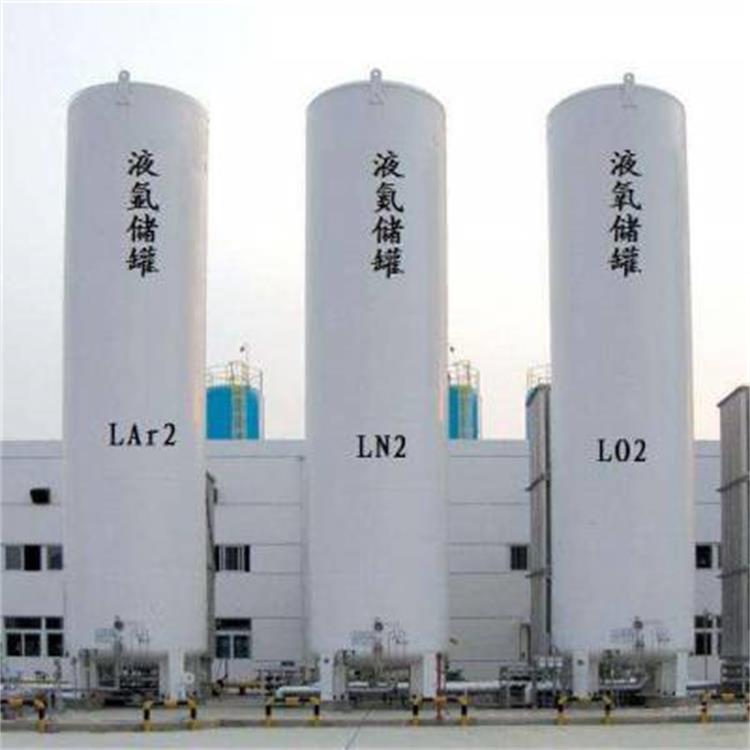
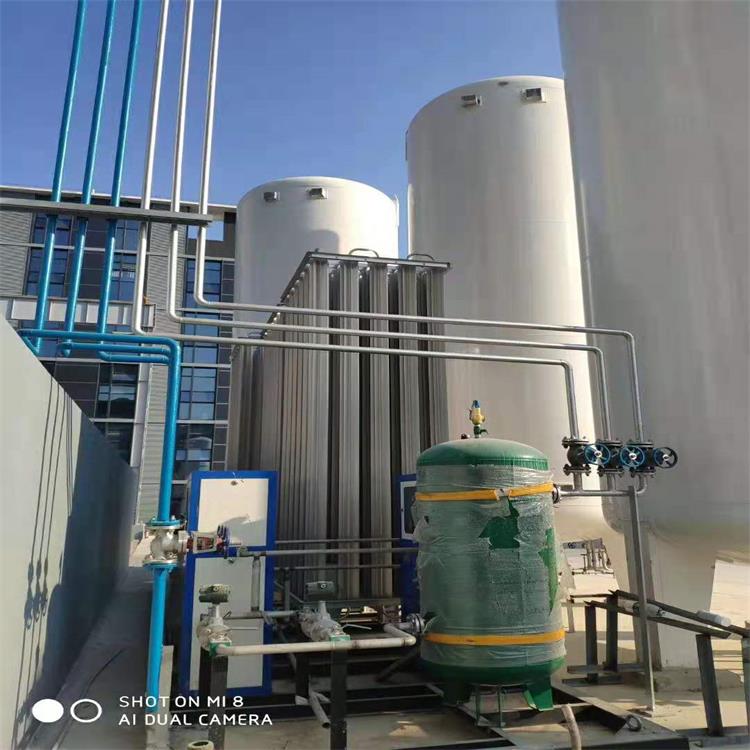

Liquid oxygen storage tanks are suitable for large components, and the vast majority of plastic molding processes involve plastic and molds being subjected to considerable pressure during the molding process, such as injection molding, compression molding, and extrusion, which are widely used When using these molding processes to produce large plastic parts, it is not only necessary to use molds that can withstand high pressure, making the molds bulky and complex, but also the plastic molding equipment must be designed and manufactured very firmly, which increases the difficulty and cost of machining and manufacturing the molds. On the contrary, anti-corrosion storage tanks only require the strength of the frame to support the weight of materials, molds, and the frame itself, as well as the closing force to prevent material leakage, due to the rotational molding process. Therefore, even for large and extra large plastic parts, anti-corrosion storage tanks do not need to use very bulky equipment and molds. The processing and manufacturing of machine molds are very convenient, with short manufacturing cycles and low costs. 1. In theory, there is almost no upper limit on the size of parts formed by rotational molding process. However, liquid oxygen storage tanks are susceptible to production conditions and road transportation. It is impossible to produce such large plastic containers using blow molding without expensive and bulky blow molding equipment.
AfterSalesService :
Key words:- Liquid oxygen storage
More Products