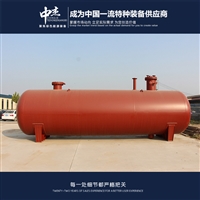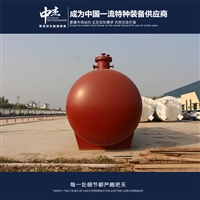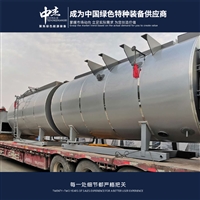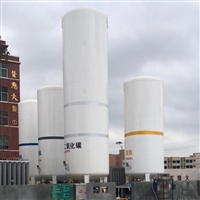
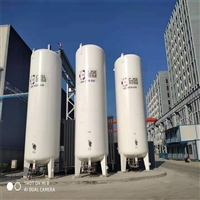


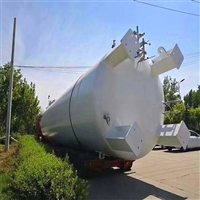

20 cubic meters of medical liquid oxygen storage tank, liquid oxygen storage tank, and oxygen storage tank are meticulously crafted by Jiete Equipment
Category:
mechanical equipment/Storage and transportation equipment/storage tank
Model:
CFL10-0.8
Brand:
Zhongjie Special Equipment
Retail Price
159,000.00USD
重量
kg
- Product Description
-
Description :
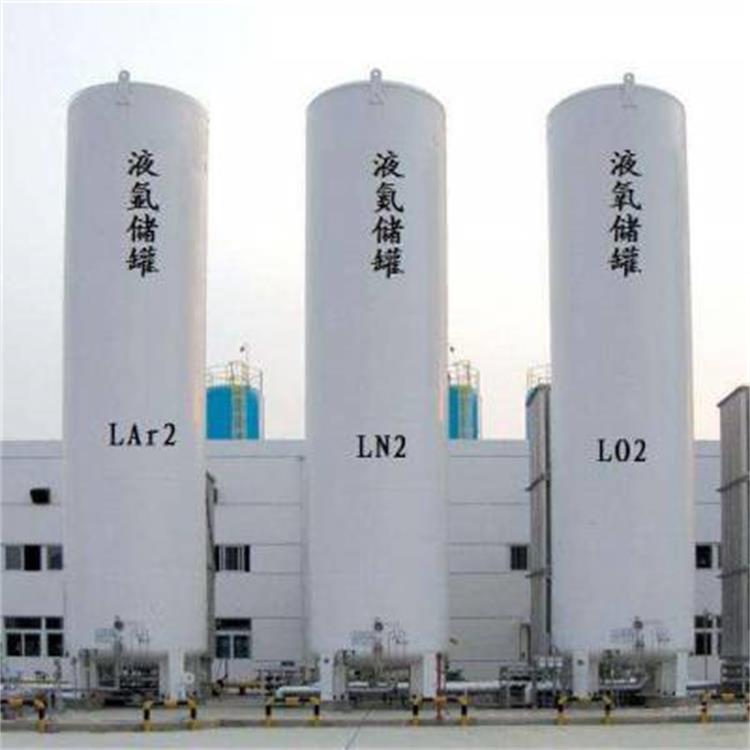
Our company is a low-temperature storage tank production enterprise in the north, with the design and manufacturing capabilities and qualifications for Class II pressure vessels. We manufacture various types of low-temperature liquid storage tanks, including liquid oxygen storage tanks, liquid argon storage tanks, liquid nitrogen storage tanks, carbon dioxide storage tanks, liquefied natural gas storage tanks, LNG storage tanks, etc. We specialize in producing complete sets of equipment such as vaporizers, low-temperature liquid pumps, and gas manifolds for gas filling stations, as well as supporting equipment for centralized gas supply systems such as vaporizers, pressure reducing devices, booster pumps, and buffer tanks. Products manufactured with high-tech precision. The product is suitable for the steel, metallurgy, structure, chemical industry, pharmaceutical, food, glass, civil, and medical industries. This series of low-temperature storage tanks is a double-layer fixed vacuum powder insulated storage tank (storage tank). The inner liner material is made of stainless steel (with 16MnDR for carbon dioxide storage tanks), and the outer liner material is Q345r or 16MnR. The surface anti-corrosion coating adopts processes such as sandblasting rust removal, blowing, and spraying, and also uses two-component rapid curing liquid coating. Our company's liquid oxygen storage tank, liquid nitrogen storage tank, and liquid argon storage tank manufacturing have the following process advantages:
1、 Stainless steel is made of Rp1.0 steel plate with fixed rolling of phthalein steel, carbon steel is made of Jigang steel plate, 16MnDR is made of Wugang fixed rolling, stainless steel pipe is made of Anhui Tianda steel pipe, pearl sand is made of Tianjin Julong, valves are made of Furuite equipment, and vacuum and liquid level gauges are made of Sichuan Lanshi raw materials to produce high-end products.
2、 After the materials enter the factory, they are retested according to national standards to ensure that the performance of all raw materials meets or exceeds national standards. The cutting is carried out using a CNC plasma cutting machine, and the geometric dimensions of the cylinder section are strictly controlled.
3、 Both longitudinal and circumferential seams are welded using submerged arc welding, resulting in a well formed appearance, and the inner liner undergoes 100X X-ray inspection.
4、 Bending is carried out on a CNC pipe bending machine, strictly ensuring the geometric dimensions of the bent pipe. Not using elbow joints greatly reduces pipeline resistance and improves the aesthetics of the external piping system.
5、 The inner and outer surfaces of the stainless steel liner have been degreased and acid washed for passivation, while the inner and outer surfaces of the carbon steel shell have been sandblasted for rust removal, ensuring the adhesion of the paint, extending the corrosion resistance of the paint, improving the corrosion resistance of the stainless steel plate, reducing the amount of air released from the interlayer, and ensuring the service life of the vacuum degree.
6、 Before sand loading, the pearl sand is subjected to a unique dehydration pretreatment, and the interlayer is heated and replaced with nitrogen gas, greatly reducing the amount of gas released.
7、 The sand filling process adopts negative pressure filling and positive pressure compaction to ensure the uniformity of the interlayer pearl sand. The use of vibration rod compaction technology maximizes the filling amount of pearl sand, ensuring the cold insulation effect of the interlayer.
8、 By adopting a unique vacuum extraction process, the evacuation time of the inner liner and interlayer is greatly shortened, ensuring that the vacuum degree of the interlayer is twice as high as the national standard. Ensure that the vacuum level of the storage tank does not need to be reprocessed within 35 years
9、 The outer surface of the storage tank adopts a fully automatic steel shot sandblasting rust removal process, which is very effective in rust removal, reaching a level of Sa2.5 or above, and the paint adhesion is very strong. The paint adopts Norwegian imported Jordan paint, sprayed with two coats of primer and two coats of topcoat, ensuring the service life of the paint and the appearance quality of the equipment.
10、 Each type of low-temperature oxygen nitrogen argon storage tank and LNG storage tank with high market sales has a certain amount of finished and semi-finished products in stock, which can maximize the guarantee of users' requirements for the construction period. Manufacturer of 20 cubic meters of liquid oxygen storage tank and argon gas tank
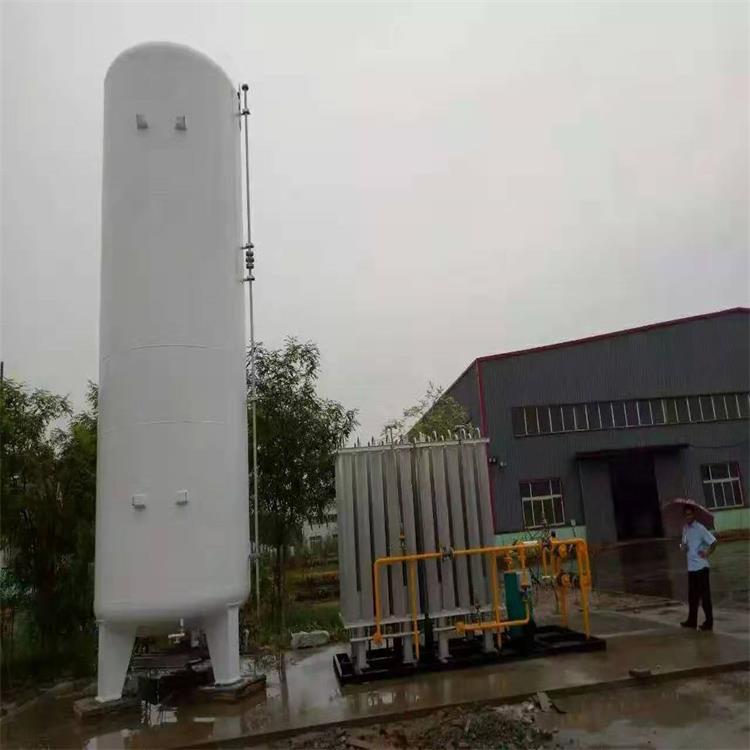

Safety operating procedures for liquid argon storage tanks:
1. Before putting the working liquid argon storage tank into use, it should undergo an air tightness test, blow off treatment, and inspection of valves and instruments.
1.1 After the installation of the airtightness test liquid argon storage tank is completed or the inner cylinder is restored to room temperature, a system airtightness test should be conducted before filling with low-temperature liquid. The test pressure is the working pressure of the storage tank, and the test gas is oil-free dry air or dry nitrogen. The test time depends on the size of the storage tank, but should not be less than 4 hours.
1.2 After passing the airtightness test, the liquid argon storage tank inner cylinder system needs to be blown off with oil-free dry air or dry nitrogen to remove humid air. After the system is blown away with dry air or dry nitrogen, it should also be blown away with product gas. During the blowing process, lighter gases than air are added from the top of the storage tank through a vent valve, and the bottom is discharged through a liquid inlet and outlet valve. In order to accelerate the removal of moisture from the tank, the blown gas can be heated to 80-1000C. Each pipe valve should be blown separately, especially the liquid level gauge and pressure gauge. Gas should be removed from the joint to remove moisture from the pipeline until the dew point of the exhaust gas from the inner cylinder system meets the requirements before filling can begin.
1.3 Inspection of Valves and Instruments Before filling with low-temperature liquid, it is necessary to carefully check whether the valves are in the correct position, whether the instruments are flexible and reliable, and whether the connections of the level gauges are unobstructed.
AfterSalesService :
Key words:- Medical liquid oxygen storage tank
More Products