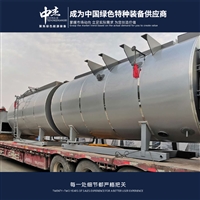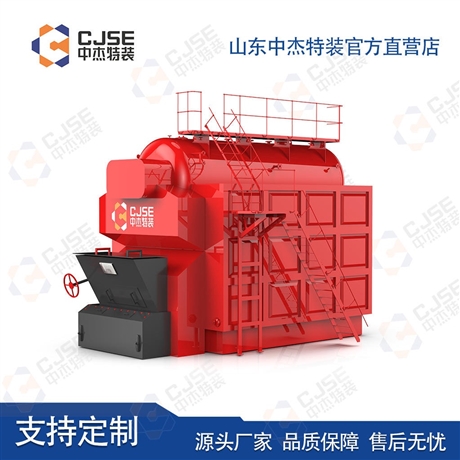



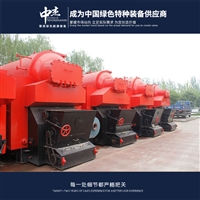

High quality biomass boiler manufacturer Shandong biomass boiler factory price
Category:
mechanical equipment/Industrial boilers and accessories/biomass boiler
Model:
DZL4-1.25
Brand:
Zhongjie Special Equipment
Retail Price
286,000.00USD
重量
kg
- Product Description
-
Description :
1. Clean and environmentally friendly, biomass pellet fuel is a natural biomass pellet fuel that can replace urban gas. It has a low moisture content, easy adjustment of combustion air, and high combustion thermal efficiency.
2. Space saving, due to the high-temperature compression of biomass fuel, it greatly saves storage space and is also convenient for transportation. Biomass pellets have good environmental benefits. The use of coal or kerosene not only requires high investment in desulfurization and denitrification equipment, but also incurs high desulfurization and denitrification costs for project operation. Biomass fuel has extremely low sulfur, nitrogen, and ash content, meeting the requirements of clean fuels. No desulfurization or denitrification measures need to be taken during combustion to meet national environmental protection requirements; The production and use of biomass energy generate no "three wastes" such as wastewater, waste, and waste residue, and there is no pollution such as scattered dust during storage and transportation. Therefore, both production and use have achieved clean production.
3. High combustion thermal efficiency; Biomass pellet fuel can greatly improve the combustion performance of wood materials, with a thermal efficiency increase of over 80%. The heat generated by 1 ton of biomass pellet fuel is equivalent to 0.8 tons of coal.
4. Safe to use, biomass pellet fuel is derived from natural state bio fertilizers or mugwort, and does not contain chemicals that are prone to fission, explosion, or leakage, so it will not cause poisoning, explosion, leakage, or other accidents.
5. Sustainable utilization. The ash from the combustion of biomass pellet fuel can be used as fertilizer to promote the growth of new plants and enter a new cycle, ensuring a continuous supply and utilization of biological resources.
Firstly, biomass boilers utilize biomass energy, which is a green, environmentally friendly, and renewable energy source that is relatively easy to obtain and inexhaustible. Ultimately, it is a type of solar energy that can achieve "zero" carbon emissions within one cycle. Its utilization is not limited by time, climate, or geography, and its pollutant emissions are low.
The following is an introduction to the subsystems:
1) Feeding system
The feeding system consists of a silo, a vibrating feeder, a belt conveyor, a screw feeder, a bucket elevator, a hopper, and other components. Different feeding methods are adopted according to the properties of different fuels and types of boilers.
The BMF fuel processed and formed in the factory is transferred to the silo by a belt conveyor, and then the BMF fuel in the silo is supplied to the burner for combustion by a bucket elevator (screw feeder).
2) Combustion system
The main equipment of the combustion system is the chain grate. Compared with coal, biomass fuel has the characteristics of easy ignition and fast combustion. Therefore, the grate reducer adopts a slow motor to reduce the operating speed of the grate. Considering that the control grate can adapt to different loads of boilers, the grate motor adopts frequency conversion control to meet the control of the grate running speed.
The material layer of the boiler is controlled by the gate on the front side of the grate. Optimize the layout of the furnace heating surface and the front and rear arch structures, adopt low-temperature combustion technology, control the furnace combustion temperature between 750~850 ℃ (determined according to the melting point of fuel ash), effectively suppress the slagging of alkali metals, and reduce the probability of boiler corrosion.
The combustion of biomass can usually be divided into three stages, namely preheating and ignition stage, volatile matter combustion stage, and charcoal combustion stage. The combustion process of biomass on the grate is divided into preheating and drying zone, combustion zone, and burnout zone. According to the combustion characteristics of each zone, the required air volume varies, with less air volume in the preheating and drying zone and the burnout zone, and more air volume in the combustion zone. The adjustment of air volume is achieved through the setting of air dampers on both sides of the grate.
Temperature control is based on the internal temperature of the furnace, which is related to the amount of air supplied during fuel gasification. The adjustment of boiler load is controlled by adjusting the feeding amount. After combustion, the flue gas enters the convection flue through the furnace for heat exchange, and then sequentially enters the economizer (energy-saving device) and air preheater to complete the entire combustion process. It then enters the dust collector for purification treatment and is discharged into the atmosphere through the chimney. Due to the use of energy-saving devices such as the economizer and air preheater, the flue gas temperature is reduced, greatly improving the overall efficiency of the boiler.
3) Blowing system
The boiler is equipped with a fully automatic sound wave soot blowing device, which can regularly blow the furnace and smoke pipes to ensure that there is no dust accumulation on the surface of the smoke pipes, thereby achieving safe and efficient operation of the boiler.
The use of sonic soot blowers has the following advantages:
The structure is simple, the soot blower body does not require electricity, there is no mechanical motion rotating mechanism, no vulnerable parts, and there will be no mechanism motion rotating failure.
2. Small size, light weight, no telescopic mechanism, and no mechanical jamming phenomenon.
3. The material is resistant to high temperature, abrasion, corrosion, aging and long service life.
4. Safe and reliable, without thinning or blowing damage to the tube bundle, without causing tube bursting, meeting the requirements of personal safety and industrial labor protection regulations.
5. High sound wave efficiency, high power, wide frequency band, and significant dust removal effect.
6. Wide applicability, suitable for various furnace types and any part of boilers, including furnace water-cooled walls, superheaters, economizers, air preheaters, electrostatic precipitators, etc; Both light tubes and spiral finned tubes can be used, and there are no dead corners when cleaning dust;
7. Low gas consumption and low power consumption.
The control system is divided into automatic and manual functions, which can form their own units or be connected to the DCS system to achieve fully automated operation.
4) Smoke and air system
Air supply system: The boiler air supply system is optimized and arranged with the grate. Air is sent to the furnace through an air preheater by a blower to transport fuel and assist combustion. The air chamber at the bottom of the grate allows hot air to enter the furnace evenly on the lower side of the grate, achieving uniform air distribution on both sides of the grate, reducing the phenomenon of partial combustion, and ensuring complete fuel combustion. Induced draft dust removal system: Under the action of the induced draft fan, the high-temperature flue gas generated after combustion is subjected to convective heat exchange in the smoke pipe, and then sequentially passes through the economizer and air preheater for heat exchange. It enters the dust collector for purification and is discharged from the chimney through the induced draft fan.
Layout of boiler secondary air
Secondary air refers to a strong airflow that is sent into the furnace above the fire bed (commonly referred to as primary air). The main function of secondary air is to disturb the airflow inside the furnace, causing it to mix with each other, thereby reducing the incomplete combustion loss of gas and the excess air coefficient in the furnace. In general, secondary air is used in conjunction with furnace arches to achieve the desired effect. In addition to disturbance and mixing of flue gas, the installation of secondary air in steam boilers can also have various other good effects if arranged properly. For example, secondary wind energy can lead the high-temperature flue gas in the boiler furnace to vortex flow, which can not only prolong the travel of unburned fly ash particles in the furnace and increase their residence time, but also reduce the amount of fly ash escape due to the vortex separation effect of the airflow, causing some fly ash to fall back into the furnace discharge. Beneficial for eliminating smoke and reducing the loss of fly ash carried away; By fully utilizing the high-speed secondary air jet to guide and push the flue gas, the flue gas flow can flow completely along the required route, thereby extending the travel of the flue gas in the furnace, improving the filling degree of the furnace airflow, controlling the position of the combustion center, and preventing local slagging in the furnace; The gas curtain formed by the secondary air jet can act to block the flue gas flow, which can be used to prevent short circuits in the flue gas flow and prevent combustible gases and fly ash from escaping the steam boiler furnace without combustion; Secondary air can provide some oxygen to aid combustion.
Front and back wall layout is a common arrangement method. When the secondary air volume is not sufficient and the depth of the furnace is not large, a single-sided layout of the front or rear wall is generally used to concentrate the wind force and exert greater disturbance, and the layout can also be simplified. In the chain furnace, the mixing effect is better when the secondary air is arranged on the front wall due to the release of volatile components in the fuel at the head of the fire bed. But the secondary air of the steam boiler arranged on the rear wall or arch can not only cause disturbance, but also appropriately press the high-temperature flue gas towards the head of the fire bed, which is helpful for the ignition of new fuel. The double-sided arrangement of secondary air can significantly reduce the requirements for the range of secondary air, making it suitable for boilers with larger capacity. At this time, the secondary air of the boiler is prioritized to be arranged at the throat of the front, rear, and arch outlets to further reduce its injection distance
AfterSalesService :
Key words:- High quality biomass boiler manufacturer
More Products