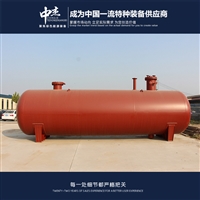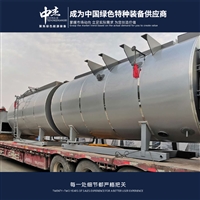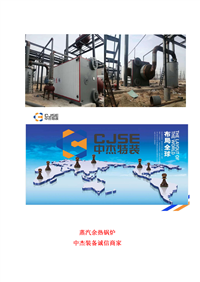
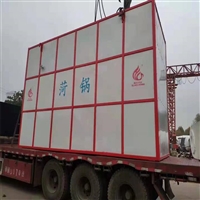


Contract after-sales waste heat boiler flue gas utilization various types of waste heat boilers
Category:
mechanical equipment/Industrial boilers and accessories/Waste heat boiler
Model:
q2-1.25
Brand:
Zhongjie Special Equipment
Retail Price
252,000.00USD
重量
kg
- Product Description
-
Description :
A waste heat boiler, literally translated, refers to a boiler that uses the heat generated by the combustion of waste heat and combustible substances from various industrial processes to heat water to a certain temperature. Oil fired boilers, gas boilers, and coal-fired boilers with smoke boxes and flue heat recovery applications are also known as waste heat boilers. After waste heat recovery, waste heat boilers can produce hot water or steam to supply other sections for use.
The high-temperature flue gas released from coal-fired combustion is transported through the flue to the inlet of the waste heat boiler, and then flows through the heater, evaporator, and economizer before being discharged into the atmosphere through the chimney. The exhaust gas temperature is generally 150-180 ℃, and the heat released from the decrease in flue gas temperature from high temperature to exhaust gas temperature is used to turn water into steam. The boiler feedwater enters the economizer, where the water absorbs heat and heats up to a full temperature slightly lower than the pressure of the steam drum before entering the drum. After the water entering the drum mixes with the full water inside the drum, it enters the evaporator along the downcomer below the drum to absorb heat and start producing steam. Usually, only a part of the water turns into steam, so the mixture of steam and water is active inside the evaporator. The steam water mixture leaves the evaporator and enters the upper drum, where it is separated by steam water separation equipment. The water falls into the water space inside the drum and enters the downcomer to continue absorbing heat and producing steam. The steam enters the superheater from the upper part of the drum, absorbing heat and turning the full steam into superheated steam. According to the three stages of the steam production process corresponding to three heating surfaces, namely the economizer, evaporator, and superheater, if superheated steam is not required and only full steam is needed, the superheater can be omitted. When there is reheated steam, a reheater can be added.

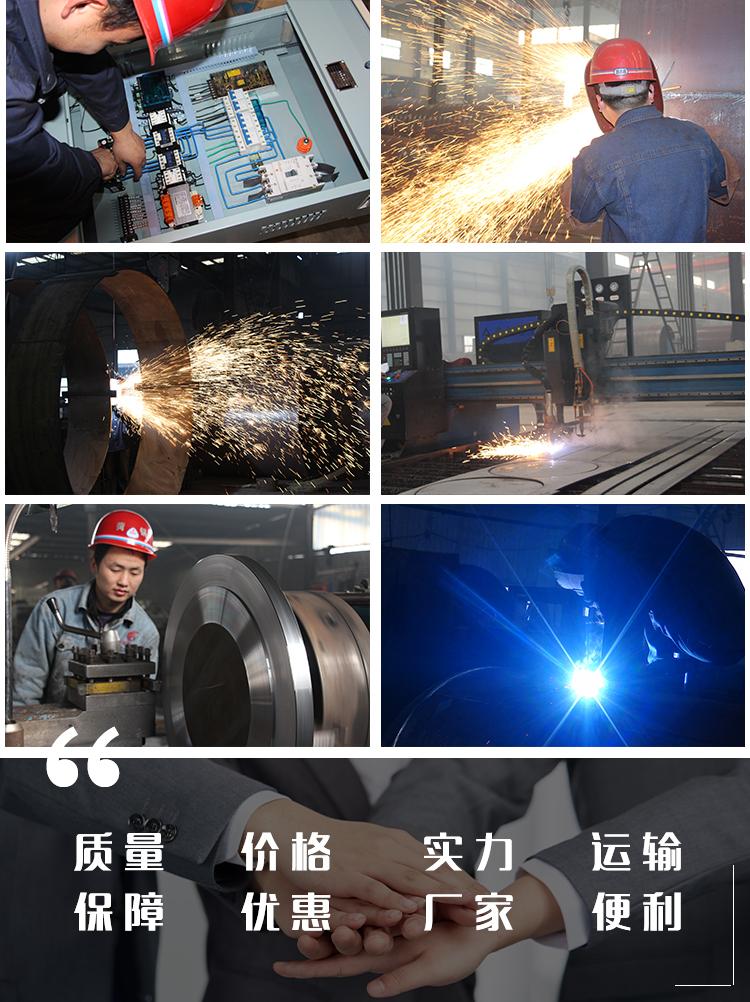
In recent years, with the significant increase in various power prices, people have started to focus on the operating cost of boilers when selecting them. In reality, steam boilers are indispensable for enterprise production, and hot water boilers are indispensable for heating or bathing in hotels, inns, residential areas, and bathing centers. The fuel cost of boilers is a significant expense. In order to avoid the objective phenomenon of "can afford a boiler, cannot afford a boiler" as much as possible, smart boiler manufacturers have carried out a series of energy-saving renovations on boilers, mainly focusing on the issue of waste heat recovery. Customers who use this type of waste heat boiler now highly recognize its equipment.
In fact, energy conservation is one of the key factors that can continue to be implemented. If we still adhere to traditional methods of power utilization and cannot effectively recycle resources, it will worsen the entire resource environment of society and cause rapid depletion of power. According to reliable data, the consumption of industrial power in China accounts for a large share of the overall cost, while the effective utilization rate of power is only about 30%. Therefore, considering economic benefits, the promotion of energy-saving equipment is an imperative action. The lack of power is a serious challenge facing the world today. In this context, pursuing the development of new power is one aspect, and more importantly, putting in enough effort to save power. Nowadays, the planning and development of domestic waste heat energy-saving boilers have gradually become mature. With the development of society, people will increasingly realize that energy-saving equipment is an inevitable trend. The sign of energy-saving boilers is not only a heavy weight for businesses to promote, but also a great contribution to society and the environment.
AfterSalesService :
Key words:- Contract after-sales waste heat boiler
More Products