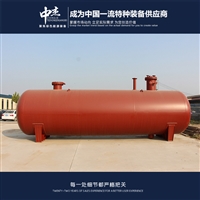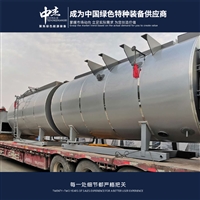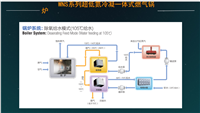


Integrity Enterprise Environmental Protection Boiler Supply 2-ton Low Nitrogen Boiler Price Advantage
Category:
mechanical equipment/Industrial boilers and accessories/Gas boiler
Model:
WNS2-1.25-Q
Brand:
Zhongjie Special Equipment
Retail Price
145,000.00USD
重量
kg
- Product Description
-
Description :
1Construction of boiler
A boiler is a device that transfers the heat energy released after fuel combustion to the water in a container to obtain the required pressure and temperature of hot water and steam. It is composed of commonly known "furnace", "pot", as well as accessory instruments and equipment, to ensure its normal and safe operation.
1. A furnace is composed of combustion equipment, furnace walls, furnace arches, and steel frames. It causes the combustion of fuel to produce hot flue gas, which flows through the furnace and various sections of the flue to release heat to the heating surface of the boiler, and then enters the tail of the boiler to be discharged.
2. The "pot" is the pressurized component of a boiler that contains water and steam. It includes the drum (steam drum) or shell, water-cooled wall tubes, convection tube bundles, smoke pipes, downcomers, headers (headers), superheaters, economizers, and other pressurized components, forming a complete system of water and steam for heating and vaporization processes.
① Boiler drum; The function of the drum is to collect, store, purify steam and replenish water. The drum of a hot water boiler is filled entirely with hot water, while the drum of a steam boiler is filled with both hot water and steam. A single drum steam boiler, with the lower half of the drum filled entirely with hot water and the upper half of the drum serving as the steam space; A double drum steam boiler has a lower drum filled with hot water, an upper drum with hot water in the lower half, and a steam space in the upper half. The boundary between steam and hot water is called the water level line.
② Water wall: Water wall is a radiation heating surface arranged around the furnace of a water tube boiler. It is the main heating surface of the boiler, and some water-cooled wall tubes are welded or have fins on both sides. The fins increase the shielding area of the furnace wall, which can receive more radiation heat from the furnace, increase the steam production of the boiler, reduce the temperature of the furnace inner wall, protect the furnace wall, and prevent slagging of the furnace wall.
③ Convection tube bundle: The convection tube bundle is the convective heating surface of the boiler. Its function is to absorb the heat of high-temperature flue gas, increase the heating surface of the boiler, and improve the heat absorption of the convection tube bundle, which is related to the flue gas flow rate, tube arrangement, and flue gas flushing method.
④ Smoke tube: Smoke tube is the convective heating tube of the boiler shell, which has the same function as the water tube convective tube bundle. The difference is that the water tube convective tube bundle allows the flue gas to flow outside the tube, while the smoke tube allows the flue gas to flow inside the tube.
⑤ Downpipe: The function of the downpipe is to transport the water in the drum to the lower header, so that the heating surface pipes have sufficient circulating water to ensure reliable operation. The downcomer must be insulated.
⑥ Collecting box: also known as a header, its function is to collect and distribute boiler water, ensuring reliable water supply to each heating surface pipe or collecting water or steam water mixture from each pipe. The collection box should generally not be exposed to radiant heat to prevent the formation of bubbles in the internal water, which may cause poor cooling and overheating and damage. There are different types of containers based on their placement, including upper container, lower container, left container, and right container. The lower collection boxes located on both sides of the grate are also commonly known as anti coking boxes.
⑦ Superheater: Superheater is an auxiliary heating surface of steam boiler. Its function is to extract saturated steam from the drum under constant pressure, and then heat it to evaporate the water in the saturated steam and increase the steam temperature, thereby improving the steam quality and becoming superheated steam.
⑧ Economizer: The economizer is a heat exchanger installed in the tail flue of the boiler, which uses the waste heat from exhaust gas to increase the temperature of the feedwater. Its function is to increase the temperature of the feedwater, reduce exhaust heat loss, and improve the thermal efficiency of the boiler. Generally speaking, for every 1 ℃ increase in the outlet water temperature of the economizer, the average exhaust temperature of the boiler decreases by 2-3 ℃, and for every 6-7 ℃ increase in the feedwater temperature, 1% of coal is saved. Generally, boilers equipped with economizers can save 5% -10% of coal.
3. To ensure the normal and safe operation of the boiler, some accessory instruments need to be installed on the boiler, including safety valves, pressure gauges, water level gauges (including dual color water level gauges, high and low water level alarms, low position water level gauges), low water level interlock protection devices, temperature instruments, over temperature alarms, flow meters, sewage devices, explosion-proof doors, commonly used valves, and automatic regulating devices. 4. Auxiliary equipment is a necessary device installed outside the boiler body, which supplies equipment such as fuel system, ventilation system, water supply system, slag removal and dust removal system, such as ball mill, coal transportation equipment, water pump, water treatment device, blower, induced draft fan, slag removal machine, dust collector, and soot blowing device.
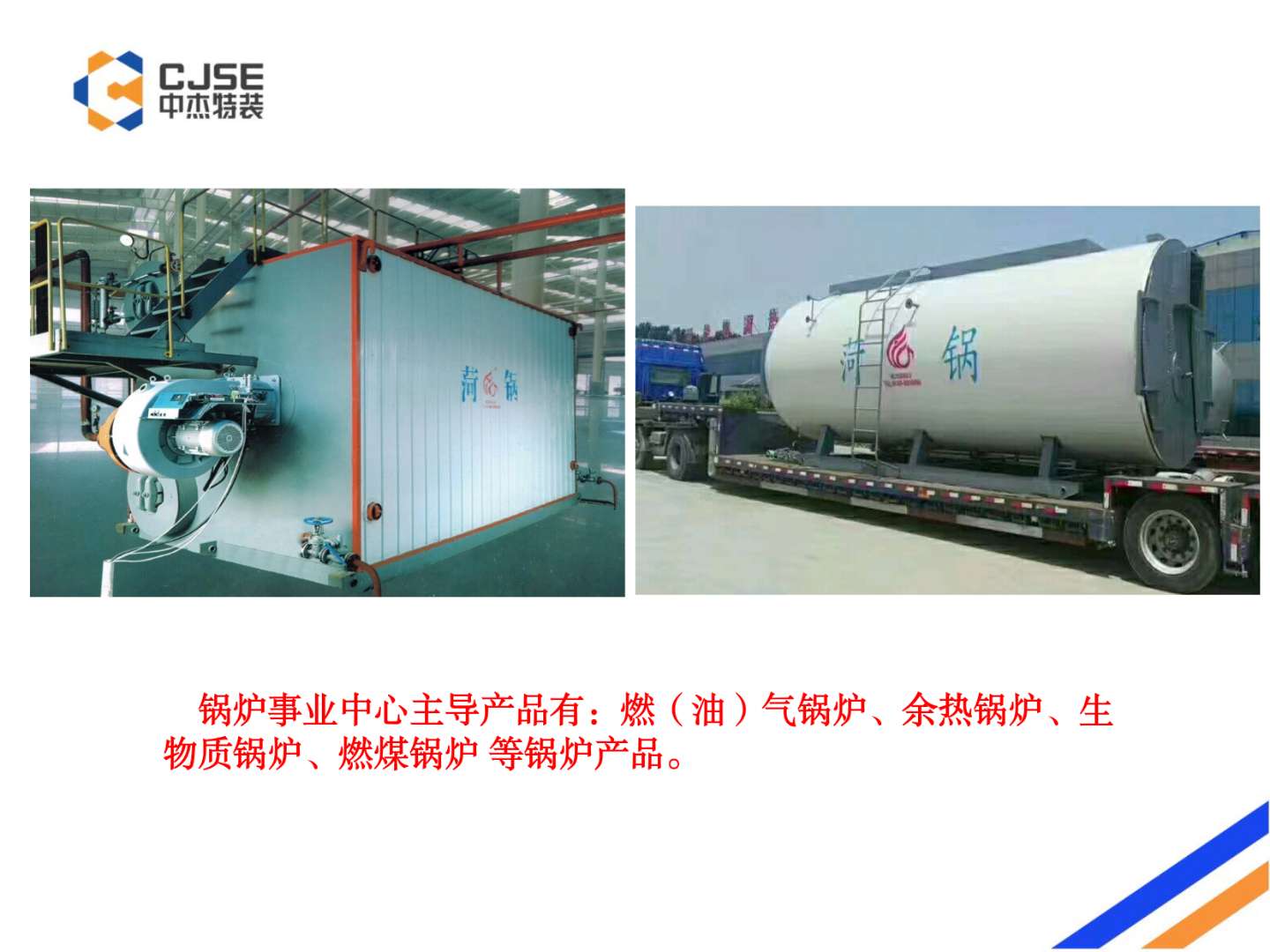
IIWorking principle of boiler
When the boiler is running, the combustible substances in the fuel mix and burn with the air delivered to the furnace by the ventilation system at an appropriate temperature, releasing energy that is transmitted to the boiler water through various heating surfaces. The water temperature continues to rise, producing vaporization, which is then saturated steam. After steam water separation, it enters the main steam valve for output and use. If high quality steam is required, saturated steam can be fed into the superheater and heated to become superheated steam for output. For hot water boilers, the boiler water temperature is always below the boiling point temperature and is connected to the user's heating network for circulation.
AfterSalesService :
Key words:- Supply of environmentally friendly boilers
More Products