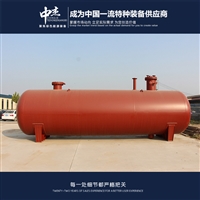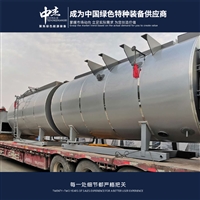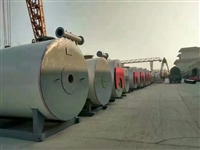
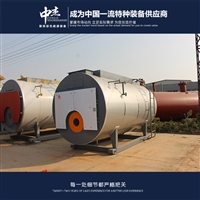
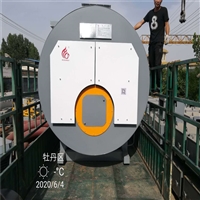
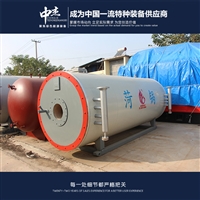

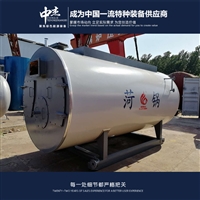
2-ton horizontal natural gas boiler price, Zhongjie brand industrial boiler manufacturing unit
Category:
mechanical equipment/Industrial boilers and accessories/Gas boiler
Model:
WNS2-1.25-Q
Brand:
Zhongjie Special Equipment
Retail Price
235,000.00USD
重量
kg
- Product Description
-
Description :
1、 The consequences of unqualified steam boiler water treatment are: 1. scaling; 2. Corrosion;
2、 The consequences of scaling and corrosion are:
① Corrosion causes damage to metal components; The components of the boiler, such as the economizer, water-cooled wall, convection tube bundle, and drum, may corrode due to poor water quality. As a result, these metal components became thinner, dented, and even perforated. More severe corrosion can damage the internal structure of the metal. The strength of corroded metal is significantly reduced. Therefore, it seriously affects the safe operation of the boiler, shortens the service life of the boiler, and causes economic losses.
② The corrosion products of metals (mainly iron oxides) that increase the scaling components in the boiler water are easily mixed with other impurities to form scale when brought to the heating surface of the boiler by the boiler water. When the scale contains iron, the heat transfer effect is worse. For example, the heat loss caused by a 1mm thick scale containing 8% iron and mixed with silicon dioxide is equivalent to a 4mm thick scale of other components.
③ The formation of scale containing high valent iron can easily cause corrosion of metallic iron in contact with the scale. The corrosion products of iron are prone to forming scale again. This is a vicious cycle that can lead to rapid damage to boiler components. Especially for oil fired boilers, the harm of metal corrosion products is greater.
Water pipes and fire pipes are defined by the different media inside the pipes. Water pipes are pipes that carry water and heat the water inside the pipes through external flue gas convection/radiation heat exchange. Fire pipes are pipes that carry flue gas inside the pipes, allowing the flue gas to heat the media outside the pipes to achieve heat exchange. Fire pipe boilers have a simple structure, large water and steam volumes, good adaptability to load changes, and lower requirements for water quality than water pipe boilers. They are mostly used in small enterprise production processes and domestic heating. The heating surface arrangement of water tube boilers is convenient, with good heat transfer performance, and can be used in large capacity and high parameter operating conditions structurally. But there are high requirements for water quality and operational level.
(1) Water tube boilers have a wide range of pressure adaptability, can break through pressure limitations, and can meet steam supply requirements above 2.5 MPa. Fire tube boilers are limited by material wall thickness and pressure, and are used for pressures below 2.5 MPa.
(2) Fire tube boilers are shell boilers, and due to the limitations of equipment and fixtures from various boiler manufacturers, it is difficult to manufacture large fire tube boilers, usually below 35t/h. Water tube structure boilers can achieve large-scale boilers, and boilers with a capacity of 35t/h or more usually use water tube structures. (3) Fire tube boilers have the characteristic of compact structure, and under the same output, their appearance and equipment weight are lower than those of fire tube boilers. Due to their larger size, water tube boilers have more space for arranging superheaters, so they occupy a relatively large boiler room.

Installation of smoke and air ducts:
The boiler wall and flue gas duct should have good sealing and insulation performance. When the ambient temperature is 25 ℃, the temperature of the outer surface of the furnace body 300mm away from the door hole shall not exceed 50 ℃, and the temperature of the furnace top shall not exceed 70 ℃; The flue in front of the condenser should be insulated and its surface temperature should not exceed 50 ℃.
When installing the chimney, asbestos ropes should be embedded between the flanges, and the verticality of the chimney should be checked using a plumb line. If there is any deviation, it can be leveled and corrected at the flange connection. two
The smoke control valve should rotate flexibly and be positioned reliably. four
The exhaust temperature gauge on the smoke duct should be installed in a clear and visible position. <span style="" mso-spacerun:"yes"; Font family: Song typeface; line-height:150%; "="">
Control system:
This series of boilers is equipped with A48Y full opening spring valve safety valve.
The burner adopts an automatic burner with a beautiful appearance and high degree of automation. It can achieve fully automatic control from pre blowing, ignition, automatic conversion of firepower to automatic shutdown and flameout protection.
The feed pump adopts CR type to achieve automatic water supply to the boiler.
At the same time, this series of boilers has the following safety protection measures and precautions:
1. The boiler has interlocking devices with the following functions:
When all air supply fans are powered off, all fuel supply will be automatically cut off;
When the gas pressure is lower than the specified value, the gas supply will be automatically cut off;
2. The burner is equipped with reliable ignition program control, automatic blowing, flame detection and extinguishing alarm and extinguishing protection devices, gas pressure over limit and under pressure alarm and protection adjustment devices, gas leakage detection alarm devices and fault shutdown alarm and other safety protection devices to ensure the safe operation of the burner.
3. This series of boilers has high and low water level alarm and low water level interlock protection, steam overpressure alarm and interlock protection functions. During boiler operation, the protection device and interlock device must not be arbitrarily removed from use, and the power supply of the interlock protection device should be reliable.
4. Before starting the boiler at any time, the blower and burner must be pre purged in strict accordance with the requirements of TSG G0001-2012 "Boiler Safety Technical Supervision Regulations" to prevent explosion accidents.
5. When shutting down the furnace, the fuel supply must be cut off.
Tightness test
After the boiler baking and boiling are qualified, a tightness test should be conducted according to the following steps:
1. When the pressure is increased to 0.3-0.4 MPa, tighten the flanges, manholes, handholes, and other connecting bolts within the boiler range in a hot state.
2. Continue to increase the pressure to the working pressure, and check the tightness of each manhole, handhole, valve, flange, and gasket. There should be no leakage. At the same time, observe the thermal expansion of the drum, pipeline, and bracket, which should be free of deformation, and the thermal expansion and contraction of the pipeline, bracket, etc. should be free.

AfterSalesService :
Key words:- Price of natural gas boilers
More Products