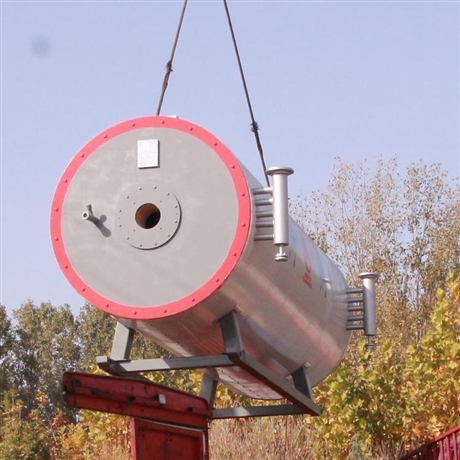


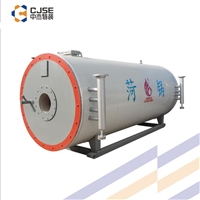


Precautions for the operation of Zhongjie 3 million kcal thermal oil boiler in the production of thermal oil boiler
Category:
mechanical equipment/Industrial boilers and accessories/Gas boiler
Model:
YYQ3500
Brand:
Zhongjie Special Equipment
Retail Price
359,000.00USD
重量
kg
- Product Description
-
Description :
The following problems often occur during the operation of the thermal oil furnace heating system.
1.1 Flow rate reduction
A decrease in the flow rate of organic heat carriers can lead to an increase in temperature, and in severe cases, cause the cracking of the heat carriers, resulting in coking on the furnace tubes, and even blockage of the furnace tubes, causing major accidents. Firstly, for the heat transfer oil furnace, the phenomenon of fouling and blockage in the heating pipeline reduces the flow rate. The reason is that the efficiency of the circulation pump decreases, and the working current does not meet the standard, resulting in a decrease in the flow rate of the heat carrier. When the use of heating equipment decreases and the system's heat load decreases, the circulation of heat carrier also decreases. If not adjusted in time, it will also cause the flow rate of heat carrier in the heating surface tube to be too low.
1.2 Premature deterioration of heat carrier
For heat carriers, a common phenomenon is premature deterioration of the heat carrier, especially for some long-term used heat transfer oil furnaces. This phenomenon is even more pronounced, and the heat transfer oil needs to be replaced almost every six months. The main reason for this phenomenon is that the staff are not familiar with the heat transfer oil heating system, and the unit has not made clear instructions, resulting in many aspects of the heat transfer oil system being unqualified during operation, causing the heat carrier to deteriorate prematurely. For example, sudden power outages can cause overheating of furnace tubes, leading to the cracking of heat transfer oil, and the expansion tank overheating can cause oxidation of heat transfer oil.
1.3 Overheating of expansion tank
Overheating of the expansion tank has always been a topic of much discussion. With the increasing use of organic heat carrier furnaces, one of the more common problems is the occurrence of overheating in the expansion tank (the temperature of the organic heat carrier in the expansion tank exceeds 70 ℃). Overheating of the expansion tank can cause significant heat loss and rapid oxidation failure of several heat carriers, thereby increasing enterprise costs. It is also a safety hazard that may cause harm to personnel. The common factors that cause overheating in expansion tanks include insufficient installation height of the expansion tank, inappropriate installation position of the oil and gas separator, non-standard installation of the expansion pipe, as well as operational management factors such as unqualified quality of organic heat carriers, excessive changes in heat load, and auxiliary exhaust valves not being closed or not being tightly closed.
2 Ways to Solve the Operation Problems of Thermal Oil Furnace Heating System
When the boiler leaves the factory, the manufacturing unit selects the corresponding model of circulating pump according to the thermal power of the boiler, which specifies the circulating flow rate of the organic heat carrier furnace. Users should not use the circulating pump model or power provided by the manufacturer in order to reduce operating costs. Instead, they should choose a circulating pump with a lower circulation flow rate or the same model but lower motor power without authorization. As a result, the circulation volume of the heat carrier will decrease, and the flow rate of the heat carrier in the furnace tube will not meet the standard requirements. The furnace tube will quickly coke and burn through, causing a fire accident. If the filter of the thermal oil heating system is clogged during operation, it is necessary to immediately open the vent valve to exhaust. To prevent fires and other situations, fire protection measures must be set up in accordance with fire safety regulations in the heat transfer oil boiler room. Enterprises should also increase the publicity and education of inspection and supervision departments, so that relevant leaders and staff understand the safety and importance of heat transfer oil furnaces, and attach importance to the operation of heat transfer oil furnaces from an ideological perspective. Due to the deterioration of heat transfer oil, many cases are caused by operators not following the operating procedures. Therefore, enterprises must strengthen the knowledge and operational skills of operators, eliminate the deterioration of heat transfer oil from the root, and ensure the safe operation of the heating system.
In terms of selecting heat transfer oil, according to the design requirements of the heat transfer oil heating system, the selected heat transfer oil must comply with the design rules, meet the requirements of viscosity, stability, and flash point, and also have the characteristics of non corrosion, non toxicity, and non flammability. The heating system of heat transfer oil is affected by the viscosity of the heat transfer oil during start-up. Therefore, when the system is outdoors, attention should be paid to the low-temperature viscosity of the heat transfer oil. It must be ensured that the viscosity meets the conditions before starting. In addition, when transferring heat, the viscosity of the heat transfer oil will also affect the flow properties in the pipeline. Secondly, the stability of heat transfer oil is of great significance for heating systems, so it is important to pay attention to its stability when selecting heat transfer oil. Usually, heat transfer oil is composed of a mixture, and under normal circumstances, some low boiling point substances are directly evaporated, resulting in a decrease in viscosity and flash point of the heat transfer oil, which in turn affects its heat transfer performance. Therefore, when selecting heat transfer oil, it is necessary to first evaporate the low boiling point substances in the heat transfer oil before measuring its performance. In the temperature setting of the heat transfer oil, if the operating temperature continues to rise in the heat transfer oil heating system, the high boiling point substances of the heat transfer oil will undergo a "condensation" reaction, producing high viscosity substances that affect its flow performance. Therefore, it is necessary to only change the heating temperature of the heat transfer oil to ensure that the temperature difference between the inlet and outlet of the liquid-phase furnace is controlled at 20-40 ℃.

In response to the phenomenon of premature deterioration of heat transfer oil, in addition to selecting the appropriate heat transfer oil as mentioned earlier, attention should also be paid to the following aspects. Firstly, during the operation of the heat transfer oil furnace, due to the high temperature rise of the heat transfer oil, other low boiling point gases will gradually be separated. Therefore, these vaporized gases must be eliminated in a timely manner. According to relevant regulations, when starting the heat transfer oil furnace, in order to exhaust the gas and moisture in the oil circuit, the vent valve should be repeatedly opened. Secondly, during operation, it is necessary to regularly send the heat transfer oil to the inspection department for testing to understand the quality changes of the heat transfer oil, analyze the reasons for the deterioration of the heat transfer oil, and the quality indicators of the heat transfer oil such as residual carbon, acid value, porosity, flash point, etc. If there are two items that do not meet the standards, the heat transfer oil needs to be replaced in a timely manner to avoid a vicious cycle, which may cause equipment corrosion and increase equipment maintenance and repair costs.
In case of unexpected situations during the operation of the heat transfer oil furnace, the user unit must strengthen the training of relevant personnel to ensure that in case of emergencies, the operator can open the emergency relief valve in a timely manner, discharge the heat transfer oil in a timely manner, and input the cold heat transfer oil stored in the high-level tank into the heat transfer oil furnace to remove the fuel that has not been completely burned in the oil furnace. This operation is manually operated due to the short duration of the entire process. When maintaining and repairing the operating equipment of the heat transfer oil furnace, it is necessary to conduct a hydraulic test first to ensure that the welding resistance is very tight. In addition, during the pressure test, water should not be used for the experiment because it is inconvenient to clean it completely. To ensure the tightness of the welding parts of the equipment, the flange connection form, parameters, and sealing materials are selected according to the regulations. For the parts in direct contact with the heat transfer oil, flange welding is adopted, and the sealing material is made of metal mesh wrapped with graphite gaskets. When stopping the heat transfer oil furnace, the oil pump must run for a certain period of time before opening the bypass for ventilation to ensure that the temperature of the heat transfer oil drops below 100 ℃ before stopping the operation.
Overheating of the expansion tank can increase the height to increase the length of the expansion tube, which is a conventional method with significant effects, but requires a large amount of construction. It is also possible to increase the length of the expansion tube by translating the expansion tank or oil and gas separator, without changing the height of the expansion tank and oil and gas separator. However, it should be noted that the turning angle of the expansion tube should not be less than 120 °. This method does not require adjusting the height, making the construction simpler.
Replacing the expansion tube with a finned tube or adding a small heat exchanger to the expansion tube to increase the heat transfer area and reduce the temperature inside the tube is also a feasible and good choice through calculation. Another method is to fill the expansion tank with nitrogen gas for protection, isolate the air to prevent oxidation of hot oil. This method has a complex nitrogen filling system and is not easy to configure by the manufacturer.

AfterSalesService :
Key words:- gas boiler
More Products