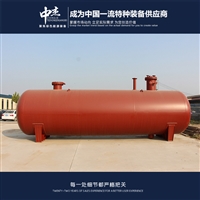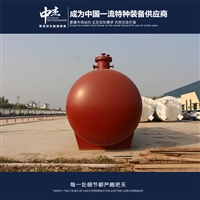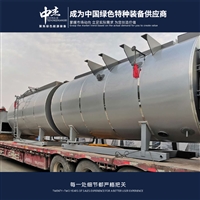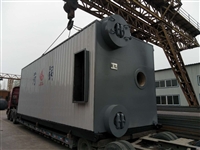
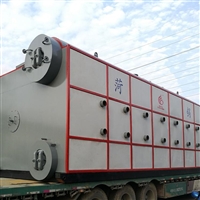
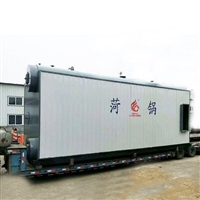
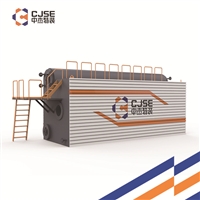

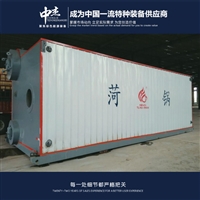
Flue gas utilization waste heat boiler manufacturer Shandong waste heat boiler price
Category:
mechanical equipment/Industrial boilers and accessories/Waste heat boiler
Model:
q2-1.25
Brand:
Zhongjie Special Equipment
Retail Price
178,000.00USD
重量
kg
- Product Description
-
Description :
The wet flue gas discharged from the chimney comes into contact with the cooler ambient air, causing the flue gas to cool down. During this process, the water vapor in the flue gas is supersaturated and condensed, and the condensed water droplets refract and scatter the light, resulting in a white or gray "wet plume" (commonly known as "big white smoke", "white mist", etc.). When wet flue gas is emitted, the lifting height of the "smoke plume" will decrease, and the diffusion effect will be relatively poor. The concentration of pollutants near the chimney will increase, exacerbating the haze phenomenon and affecting visibility. When the ambient temperature is low and the defogging effect is poor, the phenomenon of "chimney rain" may occur, which is not conducive to the lifting and diffusion of smoke, and may even exacerbate local acid rain, corrode engineering facilities and buildings, etc. The phenomenon of wet smoke plumes seriously affects the production and life of residents around power plants, weakens public satisfaction with environmental protection work, and a considerable number of residents near coal-fired power plants have raised relevant demands for the treatment of wet smoke plumes. Local authorities have also put forward requirements for the control of wet smoke plumes.
With the increasing national requirements for pollutant emissions, the environmental pollution caused by flue gas emissions from coal-fired power plants has significantly decreased. After measures such as dust removal, desulfurization, denitrification, and mercury removal, the emissions of pollutants such as particulate matter, sulfur oxides, nitrogen oxides, and mercury were effectively controlled in the flue gas. The solution technology and energy-saving measures for the "smoke plume phenomenon" are becoming increasingly sophisticated.
Main elimination techniques
Eliminating smoke plumes is a comprehensive management process that should be approached from the following aspects: (1) reducing the moisture content of smoke; (2) Reduce the relative moisture content of flue gas; (3) Control the generation and emission of SO3 in flue gas, control the emission of NOx and spray ammonia reasonably; (4) Remove submicron particles and acid mist to reduce the production of acidic aerosols. Based on the basic principles of the "smoke plume phenomenon" and combined with actual production, the treatment methods can be roughly divided into three categories: flue gas heating technology, flue gas condensation technology, and flue gas condensation reheating technology.
1. Flue gas heating technology
The flue gas heating technology is to heat the wet saturated flue gas before entering the chimney, raise the temperature of the wet flue gas, maintain the moisture content of the wet flue gas unchanged, and reduce the relative moisture content, so that the relative humidity of the flue gas is lower than the saturation humidity after heating, thereby achieving the technical requirement of eliminating smoke plumes.
At present, flue gas heating technology can be divided into two categories based on heat exchange methods: indirect heat exchange and direct heat exchange. Indirect heating technologies mainly include rotary GGH, tubular GGH, heat pipe GGH, MGGH, and steam heaters; Direct heating technology mainly includes three types: hot secondary air mixed heating, gas direct heating, and hot air mixed heating.
2. Smoke condensation technology
The flue gas condensation technology is used to cool the wet saturated flue gas before the chimney inlet, reducing the temperature of the wet flue gas and significantly decreasing the moisture content during the cooling process, thereby reducing the moisture content of the wet flue gas. This technology can recover a large amount of condensed water from flue gas and reduce the concentration of various pollutants such as smoke, Hg, SO3, etc. in flue gas.
The main technologies for flue gas condensation include edge condensers, condensation water separators, desulfurization zero makeup water systems, and integrated systems for flue gas waste heat recovery and emission reduction. There are two types of heat exchange methods: indirect heat exchange (such as tube heat exchangers) and direct heat exchange (such as spray towers). According to different cooling sources, it can be divided into three types: water cooling sources, air cooling sources, and other artificial cooling sources.
3. Flue gas condensation and reheating technology
The flue gas condensation and reheating technology is a combination of the above two methods. Its mechanism for eliminating wet smoke plumes is to reduce the moisture content in the wet flue gas by cooling, causing saturated water vapor in the flue gas to precipitate into condensed water, and then reheating the flue gas to reduce the relative moisture content of the wet flue gas, thereby eliminating smoke plumes.
Xuzhou Electric Power Whitening Standard
In summer, the temperature of the condensed flue gas should be below 47 ℃, and the moisture content of the flue gas should be below 10.4%. In winter, the temperature of the flue gas should be below 45 ℃, and the moisture content of the flue gas should be below 9.5%.
Xuzhou Electric Power Whitening Standard
In summer, the temperature of the condensed flue gas should be below 47 ℃, and the moisture content of the flue gas should be below 10.4%. In winter, the temperature of the flue gas should be below 45 ℃, and the moisture content of the flue gas should be below 9.5%.
Tangshan Iron and Steel Industry Nonferrous Feather Control Standards
1. The flue gas of the steel sintering machine (including pellet roasting) is cooled and condensed. In summer (April October), the reference flue gas temperature is reduced by more than 8%, and the moisture content is reduced by more than 15%; In winter (November to March of the following year), the reference smoke temperature is reduced by more than 15%, and the moisture content is reduced by more than 30%.
Note: The decrease in exhaust gas temperature is calculated as [(inlet temperature of the retrofit device - outlet temperature)/inlet temperature] ×
The decrease in moisture content of exhaust gas emissions=[(humidity at the inlet of the modified device - humidity at the outlet)/humidity at the inlet ×
2. The moisture content in the flue gas of blast furnace slag flushing water should be reduced to a limited extent, and in principle, the reduction ratio of moisture content in the slag ditch should not be less than 50%.
The decrease in moisture content of exhaust gas emissions is [(humidity at the inlet of the modified device - humidity at the outlet)/humidity at the inlet multiplied by.
Hebei Province Iron and Steel Industry Nonferrous Feather Control Standards
The flue gas of the steel sintering machine (including pellet roasting) is cooled and condensed. In summer (April October), the reference flue gas temperature is reduced by more than 8%, and the moisture content is reduced by more than 15%; In winter (November to March of the following year), the reference smoke temperature is reduced by more than 15%, and the moisture content is reduced by more than 30%.
Note: The decrease in exhaust gas temperature is calculated as [(inlet temperature of the modified device - outlet temperature)/inlet temperature] ×.
The decrease in moisture content of exhaust gas emissions is [(humidity at the inlet of the modified device - humidity at the outlet)/humidity at the inlet] ×.
For those who adopt other governance measures, the environmental protection departments of each city shall determine the acceptance standards.
Requirements for the treatment of colored smoke plumes in the coking industry of Hebei Province
Take effective measures such as smoke temperature control to further reduce the emission of condensable particles in coke oven flue gas. Encourage the use of cooling and condensation methods to eliminate gypsum rain and colored smoke plumes.
Requirements for the treatment of colored smoke plumes in coal-fired power plants in Hebei Province
(1) Coal fired power plants should adopt phase technology to reduce the temperature and moisture content of flue gas emissions. By collecting the moisture in supersaturated steam in the flue gas, the emissions of soluble salts, sulfuric acid mist, organic matter and other condensable particles in the flue gas can be reduced.
(2) Coal fired power plant boilers adopt smoke temperature control and other effective measures to basically eliminate gypsum rain and colored smoke plumes. For smoke temperature control using cooling and condensation methods, under normal operating conditions, the smoke temperature after condensation in summer (April October) reaches below 48 ℃, and the moisture content of the smoke is below 11.0%; In winter (November to March of the following year), after condensation, the smoke temperature reaches below 45 ℃ and the moisture content of the smoke is below 9.5%. If other methods are adopted, the acceptance criteria shall be determined by the environmental protection authorities of each city.
(3) Encourage coal-fired power generation enterprises to use recycled waste heat or other methods to reheat flue gas, in order to increase exhaust temperature, raise exhaust height, and minimize gypsum rain and colored smoke plumes.
Shanxi Linfen Iron and Steel, Coking Industry Nonferrous Smoke Control Standards
When the moisture content of exhaust gas in the steel and coking industries exceeds 25%, measures must be taken to reduce the temperature and moisture content of exhaust gas emissions, meeting the following requirements:
Summer (April October): Smoke temperature decreases by more than 8%, moisture content decreases by more than 15%;
Winter (November to March of the following year): Smoke temperature decreases by more than 15%, moisture content decreases by more than 30%;
The decrease in exhaust gas temperature=[(inlet temperature of the retrofit device - outlet temperature)/inlet temperature] ×
The decrease in moisture content of exhaust gas emissions is [(humidity at the inlet of the modified device - humidity at the outlet)/humidity at the inlet] ×.
Standard for the treatment of colored smoke plumes in Shanxi Linfen coal-fired power plant
Coal fired power plant boilers adopt smoke temperature control and other effective measures to basically eliminate gypsum rain and colored smoke plumes. The smoke temperature control adopts cooling and condensation, and under normal operating conditions, the following requirements are met:
Summer (April October): After condensation, the smoke temperature reaches below 48 ℃ and the moisture content of the smoke is below 9.5%;
Winter (November to March of the following year): After condensation, the smoke temperature reaches below 45 ℃ and the moisture content of the smoke is below 8.5%.
The wet flue gas discharged from the chimney comes into contact with the cooler ambient air, causing the flue gas to cool down. During this process, the water vapor in the flue gas is supersaturated and condensed, and the condensed water droplets refract and scatter the light, resulting in a white or gray "wet plume" (commonly known as "big white smoke", "white mist", etc.). When wet flue gas is emitted, the lifting height of the "smoke plume" will decrease, and the diffusion effect will be relatively poor. The concentration of pollutants near the chimney will increase, exacerbating the haze phenomenon and affecting visibility. When the ambient temperature is low and the defogging effect is poor, the phenomenon of "chimney rain" may occur, which is not conducive to the lifting and diffusion of smoke, and may even exacerbate local acid rain, corrode engineering facilities and buildings, etc. The phenomenon of wet smoke plumes seriously affects the production and life of residents around power plants, weakens public satisfaction with environmental protection work, and a considerable number of residents near coal-fired power plants have raised relevant demands for the treatment of wet smoke plumes. Local authorities have also put forward requirements for the control of wet smoke plumes.
With the increasing national requirements for pollutant emissions, the environmental pollution caused by flue gas emissions from coal-fired power plants has significantly decreased. After measures such as dust removal, desulfurization, denitrification, and mercury removal, the emissions of pollutants such as particulate matter, sulfur oxides, nitrogen oxides, and mercury were effectively controlled in the flue gas. The solution technology and energy-saving measures for the "smoke plume phenomenon" are becoming increasingly sophisticated.
Main elimination techniques
Eliminating smoke plumes is a comprehensive management process that should be approached from the following aspects: (1) reducing the moisture content of smoke; (2) Reduce the relative moisture content of flue gas; (3) Control the generation and emission of SO3 in flue gas, control the emission of NOx and spray ammonia reasonably; (4) Remove submicron particles and acid mist to reduce the production of acidic aerosols. Based on the basic principles of the "smoke plume phenomenon" and combined with actual production, the treatment methods can be roughly divided into three categories: flue gas heating technology, flue gas condensation technology, and flue gas condensation reheating technology.
1. Flue gas heating technology
The flue gas heating technology is to heat the wet saturated flue gas before entering the chimney, raise the temperature of the wet flue gas, maintain the moisture content of the wet flue gas unchanged, and reduce the relative moisture content, so that the relative humidity of the flue gas is lower than the saturation humidity after heating, thereby achieving the technical requirement of eliminating smoke plumes.
At present, flue gas heating technology can be divided into two categories based on heat exchange methods: indirect heat exchange and direct heat exchange. Indirect heating technologies mainly include rotary GGH, tubular GGH, heat pipe GGH, MGGH, and steam heaters; Direct heating technology mainly includes three types: hot secondary air mixed heating, gas direct heating, and hot air mixed heating.
2. Smoke condensation technology
The flue gas condensation technology is used to cool the wet saturated flue gas before the chimney inlet, reducing the temperature of the wet flue gas and significantly decreasing the moisture content during the cooling process, thereby reducing the moisture content of the wet flue gas. This technology can recover a large amount of condensed water from flue gas and reduce the concentration of various pollutants such as smoke, Hg, SO3, etc. in flue gas.
The main technologies for flue gas condensation include edge condensers, condensation water separators, desulfurization zero makeup water systems, and integrated systems for flue gas waste heat recovery and emission reduction. There are two types of heat exchange methods: indirect heat exchange (such as tube heat exchangers) and direct heat exchange (such as spray towers). According to different cooling sources, it can be divided into three types: water cooling sources, air cooling sources, and other artificial cooling sources.
3. Flue gas condensation and reheating technology
The flue gas condensation and reheating technology is a combination of the above two methods. Its mechanism for eliminating wet smoke plumes is to reduce the moisture content in the wet flue gas by cooling, causing saturated water vapor in the flue gas to precipitate into condensed water, and then reheating the flue gas to reduce the relative moisture content of the wet flue gas, thereby eliminating smoke plumes. Contact: Liu Jianming 113389068578
Xuzhou Electric Power Whitening Standard
In summer, the temperature of the condensed flue gas should be below 47 ℃, and the moisture content of the flue gas should be below 10.4%. In winter, the temperature of the flue gas should be below 45 ℃, and the moisture content of the flue gas should be below 9.5%.
Xuzhou Electric Power Whitening Standard
In summer, the temperature of the condensed flue gas should be below 47 ℃, and the moisture content of the flue gas should be below 10.4%. In winter, the temperature of the flue gas should be below 45 ℃, and the moisture content of the flue gas should be below 9.5%.
Tangshan Iron and Steel Industry Nonferrous Feather Control Standards
1. The flue gas of the steel sintering machine (including pellet roasting) is cooled and condensed. In summer (April October), the reference flue gas temperature is reduced by more than 8%, and the moisture content is reduced by more than 15%; In winter (November to March of the following year), the reference smoke temperature is reduced by more than 15%, and the moisture content is reduced by more than 30%.
Note: The decrease in exhaust gas temperature is calculated as [(inlet temperature of the retrofit device - outlet temperature)/inlet temperature] ×
The decrease in moisture content of exhaust gas emissions=[(humidity at the inlet of the modified device - humidity at the outlet)/humidity at the inlet ×
2. The moisture content in the flue gas of blast furnace slag flushing water should be reduced to a limited extent, and in principle, the reduction ratio of moisture content in the slag ditch should not be less than 50%.
The decrease in moisture content of exhaust gas emissions is [(humidity at the inlet of the modified device - humidity at the outlet)/humidity at the inlet multiplied by.
Hebei Province Iron and Steel Industry Nonferrous Feather Control Standards
The flue gas of the steel sintering machine (including pellet roasting) is cooled and condensed. In summer (April October), the reference flue gas temperature is reduced by more than 8%, and the moisture content is reduced by more than 15%; In winter (November to March of the following year), the reference smoke temperature is reduced by more than 15%, and the moisture content is reduced by more than 30%.
Note: The decrease in exhaust gas temperature is calculated as [(inlet temperature of the modified device - outlet temperature)/inlet temperature] ×.
The decrease in moisture content of exhaust gas emissions is [(humidity at the inlet of the modified device - humidity at the outlet)/humidity at the inlet] ×.
For those who adopt other governance measures, the environmental protection departments of each city shall determine the acceptance standards.
Requirements for the treatment of colored smoke plumes in the coking industry of Hebei Province
Take effective measures such as smoke temperature control to further reduce the emission of condensable particles in coke oven flue gas. Encourage the use of cooling and condensation methods to eliminate gypsum rain and colored smoke plumes.
Requirements for the treatment of colored smoke plumes in coal-fired power plants in Hebei Province
(1) Coal fired power plants should adopt phase technology to reduce the temperature and moisture content of flue gas emissions. By collecting the water in supersaturated steam in the flue gas, the emissions of soluble salts, sulfuric acid mist, organic matter and other condensable particles in the flue gas can be reduced.
(2) Coal fired power plant boilers adopt smoke temperature control and other effective measures to basically eliminate gypsum rain and colored smoke plumes. For smoke temperature control using cooling and condensation methods, under normal operating conditions, the smoke temperature after condensation in summer (April October) reaches below 48 ℃, and the moisture content of the smoke is below 11.0%; In winter (November to March of the following year), after condensation, the smoke temperature reaches below 45 ℃ and the moisture content of the smoke is below 9.5%. If other methods are adopted, the acceptance criteria shall be determined by the environmental protection authorities of each city.
(3) Encourage coal-fired power generation enterprises to use recycled waste heat or other methods to reheat flue gas, in order to increase exhaust temperature, raise exhaust height, and minimize gypsum rain and colored smoke plumes.
Shanxi Linfen Iron and Steel, Coking Industry Nonferrous Smoke Control Standards
When the moisture content of exhaust gas in the steel and coking industries exceeds 25%, measures must be taken to reduce the temperature and moisture content of exhaust gas emissions, meeting the following requirements:
Summer (April October): Smoke temperature decreases by more than 8%, moisture content decreases by more than 15%;
Winter (November to March of the following year): Smoke temperature decreases by more than 15%, moisture content decreases by more than 30%;
The decrease in exhaust gas temperature=[(inlet temperature of the retrofit device - outlet temperature)/inlet temperature] ×
The decrease in moisture content of exhaust gas emissions is [(humidity at the inlet of the modified device - humidity at the outlet)/humidity at the inlet] ×.
Standard for the treatment of colored smoke plumes in Shanxi Linfen coal-fired power plant
Coal fired power plant boilers adopt smoke temperature control and other effective measures to basically eliminate gypsum rain and colored smoke plumes. The smoke temperature control adopts cooling and condensation, and under normal operating conditions, the following requirements are met:
Summer (April October): After condensation, the smoke temperature reaches below 48 ℃ and the moisture content of the smoke is below 9.5%;
Winter (November to March of the following year): After condensation, the smoke temperature reaches below 45 ℃ and the moisture content of the smoke is below 8.5%.
AfterSalesService :
Key words:- waste heat boiler
More Products