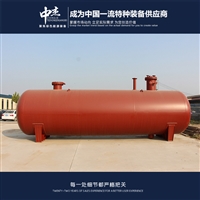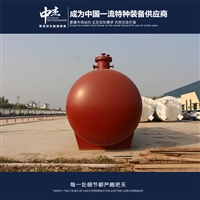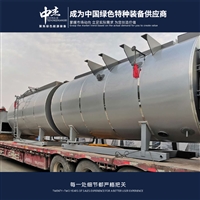
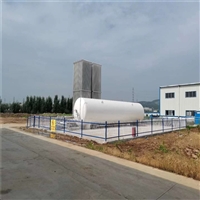
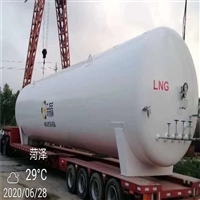
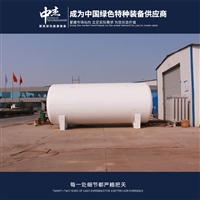
Process Design and Operation Management of LNG Gasification Station Zhejiang 60 cubic meter Natural Gas Storage Tank Price
Category:
mechanical equipment/Storage and transportation equipment/storage tank
Model:
CFW60-0.8
Brand:
Zhongjie Special Equipment
Retail Price
295,000.00USD
重量
kg
- Product Description
-
Description :
LNG (liquefied natural gas) has become the main or transitional gas source for cities that cannot currently use pipeline natural gas supply, as well as a supplementary or peak shaving gas source for many cities that use pipeline natural gas supply. LNG gasification stations, with their short construction period and ability to quickly meet the demand of the gas market, have gradually been built in many economically developed and energy scarce small and medium-sized cities along the southeast coast of China, becoming transitional gas supply facilities or pipeline transportation facilities before the arrival of natural gas. The domestic LNG gas supply technology is in the stage of development and improvement. This article intends to take some LNG gasification stations built along the southeast coast in recent years as examples to explore their process flow, design, and operation management.
Gasification station process flow
1.1 LNG Unloading Process
LNG is transported from the LNG liquefaction plant to the LNG gasification station in gas consuming cities by road tanker or tank container truck. The tank truck storage tank is pressurized using the air temperature boosting gasifier on the tanker (or the unloading boosting gasifier installed in the station is used to boost the tank container truck), creating a certain pressure difference between the tanker and the LNG storage tank. The LNG in the tanker is unloaded into the gasification station storage tank using this pressure difference. At the end of unloading, recover the gas-phase natural gas from the tanker through the gas-phase pipeline on the unloading platform.
When unloading, in order to prevent the pressure inside the LNG storage tank from increasing and affecting the unloading speed, when the temperature of the LNG in the tank truck is lower than that in the storage tank, the upper inlet method is used. The low-temperature LNG in the tanker enters the storage tank through the inlet pipe nozzle in a spray state, cooling some of the gas into liquid and reducing the pressure inside the tank, allowing for smooth unloading. If the temperature of LNG in the tanker is higher than the temperature of LNG in the storage tank, the bottom inlet method is adopted. High temperature LNG enters the storage tank through the bottom inlet and mixes with low-temperature LNG inside the tank to cool down, avoiding the difficulty of unloading due to the evaporation of high-temperature LNG entering the tank through the top inlet and increasing the pressure inside the tank. In practical operation, due to the fact that the current LNG source is far away from the gas consuming city, the temperature of LNG in the tank truck is usually higher than that in the gasification station storage tank when long-distance transportation reaches the gas consuming city. Therefore, the bottom inlet method can only be used. So, except for the upper inlet method when filling LNG, the lower inlet method is basically used when unloading tank trucks normally.
To prevent large temperature difference stress caused by rapid cooling during unloading from damaging the pipeline or affecting the unloading speed, LNG in the storage tank should be used to pre cool the unloading pipeline before each unloading. At the same time, rapid opening or closing of valves should be prevented from causing sudden changes in LNG flow rate and resulting in liquid hammer damage to pipelines.
1.2 LNG Gasification Station Process and Automatic Tank Boosting
① LNG Gasification Station Process
②
Automatic tank pressurization and LNG gasification
Driven by pressure, LNG flows from the storage tank to the air-cooled gasifier, where it is vaporized into gaseous natural gas and supplied to users. As LNG flows out of the storage tank, the pressure inside the tank continuously decreases, and the LNG outflow speed gradually slows down until it stops. Therefore, in normal gas supply operations, it is necessary to continuously replenish gas to the storage tank and maintain the pressure inside the tank within a certain range in order to sustain the LNG gasification process. The pressurization of the storage tank is achieved through the use of an automatic pressurization control valve and a self pressurized air temperature gasifier. When the pressure inside the storage tank is lower than the set opening value of the automatic pressure boosting valve, the automatic pressure boosting valve opens, and the LNG in the storage tank flows into the self pressurized air temperature gasifier based on the liquid level difference (the installation height of the self pressurized air temperature gasifier should be lower than the liquid level of the storage tank). In the self pressurized air temperature gasifier, LNG is vaporized into gaseous natural gas through heat exchange with air, and then the gaseous natural gas flows into the storage tank, raising the pressure inside the storage tank to the required working pressure. Using this pressure, LNG in the storage tank is sent to an air heated gasifier for gasification, and then the gasified natural gas is pressurized (usually adjusted to 0.4 MPa), metered, and odorized before being sent to the urban medium pressure transmission and distribution network to supply gas to users. In summer, the natural gas outlet temperature of the air-cooled gasifier can reach 15 ℃, which can be directly used in the pipeline network. In winter or rainy season, the gasification efficiency of the gasifier is greatly reduced, especially in the cold north. In winter, the gasifier outlet
Process design of gasification station
2.1 Design determines the economic benefits of a project
After determining the construction plan of the project, it is necessary to adopt advanced and applicable LNG gas supply processes, safely and reliably supply gas to users, reasonably reduce engineering costs, and improve the economic benefits of the project. The key lies in engineering design
According to analysis by Western countries, design fees, which account for less than 1% of the total life cycle cost of a construction project, have an impact on project cost of over 75%. Design quality is crucial to the overall efficiency of the construction project.
The main factors affecting the cost of LNG gasification stations include equipment selection (determined based on gas supply scale, process flow, etc.), overall layout design (overall layout, land area, terrain, fire protection requirements, etc.), and self-control scheme (mainly instrument selection).
Usually, the direct cost of engineering accounts for about 70% of the total project cost, and the equipment cost accounts for 48% to 50% of the direct cost of engineering. The equipment cost mainly includes the cost of LNG storage tanks.
Design standards for gasification stations
So far, there is no dedicated design standard for LNG in China. In the design of LNG gasification stations, the commonly used design specifications are: GB 50028-93 "Code for Design of Urban Gas" (2002 edition), GBJ 16-87 "Code for Fire Protection Design of Buildings" (2001 edition), GB50183-2004 "Code for Fire Protection Design of Petroleum and Natural Gas Engineering", and NFPA-59A "Standard for Production, Storage, and Handling of Liquefied Natural Gas" in the United States. Among them, GB 50183-2004 "Fire Protection Design Code for Petroleum and Natural Gas Engineering" was drafted by PetroChina with reference to and application of the American NFPA-59A standard, and many contents and data come from the NFPA-59A standard. Due to the high fire safety requirements of NF-PA-59A standard, the project cost is high and it is currently difficult to implement in China. At present, the design of domestic LNG gasification stations is basically based on GB 50028-93 "Code for Design of Urban Gas" (2002 edition), and practical experience has proven that it is safe and feasible.
Design of LNG Storage Tanks
Storage tanks are the main equipment of LNG gasification stations, accounting for a large proportion of the cost, and tank design should be highly valued.
2.3.1 Structural Design of LNG Storage Tanks
LNG storage tanks can be classified into three types based on their structural form: underground tanks, above ground metal tanks, and metal/prestressed concrete tanks. Above ground LNG storage tanks are divided into two types: metal mother tank and metal single tank. A metal mother tank is composed of three or more sub tanks assembled in parallel in a large mother tank (i.e. outer tank). The sub tank is usually a vertical cylindrical shape, while the mother tank is a vertical flat bottomed arch covered cylindrical shape. Mother and child tanks are commonly used in natural gas liquefaction plants. The storage tanks of urban LNG gasification stations are usually vertical double-layer metal single tanks, with an internal structure similar to an upright thermos. The inner tank is supported on the outer tank, and there is a vacuum powder insulation layer between the inner and outer tanks. The storage tank has a capacity of 50m
And 100m
, mostly using 100m
Storage tank.
The vertical storage tank has an inner diameter of 3000mm and an outer diameter of 3200mm. The total height of the tank body and support is 17100mm, and the geometric volume of the storage tank is 105.28m.

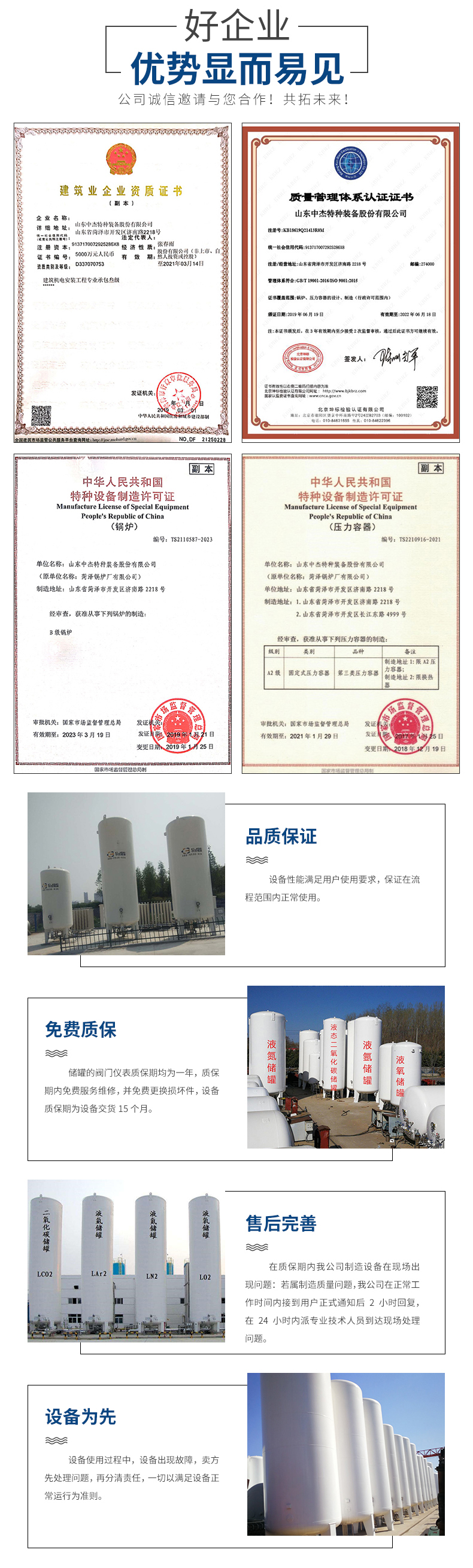
AfterSalesService :
Key words:- Process Design and Operation of LNG Gasification Station
More Products