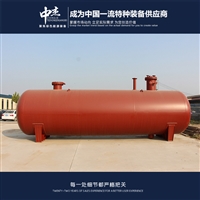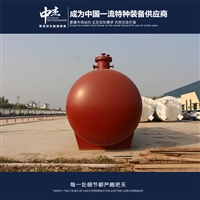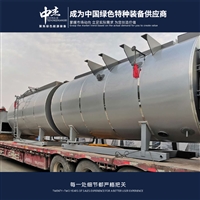


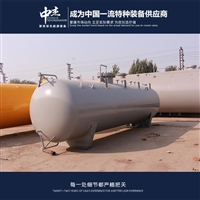
Principles for selecting propane storage tanks: Quality assurance for Zhongjie 50 cubic LPG storage tanks
Category:
mechanical equipment/Storage and transportation equipment/storage tank
Model:
WGG50-1.77
Brand:
Zhongjie Special Equipment
Retail Price
125,000.00USD
重量
kg
- Product Description
-
Description :
For design and manufacturingLiquefied gas storage tankThe reasonable selection and application of materials by engineering and technical personnel is the responsibility of every engineer. The selection of materials for liquefied gas storage tanks should comprehensively consider the mechanical properties, chemical properties, physical properties, and process properties of the materials, as well as the operating environment of the liquefied gas storage tank, such as design pressure, design temperature, medium characteristics, welding performance of the materials, inspection and testing, heat treatment, and economic rationality.
The general principles for selecting steel plates for liquefied gas storage tanks are as follows:
1. In situations where stiffness and structural design are the main considerations, ordinary carbon steel should be chosen as much as possible. For occasions where strength design is the main focus, it is advisable to select Q235B, Q245R, Q345R and other steel materials in order based on usage restrictions such as pressure, temperature, and medium.
2. When the thickness of the steel plate for liquefied gas storage tanks is less than 8mm, carbon steel should be selected between carbon steel and low-alloy steel.
3. When the thickness of stainless steel is greater than 12mm, it is advisable to use structural forms such as stainless steel lining, composite, and overlay welding.
4. Stainless steel should not be used as heat-resistant steel with a design temperature of less than or equal to 500 ℃.

5. Stainless steel can be used for heat-resistant steels with strong corrosiveness, preventing iron ion contamination, or designed for temperatures above 500 ℃, as well as for low-temperature steels designed for temperatures below -100 to -196 ℃.
6. Chromium molybdenum low-alloy steel for liquefied gas storage tanks can be used for heat-resistant steel with a design temperature of less than or equal to 550 ℃ or hydrogen resistant steel with a design temperature greater than 200 ℃.
7. When carbon steel and carbon manganese steel are used for a long time at temperatures above 425 ℃, the graphitization tendency of carbide phases in the steel should be considered.
8. When the operating temperature of austenitic steel for liquefied gas storage tanks is higher than 525 ℃, the carbon content in the steel should not be less than 0.04%.
In principle, the selection should be made in the following order, with the former being preferred over the latter as much as possible. a: Thin plate, composite plate, thick plate; b: Carbon steel, low-alloy steel, austenitic stainless steel, duplex stainless steel, titanium and titanium alloys, nickel alloys, zirconium materials; c: Cold rolling state, hot rolling state, normalizing state, normalizing and tempering state, and quenching and tempering state.

AfterSalesService :
Key words:- Principles for selecting propane storage tanks
More Products