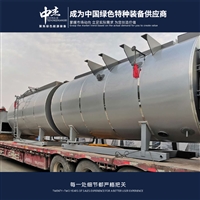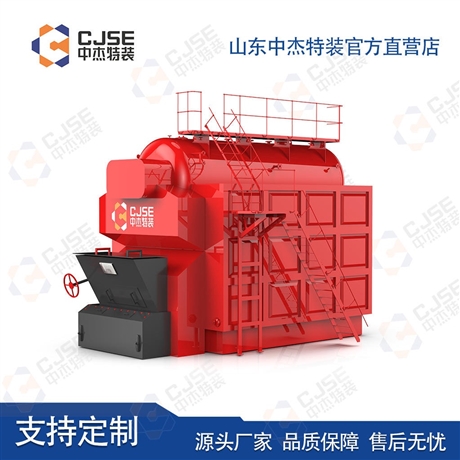



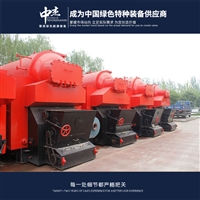

Inner Mongolia 4-ton biomass boiler price Industrial boiler wholesale price
Category:
mechanical equipment/Industrial boilers and accessories/biomass boiler
Model:
DZL4-1.25
Brand:
Zhongjie Special Equipment
Retail Price
118,000.00USD
重量
kg
- Product Description
-
Description :
Biomass fuel has a wide range of sources and is a renewable green energy source. It has almost no sulfur content and low ash content. Its growth process can absorb all the CO2 generated during combustion, achieving zero CO2 emissions. Biomass energy will gradually replace coal as one of the main energy sources. Biomass fuels include straw, wood branches, bamboo and wood processing waste, grain husks, fruit shells, sugar residue, oil residue, etc. According to its shape and size, it can be divided into three types: chip (≤ 3mm), sheet (≤ 50mm), and strip (>50mm).
Our company has been collaborating with domestic universities and absorbing advanced technologies from domestic and foreign peers since 2003, gradually developing biomass boilers and continuously improving them in practical operation. Currently, mature and stable technologies and products have been widely applied. Based on the characteristics and shape dimensions of different biomass, we have developed four combustion methods: fixed grate, movable grate, chain grate, and chamber combustion. There are also three main body structures: horizontal water pipe, single vertical, and double vertical, and four major series of biomass fuel boilers. Unlike coal-fired boilers, the main features of our company's biomass fuel boilers are as follows: by designing and arranging secondary air inside the furnace, the dynamic working conditions of the flue gas are disturbed, oxygen is replenished in a timely manner to burn out volatile matter, thermal efficiency is improved, and emissions are reduced. Reasonable design ensures the protection of the arch and rear grate, and avoids periodic micro explosions in the furnace. For waste materials containing moisture, increase the length of the preheating section, provide effective heat sources for heating, or directly input them into the high-temperature section of the hot flue gas. For high peak gas consumption loads or waste materials containing adhesive and other easily coking components, a large number of heating surfaces should be arranged in the furnace to solve the problem. Design multiple feeding methods and a single feeding method for users to choose from for waste materials with various states such as blocks, strips, pieces, chips, and powders.

Compared with coal-fired boilers, biomass fuel has lower costs and significantly reduces operating expenses. Our company can independently design products based on the usage requirements of various biomass fuels for users, providing them with valuable products. Detailed introduction of the new DZH series biomass hand fired steam boiler: 1. Applicable fuel. This product adopts a fast furnace combustion method and can burn wood chips, blocks, strips, bark, bamboo fibers, clothing and luggage enterprise waste, broken agricultural straw, etc.
2、 Structural features: (1) The drum is composed of an arch shaped tube plate and threaded smoke pipes, which transforms the drum from a quasi rigid structure to a quasi elastic structure. The tension support in the tube plate area is eliminated, reducing stress. The smoke tubes inside the tube sheet have been changed from two return loops to a single return loop, solving the problem of tube sheet cracking. (2) Due to the installation of a rising pipe row at the bottom of the drum, the dead water area at the bottom of the drum is eliminated, making it difficult for sludge to deposit. The high-temperature area of the drum can be well cooled, preventing bulging at the bottom of the drum. (3) The use of high-efficiency heat transfer threaded smoke pipes has achieved enhanced heat transfer effects, achieving the characteristics of fast boiler heating and pressure rise, and improving the thermal efficiency of the boiler. (4) Compact structure, compared with boilers of the same type, with smaller external dimensions, saving investment in boiler room infrastructure. (5) Stable operation, easy adjustment, and sufficient output. (6) The use of threaded smoke pipes enhances heat transfer, improves heat transfer coefficient and thermal efficiency, due to the disturbance effect of smoke inside the pipes. The smoke pipe is not prone to dust accumulation and has a self-cleaning effect. (7) The fire-resistant wall and exit smoke window in the furnace have a certain dust reducing effect. The original dust concentration of the boiler is controlled below the standard, ensuring that the boiler's smoke and dust emissions meet the national environmental protection regulations. (8) The unique double-layer secondary air design improves the ignition conditions of biomass fuel, adopts independent air chambers, achieves reasonable air distribution, and forms an aerodynamic field conducive to combustion in the furnace, resulting in high combustion temperature and efficiency.
3、 Performance characteristics (1) According to the fuel characteristics, manual feeding or mechanical feeding methods are used; (2) By adjusting the secondary air flow rate, the combustion ignition speed can be controlled; (3) Long wooden strips (L ≤ 2m) can burn without breaking; (4) No requirement for uniform feeding.
If the fuel is not mixed with air in a timely manner, it will cause insufficient air supply, making it difficult to ensure the full combustion of biomass fuel. The upper part of the laminar combustion furnace is equipped with secondary air and combustion air. Secondary air is an important factor in optimizing gas-phase combustion in free space, which achieves full combustion of volatile matter and carried solid particles through hedging and stirring effects. For biomass fuels with high volatile content, it is important. The proportion of secondary air, secondary wind speed, flow direction, and arrangement position have a significant impact on reducing incomplete combustion heat loss and stabilizing the combustion layer on the grate. For grate combustion, the overall excess air system of most biomass fuels is 30%, usually 6%. The secondary air is generally inclined downwards and arranged in a bi-directional manner to facilitate the formation of strong jet disturbances and enhance combustion on the fire facing surface. Due to the high moisture and ash content of domestic biomass fuels, the proportion of secondary air flow rate in actual operation may be 5 or 4, which is called the national air flow rate. Different from the wind rate values issued by the International Combustion Center laboratory.
The fuel particles are too large, which is not conducive to the combustion reaction. The reaction time of combustion is insufficient, the amplitude of grate vibration is too large, the interval is too short, and the combustion time is short. The ash content is too high, which wraps around the coke particles and slows down the combustion rate. Too much feed, the fabric layer on the grate is too thick, and gas-solid cannot mix well. 10. Biomass is laid flat on the grate to form a certain thickness of fuel layer. Perform drying, distillation, reduction, and combustion. The primary air passes through the fuel layer from the bottom to provide oxygen for combustion, distributing and stirring the fuel. The combustible gas and secondary air are fully mixed and burned in the space above the grate. The development of biomass energy using layer combustion technology has a simple boiler structure, easy operation, and relatively low investment and operating costs. Due to the large size of the boiler grate surface, the grate speed can be adjusted, and the furnace volume has sufficient suspension space, which can prolong the residence time of biomass in the furnace and facilitate complete combustion of biomass. But the volatilization analysis of biomass fuel is very fast, and combustion requires a large amount of air to be replenished.
Biomass boilers are a major type of boiler in the current market, which use biomass such as fuel oil and gas as the basic fuel. Biomass fuel boilers are a type of energy-saving and environmentally friendly boiler that has emerged in recent years and is being vigorously promoted and used by the country. As for their environmental and economic benefits, where are they reflected? Let's take a look. Compared with the same boiler, biomass fuel boilers consume a huge amount of energy and are uneconomical. However, biomass boilers have a good cost performance ratio. The thermal energy conversion rate used by coal-fired boilers is 75%, while that of gas-fired boilers can reach up to 90%. The efficiency of biomass boilers is over 85%, and the thermal efficiency of natural biomass boilers can reach 96%. Heating one ton of water in summer only costs 5 yuan, and in winter it only costs 10 yuan, which can be said to be very cost-effective. According to the cost of material usage, producing the same amount of heat requires burning 66.8 units of coal or 27 units of natural gas, and the price can be imagined.
AfterSalesService :
Key words:- biomass boiler
More Products