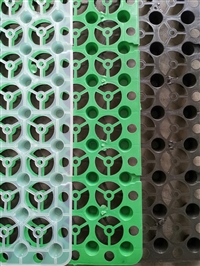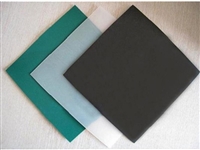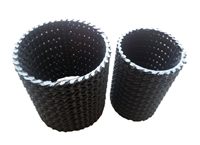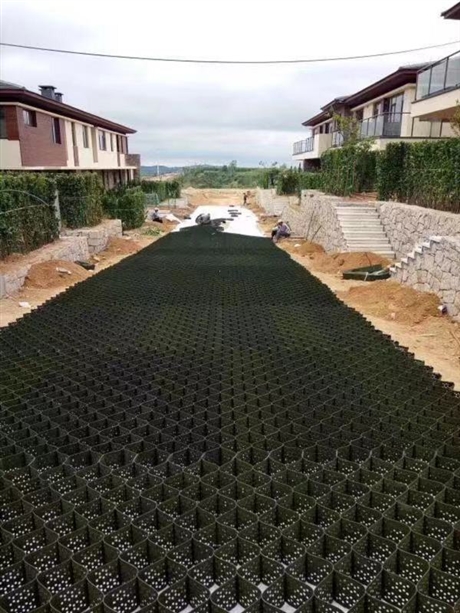

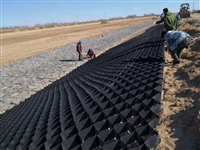
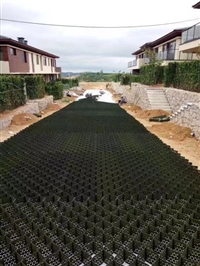


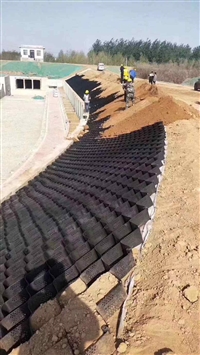

Geogrid cell honeycomb cell
Category:
building materials/Plastic building materials/Plastic decorative board
Model:
complete
Brand:
Kuaizhan
Retail Price
3.00USD
重量
kg
- Product Description
-
Description :
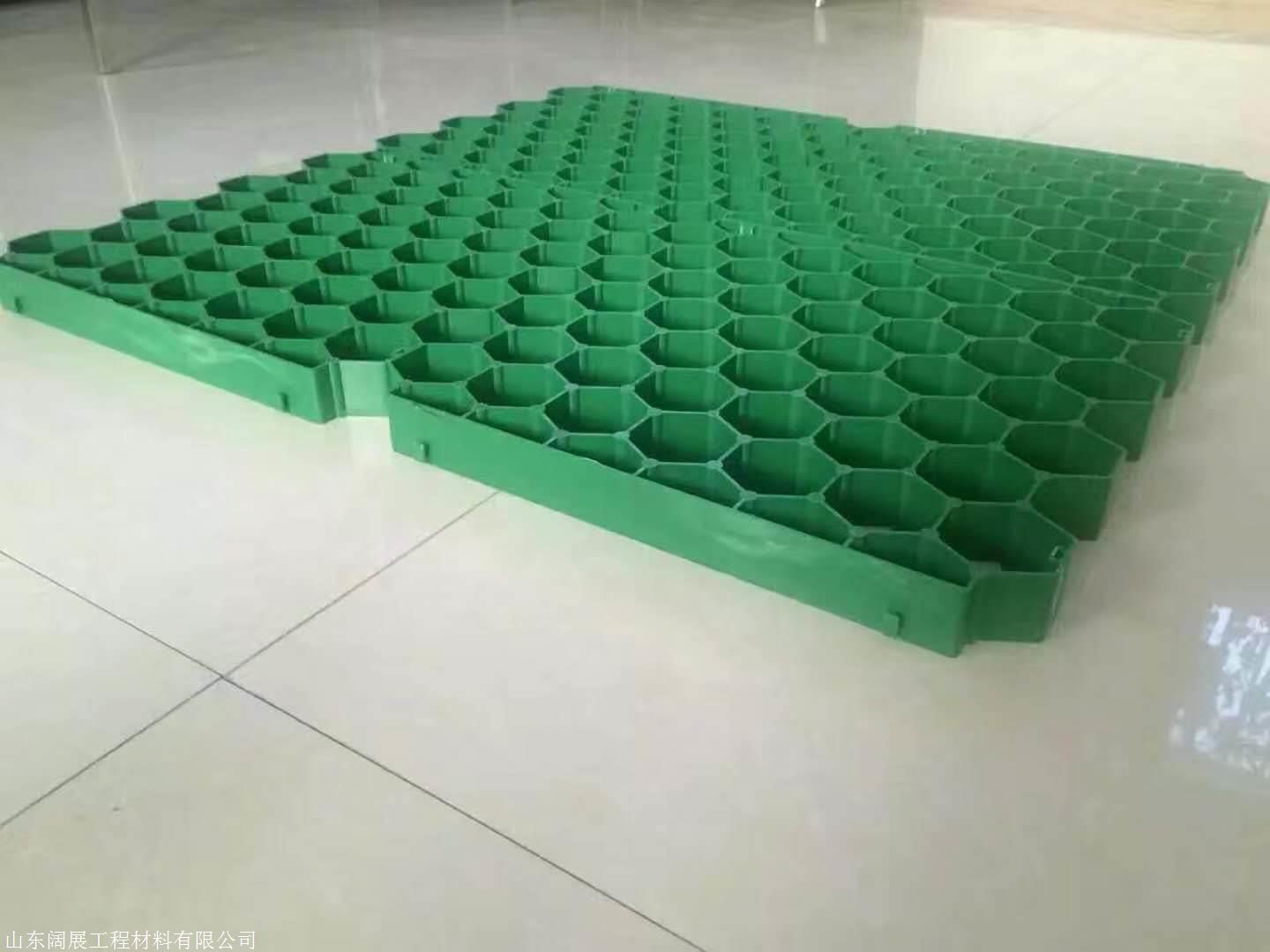
Geogrid is a three-dimensional mesh structure formed by high-strength welding of reinforced HDPE sheet material
It is generally welded by ultrasonic needle welding. Due to engineering requirements, some holes are drilled on the membrane.
What are the characteristics of geogrids
1. It has flexible expansion and contraction, can be transported and stacked, and can be stretched into a mesh during construction, filled with loose materials such as soil, gravel, and concrete, forming a structure with strong lateral restraint and high stiffness.
2. Lightweight material, wear-resistant, chemically stable, resistant to light and oxygen aging, acid and alkali, suitable for different soil conditions such as soils and deserts.
3. High lateral restraint and anti slip, anti deformation, effectively enhancing the bearing capacity of the roadbed and dispersing loads.
4. Changing the geometric dimensions such as geogrid height and welding distance can meet different engineering needs.
5. Flexible expansion and contraction, small transportation volume; Convenient connection and fast construction speed.
Basic principles of geocell
The reason why geogrids are effective and have attracted attention from the engineering community should start with their basic principles. In foreign literature, its principle is described as "a honeycomb shaped three-dimensional confinement system that can significantly improve the performance of ordinary filling materials in load-bearing and insect erosion control applications over a large range." Its key principle is three-dimensional confinement. As we all know, when a car is driving in the desert, it will leave two deep tracks, with the pressed parts sinking deeply and the sides of the tracks rising high. If the vehicles behind continue to move along the ruts, the sunken part will further sink and the raised part will further rise until the raised part rubs against the chassis and the sunken ruts bury half of the wheels, making it impossible to move forward. The reason for this is that when an external load acts on the surface of the foundation, according to the Prandtl theory and Taylor theory, it is known that under the action of concentrated load, the active zone 1 is compressed and sinks, and the force is decomposed and transmitted to the transition zone 2 on both sides. The transition zone 2 then transmits to the passive zone 3, and the passive zone will deform and bulge without restriction.
Product Features:
1. Flexible in expansion and contraction, transportable and stackable, can be stretched into a mesh during construction, filled with loose materials such as soil, gravel, concrete, etc., forming a structure with strong lateral restraint and high stiffness.
2. The material is lightweight, wear-resistant, chemically stable, resistant to light and oxygen aging, acid and alkali, suitable for different soil conditions such as soils and deserts.
3. High lateral restraint and anti slip, anti deformation, effectively enhancing the bearing capacity of the roadbed and dispersing loads.
4. Changing the geometric dimensions such as geogrid height and welding distance can meet different engineering needs.
5. Flexible expansion and contraction, small transportation volume, easy connection, and fast construction speed. That is to say, once the load is applied to the roadbed, a wedge-shaped active area will be formed below the load, which will then be squeezed through the transition area, causing the passive area to bulge. That is to say, the bearing capacity of the foundation is determined by the shear force along the sliding line and the forces in the active, transitional, and passive regions of movement. The true process of the above principle can be clearly experienced not only on sand bases, but also on soft foundation highways, although its formation rate is slower than that on sand. Even with better roadbed materials, lateral movement cannot be avoided. The roadbed of a typical highway is several meters above the ground, making it difficult to absorb water and turn over mud, but long-term settlement still exists. Upon investigation, rainwater infiltration, material loss, and foundation subsidence are some of the reasons. The lateral displacement of materials towards both sides of the roadbed section under long-term wheel load and vibration force is undoubtedly another very important reason for the roadbed and pavement. Taking various levels of highways in our province as an example, it can be clearly felt that an "S" - shaped groove has been formed on the main lane of the road. Part of the highways are no exception, where the bumps on the driving lane are significantly stronger than the feeling of driving on the overtaking lane, especially in the road bridge connection section (commonly known as "bridgehead jumping"). This type of gully shaped roadbed settlement is a typical case of lateral sliding of roadbed materials.
The conventional methods for treating roadbeds in engineering do not need to be repeated. Their purpose is to improve the shear and friction resistance of foundation materials, reduce or delay the ability of foundation materials to move under load pressure or vibration. Therefore, there are inevitably many strict restrictions on material requirements in engineering. If the required materials cannot be obtained nearby, they need to be purchased externally, and the cost of purchasing materials and transportation accounts for a large part of the entire project cost. By using geogrids, materials can be obtained locally or nearby, and even materials that cannot be used under normal circumstances can be used, greatly reducing material procurement and transportation costs. Why is this happening? Schematic diagram of the bearing capacity of the geogrid: Under concentrated load, the active zone 1 still transfers the force to the transition zone 2. However, due to the lateral restriction of the grid wall, the reaction force of adjacent grids, and the lateral resistance formed by the friction between the filling material and the grid wall, the lateral movement tendency of the transition zone 2 and the passive zone 3 is suppressed, thereby improving the bearing capacity of the roadbed. Through experiments, it has been found that under the confinement of the grid, the apparent cohesion of medium density sand can increase by more than thirty times. 135.6288.5885 It is obvious that if the shear resistance of the roadbed material can be increased or the movement of the three areas can be suppressed, the effect of improving the bearing capacity of the foundation can be achieved. This is the limiting principle of the geocell. Geogrid, as a new type of synthetic material, began extensive research and development in countries such as Europe and America in the late 1980s and early 1990s. Through experiments and field applications, it has been proven to have significant effects in improving the load-bearing capacity of general fill soil and roadbed protection. In the early 1990s, China began the development and research of geogrids based on the absorption of advanced foreign experience, and made significant breakthroughs in the treatment of road foundation diseases and the application of fixed loose media. With further understanding of the characteristics of geogrids, it has been found that they have unique advantages that cannot be replaced by other geotechnical materials such as geotextiles, geomembranes, geogrids, geotextile bags, geonets, etc., making them have unique application prospects in many fields.
Application of Geogrid Engineering
1. Processing semi filled and semi excavated roadbeds
When constructing an embankment on a slope with a natural slope steeper than 1:5, steps should be excavated at the base of the embankment, and the width of the steps should not be less than 1M. When constructing or widening a road in stages, steps should be excavated at the junction of the new and old roadbed fill slopes. The width of the steps for high-grade highways is generally 2M. Geotextiles should be laid on the horizontal plane of each step, and the reinforcement effect of the geogrid's own vertical side limit should be utilized to better solve the problem of uneven settlement.
2. Roadbed in windy and sandy areas
The roadbed in windy and sandy areas should mainly be low embankment, with a filling height generally not less than 0.3M. Due to the low roadbed and heavy bearing requirements of roadbed construction in windy and sandy areas, the use of geogrids can play a lateral limiting role on loose fillers, ensuring that the roadbed has high stiffness and strength within a limited height to withstand the load stress of large vehicles.
3. Embankment filling and reinforcement of the embankment at the back of the platform

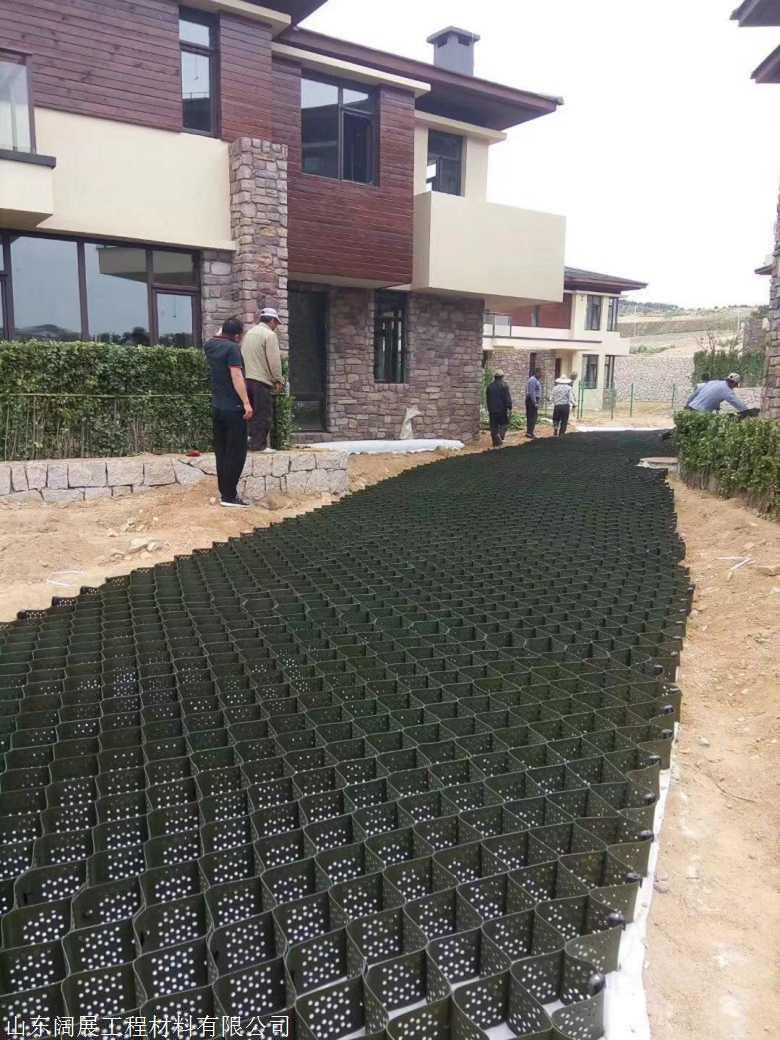


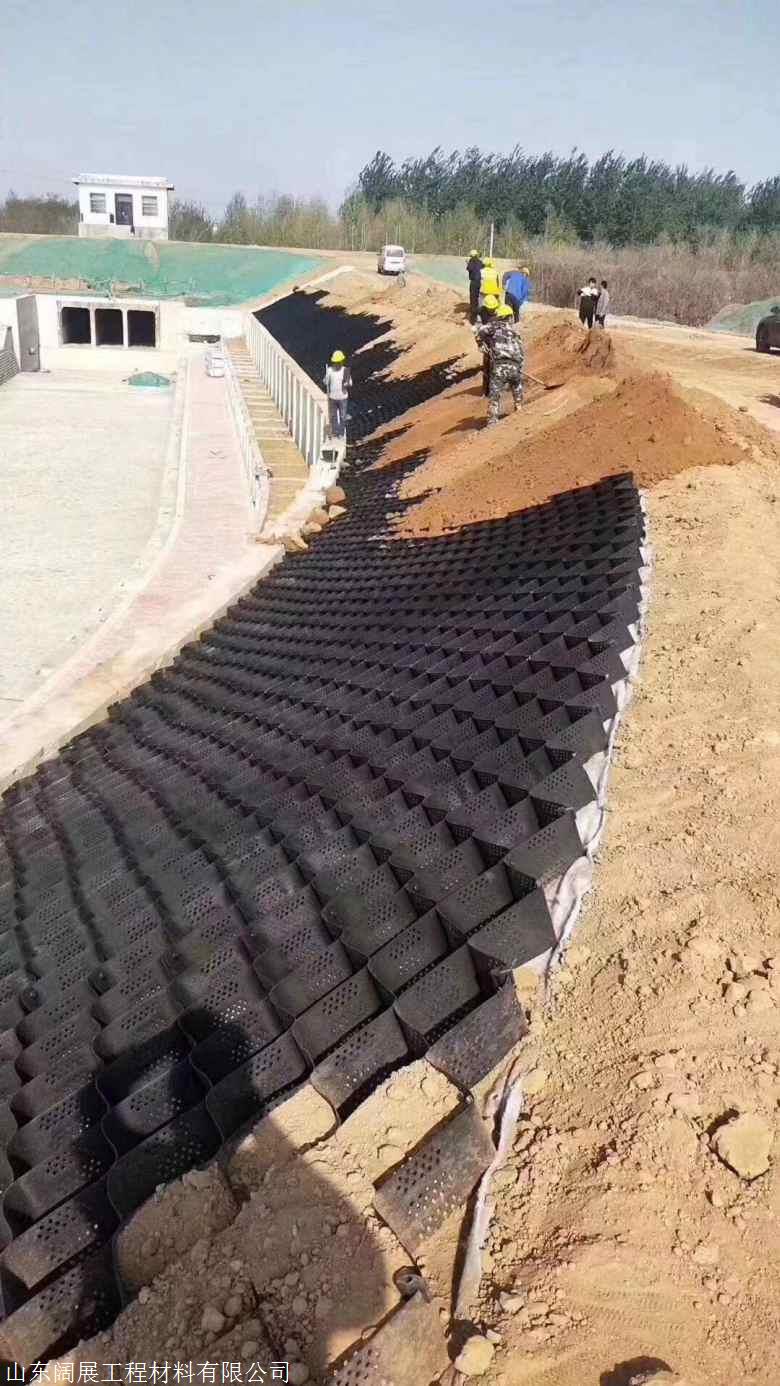
The use of geogrids can better achieve the purpose of reinforcing the abutment back. The geogrid can generate sufficient friction between the filling material, effectively reducing the uneven settlement between the roadbed and the structure, and ultimately effectively alleviating the early impact damage of the "bridge abutment jumping" disease on the bridge deck.
4. Roadbed in permafrost regions
When constructing fill roadbeds in permafrost regions, the height of the fill should be small to prevent excessive settlement of the embankment due to slurry overturning or a decrease in the upper limit of the frozen layer. The unique facade reinforcement effect and effective implementation of overall confinement of geogrids can ensure small fill heights in certain special areas to a certain extent, and make the fill have high-quality strength and stiffness.
5. Loess collapsible roadbed treatment
When expressways and first-class highway pass through collapsible loess and loess sections with good compressibility, or when the allowable bearing capacity of the foundation of high embankments is lower than the pressure of the vehicle load and the self weight of the embankment, the subgrade should also be treated according to the requirements of the bearing capacity. At this time, the superiority of the geotechnical cells will undoubtedly appear.
6. Saline soil, expansive soil
The expressway, first-class highway, shoulder and side slope constructed with saline soil and expansive soil all adopt reinforcement measures. The facade reinforcement effect of the cell is one of the excellent reinforcement materials, and it has excellent corrosion resistance, which can fully meet the requirements of building highways in saline soil and expansive soil.
component
Geotechnical grid is a mesh grid structure formed by high-strength HDPE or PP copolymer broadband, which is strongly welded or riveted. It can expand and contract freely, and can be folded up during transportation. When in use, it can be opened and filled with soil, rock or concrete materials, forming a structure with strong lateral restraint and high stiffness. It can be used as a cushion layer to increase the bearing capacity of weak foundations, and can also be laid on slopes to form slope protection structures. It can also be used to construct retaining structures, etc.
main purpose
1. Used to stabilize the roadbed of highways and railways.
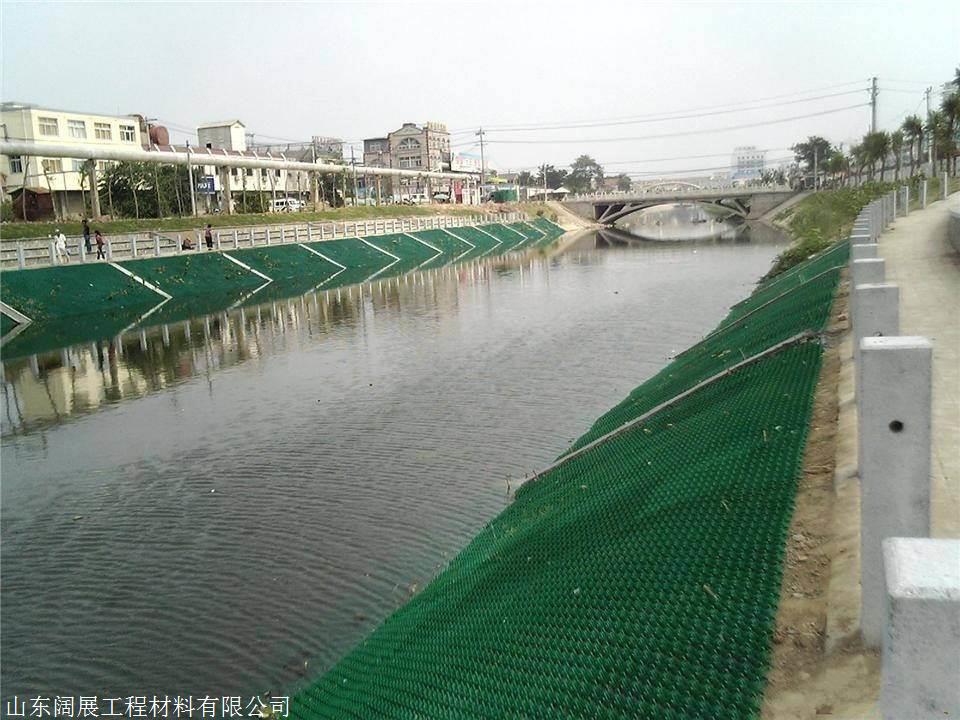
2. Used for the treatment of embankments and shallow water channels that can withstand the load of gravity.
3. A hybrid retaining wall used to prevent landslides and withstand gravity loads.
4. When encountering soft soil foundation, using geogrids can greatly reduce construction labor intensity, decrease roadbed thickness, improve construction speed and performance, and greatly reduce project costs.
AfterSalesService :
Key words:- geocell