

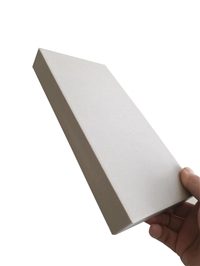


Internal factors causing cracking of acid resistant bricks
Category:
building materials/Masonry materials/tile
Model:
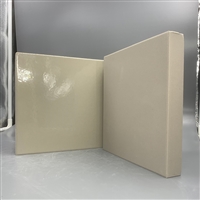
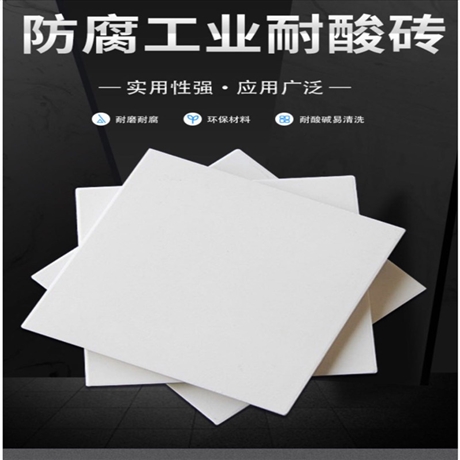
Acid resistant brick
Brand:
Zhongguang Porcelain Industry
model:
Acid resistant brick
type:
ceramic tile
surface state:
unglazed
product grade:
Premium product (A)
special function:
anti-corrosion
Processing & Customization:
yes
density:
two point three
compressive strength:
fifty-eight
Room temperature compressive strength:
one hundred
chemical composition:
silicon dioxide
thermal conductivity:
fifty
purpose:
Corrosion and acid alkali resistance
Overall dimensions:
300*300
weight:
thirty
Place of Origin:
Henan
manufacturer:
Zhongguang Porcelain Industry
Retail Price
4.00USD
重量
kg
- Product Description
-
model Acid resistant brick
type ceramic tile
surface state unglazed
product grade Premium product (A)
special function anti-corrosion
Processing & Customization yes
density two point three
compressive strength fifty-eight
Room temperature compressive strength one hundred
chemical composition silicon dioxide
thermal conductivity fifty
purpose Corrosion and acid alkali resistance
Overall dimensions 300*300
weight thirty
Place of Origin Henan
manufacturer Zhongguang Porcelain Industry
Description :
Internal factors of cracking in acid resistant bricks L
The internal factors causing cracking of acid resistant bricks mainly refer to the cracking defects caused by the unreasonable process performance and formula ratio of various raw materials, and the composition of the billet directly affects the product quality. The quality of the formula is a prerequisite for determining cracking defects. The reasons for cracking include:
1) The formula uses raw materials with high free quartz content.
2) The plastic raw materials in the formula contain a large amount of coarse SiO2 particles, which are difficult to melt by the eutectic during firing and crack due to crystal transformation during cooling.
3) The high content of SiO2 and coarse particles in the formula result in inherent deficiencies in the body, making it prone to cracking. The fineness of quartz particles is extremely important for preventing cracking and improving the thermal stability of acid resistant bricks.
4) The excessive amount of raw materials with high crystal water content in the formula and the concentrated decomposition temperature of crystal water are also important reasons for cracking.
5) Improper proportioning or poor selection of various raw materials in the formula can result in poor plasticity and weak bonding of the billet, or the introduction of too much strong plasticity clay can cause excessive shrinkage of the billet, making it difficult to remove moisture and leading to cracking. Special attention should be paid not to use too much clay raw materials with the same high plasticity main mineral phase.
6) Low Al2O3 content in the billet, high flux content, narrow firing range of the billet, or low liquid viscosity will all cause product deformation and cracking. Therefore, the Al2O3 content of acid resistant brick bodies should generally be controlled between 18% and 27%, not less than 16%.
7) The formula contains a lot of substances with high shrinkage, especially clay, which causes the body to shrink greatly during firing and is prone to deformation and cracking. Therefore, controlling the shrinkage rate during firing plays an important role in solving the cracking of acid resistant bricks.
8) The amount of flux in the formula is too small, and quartz cannot completely melt in the liquid phase or form other crystals at high temperatures, which can cause cracking during firing.
9) For acid resistant glazed bricks (such as glazed tiles), cracking is also related to the bonding performance between the base and glaze. Mismatched base and glaze formulas can cause the thermal expansion coefficient of the base and glaze to be unsuitable. When the expansion coefficient of glaze is greater than that of the blank, tensile stress is generated during the cooling process of the glaze, causing cracking of the glaze. When the strength of the blank is low, it will cause uniform cracking of the glaze.
The internal factors causing cracking in acid resistant bricks are multifaceted, but the main factors are the chemical composition and process performance of the raw materials. Therefore, only by fully understanding the process performance and chemical composition of the raw materials when selecting them, comprehensively considering them, observing whether the chemical composition and process performance of the acid resistant brick body are reasonable, and whether the production process can proceed smoothly, can cracking be effectively reduced and the product qualification rate be improved.
External factors affecting the cracking of acid resistant bricks - the influence of process regulations
The cracking defect of acid resistant bricks exists throughout the entire production process, resulting in different shapes of cracks in raw material preparation, forming, drying, and firing processes. However, the reasons for these cracks are diverse and varied. Now classify and describe them separately.
Cracking caused by improper handling of raw materials
Mainly refers to the process from material selection to billet making, where impurities cannot be effectively removed, resulting in a certain amount of coarse particles in the billet, which undergo changes during billet making and drying firing, leading to cracking, mainly manifested in the following aspects.
1) The blank contains impurities or hard particles during the preparation process, and the surrounding area becomes loose after forming. After firing, cracks occur around the hard particles. The cracking shape is several radial cracks appearing at the hard particles, in the shape of chicken claws.
2) The aging time of the billet is short, and the moisture content of the mud material is uneven, resulting in different dry and humid parts of the billet. During roasting, the billet shrinks unevenly, causing cracking. The cracking shape is a mouth crack, which means the edge of the brick cracks.
3) During the preparation of raw materials, the slurry is ground too finely, causing excessive shrinkage and cracking during the preparation or firing process.
4) The fineness of the quartz used in the ingredients must be controlled to ensure that the quartz in the billet exists as fine particles. If the particles are too coarse, the volume change during the firing process due to the transformation of quartz crystal structure will cause significant cracking of the billet, and the cracking shape will be linear or S-shaped.
5) The rough grinding of the billet results in poor bonding, which reduces the strength and density of the green billet, and is prone to billet cracking. This type of cracking often occurs in the preheating and moisture removal zone, and the cracking shape is a large mouth crack at the edge.
Cracks generated during the forming process
Mainly refers to the cracking of the billet caused by the forming process during and after forming. There are many types of cracks, including delamination, corner cracking, expansion cracking, intermediate cracking, etc.
1) Layered cracking (interlayer). The main reason for layer cracking is poor exhaust during compression. Under pressure, the gas is compressed and distributed along a plane perpendicular to the direction of pressure inside the billet. When the pressure is removed, the gas expands to form layer cracks. The causes include: improper operation; The moisture content of the powder is too high; Poor exhaust performance; The moisture content of the powder is high and low, and the strength of the green body is low, which is not enough to overcome the stress caused by the expansion of a small amount of residual gas; Poor particle size distribution of raw powder; The pressing pressure of the billet is too high, and the residual gas expands significantly due to excessive compression, causing the billet to split into parallel pieces.
2) Corner cracking (billet corner cracking). The main reason for this is that the filling material at the corners is too loose, resulting in low strength at the corners of the brick blank. Due to the unreasonable design of the brick blank shape, it is bumped during the stacking, bowl loading, and transportation.
3) Expansion cracking. The shape of this crack is a small crack perpendicular to the edge of the brick surface. The main reason is that the mold sleeve descends too quickly during demolding, causing the brick blank to rapidly expand and generate significant stress.
4) The middle crack. Due to uneven and uneven filling, there is a large difference in density between the semi-finished products after compression forming, resulting in a middle crack. The crack shape is split into two halves, and the billet cracks occur on the side with lower density.
Cracks generated during the firing process
It mainly refers to the cracking of products from entering the kiln to firing them. At this stage, cracking defects are also the main stages of cracking, including large mouth cracking, middle cracking, micro cracks, wind cracking (cooling cracking), etc.
1) Big mouth cracked. It usually occurs during the preheating stage, when the billet is in the stage of removing mechanical binding water and adsorbed water (temperature inside the kiln is 100-250 ℃), and the moisture diffuses from the inside to the surface. If the temperature rises too quickly during the evaporation process, cracking will occur when the tension is greater than the cohesion between the green bodies due to gasification expansion. This type of cracking during the process of removing moisture will result in a large opening. The reaction in the process is related to various factors, such as the thickness of the raw materials, whether the formula is reasonable, especially whether the amount of clay added is appropriate, the bonding performance of the body, drying performance, etc., all of which are directly related to the large mouth cracking. Next, at 400? 650 ℃ is the stage when the crystallization water of kaolin evaporates and is discharged. At this time, the crystallization water evaporates violently, causing a rapid increase in weight loss. The structure of clay crystals is destroyed, gradually losing their plasticity, and the strength of the body decreases. If the heating system during firing is not reasonable, cracking is likely to occur.
The uneven density of the billet caused during the forming process makes it easy for the billet to crack from areas with lower density during the preheating stage.
Environmental changes, increased moisture content in the raw materials entering the kiln, and rising kiln head temperature can all lead to large cracks in the raw materials due to rapid evaporation of moisture.
The density of the kiln, the heating rate, changes in the airflow velocity inside the kiln, the magnitude of the moisture extraction force, and adjustments to the pressure system can all affect the water diffusion rate and evaporation rate, which can directly cause large cracks.
Excessive amount of sensitive raw materials for drying in the billet and unreasonable drying system. The recommended drying temperature is generally 100-120 ℃. No cracks were found during the inspection of the dry cracked billet, but the cracks increased during the preheating stage of firing.
The shape of a large mouth crack is characterized by a rough cross-section of the crack, which can be of two sizes. At the initial stage of entering the kiln, there is cracking, and the moisture content of the billet is high, resulting in large cracks. Cracking occurs near the firing zone in the preheating zone, where the moisture content of the billet is low and the cracks are relatively small, but the proportion of such cracking is smaller than the previous type.
2) Cracking in the middle. Uneven filling results in low density in a certain part of the brick, causing cracking during firing, which is characterized by an arc shape.
There are dry hard blocks, wet blocks, or overly dense blanks in the billet, which can easily cause cracking in the middle during firing. The cracking shape is radial and the distribution is irregular.
Poor control during loading, kiln loading, and firing can result in not only mouth cracks but also central cracks. The crack shape is arc-shaped, and the cracks on several bricks at the same position have a fixed position and corresponding relationship with the box bowl (or kiln car).
3) Micro cracks. If the billet is excessively dry, it will absorb moisture during the preheating stage before or after entering the kiln, resulting in a large number of fine cracks in the product.
4) The wind cracking (cooling cracking) billet enters the cooling stage from the firing zone and is in a plastic state above 1100 ℃. The liquid phase inside the billet is still in a softened state, and can be rapidly cooled at this time. But below 800 ℃, due to the solid and hard state of the product surface and uneven temperature distribution, if the temperature drops too quickly, the quartz crystal structure will rapidly transform, causing uneven stress inside the billet. It is easy to produce a large number of cracks, commonly known as wind cracking. If the firing temperature is low at this time, and if there is raw firing, the strength of the billet will decrease, making it difficult to resist the stress generated during cooling, resulting in more severe cracking. Excessive driving speed and unreasonable timing of kiln products can both cause wind cracking.
The content of free quartz in the raw material formula increases, and the fineness does not meet the requirements. Under the same firing system, severe wind cracking occurs. In the tunnel kiln, the first thing to check is whether the temperature range of the rapid cooling system is reasonable, and whether the rapid cooling air pressure and air volume are reasonable. Generally, accelerating the rapid cooling speed and slowing down the slow cooling speed can be used to solve the problem. If it is fired in a reverse flame kiln, it should be adjusted from the wind tunnel, inlet and outlet doors, and other parts to allow for slow cooling.
The characteristic of wind cracking is that the fracture surface is neat and fine. Generally, it appears as an S-shaped crack or a straight crack, with sharp edges and a certain regularity. Unlike the rough cross-section of a large slit, some cannot be seen with the naked eye, but can be judged by the sound of knocking.
Analysis of cracking (glaze cracking) defects in acid resistant glazed bricks
The cracking of acid resistant glazed bricks is not only related to the aforementioned cracking reasons, but also to the absorption of moisture by the body during glazing, rapid heating during the preheating stage of firing, and high drainage speed, which cause cracking. The cross-section of the cracked fragments during the preheating stage is difficult to match neatly and the cross-section is relatively dull. This kind of cracking can be solved by appropriately increasing the concentration of glaze slurry, reducing the water absorption capacity of the body, or by reducing the heating rate or entry speed to eliminate it.
During the cooling stage, the glazed acid resistant brick cracks, and the fracture surfaces of the fragments are flat and sharp. The reason is that the cooling curve is unreasonable, and the cold air blowing into the kiln creates negative pressure inside the kiln. This cracking can be solved by reducing the discharge speed and extending the billet discharge time.
Glaze cracking refers to the occurrence of cracks or fissures on the glaze surface of acid resistant bricks, which are mainly caused by the following reasons:
1) The formula of the glaze is not compatible, and the expansion coefficient of the glaze does not match that of the body. The expansion coefficient of the glaze is greater than that of the body, and during cooling, the glaze layer shrinks greatly and cracks due to excessive tensile stress. On the contrary, when the expansion coefficient of the blank is greater than that of the glaze. During cooling, the glaze is subjected to compressive stress. When the compressive stress is low, it helps to improve the strength of the product. However, when the stress is high, the glaze layer tends to peel off.
2) Excessive glaze layer can also cause glaze cracking. This is because a too thick glaze layer will weaken the elasticity of the glaze, making it difficult to soften the middle layer of the glaze; The glaze layer is too thick, making it difficult for the inner layer of the glaze to dissipate heat during the cooling process It is difficult to establish thermal equilibrium, often resulting in excessive stress and causing the glaze layer to crack.
Conclusion
In summary, the focus of addressing cracking defects should be on the kiln structure and firing system. Cracking of acid resistant bricks is a very complex technical issue. The division of various defects is particularly important. If the division is unreasonable and targeted solutions cannot be found, it will lead to long-term unresolved key issues and seriously affect product quality. In addition, the classification of cracking defects should be based on the actual situation of each factory, and "targeted treatment" and "multi-party verification" should be carried out to identify the true cause of the cracks. Based on the characteristics of the cracks, solutions should be sought to identify the processes and unreasonable process parameters that cause the cracks, so as to completely overcome the cracking defects of acid resistant bricks.





AfterSalesService :
Key words:- Acid resistant brick
More Products