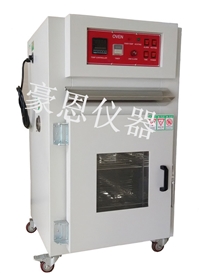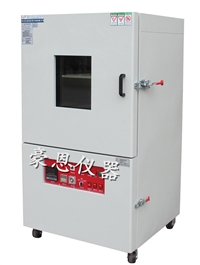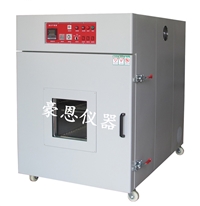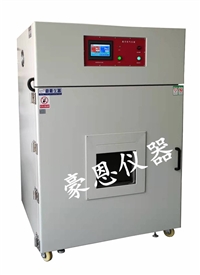


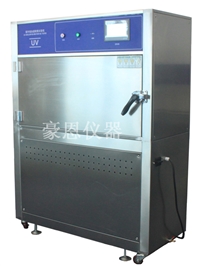
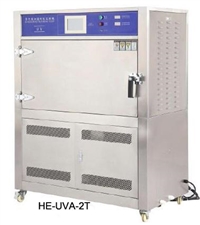

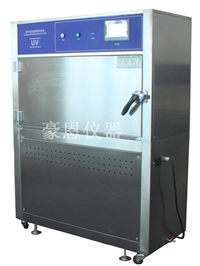
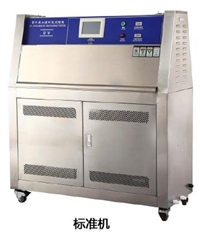


Plastic product UV aging testing machine UV UV testing instrument UV accelerated testing chamber
Category:
Instrumentation/Test chamber and climate environment equipment/Aging chamber
Model:
HE-UVA-2T
Brand:
Haoen Instrument
model:
HE-UVA-2T
type:
UV aging test chamber
inner material:
304 stainless steel
temperature range:
50~70
Processing & Customization:
yes
Retail Price
1,000.00USD
重量
kg
- Product Description
-
model HE-UVA-2T
type UV aging test chamber
inner material 304 stainless steel
temperature range 50~70
Processing & Customization yes
Description :
1、 Compliant with standards
GB/T 14522 Test Method for Artificial Weathering of Plastics, Coatings, and Rubber Materials for Mechanical Industry Products
GB/T 16422.3 Plastics Laboratory Light Source Exposure Test Method Part 3: Fluorescent UV Lamp
GB/T 16585 Test Method for Artificial Climate Aging of Vulcanized Rubber (Fluorescent UV Lamp)
ASTM 4329、D4587、D5208、G154、G53; Current UV aging test standards such as ISO 4892-3
2、 Technical indicators
Model: HE-UVA-2T
2.1 Volume and size:
Studio size (mm): 1140 × 640 × 690 (D width × W depth × H height)
Outer box size (mm): 1300 × 700 × 1630 (D width × W depth × H height)
2.2 Solar Eye:
Range of irradiance: adjustable from 0.45 to 1.0W/m2
Extend the lifespan of the lamp tube
2.3 UV Lamp Parameters:
Lamp model: UVA-340 (315-400nm), UVB-313 (280-315nm) optional, this scheme requires 8 lamps. Comes standard with UVA-340
Lamp brand: American ATLAS or Q-Lab lamp
Center distance of the lamp: 70mm
Distance between test rack and lamp tube: Plate type base frame test board (adjustable up and down)
Radiation intensity: output according to the set light intensity
2.4 Temperature and humidity indicators:
Temperature range: adjustable from room temperature+10 to 70 ℃
Humidity range: ≥ 90% RH
Temperature fluctuation: ± 3 ℃
Temperature resolution: 0.1 ℃
2.5 Blackboard thermometer:
Measurement range: 45-80 ℃
Tolerance: ± 3 ℃
2.6 Temperature control method: PID self-tuning temperature control method


3、 Characteristics:
1. Simulate sunlight
The ultraviolet rays in sunlight are the main factor causing durability damage to most materials. We use ultraviolet lamps to simulate the short wave ultraviolet part of sunlight, which produces very little visible or infrared spectral energy. We can choose UV lamps with different wavelengths according to different testing requirements, as each lamp has different total UV irradiation energy and wavelengths. Usually, UV lamps can be divided into two types: UVA and UVB.
2. UV lamp type
UVA-340 tube: The UVA-340 tube simulates short wave ultraviolet light in sunlight, ranging from 365 nanometers to the cutoff point of 295 nanometers.
UVB-313 tube: The short wave ultraviolet light emitted by the UVB-313 tube is stronger than the solar ultraviolet light that usually shines on the Earth's surface, which can accelerate material aging. However, the lamp may cause impractical damage to certain materials. UVB-313 lamps are mainly used for quality control and research and development, or for material operation testing of weather resistance.
UVA-351 lamp: simulates sunlight and ultraviolet light passing through window glass, which is most effective for testing the aging of indoor materials.
3. Damp condensing environment
In many outdoor environments, materials can be kept moist for up to 12 hours per day. Research has shown that the main factor causing outdoor humidity is dew, not rainwater. UV simulates outdoor moisture erosion through its unique condensation function. In the condensation cycle during the experiment, the water in the reservoir at the bottom of the testing chamber is heated to generate hot steam, which fills the entire testing chamber. The hot steam maintains the relative humidity in the testing chamber at 100% and maintains a relatively high temperature. The sample is fixed on the side wall of the testing chamber, so that the testing surface of the sample is exposed to the ambient air inside the testing chamber. The outward side of the sample exposed to the natural environment has a cooling effect, resulting in a temperature difference between the inner and outer surfaces of the sample. The occurrence of this temperature difference causes the sample to always have liquid water generated by condensation on its testing surface throughout the entire condensation cycle.
Due to outdoor exposure to moisture for up to ten hours a day, a typical condensation cycle typically lasts for several hours. UV provides two methods for simulating humidity. The most commonly used method is condensation, which simulates outdoor moisture erosion. All QUV models are capable of running condensation cycles. Because some application conditions also require the use of water spray to achieve practical results, some UV models can operate both condensation cycle and water spray cycle.
4. Temperature control
In each cycle, the temperature can be controlled at a set value. Meanwhile, the blackboard thermometer can monitor the temperature. The increase in temperature can accelerate the aging process, and temperature control is also important for the reproducibility of testing
5. Water spray system
For certain applications, water spray can better simulate the environmental conditions of final use. Water spraying is very effective in simulating thermal shock or mechanical erosion caused by temperature fluctuations and rainwater erosion. Under certain practical application conditions, such as sunlight, when the accumulated heat rapidly dissipates due to sudden showers, the temperature of the material will undergo a sharp change, resulting in thermal shock, which is a test for many materials. UV water spray can simulate thermal shock and/or stress corrosion. The sprinkler system has 12 nozzles, with 6 on each side of the testing room; The sprinkler system can run for a few minutes and then shut down. This short-term water spray can quickly cool the sample and create conditions for thermal shock.
6. Exposure intensity control: optional
Choosing the irradiation intensity control option can obtain test results with good shape and repeatability; The light intensity control system allows users to set different light intensities according to different testing requirements. Control the irradiation intensity through its feedback loop device; At the same time, it can also extend the service life of fluorescent lamps.
AfterSalesService :
Key words:- Plastic product UV aging testing machine
More Products