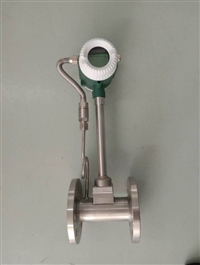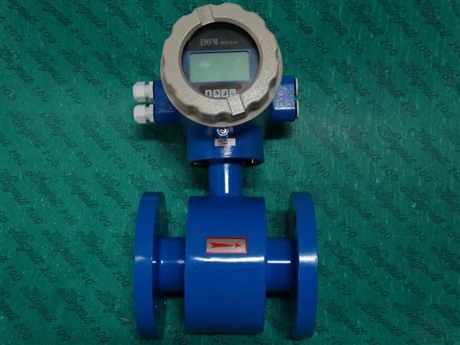



Anti corrosion DN40 electromagnetic flowmeter
Category:
Instrumentation/Flow meter/electromagnetic flowmeter
Model:
LDG-40
Brand:
Jiangsu Fenghui Instrument Co., Ltd
Retail Price
1,650.00USD
重量
kg
- Product Description
-
Description :
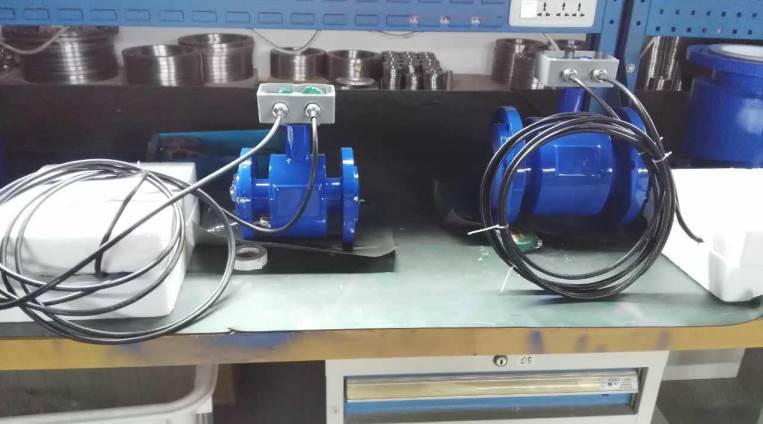
Anti corrosion DN40 electromagnetic flowmeter
This product can measure various corrosive media such as acids, alkalis, salts, etc; The use of wear-resistant rubber as an inner lining is particularly suitable for measuring liquid-solid two-phase flows such as slurry and cement slurry with solid particles and high wear, as well as various suspended liquids such as fibrous liquids and pulp.
1、 Characteristics:
The measurement of flow rate is not affected by changes in fluid density, viscosity, temperature, pressure, and conductivity. The sensor induced voltage signal is linearly related to the average flow rate, resulting in high measurement accuracy (0.3-0.5%).
There is no obstruction in the measuring pipeline, so there is no additional pressure loss, which has significant energy-saving significance.
There are no movable parts inside the measuring pipeline, so the sensor has a long lifespan.
The straight pipe section required for the sensor is relatively short, making it easy to install.
Reasonable selection of electrode and lining materials can resist corrosion and wear.
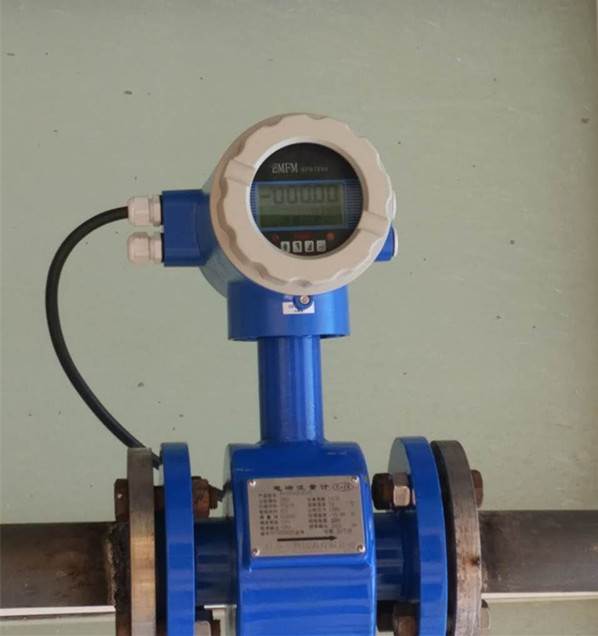
Anti corrosion DN40 electromagnetic flowmeter
2、 Technical data:
Nominal diameter: DN6-3000mm
Nominal force: 0.6, 1.0, 1.6, 4.0 MPa (high pressure can be processed according to user requirements)
Accuracy: ± 0.2% ± 0.5% (indication error)
Measurement range (flow rate): 0-1m/s to 0-10m/s
Medium temperature: Split type -10 ℃~+80 ℃ (PTFE and F46 lining -40 ℃~+180 ℃) Integrated type -10 ℃~+80 ℃
Environmental temperature: -25 ℃~+60 ℃
Environmental humidity: 5~RH (relative humidity)
Dielectric conductivity: greater than 20 μ S/cm
Installation: integrated type, split type
3、 Installation:
1. Horizontal and vertical installation
Sensors can be installed horizontally and vertically, but it should be ensured to avoid the influence of sediment and bubbles on the measuring electrode, and the electrode axis should be kept horizontal. When installed vertically, the fluid should flow from bottom to top. The sensor cannot be installed at the highest position of the pipeline, as this position is prone to the accumulation of air bubbles.
2. Ensure full pipe installation
Ensure that the flow sensor is filled with the measured fluid in the pipeline during measurement and that there is no non full pipe state. If the pipeline is not full or the outlet is empty, the sensor should be installed on a siphon tube.
3. Installation between bends, valves, and pumps
To ensure the stability of the measurement, a straight pipe section should be installed in front and behind the sensor, with its length given in the following figure. If it cannot be achieved, a current stabilizer should be used or the cross-sectional area of the measurement point should be reduced.
4. Sensors cannot be installed at the inlet of the pump
To avoid negative pressure, the sensor should not be installed at the inlet of the pump, but at the outlet of the pump.
5. Inlet and outlet straight pipe sections of the sensor
An ideal installation location should be chosen with sufficient straight pipe sections before and after the measurement point. The inlet straight pipe section should be ≥ 5D, and the outlet straight pipe section should be ≥ 3D (D is the nominal diameter of the sensor). The inserted inlet straight pipe section should be ≥ 20D, and the outlet straight pipe section should be ≥ 7D (D is the nominal diameter of the sensor).
6. Installation when the pipeline outlet is empty
When the outlet is in an empty state, the sensor should not be installed at the point where the pipeline is empty, but at a lower position. When the sensor is installed below the pipeline, it should be ensured that the sensor is filled with liquid and there should be no empty tube state.
AfterSalesService :
Key words:- Anti corrosion DN40 electromagnetic flowmeter