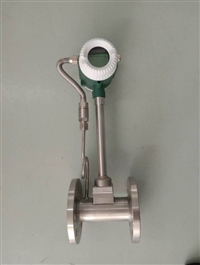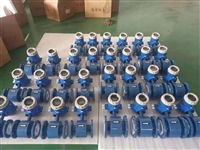
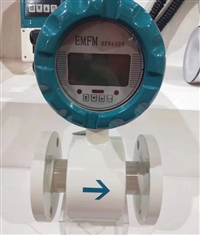
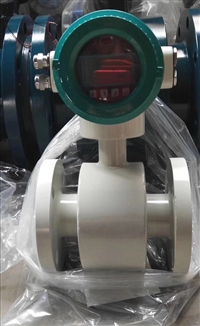
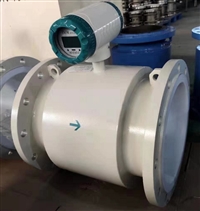
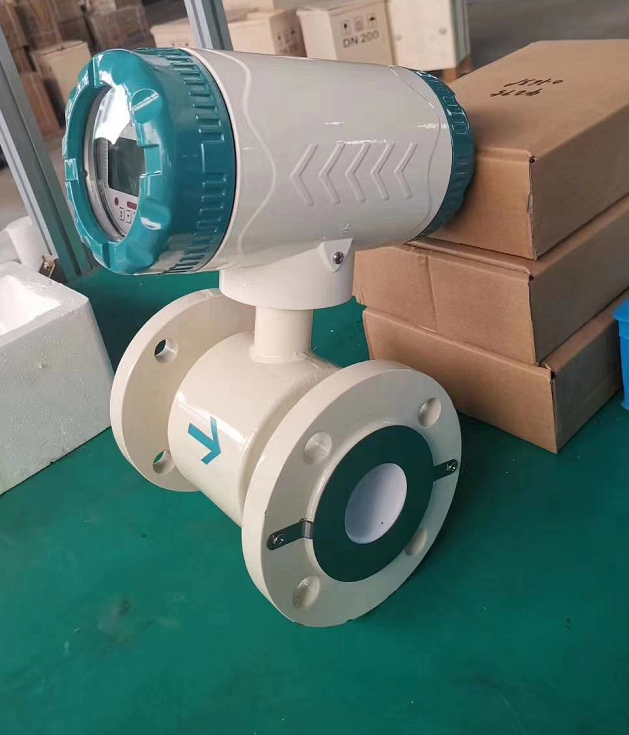
Explosion proof LDG electromagnetic flowmeter LDG-50 anti-corrosion electromagnetic flowmeter
Category:
Instrumentation/Flow meter/electromagnetic flowmeter
Model:
LDG-50
Brand:
Fenghui Instrument
Retail Price
1,600.00USD
重量
kg
- Product Description
-
Description :
The main structure of this product consists of a magnetic circuit system, measuring conduit, electrode, housing, lining, and converter. Advantages include: measurement is not affected by changes in fluid density, viscosity, temperature, pressure, and conductivity; There are also advantages such as unobstructed flow components inside the measuring tube, no pressure loss, and high measurement accuracy.
1、 Characteristics:
The sensor adopts an integral welded structure with good sealing performance;
The structure is simple and reliable, with no moving parts inside and almost no pressure loss;
The measurement accuracy is not affected by changes in physical parameters such as pressure, temperature, density, viscosity, etc. of the measured medium; Accuracy is not sensitive to changes in velocity distribution (except for vortices);
Equipped with conductivity measurement function, it can distinguish whether the sensor is empty or not; Adopting a 16 bit embedded microprocessor, it has fast computing speed and high accuracy
Containing digital processing, strong resistance to F-interference, reliable measurement, and high accuracy; The instrument is sensitive, the output signal is proportional to the current, and the range ratio is wide.
2、 Performance indicators:
Flow velocity measurement range: (0.05-10) m/s
Power consumption:<15VA
Protection level: IP68
Connection method: flange connection
Electrode materials: molybdenum containing stainless steel OCr18Ni12Mo2Ti, Hastelloy B, Hastelloy C, titanium Ti, tantalum, etc
Measuring pipeline diameter: DN (32-6000) mm
Instrument accuracy: Level 1.0
Work pressure: ≤ 1.6MPa
Medium temperature: 0-80 ℃

3、 Installation:
1. Horizontal and vertical installation
Sensors can be installed horizontally and vertically, but it should be ensured to avoid the influence of sediment and bubbles on the measuring electrode, and the electrode axis should be kept horizontal. When installed vertically, the fluid should flow from bottom to top. The sensor cannot be installed at the highest position of the pipeline, as this position is prone to the accumulation of air bubbles.
2. Ensure full pipe installation
Ensure that the flow sensor is filled with the measured fluid in the pipeline during measurement and that there is no non full pipe state. If the pipeline is not full or the outlet is empty, the sensor should be installed on a siphon tube.
3. Installation between bends, valves, and pumps
To ensure the stability of the measurement, a straight pipe section should be installed in front and behind the sensor, with its length given in the following figure. If it cannot be achieved, a current stabilizer should be used or the cross-sectional area of the measurement point should be reduced.
4. Sensors cannot be installed at the inlet of the pump
To avoid negative pressure, the sensor should not be installed at the inlet of the pump, but at the outlet of the pump.
5. Inlet and outlet straight pipe sections of the sensor
An ideal installation location should be chosen with sufficient straight pipe sections before and after the measurement point. The inlet straight pipe section should be ≥ 5D, and the outlet straight pipe section should be ≥ 3D (D is the nominal diameter of the sensor). The inserted inlet straight pipe section should be ≥ 20D, and the outlet straight pipe section should be ≥ 7D (D is the nominal diameter of the sensor).
6. Installation when the pipeline outlet is empty
When the outlet is in an empty state, the sensor should not be installed at the point where the pipeline is empty, but at a lower position. When the sensor is installed below the pipeline, it should be ensured that the sensor is filled with liquid and there should be no empty tube state.
AfterSalesService :
Key words:- Explosion proof LDG electromagnetic flowmeter