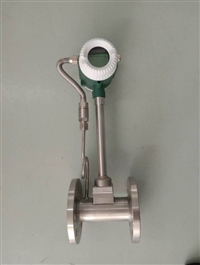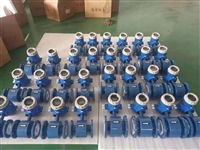
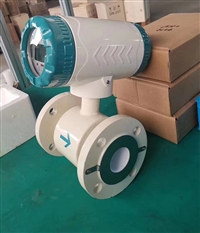
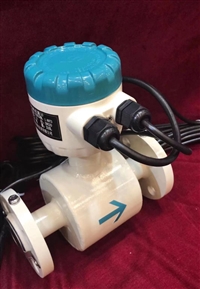
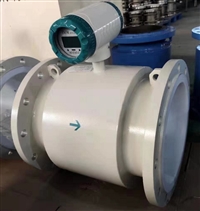
Split LDE electromagnetic flowmeter LDE-40 integrated electromagnetic flowmeter
Category:
Instrumentation/Flow meter/electromagnetic flowmeter
Model:
LDE-40
Brand:
Jiangsu Fenghui Instrument Co., Ltd
Retail Price
1,600.00USD
重量
kg
- Product Description
-
Description :
This product has a simple structure and a long service life, making it particularly suitable for flow measurement in industrial pipelines, channels, and small rivers, as well as for measuring various conductive liquids in environmental protection treatment. It is widely used in municipal water supply, steel, petroleum, chemical, power, industry, water conservancy, water resources and other departments.
1、 Characteristics:
1. Impurities and fibers do not affect the measurement
2. Body lining: Two types of corrosion-resistant linings, polytetrafluoroethylene and polyurethane
3. Antibacterial and anti stick electrode
4. Positive and negative cumulative flow
5. Intelligent self diagnostic function
2、 Technical parameters:
Nominal diameter (mm) (special specifications can be customized)
Pipeline type PTFE lining: DN10~DN600
Pipeline rubber lining: DN40~DN2200
Flow direction: positive, negative, net flow
Range ratio: 150:1
Repetitive error: ± 0.1% of the measured value
Accuracy level: Pipeline type: 0.5 level, 1.0 level
Temperature of the tested medium: ordinary rubber lining: -20 to+60 ℃; High temperature rubber lining: -20 to+90 ℃
PTFE lining: -30 to+100 ℃; High temperature PTFE lining: -20 to+180 ℃
Rated working pressure: (high pressure can be customized) DN10- DN150: ≤ 1.6MPa; DN200-DN350:≤1.0MPa
DN400-DN1000:≤0.6MPa; DN450-DN2200:≤0.25MPa
Flow velocity range: 0.1-15m/s
Conductivity range: The conductivity of the measured fluid is ≥ 5 μ s/cm
Signal output: 4-20mA (load resistance 0-750 Ω), pulse/frequency, control level
Communication output: RS485, MODBUS protocol, HART protocol
Power supply: AC220V or DC24V

3、 Selection:
(1) Caliber selection. The selection of electromagnetic flowmeter is generally determined by factors such as fluid properties, flow velocity, etc. Generally speaking, when the pipeline flow velocity is between 0.5-1.5m/s, it is considered an economic flow velocity. If the fluid medium has less wear on the sidewall, it is recommended to have a long-term flow velocity greater than 3m/s but less than 7m/s. In this case, a flow meter smaller than the pipe diameter can be selected.
(2) Selection of lining materials. Electromagnetic flow meters are mainly used to measure the flow rate of fluid substances, and flow meters with different lining materials should be selected based on the characteristics of the substance being measured, such as corrosiveness, wear, temperature, and condensation. The lining material and its characteristics used in electromagnetic flow meters:
Natural rubber has a temperature resistance range of -10 ℃ to 70 ℃, good wear resistance and insulation performance, and average corrosion resistance.
Chloroprene rubber has better elasticity and wear resistance than natural rubber, but its cold resistance is poor.
Polyurethane rubber is suitable for temperatures lower than natural rubber, up to -25 ℃.
Nitrile rubber is more resistant to high temperatures and wear than natural rubber, with poor elasticity but excellent oil resistance.
Polytetrafluoroethylene is a type of plastic that has excellent acid and alkali resistance, but has poor resistance to corrosion and negative pressure from some liquid substances such as fluorine, oxygen, and ozone, as well as poor wear resistance.
(3) Selection of electrode materials. The electrode of the electromagnetic flowmeter is installed on the inner wall of its pipeline and comes into direct contact with the measured substance, so it should be selected based on the corrosiveness of the measured substance. The materials commonly used for manufacturing electrodes include titanium (Ti), which is resistant to strong acidity; Tantalum (Ta) has high measurement accuracy; Platinum iridium (Pt Yi) alloy has strong corrosion resistance; Hastelloy C (HC) can be used for measuring high-temperature hypochlorite, sulfuric acid, and nitric acid; 316L, The corrosion resistance is average, but the price is low. When choosing an electromagnetic flowmeter, the selection of electrode materials should be based on the precision requirements of the measurement, the corrosiveness of the tested object, and the affordability of the price.
(4) Selection of other parameters. The selection of electromagnetic flow meters should also consider factors such as protection level, connecting flanges, and cables. The selection of connection flanges for electromagnetic flow meters should be determined based on the pipeline, especially for corrosive fluid pipelines. It is not allowed to randomly process and weld the pipeline on site, and careful selection should be made.

AfterSalesService :
Key words:- Split LDE electromagnetic flowmeter