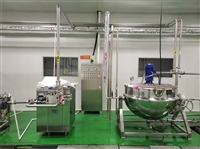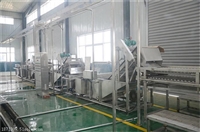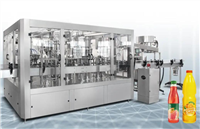



Wine fermentation tank equipment 50 ton pilot grape deep processing juice fruit wine machine
Category:
Food and Beverage/Food and beverage processing equipment/Beverage production equipment
Model:
kx-2000
Brand:
Wenzhou Kexin
model:
kx-2000
Processing & Customization:
yes
power:
two hundred
power supply voltage:
three hundred and eighty
Applicable bottle height:
five hundred
Applicable bottleneck:
four hundred and fifty
Filling volume:
five hundred
Filling accuracy:
ninety-nine
Overall dimensions:
1700x1300x2100
Place of Origin:
Wenzhou
Retail Price
320,000.00USD
重量
kg
- Product Description
-
model kx-2000
Processing & Customization yes
power two hundred
power supply voltage three hundred and eighty
Applicable bottle height five hundred
Applicable bottleneck four hundred and fifty
Filling volume five hundred
Filling accuracy ninety-nine
Overall dimensions 1700x1300x2100
Place of Origin Wenzhou
Description :
One Introduction to Grape Enzyme Production Line Equipment for Deep Processing of Grapes:
Grape fruit enzyme refers to the product produced by fermenting fruits. Due to the fact that enzymes were also known as enzymes in the past, businesses referred to fruit enzymes as enzymes in fruits and claimed that ingested fruit enzymes could have effects in the human body. This is a pseudo science.
Even if fruit enzymes are truly enzymes found in fruits, they cannot function in the human body. In fact, oral enzymes have been broken down into small molecules in the digestive tract and cannot function effectively; And plant enzymes may not necessarily catalyze human reactions; More importantly, humans themselves have a complete mechanism to control enzyme production and decomposition, and use this method to control all life activities. Supplementing enzymes seems redundant and blind.

II Pre treatment equipment for fully automatic constant temperature fermentation grape enzyme production line:
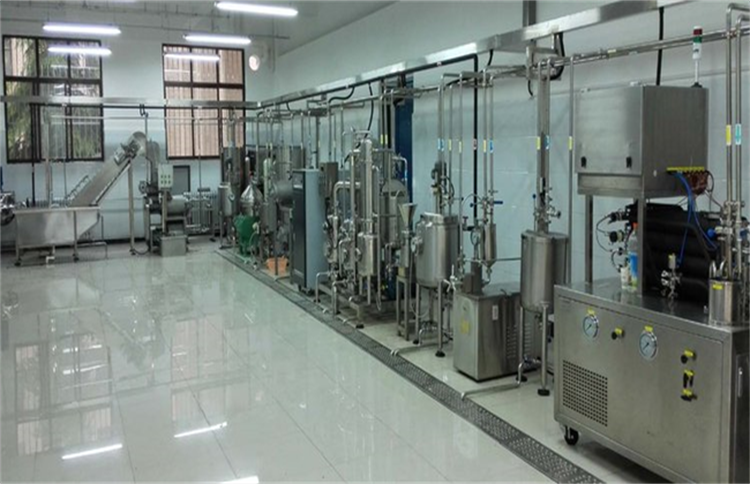
1. Pre fermentation treatment: Pre treatment includes fruit sorting, crushing, pressing, juice clarification, juice improvement, etc. Crushing and removing stems: Crushing requires that each seed be broken, but the seed and stem cannot be crushed, otherwise the oil esters, glycosides, and some substances in the seed and stem will increase the bitterness of the enzyme. Immediately separate the crushed fruit pulp from the stem to prevent the dissolution of grassy and bitter substances from the stem. There are double roll crushers, drum shaped scraper crushers, centrifugal crushers, hammer crushers, etc.
2. Separation of slag juice: The juice that flows out without pressure after crushing is called self flowing juice, and the juice that flows out after pressure is called pressed juice. Self flowing juice has good quality and is suitable for separate fermentation to produce enzymes. Squeezing is carried out in two stages, gradually increasing pressure each time to extract as much juice as possible from the fruit flesh. If the quality is slightly poor, it should be fermented separately or combined with self flowing juice. Loosen the residue and press it for the second time. The pressed juice has a strong odor and low quality, and the equipment is usually a continuous screw press.
3. Clarification of fruit juice: Some insoluble substances in pressed juice can have adverse effects during fermentation, causing mixed flavors to enzymes. Moreover, enzyme colloids made from clarified juice have high stability, are insensitive to oxygen, have light color, low iron content, stable aroma, and refreshing taste. The clarification method can refer to the clarification of fruit juice.
IIIThe process of making grape and vegetable juice enzymes:
1. Preparation of fermentation strains:
Selecting excellent bacterial strains through biological cultivation methods to provide raw materials for the transformation of fermentation substrates;
2. Fruit and vegetable juice fermentation beverage production line:
(1) Preparation of fermentation base material through steaming and cooking tanks and ingredient tanks;
(2) The main raw materials for fermentation include bran, malt, hops, mountain honey, etc;
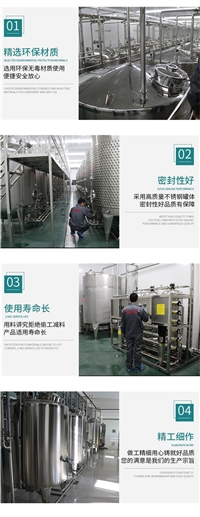
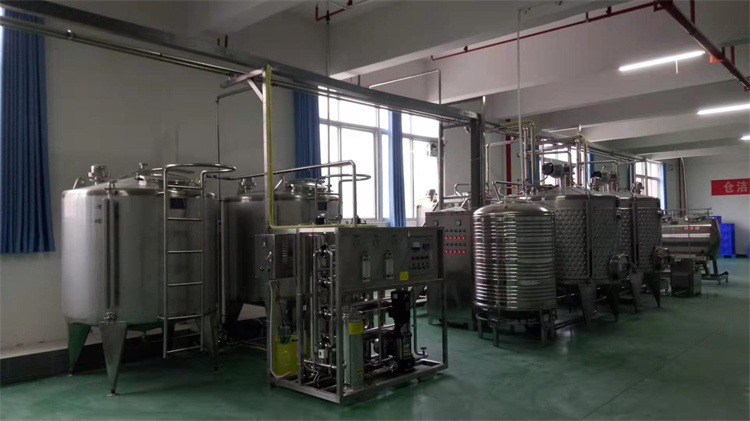
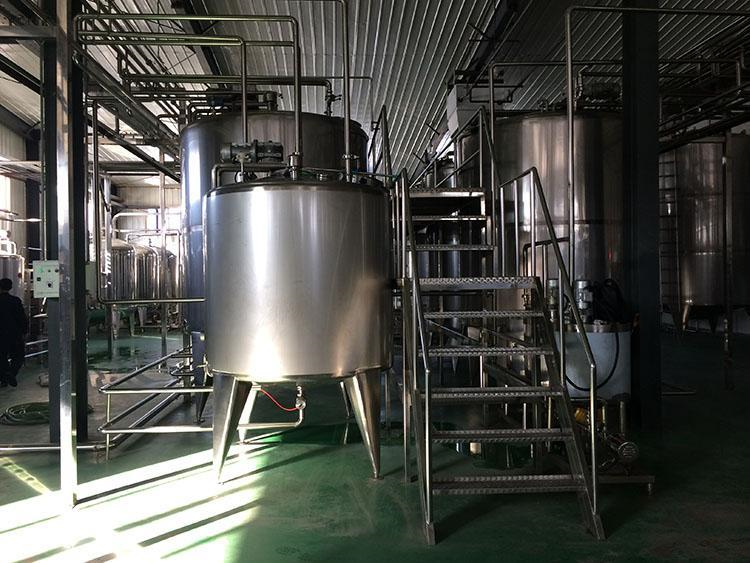
(3) Construction of fermentation tank: The fermentation tank is a fully enclosed temperature control device equipped with an inlet, sampling port, pressure relief port, etc. The interior has been polished to meet the growth of microbial communities and the synthesis of products;
(4) Fermentation method for fruit and vegetable juice fermented beverage production line: Before feeding, the fermentation tank must be thoroughly disinfected and sterilized to ensure that the tank and pipelines are sterile. Check whether all gates are closed and whether the sealing equipment is intact
(5) When the temperature of the liquid reaches 28 ℃, heat exchange begins and stirring stops. At the beginning of 4 hours, open the air outlet valve and stir for 10 minutes every hour to facilitate microbial growth.
(6) Let it stand and ferment in a closed environment. Regularly observe the fermentation of the liquid and maintain the fermentation temperature between 29-30 ℃. When the pressure rises to 1.5-2 kg/cm2, the fermentation is complete.
3. In tank pasteurization and cooling clarification of fruit and vegetable juice fermented beverage production line:
After the fermentation is terminated, immediately open the steam gate and start the mixer simultaneously. When the temperature rises to 60 ℃, perform slow heat exchange to maintain the liquid temperature at 60-65 ℃ for 30 minutes, then cool immediately. After the liquid temperature drops to room temperature, use the pressure difference in the tank to place it in the cooling and clarification tank. The pasteurization in the tank is completed. Before feeding into the cooling clarification tank, ensure sterile conditions.

4. Filtering, temporary storage and filling of fermented fruit and vegetable juice beverages:
The frozen clarified fruit and vegetable juice will be fermented in stages according to the principle of clearing first and then turbidity. After passing through sterile diatomaceous earth filter and sand rod filter, it will be stored in a temporary storage tank for 24 hours before being filled, labeled, packaged, and shipped.
4 The production process of wine can generally be divided into three stages:
The fermentation process, storage management process, and filling production process of raw wine.
Fully ripe grapes → washed, dried, de stemmed → crushed, added sugar → bottled, added yeast → initial fermentation → post fermentation → clarified → distilled, blended → bottled, stored
1. Cleaning, removing stems, and crushing: Wash and dry fresh and ripe grapes. It is necessary to choose dry and flat particles, because rotten grapes contain more nitrogen than normal grapes, which is conducive to the proliferation of miscellaneous bacteria, especially lactic acid bacteria that cause wine turbidity. Remove the stems from the grapes, crush them, and store them in stainless steel storage tanks.
2. Adjust grape juice: Mature red grapes have an alcohol content of around 12 degrees when sugar is not added. To make wine with slightly higher alcohol content, 1 degree of alcohol can be added to 1 liter of grape juice.
3. Wine production line - barrel filling and adding: Place the adjusted fruit pulp into a sterilized fermentation tank with a volume of 80% to prevent the juice from overflowing the container during vigorous fermentation. Add Ya immediately after bottling the grape juice.
4. Initial fermentation: During fermentation, stir 4 times a day (twice during the day and twice at night), press down the wine cap (a type of lid formed by the skin, stem, etc. floating on the surface in the center of the tank), and let each part ferment evenly. At a temperature of 26-30 ℃, the initial fermentation can be basically completed after 7-10 days. If the temperature is too low, it may be extended to about 15 days. Fermentation is completed in a fermentation tank, which can control the fermentation temperature.
5. Wine production line - pressing: The initially fermented product is pumped and filtered into a post fermentation tank for post fermentation and aging.
6. Post fermentation and brewing: After post fermentation, residual sugar is converted into alcohol, and the acid in the wine reacts with the alcohol to produce fragrant esters. Enhanced the stability of the wine, requiring pouring during post fermentation and aging. Usually, the wine is poured twice in the winter of brewing, and once in spring, summer, autumn, and winter of the following year. The wine produced in the first year after brewing is called new wine, and the wine produced in 2-3 years is called aged wine. The longer the storage time, the stronger the flavor and the stronger the stability.
7. Wine production line - clarification: It can be clarified naturally or manually. Natural clarification takes a long time, while manual clarification can be achieved by adding glue.
8. Wine blending: After wine fermentation, the alcohol content is often insufficient and the taste is not sweet. Generally, red wines with slightly higher alcohol content and sweetness are blended wines. Generally, alcohol (medicinal alcohol or beverage alcohol) and white sugar are added. When adding sugar, first dissolve the sugar in wine and mix it into a palatable red wine as needed.
9. Bottling and storage: Select different bottles or cans for bottling and storage according to packaging requirements.
Five Production process of fully automatic constant temperature fermentation enzyme production line equipment:
1. Preparation of fermentation substrate: Fresh fruits and vegetables (including edible fungi and seaweed in addition to common vegetables and fruits) are washed and cut into pieces according to their types, and then juiced. Different types of fruit and vegetable juices are mixed in the same weight ratio, diluted with the same volume of purified water to adjust the slurry, and then 23% marine fish skin collagen peptide powder (w/v) is added. The mixture is sterilized at high temperature and cooled in a fermentation tank;
2. Lactic acid bacteria fermentation: 2-4U/1000L of lactic acid fermentation agent strain is added, and the fermentation is carried out for 7 lld at a temperature of 3-35 ° C. The fermentation is terminated when the pH reaches 4.3;
3. Yeast fermentation involves adding 1-1.5% sucrose and 1-1.5% marine fish skin collagen peptide powder, followed by high-temperature sterilization and cooling. Add 0.08-0.12% high activity yeast, ferment at 25-30 ° C for 5-7 days, terminate fermentation when pH reaches 4.0, sterilize at high temperature and cool. Stored in a low-temperature storage tank at 8-12 ° C for 14 21 days;
4. Homogenize, concentrate, and mix at 40MPa for 10-15 minutes; Concentrate to IOBrix using, for example, dual effect low temperature at 60-80 ° C; For example, organic membrane microfiltration filter is used for filtration; Add 0.5-1.0% maltitol, 0.1-0.2% galactooligosaccharides, and 0.01-0.02% acesulfame to the filtrate, and then filter it through an organic membrane ultrafiltration filter for sterilization. Preferably, the beverage is filled and sealed according to the oral liquid production process, sterilized using pasteurization, and made into an oral liquid beverage product, which is stored at a low temperature of 4-10 ° C!

VI Wenzhou Kexin's cooperation mode and after-sales service with customers:
1. After signing the contract, 30% of the advance payment shall be made as a deposit.
2. Pay 65% of the payment before picking up the goods.
3. After the full line debugging is qualified, the remaining payment for the goods shall be made.
4. Delivery shall be made within 30 working days after the deposit is received upon signing the contract.
5. After the equipment is delivered from the supplier to the purchaser, the purchaser shall organize personnel to move the equipment into place according to the requirements of the supplier's technical personnel, and the connection between equipment shall be the responsibility of the supplier's debugging personnel. The external water, electricity, and gas supply of the equipment shall be the responsibility of the purchaser, with the assistance of the supplier's debugging personnel.
After the installation of all equipment is completed, the supplier's debugging personnel are responsible for the full line debugging and qualification.
7. At the beginning of equipment installation, the supplier shall train one specialized maintenance electrician and one fitter for the purchaser. The training shall end after the equipment is debugged and accepted.
After the equipment debugging is qualified and accepted, the supplier shall provide a one-year warranty for the quality of the equipment. During the warranty period, if the equipment malfunctions due to quality issues, the supplier is responsible for free maintenance. Due to equipment malfunctions caused by the demand side, the supplier can provide maintenance services, and the cost will be borne by the demand side.
During the operation of the equipment, the equipment operator must strictly follow the instructions in the equipment manual for safe operation and maintenance.
10. After sales service: The entire equipment is covered by a one-year warranty. During the warranty period, we will provide free services, and after the warranty period, we will only charge the buyer a cost fee. If the equipment malfunctions, we will arrange for engineers to arrive at the buyer's factory within 72 hours after receiving notification from the buyer to troubleshoot the equipment (excluding delays due to transportation arrangements and weather), and restore the equipment to normal operation within three days. If it is a major malfunction that cannot be repaired in a timely manner, the seller and buyer shall negotiate to determine the repair time.

11. Regarding prices: The prices on the page are approximate wholesale prices. If you are interested in purchasing in large quantities or require special customization, please contact us for further discussion.
12. Regarding shipment: Our company assigns a dedicated person to strictly inspect the quality of the equipment before shipment, and conducts a trial run to ensure that the equipment runs smoothly before organizing shipment. When shipping, we use wrapping film to package the equipment as a whole, which is rainproof, waterproof, and anti-collision. We confirm that the equipment is suitable for long-distance transportation, so please feel free to purchase.
13. Regarding customer service: If you are interested in purchasing equipment, please contact our responsible person in a timely manner, communicate online or by phone, inquire about the size, output, and precautions of the equipment you need to purchase, so that we can recommend suitable equipment to you, reduce and avoid cost waste caused by your equipment purchase, and continuously save costs and improve product quality for you in the long run.
At the same time, Kexin Company designs, develops, and modifies various packaging machinery according to user needs. Our service focuses on tracking services to ensure customer interests. Over the years, our products have won the favor of more than 4000 customers worldwide through excellent quality and service, and are exported to various parts of the world.
AfterSalesService :
Key words:- Wine fermentation tank equipment
More Products