


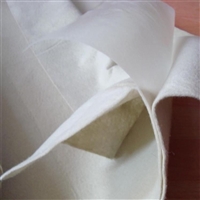


6-meter-wide impermeable geotextile product in Qinghai Province
Category:
building materials/Geosynthetic materials/Composite geotechnical materials
Model:
200g——1200g
Brand:
Kind
Retail Price
Negotiable
重量
kg
- Product Description
-
Description :
Qinghai Province 6-meter widthImpermeable geotextileProduct News
News on 6-meter-wide impermeable geotextile products in Qinghai Province
The cultivation of shallow water lotus root has undergone several years of development, with mature technology and considerable benefits, but the entry threshold is too high. The cost of building a one acre cement pond ranges from 20000 to 25000 yuan, which is difficult for ordinary farmers and entrepreneurs to afford. In addition, the national policy for land protection generally does not allow the construction or destruction of the cultivated layer on farmland. Although the construction of cement ponds is for agricultural production, many constructions are still forcibly prevented, even fined or demolished due to inconsistent understanding and implementation of policies. Another issue is renting land to plant lotus roots. After the lease term expires, if the lessor requests to resume cultivation, the high fees and construction waste will be unbearable. Therefore, we have introduced a specialized membrane pool construction method that is economically practical and convenient for construction.
Traditional pond lotus root production results in high fertilizer loss, inconvenient management, low yield, excessive digging costs, and low efficiency. Adopting shallow water lotus root cultivation, without running water or fertilizer, with sufficient heat, high yield, convenient management, and easier lotus root digging. The yield of pond lotus root is 3000 catties per mu, and shallow water lotus root is 6000-10000 catties. The cost of digging lotus roots is 0.5 yuan/jin for shallow water lotus roots, and the average cost of digging lotus roots with a digging machine is less than 0.2 yuan/jin for shallow water lotus roots. The construction cost of lotus root is low, while the cost of shallow water tank is high. However, if it is evenly distributed over a period of 10 years, the annual cost is 1000-2000 yuan. The cost of digging lotus root in just one year is saved, not to mention saving labor and increasing production. The income from increasing production alone is several times that of lotus root. Shallow water lotus root is an investment with high returns for many years. Therefore, the development of shallow water lotus root is determined by its expected benefits and is a model of high-yield and high-efficiency agriculture, which is worthy of active promotion on a large scale. In fact, a simple calculation is that planting one acre of lotus root can yield a net income of over 5000 yuan, with some as high as tens of thousands of yuan.
General anti-seepage membranes come in various specifications, with different qualities and prices ranging from 2 yuan to 20 yuan. And the lotus pond special film is customized with our special materials, with a price range of 7-9 yuan. We provide you with reasonable guidance on the selection according to the required planting years and wear degree. Avoid unnecessary waste caused by your blind choices.

Characteristics of composite geomembrane (impermeable geotextile);
Width up to 6m, (composite geomembrane weighing over 400g can be welded with edges thrown around)
High puncture resistance and high friction coefficient
Good aging resistance and adaptability to a wide range of environmental temperatures
Excellent anti drainage performance
Suitable for water conservancy, lotus pond, aquaculture, artificial lake, chemical industry, construction, transportation, subway, tunnel, garbage disposal site and other projects
News on 6-meter-wide impermeable geotextile products in Qinghai Province
Method for laying anti-seepage membrane in lotus pond
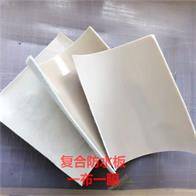
First, level and compact the slopes on all sides of the fish pond. Use thin mud to apply a thickness of 2-3 centimeters, and then lay a layer of plastic geomembrane. The lower end of the geomembrane should be buried about 15 centimeters into the bottom of the pond, and the upper end should be compacted with soil; The bottom of the pool should be paved and compacted with clay and quicklime, or evenly paved with 20-30 centimeters thick clay. After adding water or human feces and urine, it should be mixed into a slurry and allowed to naturally seep and dry, so as not to leak water.
Good geotechnical materials are here. You don't need to travel around. Please call the manufacturer's 24-hour contact number: 156=6634=8739
The anti-seepage membrane is a new type of synthetic geotechnical waterproof and barrier material that emerged in the 1980s. It is another new type of waterproof material after high polymer anti-seepage materials such as soft PVC, chlorosulfonated polyethylene (CSPE), and butyl rubber. The application of Lianjie anti-seepage membrane began in the mid-1980s, first with the application of anti-seepage membrane in channel anti-seepage, followed by the emergence of HDPE anti-seepage membrane. Early waterproof and anti-seepage projects include the People's Shengli Canal in Henan, the People's Wei Canal in Shaanxi, the Dongbeiwang Irrigation District in Beijing, and several irrigation districts in Shanxi, which have shown good results after use. Therefore, they will be promoted to projects such as reservoirs, water gates, and reservoirs in the future. The thickness of the anti-seepage membrane in the early days was very thin due to the lack of scientific production technology, which limited the thickness of the anti-seepage membrane. At that time, people used anti-seepage membranes ranging from 0.12mm to 0.38mm. Thicker anti-seepage membranes were not applied in China until the early 1990s. In 1992, the Tiancun Dam in Liuzhou, Guangxi was a 48m high anti-seepage membrane and geomembrane rockfill dam currently in use in China. It has been in use until now, and its anti-seepage effect is even more ideal than expected. In 1998, anti-seepage membranes were also used for the cofferdam and anti-seepage wall of the Three Gorges Project after the river closure. In 1998, 1.2 million square meters of anti-seepage membranes were used in the embankment anti-seepage project of the Han River Fuzhou Water Conservancy Hub, including HDPE anti-seepage membranes, LDPE anti-seepage membranes, geomembranes, and composite geomembranes. In 21st century China, with the development of industry and science, the thickness of anti-seepage membranes produced in our country can reach 3mm, and the width can reach 8m, which is currently at a level. At present, our national defense membrane production bases are mainly distributed in developed cities in East China, such as Beijing, Shanghai, Shandong and other cities. The anti-seepage membrane has been widely used in various anti-seepage projects, such as artificial lakes, golf courses, landfills, tailings treatment stations, tunnels, high-speed rail anti-skid layers, aquaculture, landscaping, and petrochemical industries. The National Institute of Geosynthetics is continuously developing new applications for anti-seepage membranes.
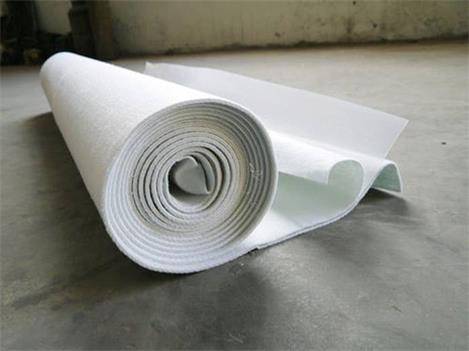
Why do we persist in selling geotechnical materials through online messaging? We firmly believe that a successful order is 90% information plus 10% intuition. What are you still hesitating about? Choosing our products is a wise choice for you to further develop and grow your lotus root farming industry. Now, place an order with us for high standard and high-quality lotus root pond special film.
AfterSalesService :
Key words:- Impermeable geotextile


