


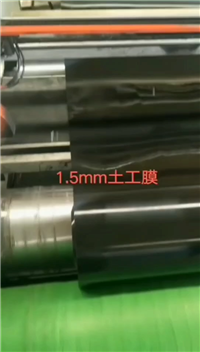


Quality Three Guarantees Pig Farm HDPE Membrane Biogas Tank Black Film Co., Ltd. Lishui, Zhejiang
Category:
building materials/Geosynthetic materials/Geomembrane
Model:
0.2-3.0 millimeters thick
Brand:
Kind
Retail Price
Negotiable
重量
kg
- Product Description
-
Description :
title
title
Black film of biogas digesterThe material composition is high-density polyethylene, abbreviated as HDPE. Common specifications and thicknesses include 1.2mm, 1.5mm, and 2.0mm, and quality standards include urban construction standards and American standards. Black film for biogas digesters is a waterproof and barrier material based on high molecular weight polymers
The width and thickness specifications are complete. 2. It has excellent resistance to environmental stress cracking and chemical corrosion. 3. Excellent chemical corrosion resistance. 4. It has a wide range of operating temperatures and a long service life. 5. Used for landfill sites, tailings storage sites, channel anti-seepage, dam anti-seepage, and subway engineering, etc
Biogas digesters, also known as "fully enclosed anaerobic ponds", are currently an indispensable part of biogas production equipment in many breeding farms. The construction of anaerobic ponds is determined by the detailed situation of pig farms and other projects, and excavation and pond construction are necessary.
The black film biogas digester can integrate anaerobic fermentation and gas storage. Due to the comprehensive closure of the anaerobic pond, the organic matter in the biogas digester can effectively degrade the COD and BOD concentrations in the sewage, and through microbial fermentation, 80% -90% of the organic matter can be degraded, thereby producing biogas. The biogas is further converted into electricity, and the biogas residue can also be made into organic fertilizer. The volume of biogas digesters required for pig farms is related to the scale of the farm, the type of biogas digester used, the hydraulic retention period, etc., and can be calculated using the formula "biogas digester volume (unit: cubic meter)=average daily discharge (unit: ton) x hydraulic retention period (unit: day)". The hydraulic retention period specifically refers to the number of days sewage remains in the biogas digester. The hydraulic retention period of black film biogas digesters is at least one month and can last up to six months.
Black film soft biogas digesters are quietly emerging. Black film biogas digesters, commonly known as covered lagoons, film covered biogas digesters, and geomembrane biogas digesters. Its biogas production principle is the same as that of the traditional biogas digester. It uses the advantages of HDPE membrane material in seepage prevention and leakage prevention to lay a layer of HDPE anti-seepage membrane in the excavated pit. According to the requirements of anaerobic fermentation process, the inlet and outlet, slag extraction pipe and biogas collection pipe are installed in the tank. The upper mouth of the pit is sealed with HDPE anti-seepage membrane, and the surrounding anchor ditches are fixed to form an overall anaerobic fermentation space. Through practical results, it has been proven that black film soft biogas digesters are more suitable for the pollution control needs of aquaculture farms. The principle is to use black film to absorb heat and improve fermentation efficiency. The construction cost of the tank is one tenth of that of a steel-concrete structure biogas tank and one-fifth of that of a red film biogas tank. Whether in terms of price, gas production, or usage effectiveness, biogas digesters from other processes are far ahead. Nowadays, black film soft biogas digesters have been widely popularized in Guangdong and Guangxi regions. The Guangdong Provincial Environmental Protection Department has recommended this process to breeding enterprises in Guangdong. As of the end of 2016, it is conservatively estimated that black film soft biogas digesters have already occupied one-third of the market in Guangdong region. This process gradually spread to Hunan, Jiangxi, Anhui, Hubei, Hebei and other places. Can this type of black film soft biogas digester be built in northern regions? Actual cases and usage effects have proven to be completely suitable. At present, it has been operating stably for several years, producing stable biogas throughout the year. All biogas is used for power generation, which not only meets the needs of enterprise pollution control, but also has significant benefits for biogas power generation. Truly solved the bottleneck problem of traditional biogas digesters with only input and no output.
The construction cost of black film biogas digesters is low and the construction is convenient; Long residence time and good water output effect; PE film heat absorption performance number, high gas production; Ultra large gas storage capacity, achieving integrated gas storage; It can effectively achieve the function of slag discharge. After being approved by the Agricultural Mechanization Processing Department of the Ministry of Agriculture and Rural Affairs, the equipment item was listed as a new product subsidy pilot equipment item. The approved pilot equipment is the "self-propelled straw harvesting square bundling and pressing machine", and the item belongs to the "bundling (pressing) machine". Subsequent equipment items that have been registered will be notified and announced separately. In terms of subsidy regulations, the subsidy amount is calculated based on a 25% ratio of the fair market price issued by a qualified third-party evaluation agency provided by the pilot equipment expenditure enterprise, and a fixed subsidy is implemented.
Black film biogas digester, scientific name "fully enclosed anaerobic pond", is an important part of the biogas production equipment in aquaculture farms. The capacity of this biogas digester is 15000 cubic meters, with a black film on the ground and a top height of four to five meters. The anaerobic pond has a total depth of over 10 meters and a water depth of seven to eight meters. All the floating on the water is biogas. The black film with a thickness of only 1.5 millimeters is like a pot lid, covering the biogas inside and preventing it from leaking out. Biogas can be converted into electrical energy for production and daily use such as lighting, cooking, and pig house insulation in breeding farms.
The power of this pig farm's black film biogas digester is extraordinary: the gas holder can only store 200 cubic meters of biogas and can only generate 3 to 4 hours of electricity per day; The black film biogas digester can store two to three thousand cubic meters of biogas and generate electricity almost all day long. Black film biogas digesters have the advantages of large anaerobic fermentation capacity, long sewage retention period, large biogas production, and low operating and treatment costs. They are very suitable for the treatment of livestock excrement in large-scale farms and "water bubble manure" process farms. There are many benefits to building a black film biogas digester, the most obvious of which is that it has a large capacity and can store 10-20 times more waste liquid and biogas than conventional biogas digesters.
It has natural advantages in terms of construction cost, maintenance and management, as well as gas production, power generation, sewage treatment and other aspects, thus having strong economic, social and ecological benefits.
The biogas produced by the black film biogas digester in pig farms is a colorless, odorous, toxic, and odorous gas. Its main component, methane/alkane, is a colorless, odorless, odorless, and non-toxic gas at room temperature. The molecular formula of methane/alkane is CH4, which is a simple hydrocarbon compound composed of one carbon atom and four hydrogen atoms. The weight ratio of methane to air is 0.54, which is about half lighter than air. The solubility of methane/alkane is very low. At 20 ℃ and 0.1 kPa, 100 units of water can only dissolve 3 units of methane/alkane.
The methane/methane in the black film biogas digester of a pig farm is a simple organic compound and a gas fuel. When burning, it emits a blue flame and can reach a high temperature of up to 1 ° C? 400? Around ℃. The calorific value of pure methane/alkane per cubic meter is 36.8 kilojoules. The calorific value of biogas per cubic meter is about 23.4 kilojoules, which is equivalent to the heat released after fully burning 0.55 kilograms of diesel or 0.8 kilograms of coal. From the perspective of thermal efficiency analysis, the amount of heat that can be utilized per cubic meter of biogas is equivalent to the amount of heat that can be utilized by burning 3.03 kilograms of coal.
In the construction of black film biogas digesters, it is particularly important to strengthen the inspection of the joints of polyethylene geomembranes, so we can conduct inspections based on visual inspection and on-site leak detection methods. After welding the biogas digester membrane, check for any missing connections, whether the seams are burnt, whether there are wrinkles, and whether the splicing is uniform. On site leak detection uses the inflation method to inspect all welds. After inflating and observing for about one minute, adjust/check the vacuum gauge. If there is no decrease in air pressure, it indicates that there is no leakage and the welds are qualified. Then, leak detection is carried out and the black film of the biogas digester is repaired.
Black film biogas digester for cattle farm
Black film biogas digesters are an important part of many biogas production facilities in livestock farms. There are already many demonstration projects nationwide. This technology was introduced to China in 2003 and has been highly praised by many livestock farm owners. This process technology has a large gas production capacity, low cost, and can effectively degrade the concentration of COD and BOD in wastewater.
The biogas digester is excavated and constructed, with anti-seepage membrane laid at the bottom. The anti-seepage membrane has a good anti-seepage effect and will not pollute groundwater. The top is covered with black membrane for full sealing, significantly reducing odors and protecting the surrounding environment. Biogas can be converted into electricity to keep pig houses warm, provide lighting and cooking electricity for livestock farms, and be used as fertilizer for growing vegetables and fruits. Biogas residue can be directly discharged into fish ponds as feed.
title
Our factory has gathered a group of excellent scientific research and management talents, who can provide customers with good pre-sales, in sales, and after-sales services. We can also develop suitable black film biogas digesters and equipment plans based on users' water conditions, achieving economic practicality and efficiency. Continuously strive for our green mountains and clear waters!
Laiwu Jinde Geotechnical Materials Co., Ltd. is located in the national geotechnical material production base--Laiwu, Jinan City, is a manufacturer of geosynthetic materials and waterproofing membranes, produced by the company;EVA\ECBTunnel composite waterproof board(glossy/Single hair surface/Double haired surface),LDPE\HDPEGeomembrane (waterproof board),Composite geomembrane, needle punched non-woven geotextile, woven geotextile, bentonite waterproof blanket(GCL)Plastic drainage board (double-sided concave convex type, square type) grass grid, soft permeable pipe (spring blind pipe),PEPipe, plastic blind ditch (board), double (single) arm perforated corrugated pipe, geogrid (fiberglass steel plastic unidirectional and bidirectional), composite drainage network, geogrid room, soundproof felt and other products. The black film biogas digester has low cost and high efficiency. The black film biogas digester process adopts a new type of anti-seepage membrane technology, making the entire storage process more scientific, concise, and much lower in terms of cost and engineering expenses than waterproof materials. After actual calculation, the use of this storage process saves about 50% of the cost compared to the storage process.
The black film of the biogas digester is made of high-density polyethylene, abbreviated as HDPE. Common specifications and thicknesses include 1.2mm, 1.5mm, and 2.0mm, and quality standards include urban construction standards and American standards. Black film for biogas digesters is a waterproof and barrier material based on high molecular weight polymers
AfterSalesService :
Key words:- Quality Three Guarantees


