

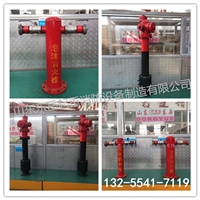
How to select the foam fire hydrant supplied by the ground foam fire hydrant manufacturer
Category:
Security/Firefighting equipment/Other fire-fighting equipment
Model:
PS150-65*2
Brand:
Eastern Mountain
Retail Price
960.00USD
重量
kg
- Product Description
-
Description :

Fire safety tips for escaping from a fire scene
The key to escaping from a fire is to remain calm and composed, and not to be at a loss. If the location of the fire is outside the home. Try the door handle and door with your hands first to see if they are hot. If you don't feel hot, you can press your body and feet against the door, carefully open the door by a gap, and check the fire outside the door. If smoke is pervasive and hot air is pushed in through the cracks of the door, causing unbearable heat, or if you feel the heat pressing above the door with your hand, you should immediately close the door, splash water on the door, and seal the door with wet blankets, towels, and other items to temporarily prevent the fire from spreading into the house. If the smoke is not strong and the heat above the door is tolerable, you can cover your mouth and nose with a wet towel. If necessary, wet your whole body with water or wrap a wet cotton quilt. Use the method of hanging your head and folding your waist to open the door and escape. If the door is sealed by fire, it is impossible to escape through the door, only rely on the external window and balcony. If the floor is not high, bed cloths, window cloths, clothes and other items can be connected to form a lifeline and tied to window frames, heating pipes and other objects, and then slid down along the rope to escape; Water leakage pipes can also be used to escape by sliding down. Residents living on the second floor may throw cushions, quilts, sofa cushions, and other cushioning materials under the window as a last resort, and then jump off the building to escape. When jumping, one should climb onto the windowsill or balcony edge with their hands and jump vertically downwards. If the floor where you live is very high and you cannot find a satisfactory length of lifeline even after using up all your belongings, you should occasionally splash water on the door to buy time, wave, call or use the existing length of lifeline on the balcony or window to slide down to other floors for temporary shelter.
If the fire not only seals the door, but also creates a sea of flames outside the window, all doors and windows should be sealed. Wet cotton quilts, towels, clothing, etc. should be used to block the doors and windows, and methods such as making phone calls, hitting washbasins, throwing things outside the window should be used to attract the attention of external personnel in order to be rescued.
Remember not to use the elevator during the escape. Due to the frequent burning of power lines in fires, you may be trapped in elevators and unable to escape.

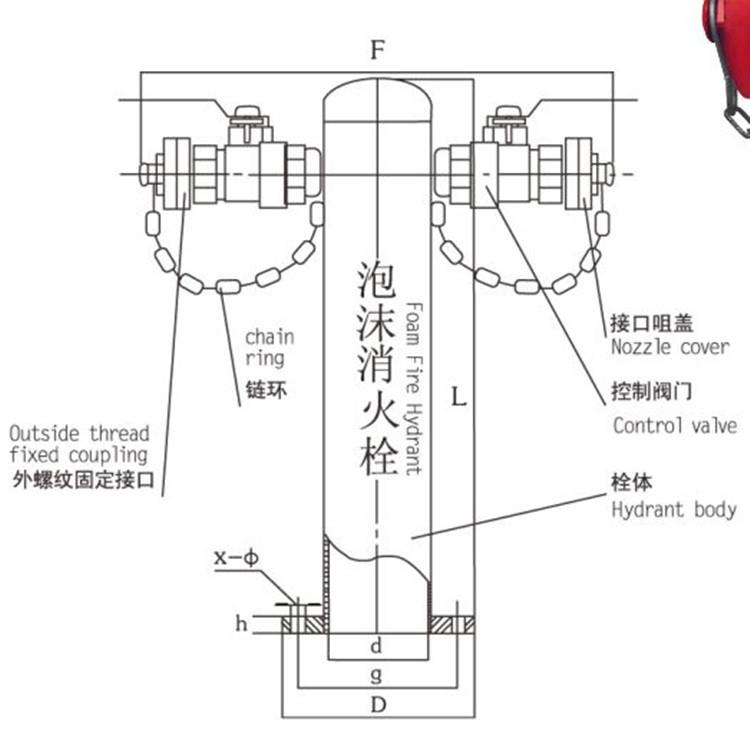
A fire hydrant, officially known as a fire hydrant, is a fixed fire-fighting facility primarily used to control combustibles, isolate combustibles, and eliminate ignition sources. Divided into indoor fire hydrants and outdoor fire hydrants.
The fire protection system includes outdoor fire hydrant system, indoor fire hydrant system, fire extinguisher system, and some may also have automatic sprinkler system, water cannon system, gas fire extinguishing system, fire detection system, water mist system, etc. A fire hydrant set is generally composed of a fire box, fire hose, water gun, coupling, hydrant, clip, etc. The fire hydrant is mainly used for fire trucks to take water from the municipal water supply network or outdoor fire water supply network to extinguish fires, or can be directly connected to a water hose or water gun to discharge water for extinguishing fires. Therefore, indoor and outdoor fire hydrant systems are also one of the important fire-fighting facilities for extinguishing fires.
placement location
1. Fire hydrants should be placed in public shared spaces such as corridors or halls, usually within the walls of these spaces, and should not be decorated in any way. They should be clearly marked (indicating "fire hydrant") and no obstacles should be placed in front of them to avoid affecting the opening of the fire hydrant door.
2. Fire hydrants are generally not installed in rooms (such as private rooms), which does not comply with fire safety regulations and is not conducive to timely rescue by firefighters.
Key points for selection
1. When the building is within a 150m radius of municipal fire hydrant protection and the fire water consumption does not exceed 15L/s, outdoor fire hydrants may not be installed.
2. Outdoor fire hydrants should be evenly arranged around high-rise buildings and should not be concentrated on one side of the building.
3. The distance between the outdoor fire hydrant of civil air defense engineering and the entrance of civil air defense engineering should not be less than 5m.
4. The outdoor fire hydrant in the parking lot should be installed along the perimeter of the parking lot, and the distance from the nearest row of cars should not be less than 7m, and the distance from the gas station or garage should not be less than 15m.
5. Outdoor fire hydrants should be installed in locations that are convenient for fire trucks to use.
6. Outdoor fire hydrants should be above ground, and when underground fire hydrants are used, there should be clear signs. Underground construction is preferred in cold regions, while above ground construction is recommended in non cold regions. If conditions permit, anti-collision construction can be used for above ground construction.
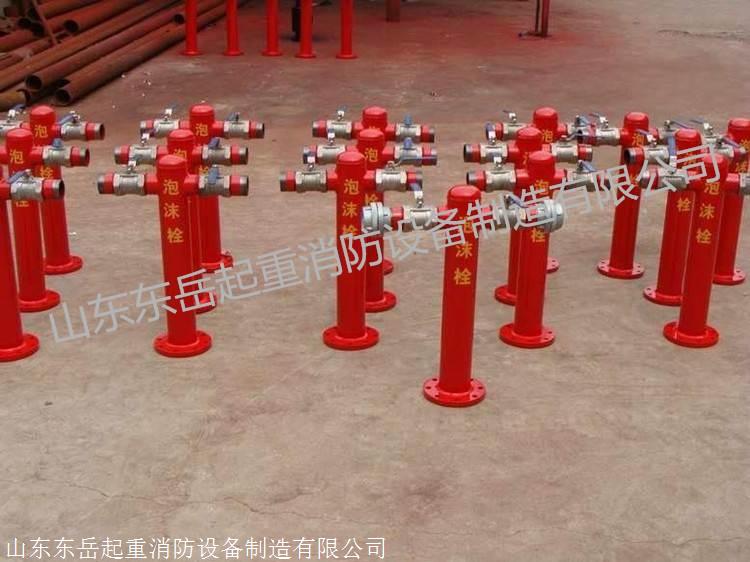
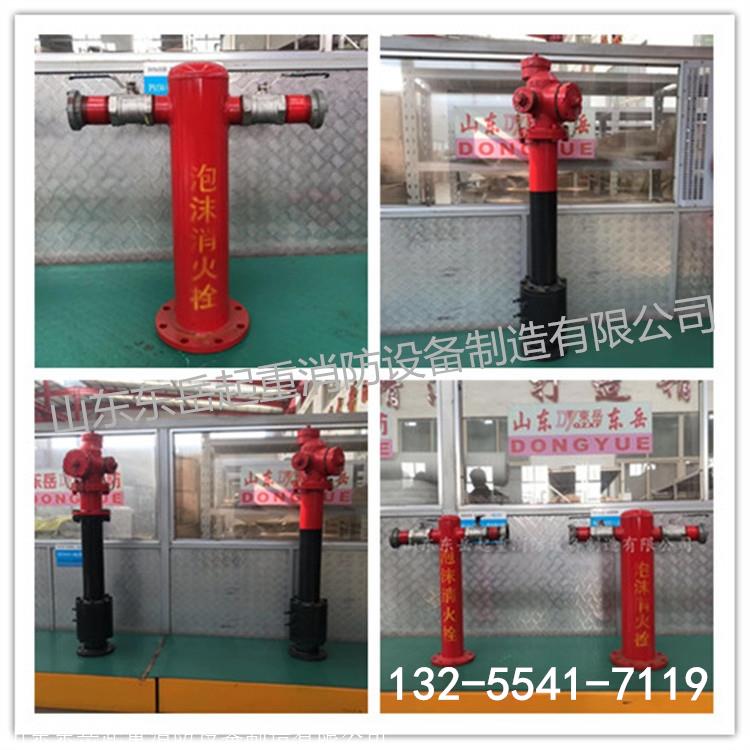
7. Outdoor above ground fire hydrants should have a diameter of 150mm or 100mm and two hydrant ports with a diameter of 65mm. Outdoor underground fire hydrants should have one nozzle with a diameter of 100 and one with a diameter of 65mm.
8. The protection radius of outdoor fire hydrants should not exceed 150m, and the spacing should not exceed 120m.
9. The distance between outdoor fire hydrants and the roadside should not exceed 2 meters, and the distance from the exterior wall of the house should not be less than 5 meters.
Type characteristics
Outdoor fire hydrants include traditional above ground and underground fire hydrants, as well as new types of outdoor direct buried telescopic fire hydrants.
The above ground water connection is easy to operate, but it is prone to collision and freezing; The underground anti freezing effect is good, but it requires the construction of a large underground well, and when in use, firefighters have to go to the well to collect water, which is very inconvenient.
Outdoor direct buried telescopic fire hydrants are usually pressed back below the ground and pulled out to work when in use. Compared to above ground models, it can avoid collisions and has better anti freezing effect; More convenient to operate than underground, and simpler to install directly. It is a very new and advanced outdoor fire hydrant.

AfterSalesService :
Key words:- The ground foam fire hydrant is supplied by the manufacturer
More Products