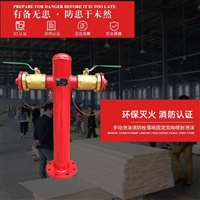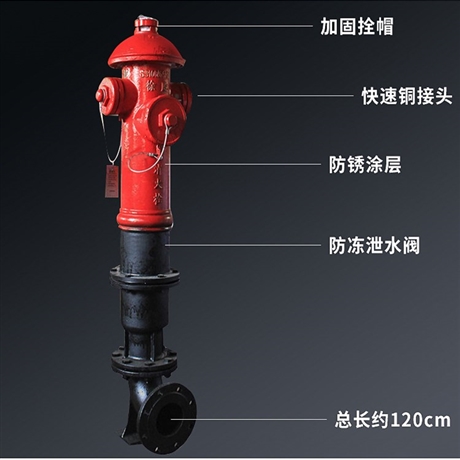

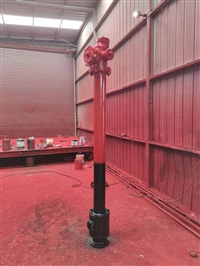
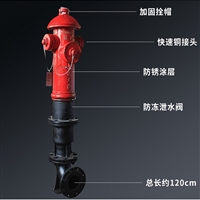
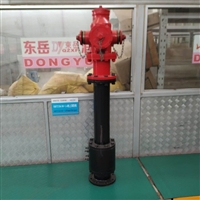
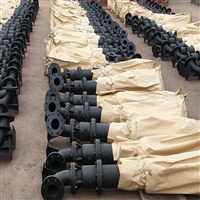


Ground fire hydrant anti freezing anti-collision outdoor fire hydrant SSFT series quick opening pressure regulating
Category:
Security/Firefighting equipment/Other fire-fighting equipment
Model:
SSFT100/65-1.6
Brand:
Eastern Mountain
Retail Price
1,400.00USD
重量
kg
- Product Description
-
Description :

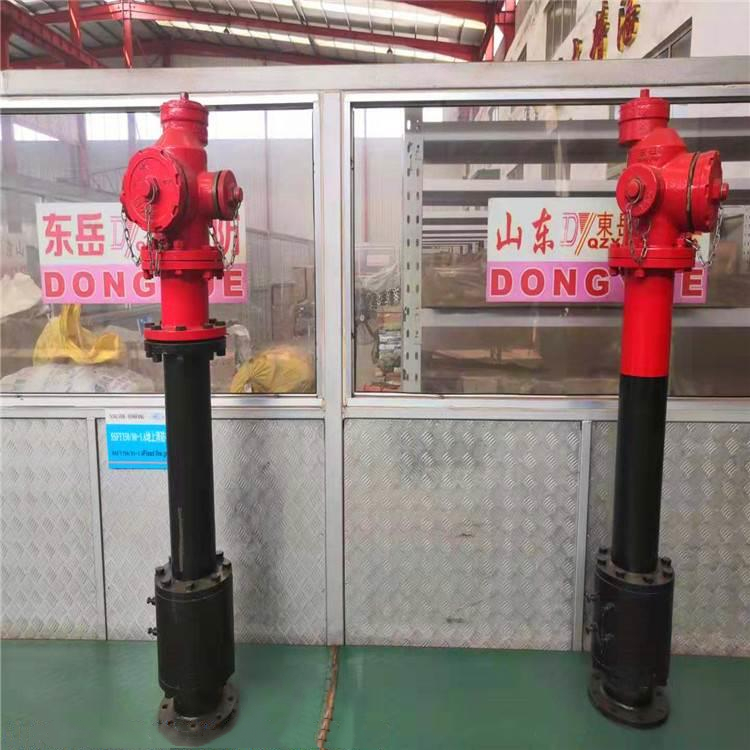
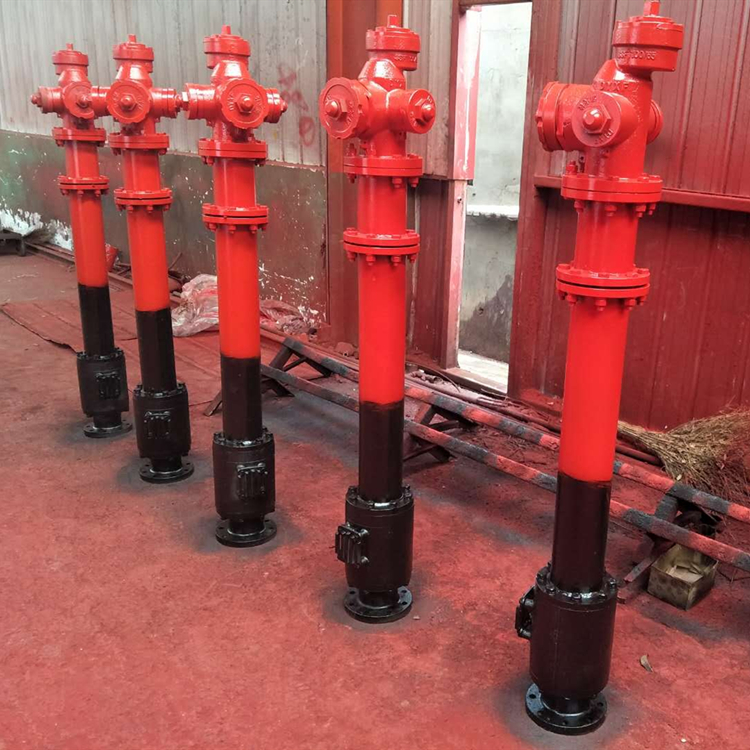
Outdoor fire hydrants include traditional above ground and underground fire hydrants, as well as new types of outdoor direct buried telescopic fire hydrants.
The above ground water connection is easy to operate, but it is prone to collision and freezing; The underground anti freezing effect is good, but it requires the construction of a large underground well, and when in use, firefighters have to go to the well to collect water, which is very inconvenient.
Outdoor direct buried telescopic fire hydrants are usually pressed back below the ground and pulled out to work when in use. Compared to above ground models, it can avoid collisions and has better anti freezing effect; More convenient to operate than underground, and simpler to install directly. It is a very new and advanced outdoor fire hydrant.
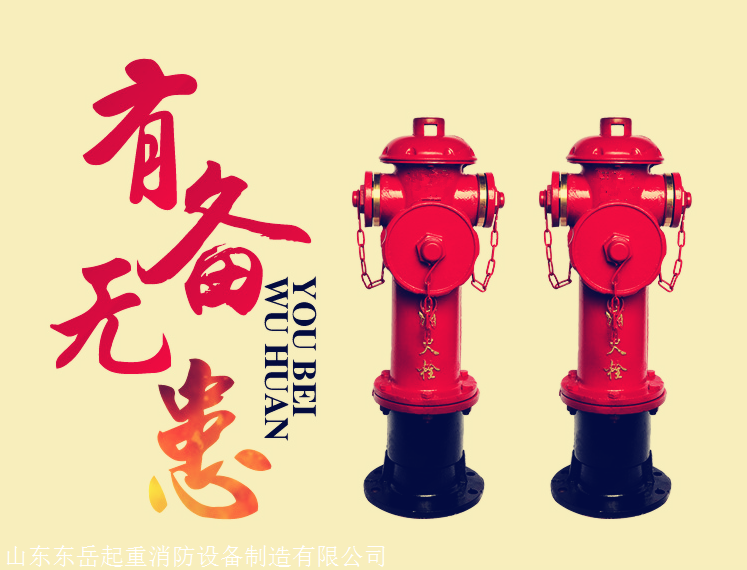
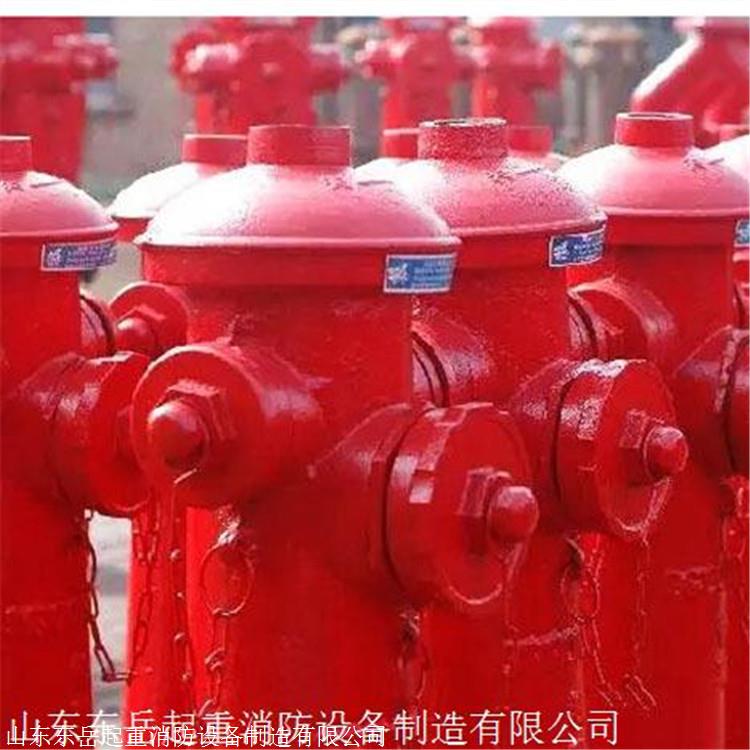
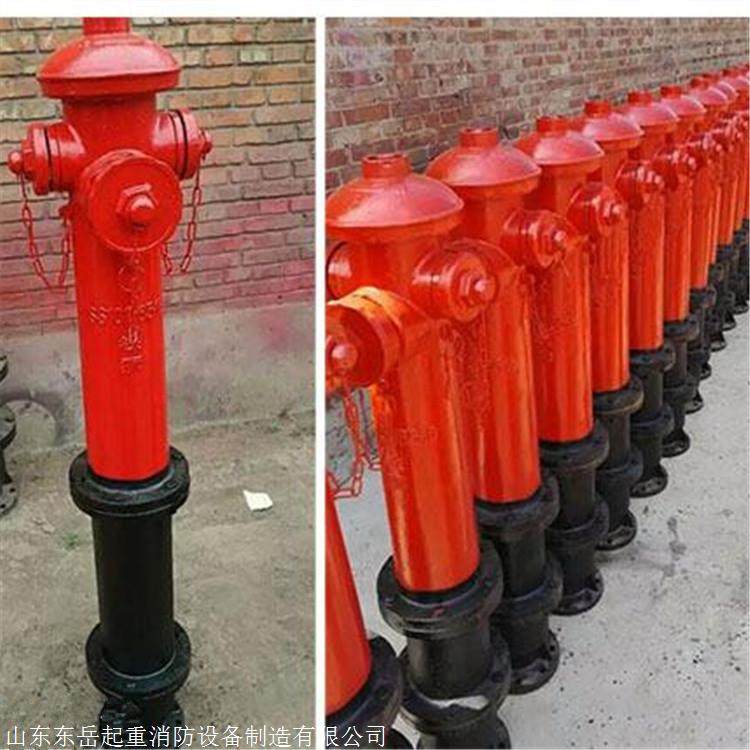
Selection of Outdoor Fire Hydrants
1. The selection of underground and above ground fire hydrants should be tailored to local conditions. In some cities, the planning and installation of fire hydrants in the municipal water supply network emphasizes the use of underground type, while in other cities, the original underground type has been completely transformed into ground type. Underground fire hydrants have the advantages of strong concealment, no impact on urban aesthetics, minimal damage, and anti freezing in cold areas. However, as a user and management department, it is not very convenient to find and maintain, and it is easy to be buried, occupied, and compressed by building vehicles. A large number of underground fire hydrants require well protection, which requires a large amount of capital investment. At the same time, they occupy a considerable position in urban underground pipeline planning, bringing difficulties to the planning. On the other hand, above ground fire hydrants are more conspicuous, easy to find, and convenient to use and maintain, but they are prone to damage and theft of water. If a fire hydrant is truly installed within 120 meters according to the specifications, it will inevitably have a certain impact on the urban streetscape. Fire hydrants are mainly used for extinguishing fires and obtaining water. Therefore, as the department using fire hydrants, it is the desire and requirement of the fire department to quickly find fire hydrants, obtain water quickly, conveniently, and easily. The selection of fire hydrants should be tailored to local conditions, taking into account both the usage and urban landscape, as well as maintenance and management. Therefore, the combination of underground and ground types should be considered. And the specifications and models of fire hydrants should not be too many, making them easy to use and maintain. 2. The outlet diameter of the fire hydrant shall not be less than 100mm. With the increase of urban buildings and population density, the difficulty of extinguishing fires has increased. In order to ensure the water pressure and quantity requirements for extinguishing fires, it is necessary to ensure that at least one outlet diameter of the fire hydrant is not small, with a diameter of not less than 100; mm。
3. The opening and closing direction of the fire hydrant should be uniform, both clockwise and counterclockwise. The screw rod should be made of stainless steel, and the sealing cup should be made of EPDM rubber or nitrile rubber. The anti-corrosion inside the cavity should meet the hygiene standards of drinking water and be consistent with the requirements of the valve.

Maintenance of fire hydrants
As one of the ancillary facilities of the pipeline network, the management of fire hydrants should be equivalent to the management of other facilities, and a dedicated management team should be established to implement specialized management. Once the fire hydrant is found to be malfunctioning, it should be treated as if it were a pipe network and dealt with promptly. In addition, a periodic maintenance plan for fire hydrants should be developed, and regular maintenance measures should be implemented. Ground mounted fire hydrants should also be regularly painted for corrosion prevention to ensure visibility. Regularly inspect the drainage operation of fire hydrants to determine whether they are effectively opened and closed, and whether the water pressure and volume are within the normal range. On the other hand, the water quality of the distribution network is also improved by using fire hydrants to drain water. In the implementation of fire hydrant drainage work, in order to ensure the quality and effectiveness of drainage and prevent secondary pollution of the pipeline network, a flexible hose should be used to discharge water into the rainwater well during drainage. The quality of drainage is mainly measured through on-site water sample testing, which mainly measures water quality indicators such as turbidity and residual chlorine. In addition, the water pressure measurement of the pipeline network is recorded before drainage to accumulate the service pressure parameters of the pipeline network and facilitate the operation and scheduling of the pipeline network as parameters.
It is necessary to improve the water quality of the pipeline network and ensure the safe operation of fire hydrants through fire hydrant drainage. However, at the same time, the problem brought to water supply enterprises is that the sales of their own aquatic products have also increased accordingly. How to economically, reasonably and scientifically manage drainage is a problem that water supply enterprises should explore in depth.
In the management of fire hydrants, Chengdu Water Supply Company implements hierarchical drainage management based on the setting of fire hydrants, the discharge conditions of each site, the material condition of the pipelines where the fire hydrants are located, and the water consumption situation of the area. It implements periodic and phased discharge according to specific situations, and calculates the discharge water volume based on the time of greeting and the water pressure at that time. In order to facilitate the accuracy of drainage instructors, some water supply companies have also installed water meters for each fire hydrant for measurement, and similar practices have been adopted abroad. However, the installation of water meters also increases the difficulty of management, and this approach should be carefully considered.
2. Fire hydrant wells, like other facility wells, may often be piled up, blocked, buried, or compressed. In addition to strengthening inspections, it is also necessary to promote and guide fire safety regulations. Especially, close cooperation should be established with the local fire department, and the law enforcement efforts of the fire department should be relied upon to maintain and manage fire-fighting facilities. The fire department implements zone management for fire extinguishing, so the maintenance and management of fire hydrants in water supply enterprises should also be organically combined with the zone management of the fire department to form a joint management, which is conducive to achieving twice the result with half the effort. Chengdu Water Company sprayed yellow paint on the cover of the fire well as a warning, which facilitated the search and maintenance, and also played a prominent role for the use of the fire department. This method is worth promoting. Of course, if conditions permit, the fire manhole cover should be painted with fluorescent and reflective markings for easy searching at night.
3. As one of the water supply network facilities, establishing and improving the archive data of fire hydrants is the key to fire hydrant management. The archive data should include single card diagrams, maintenance records, daily inspection records, etc. If conditions permit, a fire hydrant management information computer system should be established to improve the means of fire hydrant management. For more information and pricing on fire hydrants, please contact sales

AfterSalesService :
Key words:- fire hydrant
More Products