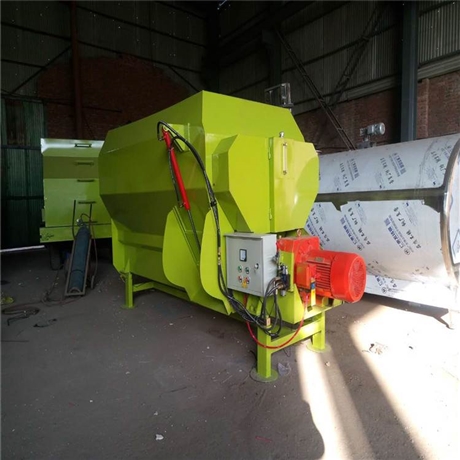





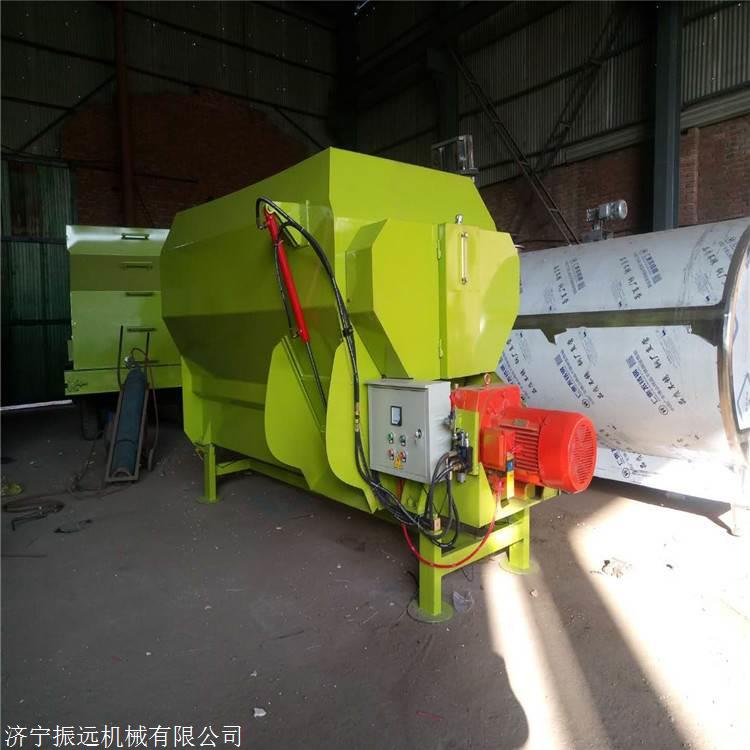
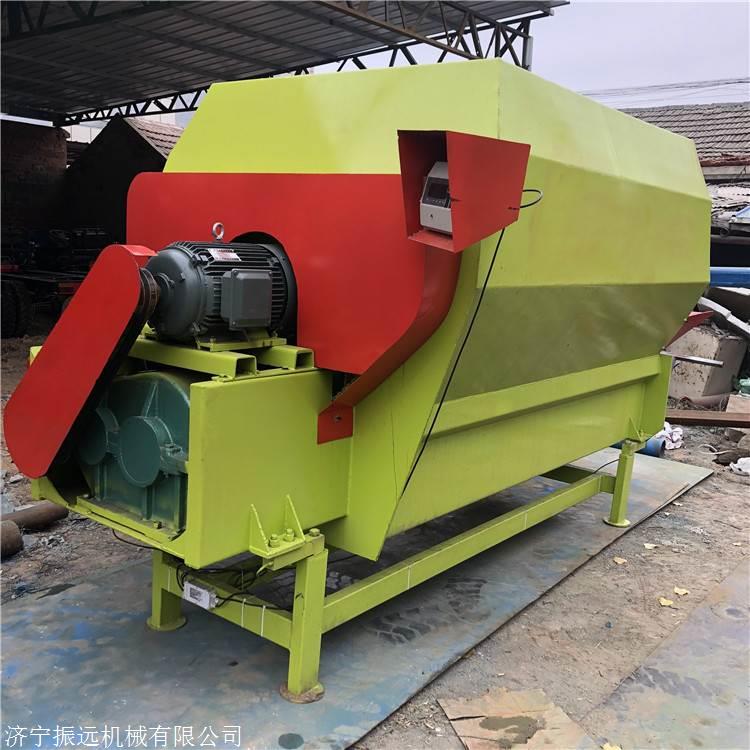
Jiangxi Cattle Farm Whole day Grain Blender Self propelled TMR Blender Forage Grinding Uniform Blender
Category:
agriculture/agricultural machinery/Animal husbandry machinery
Model:
Brand:
Zhenyuan Machinery
Retail Price
Negotiable
重量
kg
- Product Description
-
Description :
Except for two domestic bike sharing brands, Mobike and ofo, almost all bike sharing brands are significantly reducing production. The bike sharing industry has undergone a major reshuffle, and the era of crazy car making is now a thing of the past. Come and listen to this episode of 'New Business Observation' to talk about the major reshuffle in the bike sharing industry. Observers: Yang Xuan, Chief Editor of the Deep Feature Department, and Yang Lin, Journalist of the Deep Feature Department
Article | Fang Yu Retail Boss Internal Reference * * Special Article Unauthorized Reproduction is prohibited Core Introduction: Why did the new species not initially care about the so-called cost and efficiency issues? Why is Xicha grateful that she was not born in a first tier city? What does the sense of ceremony mean to consumers? On December 30th, 2018, before the New Year, HEYTEA opened a pop-up store in Sanlitun, Beijing. When I went to the scene, I saw two circles of lines. Turning to the Heytea store in Sanlitun, there was also a queue. It seems that after six months, the phenomenon of queuing for Heytea is still present. The reason why the queuing problem is eye-catching is that it is theoretically inhumane. People always hope for speed and convenience. Mr. Luo Zhenyu also pointed out in his 2017 New Year's Eve speech that the core of new retail is efficiency. However, Mr. Luo Zhenyu did not clarify whether the efficiency issue he mentioned was from the perspective of merchants or consumers? The phenomenon of liking tea indicates that from the perspective of consumers, sometimes we may find that they do not seem to care about "wasting" their time and reducing their transaction efficiency. The core pain points of the retail industry are nothing but cost and efficiency. Reducing costs and increasing efficiency is the expectation of all enterprises. However, if we look back at the changes that occurred in the new retail field in 2017, we will also find an interesting phenomenon: cost and efficiency were not the first considerations for new species. Or in other words, many new species may not have significant improvements in cost and efficiency compared to traditional retail companies in the short term, but this does not prevent consumers from accepting them. Of course, it should be clarified that the cost and efficiency discussed in this article include both the perspectives of businesses and consumers. For example, Hema's store costs are much higher than traditional supermarkets, which is a high cost strategy. Even from the perspective of consumers, they are concerned about time costs and transaction efficiency. 30 minute home delivery has indeed improved efficiency, but this approach is also an e-commerce practice and not new. From the perspective of in store consumption, the efficiency of eating and cooking seafood on the spot is not high at present. However, these do not hinder people's curiosity and curiosity about Hema. HEYTEA is no exception. On the one hand, HEYTEA also knows that long queues can affect the experience. On the other hand, the author recently met a Heytea Black Gold member (spending 5000 yuan) named Herofo, who is a media person "floating" in Beijing and reached the Black Gold standard within two months. Herofo admits that he is a loyal fan of Heytea and also interacts with friends. So, would he choose to purchase tea on behalf of others in order to drink tea faster? He said he wouldn't. Or wait in line by yourself and pack up to take away. On the one hand, experts are talking about reducing costs and increasing rates, while on the other hand, the truly popular new species have bypassed the so-called cost efficiency issue in the early stages of development, and even gone against it, winning the favor of consumers (such as Heytea, which can choose to franchise to expand its stores to speed up the process, but Heytea did not choose this option and insists on direct sales). Why? Starting from this question, we have summarized the four steps of upgrading the consumption of new brands based on the consumption case reports we have done this year (mainly focusing on new tea drinks), for your reference. On January 1st, in our tweet, our special contributor Mingxuan talked about the success of Starbucks. The original title of the author's article was "Everyone Loves Starbucks", but we made some modifications because the author believed that saying that everyone has been to Starbucks is not a problem. But love or not, it's not necessarily true. One of the reasons why everyone has been there is that there is no other choice in the Chinese market. The concept of the third space created by Starbucks is so deeply ingrained in people's minds that I even recall that most of the interviews and recruitment this year were actually conducted at Starbucks. But if you ask me what I drank during the Starbucks interview, I really don't remember. Perhaps for many non Starbucks die hard fans like me, Starbucks' true product is its space, not coffee. So, when there are alternatives to Starbucks' third space on the market, Starbucks will be diverted (such as COSTA) to certain groups of people, but personally, the existence of these alternatives will not increase the total number of coffee shop visits in a year (because there is no new demand stimulated). But when new types of tea drinks such as Heytea and Nayuki's tea emerged, they provided a new world, not only with different teas, but also with different spatial environments and atmospheres. New species will attract consumers out of curiosity, whether it's tea drinks, decoration styles, or subsequently, other new reasons will emerge. Space is the carrier and starting point of HEYTEA's brand and culture. We believe that attracting consumers through products or the brand itself is the driving force behind the long-term development of the brand itself, "HEYTEA said. Rejecting the old is human nature. Even Mingxuan, who deeply loves Starbucks, had to joke at the beginning of his article on January 1st that Starbucks is an "outdated internet celebrity". You're good, but I don't have any passion for you anymore, that's all. That's why Starbucks' global flagship store opened in Shanghai. A new scenario, a new business model, even if its experience is not yet perfect, consumers are willing to pay for it within a certain period of time. It's like having a honeymoon period when dating, and the other person will have a halo over them. Because this is the dividend of innovators. The question is, do you have the ability to innovate and create a new world for consumers? Of course, this' new world 'may be a new continent, or perhaps a transformation of the old world. HEYTEA told the "Retail Boss Internal Reference" app that HEYTEA does not consider itself a representative of consumer upgrading, nor does it consider tea drinks to be a new species. Tea drinks have a long history in China and are a real and objective demand. We are just making it better with our hearts. "Xicha made a metaphor:" Xicha actively chose a very high-frequency and spacious tea drink industry. This soil has always been there, but we have not planted it properly, and we have been watering it more carefully than others. The key is still that consumers like it. "However, Xicha itself is still on the path of continuous change. Every time I enter a new city, I will create illustrations and design peripheral products, including cup covers, based on the characteristics of the city; On different holidays, there will also be topic interactions; At the same time, different themed stores will be launched, such as pink themed stores, to create surprises. For consumers, suddenly growing different fruits in the same soil is a new market. Especially for consumers who are accustomed to coffee shops in first tier cities. The same logic can also be understood why bookstores that have been following a mix and match style in recent years have revived and regained popularity among young people. This innovation also includes gameplay innovation, such as blind box gameplay with flower time, which breaks the consumption cycle centered on festivals and actually increases consumption frequency and new consumption demands. If you look at the issue from the perspective of efficiency and cost, then in the eyes of straight men, buying flowers itself is a waste, let alone buying once a week. In the dividend period of innovators, cost and efficiency are not important. Who hasn't made some selfless sacrifices in love. The important thing is whether you have the ability to continuously create new consumer demand and how to stick to your consumers. Different strategies may result in different outcomes, even the difference between life and death. Let's discuss this issue below. In this year's review of consumer upgrading, many industry insiders have found the same problem: why many new consumer brands have emerged in second - and third tier cities. The explanation given by Luo Zhenyu is very representative: the population of China's * * scale lives in second - and third tier cities, which better represent the typical Chinese way of life. From a comprehensive analysis, starting a consumer brand in a small city can avoid at least two major pitfalls: it can avoid the attention of giants and avoid being trampled on too early. Secondly, it can avoid the "illusion" brought by the high traffic in first tier cities and polish its core competitiveness in products. This kind of traffic illusion has harmed many entrepreneurs in the past. Xicha said to the APP of Retail Bosses that in small cities where there is no Internet concept and the population lacks mobility, the market will immediately give an intuitive score on whether the taste is popular. Starting from a small city like Jiangmen provides an opportunity for Heytea to undergo rigorous consumer testing. From being almost deserted to queuing up in a small city, the initial test that Heytea experienced happened to be its * * trial. HEYTEA believes that the consumer market in first tier cities is large and can accommodate diverse things. Consumers are willing to try and do not have to worry about their purchasing power; First tier cities can find better talents and better integrate with various aspects of funding, which is the opportunity side. On the other hand, in first tier cities, it is also easy to cause a problem where brands may be matured. Like a magical potion that allows a child to speak and walk for two days. A seemingly successful store is actually consuming and overdrawing the brand. HEYTEA has been struggling on its own, with every step in Jiangmen and Zhongshan being difficult but solid, and in Guangzhou and Shenzhen, it's like fish in water, "said Xiao Shuqin, HEYTEA brand manager. Assuming that HEYTEA is located in Beijing and Shanghai from the beginning, if it can get a good storefront and use marketing methods that are close to young people, it may also become popular overnight. But this kind of sudden popularity is more about hitchhiking on the traffic dividend, rather than the success of one's own product strength. The example of extreme popularity and decline has been repeated in the years when the concept of Internet catering became popular. On the contrary, in a small place like Jiangmen in Guangdong, all feedback is genuine, localized, and grassroots. If your tea tastes good, it tastes good. If it doesn't taste good, no matter how much you smile at it, it's useless. The young couple who came yesterday went to the milk tea shop under your nose today. These are all things that the founder of HEYTEA personally experienced. So, it forces him to spend most of his energy on product quality polishing and innovative iteration. Ultimately, this attentive consumer will experience it. I don't understand how Herofo, the Heytea Black Gold user mentioned earlier, spent 5000 yuan in two months at a tea shop. The reason he gave is: "For HEYTEA, my concept is texture and Chinese brand. I think HEYTEA's more obvious labels are these two. From decoration to product packaging, they are very textured and pay great attention to all aspects. Unlike previous milk tea shops, I believe this is the difference between self operated and franchise models. Starbucks is also good at this point. Texture can bring good consumer feelings to many people. After all, they hope that the stores they go to have quality." Personally, he likes to go to Yulu Tea, which has less ice and sugar, so the taste combines well with Zhishi. In the media's summary, this is a generation of consumers who are not willing to compromise. Products without excellent quality cannot deceive people. Xiao Shuqin, the brand manager of HEYTEA, told the "Retail Boss Internal Reference" app that our consumers are not foolish. They believe that many consumers queue up just to post on social media, which underestimates their intelligence and the appeal of HEYTEA's products. When Heytea meets their expectations, they will pay the bill. When consumers' expectations put pressure on new brands, they ultimately need to use scale to turn the pressure into growth momentum. HEYTEA stated that in the densely populated Guangzhou area, the phenomenon of HEYTEA queuing has been greatly alleviated. We are working hard to improve the convenience of our products, hoping that everyone can easily buy a cup of Heytea without having to go to a certain place or queue up. The goal of making Heytea a daily necessity can definitely be achieved, but it will take time. Currently, the total number of Heytea stores has exceeded 80, and it will double next year. Feed the fish fat before going to the sea, don't expose yourself too early, but does this mean choosing a track without giants? From the perspective of the Internet industry, there is no doubt that doing what Tencent can do will kill you in minutes. But in the consumer field, perhaps the situation is different, look down. Giants always appear in the same place when reporting on new tea drinks, and some people ask us, 'Why do you always compare us to Starbucks? It's unfair!'! It's like comparing a baby to an adult, after all, they are international giants. To be honest, we don't want to make such a comparison either, but there's nothing we can do because you're becoming more and more alike and competing in the same market. In Nayuki's report, we mentioned the phenomenon of Nayuki liking to open stores next to Starbucks. Even for 813, which is deeply rooted in southern China, we label it as a tea drink that likes to open big stores in urban villages. I have experienced it once. In the Pearl River Delta, the manufacturing base of China, a large part of the population structure consists of migrant workers. Simply put, for the migrant workers who move between cities, 813 is their Starbucks. From south to north, it can only be said that China's demand for a 'third space' is much greater than imagined. So Starbucks is desperately opening stores, but we still often can't find seats at Starbucks. The rise of Chinese new-style tea drinks may seem like the rise of a local category, but in reality, it satisfies people from different social classes and their pursuit of a third space (while Starbucks only meets the needs of a single social class). For example, students or people who have just graduated from school may prefer Heytea over Starbucks because the latter is too formal. Working girls tend to prefer 813 over Starbucks because the latter is too restrained. In a market where there are super giants, there is still so much room for growth, which may be the inspiration brought to us by the new tea drink. There is a saying that dangerous places are also safe places, so we can also say that dangerous places are also places of opportunity. The market where giants have already emerged may also see the emergence of new unicorn companies. On the contrary, many highly dispersed markets have not yet seen the emergence of oligopolies, and dispersion has become the norm. That means that although this market has a lot of money, it is not easy to concentrate. I will give two examples, one is the maternal and child market. If we don't include the Taobao platform, the maternal and child market is still not particularly prominent, although everyone knows that this market is huge. The second market is the pet economy market. It is also a market where oligopolies are absent, although it can be imagined that the popularity of the single economy will drive the continued development of the pet market. The specific reasons have been analyzed by many peers and will not be further elaborated. Although this pattern of sharing the market with giants was something I never imagined, when Nie Yunchen opened a 30 square meter storefront in Jiangmen at the beginning of his entrepreneurship, he never expected it to be today. However, later on he clearly realized what path Heytea was going to take. In 2014, HEYTEA stopped opening small shops. As of now, Heytea's standard store area is -200 square meters, and its flagship store can reach 2000 square meters. So, I would like to draw a bold conclusion that if you want to become a unicorn company, you should go to the arena where giants have appeared before. Why is it that you are the one who can change history in a market that has long been highly dispersed and dominated by various warlords? In a recent interview, Wang Haihui, founder of U Shopkeeper, gave an example of how a new brand can maintain its presence for a long time when talking about consumer upgrades. He said that when he was in college, everyone would go to Watsons with their girlfriends to buy cosmetics. Young people nowadays who still go to Watsons, you will find that those who go to Watsons are still the same generation. The same phenomenon is also true in supermarkets and hypermarkets. People jokingly say that a person's age can be revealed by singing certain songs or watching certain cartoons, but in fact, consuming certain brands can also reveal their age. Of course, for an old brand, this is sad, who wouldn't want to have the power to fight against time like Coca Cola. But for a new brand, this is indeed an opportunity, as the new generation of consumers are struggling to find their new spokesperson. How can a new brand quickly capture consumers' minds and possess significant cognitive power. Perhaps we still need to return to the question at the beginning of this article, which is that consumers are willing to invest extra time and energy for something worth it. What is the secret here, besides functional needs, how to enhance a brand's "presence" in consumers' lives. A major characteristic of the new generation of consumers is their willingness to pay for seemingly useless things that are beautiful (or interesting). Here is a tip. The premise is that you acknowledge that consumer upgrades have always been driven by women. This year, there was a phenomenon that was widely reported by the media, which was the popularity of claw machines. Even once regarded as a small opportunity. If a person wants a plush toy, they can go to the store and buy it online. The claw machine is nothing more than setting up a game segment that makes people feel interesting and can pass the time, although the result is only to get a plush toy. If someone is very busy, they may think it's a waste of time. But young people don't think so. They have money (willingness to consume), leisure, and independence. A similar example is that Hema has made the shopping mall look like an aquarium in a zoo. You can go and catch strange shrimp, soldiers, and crabs by yourself, and then weigh them. Doesn't it seem very fulfilling? Also, new tea drinks such as Heytea are made with transparency throughout the entire process, just like Starbucks. You can see the production process, the ingredients used, the shaking process, until a cup of tea is placed in front of you. This kind of careful thinking, I call it a sense of ceremony, and it goes without saying how important a sense of ceremony is for female consumers. It goes without saying that the process of building a brand's presence is also the process of falling in love with consumers. To have a true love instead of being "* *", it requires more sincerity and a sense of ceremony. One phenomenon is that many brand members are now bound with their phone numbers, and in this case, the membership card itself is no longer necessary. But many Heytea members still buy a membership card to carry with them. What does a card bring, a sense of belonging and identity. As a fan, I can understand that it's like fans painting the team flag with oil paint on their faces. Moreover, this sense of identity can eliminate the barriers caused by some social factors, such as regional differences and income disparities, and form a sense of connection between different groups of people. This sense of connection with others and the world is also one of the functions of the Internet, but compared with the abstract connection between networks, the connection brought by brands is more warm and flesh and blood. When more and more consumers truly transform from customers to your senior members, and then from members to loyal fans, you no longer have to worry about cost and efficiency issues. To conclude this article, it is not enough for a person to only have this life, he also needs to have a poetic world.
Editor's note: This article is compiled from Medium by Jimmy Song, with the original title 'The TruthaboutSmart Contracts'. Just like "blockchain," "AI," and "cloud," "smart contracts" are also a popular new concept nowadays. Imagine, what could be better than being certain that a contract will be executed as agreed in the future without any judicial intervention? The promise of smart contracts includes: contracts can be automatically, trustlessly, and fairly executed during the process of contract formulation, performance, and enforcement, eliminating intermediaries or eliminating the need for lawyers. I can understand why smart contracts are being hyped up. After all, if we don't have to worry about whether the other party will fulfill the contract as agreed, the efficiency of many things will be greatly improved. Speaking of which, what exactly is a smart contract? Is this a concept derived from Ethereum? Is this the way future contracts will be made? In this article, I will explore the various details of smart contracts and the accompanying "engineering reality" issues (spoiler: it is not simple and difficult to guarantee). What is a smart contract? A normal contract is an agreement between two or more parties that binds them to something that will happen in the future. For example, Alice may pay Bob some money to use Bob's house (also known as rent). Charlie may agree to repair any future damage to Denise's car, in return for Denise paying Charlie a monthly fee (also known as car insurance). The difference between so-called "smart" contracts is that all terms of the contract are evaluated and executed by computer code, which makes it unnecessary to have any credit endorsement. Therefore, if Alice agrees to pay Bob 500 to purchase the sofa, the delivery period will be 3 months. By using computer code, it can be determined whether certain terms of the contract are valid (whether Alice has paid Bob or not)? Has the 3-month delivery period expired? )And execute the contract (deliver the sofa under custody to Alice); Neither party has the right to retract the contract. The key feature of smart contracts is that their execution does not rely on any credit endorsement. That means you don't need to rely on third parties to enforce the terms. There is no need to rely on the other party's consistent words and actions in fulfilling the contract, nor is there a need to rely on lawyers and legal systems to correct things when problems arise in contract execution; Smart contracts can timely and objectively execute various matters agreed upon in the contract. Smart contracts are very 'stupid'. Using the word 'smart' means that these contracts have some innate intelligence. And then things were not like that. The so-called "smart" part is that the execution of the contract does not rely on the cooperation of any party. Compared to asking tenants who owe rent to vacate the house, a "smart" contract will directly lock tenants who have not paid on time outside the house. The unconditional execution of contractual consequences is the reason why smart contracts appear powerful, rather than their innate intelligence. A true smart contract should consider all justifiable situations, focus on the spirit of the contract, and attempt to make fair judgments even in very uncertain conditions. In other words, a true smart contract is like a very good judge. On the contrary, smart contracts in reality are very unintelligent. It is actually based solely on rules and strictly follows them, without taking into account any secondary factors or the spirit of the rule of law. In other words, since smart contracts do not rely on any credit endorsement, it also means that there cannot be any ambiguity in the formation of the contract. This raises the next question. It is very difficult to draft smart contracts due to the extensive promotion of Ethereum, which leads people to mistakenly believe that smart contracts only exist on Ethereum. However, this is not the case. Since the beginning of 2009, * * has had a widely used language called Script to draft smart contracts. In fact, the existence of smart contracts can be traced back to 1995, before * *. **The difference between the smart contract language and the Ethereum version is that the Ethereum language has Turing completeness. That is to say, Ethereum's Solidity language allows for more complex contracts at the cost of increased analysis difficulty. The complexity of this language has brought about some significant consequences. Although complex contracts may allow for more complex situations, they are also difficult to guarantee security. Even for ordinary contracts, the difficulty of implementation will increase due to the increase in complexity; Because complexity brings more uncertainty and explanatory space. With smart contracts, ensuring security means handling all possible ways in which contracts may be executed and ensuring that contract execution is in line with the intent of the drafter. Executing in a context with Turing completeness is extremely tricky and difficult to analyze. Safely executing Turing complete smart contracts is equivalent to proving that a computer program is error free. We know this is very difficult because almost all existing computer programs have defects to varying degrees. Considering the fact that it takes years of learning and very rigorous assessments to be competent in writing ordinary contracts. The writing of smart contracts requires at least equivalent skills, but currently there are still contracts written by many beginners who do not know how to ensure their security. This can be clearly seen from many flawed smart contracts currently in use. **The solution is simply to abandon Turing completeness. This makes the contract easier to analyze, as the possible outcomes of the contract are easier to list and check. The solution of Ethereum is to entrust the responsibility of ensuring security to the drafters of smart contracts. The drafters of the contract should ensure that the contract is executed according to their intentions. Smart contracts are not real contracts (at least in Ethereum). Although theoretically it is a good idea to leave the responsibility of ensuring contractual integrity to the drafter, in practice this has already resulted in some serious centralization consequences. Ethereum was initiated from the perspective of 'code is law'. That is to say, in Ethereum, contracts are the ultimate authority and no one can veto them. This viewpoint expresses to smart contract developers that they must rely on themselves. If you mess up your smart contract, then in a sense, you are blaming yourself. When the DAO event occurred, it resulted in a crash. DAO stands for Decentralized Autonomous Organization, which created a fund on Ethereum to showcase what the platform can do. Users can deposit funds into DAO and receive returns based on DAO investment returns. Investment decisions will be made through decentralized crowdsourcing. DAO raised approximately $150 million at a value of $20. The above things may seem beautiful, but the thousand mile dike has collapsed in the ant nest. Because the nature of the code was not well protected, someone eventually came up with a way to * * access all the funds of DAO. Many people refer to those who steal DAOs as "* *". In this sense, this' * * 'has found a way to extract funds from the contract in a way that the smart contract drafter did not consider, which is a real example. But in a broader sense, this person cannot be called * * at all, he is just someone who is profiting from flaws in smart contracts. This is not much different from how thoughtful Certified Public Accountants (CPAs) exploit tax loopholes to save taxes for their clients. Afterwards, Ethereum decided to no longer consider code as law and will return all funds deposited into the DAO. In other words, the drafters and investors of smart contracts did some foolish things, and the developers of Ethereum decided to rescue them. The impact of this incident is fully documented. The Ethereum Classic platform was thus born, retaining the DAO and continuing the principle of 'code is law'. In addition, developers have started to avoid using smart contracts with Turing complete properties of Ethereum diagrams, as it proves difficult to guarantee. The current ERC20 and ERC721 standards are frequently used smart contract templates in Ethereum. It should be emphasized that both contracts can be written without any Turing completeness. Smart contracts are just anonymous digital bearer instruments used for digitization. Even without Turing completeness, smart contracts still sound good. After all, who likes to have to go to court to get what should belong to them? Isn't it easier to achieve this using smart contracts compared to regular contracts? For example, can't the real estate industry benefit from smart contracts? Alice can prove that she owns the house, and Bob can pay for and receive it. Without ownership issues, machines can execute contracts quickly and without trust, without the need for judges, administrative agencies, or property insurance. Sounds great, doesn't it? There are two questions here. Firstly, it is not really impossible for a centralized organization to be responsible for executing smart contracts. You still need to trust this centralized organization to execute the contract. Trust free is a key feature of smart contracts, so centralized execution mechanisms render them meaningless. To make smart contracts truly trust free, you need a truly decentralized platform. The second question is raised here. In a decentralized environment, smart contracts can only effectively replace regular contracts when there is a clear connection between the digital version and the entity. That is to say, as long as the digital version of the house changes ownership, its physical form must also change ownership. The digital world needs to connect with the material world. This is called the 'oracle problem'. When Alice transfers the house to Bob, the smart contract needs to know that she has actually transferred the house to Bob. There are several ways to achieve this, but they all have the same basic problem. That is, there is a trusted third party verifying the occurrence of transfer behavior in the real world. For example, a house can be represented as an irreplaceable token on Ethereum. Alice can transfer the house to Bob through Atomic Swap to obtain a certain amount of * *. The problem is that Bob needs to believe that this token actually represents the house. There must be some testing criteria here to ensure that the transfer of the token representing the house actually means the legal transfer of the actual ownership of the house. Furthermore, even if the authorities acknowledge that the token actually represents the house, what would happen if the token were stolen? Does the house now belong to a thief? What should I do if my token is lost? Can't the house be sold anymore? Can the token representing the house be reissued? If possible, who should execute it? In the context of decentralization, linking digital with physical assets is a tricky problem, whether it's fruits, cars, or houses. Physical assets are subject to the jurisdiction of * * or other institutions in your area, which means that in addition to the smart contracts you create, they also need to trust something else. This means that ownership in smart contracts does not necessarily equal ownership of the same thing in the real world, and will face trust issues like regular contracts. Smart contracts that require trust from third parties to fulfill no longer have the * * function (or advantage) of not needing to trust anyone. Even digital assets such as e-books, health records, or movies will encounter the same problem. The 'rights' of these digital assets are ultimately determined by other authoritative institutions, and testing standards need to be trusted. From this perspective, the testing criteria are only a simplified version of judges in reality. In addition to relying solely on machines to fulfill contracts and simplifying enforcement rules, the complex task you actually face is to use code to consider all possible scenarios of the contract as well as subjective and human judgment risks. In other words, signing a 'smart' contract means you need to write complex code while also trusting someone or organization. **The contract subject that does not require testing criteria is digital anonymous bills. Essentially, both parties to the transaction not only need to be digitized, but the contract subject must also be an anonymous bill. That is to say, the ownership of the token cannot have a dependency relationship outside of the smart contract signing platform. Only when the title of the smart contract is a digital anonymous bill, can the smart contract be executed on a trustless basis. I really hope that smart contracts can be more practical than they currently appear. Unfortunately, our human understanding of contracts contains a large number of assumptions and case law that do not require clear explanation. In addition, it has been proven that utilizing Turing completeness is a simple way to disrupt smart contracts and lead to unexpected behavior. We should label smart contract platforms that do not possess Turing completeness, rather than those that do. The DAO incident also proves the existence of a contractual spirit that is faintly believed in and helps resolve disputes, which is beyond our imagination. Smart contracts are simply too easy to mess up, difficult to guarantee, difficult to widely achieve trustless and rely too much on external things to make them suitable for most scenarios. The scenario where smart contracts have the characteristic of no need for trust is digital anonymous bills based on decentralized platforms. Produced by the compilation team. Editor: Hao Pengcheng
Due to accurate weighing of the mixed materials, they are well mixed. Most of them adopt this type of homework method.
AfterSalesService :
Key words:- Cattle farm full day grain mixing mixer
More Products