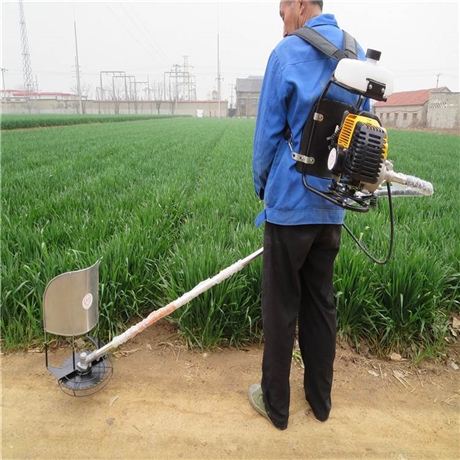





Zhejiang gasoline backpack multifunctional lawn mower, multi-purpose disc lawn mower
Category:
agriculture/agricultural machinery/Soil Tillage Machinery
Model:
Brand:
Zhenyuan Machinery
Retail Price
Negotiable
重量
kg
- Product Description
-
Description :
9. It is strictly prohibited to use blades to mow grass on areas with rough stones, and to use a grass brush to mow grass. For non wooden weeds on the lawn, using a grass brush to mow grass is both safe and efficient.
11. After use, the blade should be placed out of reach of children.
The invention of lawn mowers has reduced people's working hours, reduced labor output, and further developed the labor of workers. Workers no longer have to work time-consuming and labor-intensive, and have provided us with better services. At the same time, it has a certain level of noise, and many lawnmowers make loud noises, affecting people's normal lives.
Editor's note: This article is from the WeChat official account "Sequoiacap" (ID: Sequoiacap), written by/John Sviokla, compiled by/Hong Shan,. The world increasingly infected by digitalization seems to be operating according to some new rules. Have you been eager to abandon the old logic of the industrial economy era? But in fact, in the face of a rapidly changing business world, identifying what are the constant factors may be just as important as identifying the changes themselves. The following is a heavyweight article written by Harvard University professor John Sviokla towards the end of the year, revealing five fundamental unchanging laws that will continue to affect the functioning of the business world. Many growth strategies that worked well in the past are no longer as effective, and these principles not only explain what your company will face next, but also why. They are Turing's computability theory, Coase's theorem related to transaction costs, Bell's law in the field of computer science, Baldwin and Clark's modular concept, and Satoshi Nakamoto's principle of distributed accounting. Significant changes are often not obvious, especially in business. The birth of digital technology has changed the face of many industries, but there are still some laws that originated in the industrial economy era that will continue to work and can be seen as principles. If you start a business in the second decade of the 21st century, it is crucial to understand these five principles as the disruptive effects of digitization are rapidly becoming the new normal. Many growth strategies that worked well in the past are no longer as effective, and these principles not only explain what your company will face next, but also why. Turing's computability theory: Machines can handle any computable problem that appears increasingly frequently. In the era when Turing published his original paper, only a few activities were computable, but he foresaw that with the continuous development of digital computing, the number of computable activities would increase. Indeed, to this day, their quantity and influence are still growing. Even as the crystallization of constantly evolving human efforts, machines are as capable as humans, and may even be more capable than humans. Turing's efforts in computability and artificial intelligence propelled the advent of the computer age and established the fact that everything digitized, from a computer to today's mobile phone, has the potential to surpass human achievements. When highly valued digital technologies such as search engines, autonomous driving applications, ATMs, travel booking websites, etc. emerge, they inevitably replace human labor and fundamentally change the industry in which they operate. The increasing impact of computability explains why mature companies are so strongly influenced by digitization. In a world where the activities of any enterprise are likely to be completed by computers soon, we must constantly redefine ourselves along the digital route - whether it is Wal Mart's acquisition of Internet retailer Jet, General Electric's making its industrial products "smart", or John Deere's invention of the robot lawn mower. In the future, tasks that are expected to become computable include due diligence in M&A transactions, real-time language translation, some forms of programming, and the vast majority of car driving operations in the world. At the same time, concerns (or hopes) that computers will completely replace humans may still be premature. Although many aspects of human activity can be achieved in the wave of increased computability, most of the work done by humans exceeds the ability of machines to replicate. Turing himself believed that some tasks are never computable, such as where only humans can decide to travel or which company's products to buy. Coase's Law of Transaction Costs: Only companies that maintain internal transaction costs lower than external costs have growth potential. Since the late 1930s, economist Ronald Coase began to consider the reasons for the emergence of companies and why they declined. His final conclusion is the Coase theorem: when the cost of conducting activities internally within a company is cheaper than outsourcing, the company can survive. If it weren't for this situation, the company would no longer exist. The Coase theorem explains the limitations of scale growth that many companies face, stating that a company can only develop when its internal costs (including all indirect costs) are lower than its external costs. Once internal costs exceed or remain at par with external costs, the company will face a turning point of diminishing returns and stop expanding. Because internal transaction costs are often difficult to track, companies may not realize why they are struggling. The new digital technology has increased the pressure brought by the Coase theorem. Some observers believe that these technologies will sound the death knell for large companies. For example, search engines have made it easier and cheaper to obtain information today than in the past, thus weakening the advantage of rich resources that used to be unique to large companies. But digitalization has also reduced internal costs, at least for companies that effectively utilize technology, which has changed the economic practices of internal organizations. For example, companies such as Amazon, Microsoft, and Google have taken advantage of this trend, and this service has a tendency to spread out. Some companies have established technology platforms that connect all parts of the enterprise and value chains with relatively lower costs compared to past IT projects. They have become more competitive than before as a result. As digitalization continues to thrive, transaction costs will continue to decrease, which will affect decisions on which activities need to be retained within the organization and which need to be obtained externally. Some things that used to be cheap internally are now becoming more expensive. For example, maintenance of R&D personnel. Therefore, the value of open innovation is reflected. Meanwhile, projects that previously benefited from outsourcing, such as human resources and training, may now have lower costs internally. Because the hierarchical structure may support more informal (and therefore cheaper) talent management and recruitment. **What will not change is the basic formula: the lower the proportion of internal costs to external costs, the greater the possibility of the company's development. Bell's Law: About every ten years, new and cheaper computer equipment will emerge, which will change everything. Gordon Bell was one of the engineers in the field of computer science. In his 1972 article, he pointed out that about every ten years, the development of semiconductors, storage, interfaces, and networks will drive the development of a new and cheaper computer "field", as well as the development of new industries and markets. This often replaces (at least partially replaces) old products. Smartphones have replaced many personal computers, previously personal computers replaced small computers, and small computers replaced large computers. Bell's Law states that technology repeatedly pushes the world towards a new normal through continuous evolution from equilibrium, imbalance to rebalancing. **A typical example of this field is the Internet of Things (IoT), which has driven tremendous development in the industry. The banking, automotive, defense, healthcare, and security industries are a microcosm. With the development of the Internet of Things, the opportunities provided by embedded computers will become clearer, but there is no doubt that this new thing will be as transformative as previous technologies. The concept of modularity: Breaking down technology or processes into functionally related components is beneficial for innovation. In the late 1990s, Harvard Business School professors Aris Baldwin and Kim Clark pointed out that modularity is a key driving force for increasing innovation speed. Modularization is a technique used in software development, automotive design, and other aspects of engineering, which decomposes a complex technical project into many functionally related components - standardized according to standardized requirements and designed separately according to differentiated requirements. In highly modular systems, standardized components or modules can be easily replaced, upgraded, and adapted to different systems in various ways. Modularization makes it easier and cheaper to manage design complexity. A truly modular system can be tailored to individual users without the need to completely redesign. The concept of modularity also applies to companies. Companies that are relatively modular can innovate faster than others because their research and development speed will not slow down due to slow progress or products. Think about Amazon, which has developed a service architecture that enables Amazon to offer complex product lines at a lower cost than its competitors. This is a key reason why Internet retailers are particularly good at entering new industries and developing new products. Modularization in the company does not mean setting up completely independent R&D laboratories, but rather paying attention to the design of the R&D process, sharing common processes and practices, while maintaining complete independence for other activities. Today, as companies transition from analog to digital, modularity is crucial as speed and agility play a crucial role. Satoshi Nakamoto's Law: Transactions improve when the trustee fund institution is managed by a system rather than a mediator. Although no one calls it "Satoshi Nakamoto's Law," the principles of blockchain technology are the foundation for future validation and practice. Blockchain and * * may completely change the economics of trade, banking, voting, supervision, and other verified transactions. Without institutional approval, the number and scale of transactions that can be automatically cleared may increase significantly. These transactions will become the foundation of 'smart contracts': automated, legally binding, and self executing transaction agreements. As trust risk has become a thing of the past, businesses will become more active and can take on new risks without constraints. Computers from all over the world are connected together to provide a trustworthy environment for all parties involved. Satoshi Nakamoto's Law is a natural extension of the other four principles previously described. As predicted by Turing, it digitizes verification, which has long been considered a human dominated field; It can also reduce the reduction of transaction costs mentioned by Coase's Law; It also demonstrates the effectiveness of modularity. The above 5 basic laws will help us better understand how the winning companies compete in the rapidly digitizing market. Ultimately, great strategy depends on an understanding of the fundamentals of innovation, economics, and marketing. Success will favor enterprises that are passionate about automation, reducing internal costs, better utilizing equipment, applying modular design to their products and services, and participating in blockchain verification systems.


AfterSalesService :
Key words:- Gasoline backpack multifunctional lawn mower
More Products