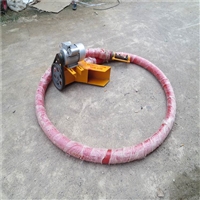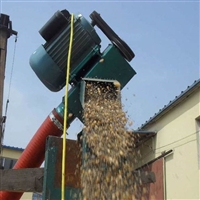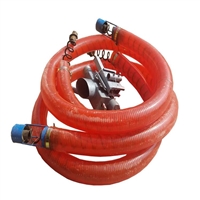
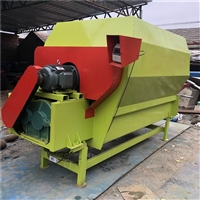
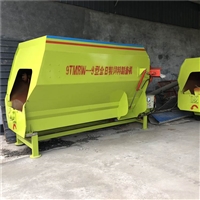

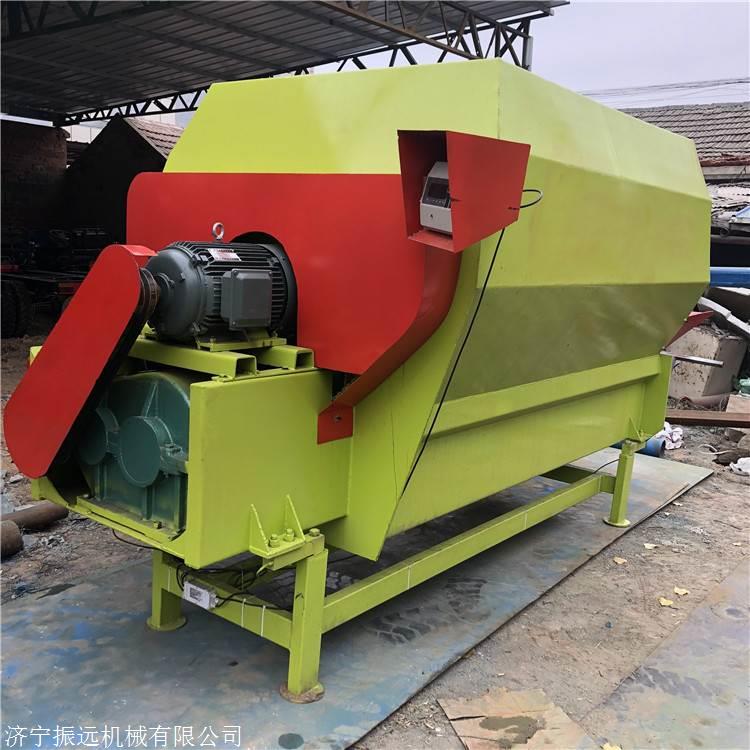
Shandong fully hydraulic open door mixer, all day grain mixing machine, twin-screw TMR mixer
Category:
agriculture/agricultural machinery/Animal husbandry machinery
Model:
Brand:
Zhenyuan Machinery
Retail Price
Negotiable
重量
kg
- Product Description
-
Description :
Author | Ouyang Weikang Editor | Han Honggang Meizu Note8 has arrived, but Meizu Blue has disappeared. On the evening of October 25th, at an online press conference called "Meizu Note8 New Product Launch and Meizu X8 First Sales Conference", Meizu CMO and Senior Vice President Li Nan officially released Meizu Note8. During the press conference, Li Nan referred to Note6 as the previous generation of Note8, but intentionally or unintentionally, she omitted the brand names before the two product models: the former was actually called Meizu Blue, while the latter was already Meizu. In terms of configuration, the Meizu Note8 is equipped with a Qualcomm Snapdragon 632 processor, a 6-inch full screen display, a 12 megapixel and 5-megapixel rear dual camera... The configuration is in line with the performance of a thousand yuan machine, but it lacks some of the surprises brought by the Meizu Blue Note series in previous years. In terms of price, the 4GB and 64GB versions of the Meizu Note 8 are priced at 1298 yuan, which is between the previously released Meizu V8 and X8, and is also the traditional price range of the Meizu Blue Note series. With the official transfer of the Meizu Note series to Meizu, perhaps the Meizu brand's mobile phone product line will also reach its end. Meizu Note8 Meizu Blue Will "Die" Meizu Blue is a brick of Meizu, wherever it needs to be moved. Meizu launched the Meilan brand when it needs to expand the shipment volume and keep up with the trend of cost-effective Internet mobile phones brought by Hongmi. When it comes to the overall adjustment of Meizu, Meizu Blue, as a sub brand, undoubtedly needs to comply with the overall planning of Meizu brand. This plan may be due to the Meizu brand no longer launching mobile phone products and shifting to other product lines such as audio and IoT, or it may be to classify the original Meizu products under the Meizu brand for other purposes. The Meizu Blue brand was launched on December 23, 2014, on the eve of Meizu accepting a $590 million investment from Alibaba. The Meizu Blue brand, together with Alibaba's $590 million investment, has opened the door for Meizu to officially transform from a "small and beautiful" to a mass market brand. In 2015, Meizu sold 20 million units of smartphones, with a year-on-year growth rate of over 300% compared to 2014. The two generations of Meizu Note and Meizu phones contributed the most. Afterwards, Meizu's overall shipment volume began to decline after reaching a disruptive 22 million units in 2016. GFK data shows that Meizu's overall shipment volume in 2017 has already declined to 16.81 million units. One of the measures to save Meizu's shipment volume is to merge Meizu Blue and Meizu again. Zhang Jinyang, Senior Research Manager at OviCloud Network, believes that the merger of Meizu and Meizu Blue is more for profit considerations. "Continuing to operate two brands is no longer a good choice for Meizu from the perspective of human and financial investment. In the future, Meizu can spend more resources on rebuilding its own brand image and operating multiple product lines under a single brand operation. A single brand will have greater advantages in internal management and promotion." The demise of Meizu Blue mobile phones also has early signs. After Li Nan released the Meizu 6T on May 29th at the Meizu 6T launch event, Meizu successively released multiple models such as Meizu 16th series, Meizu V8, Meizu X8, etc. Among them, the starting price of Meizu V8 is 799 yuan, which is the same as the Meizu 6T, and there is also a rumored "mblu" in the corner of the packaging box, which was once rumored to be the independent logo of Meizu. At the Meizu X8 launch event, Li Nan accidentally said "Meizu X8" as "Meizu X8". Various signs indicate that Meizu has absorbed Meizu's product line, and as an independent mobile phone brand, Meizu may no longer exist. When responding to netizens' questions about the "Meizu Blue series being cut" in the Meizu community, Meizu founder Huang Zhang vaguely stated, "In the future, I will only release two series of mobile phone products: Meizu flagship series and national mobile phone series." One of the promotional points that Meizu Note8 has long been mentioned is the "national camera phone", which belongs to Huang Zhang's "national mobile phone series". This is like the "death declaration" of Meizu Blue's phone. Huang Zhang's strategy for Meizu is ultimately Huang Zhang's Meizu. He can allow Meizu to run blindly after receiving investment, releasing 10 Meizu Blue phones in 2016, or give up Meizu Blue in order to bring Meizu back to the track he wants. Meizu's "independence" and "death" also stem from Huang Zhang's adjustments to Meizu's architecture. After Huang Zhang announced in February 2017 that he would come back to build the Dreamliner, Meizu underwent organizational restructuring in May of that year, establishing three major business units: Meizu, Meizu Blue, and Flyme. Li Nan was appointed as the president of the Meizu Blue business unit. After the establishment of the Meizu Blue Business Unit, there was a discussion in the community about whether Meizu Blue could become the next glory. Li Nan has also revealed a series of plans for Meizu's independent development, such as finding independent brands, opening offline stores, breaking through the price limit to enter the 2000 yuan market, maintaining a different design language from Meizu to avoid nesting dolls, and so on. However, Huang Zhang is clearly not Ren Zhengfei. Under the leadership of Li Nan, Meilan only released four new products before its design rights were revoked. The Meizu E3, released on March 21, 2018, was the next Meizu smartphone led by Li Nan. After that, Meizu experienced several months of turmoil: internal strife within the company in April, the release of the 15 series, another restructuring in May, and the merger of Meizu and Meizu's two business units. In June, there were personnel changes, with Yang Zhe transferred to CSO and Li Nan taking over as CMO, responsible for the market center. At the same time, Meizu co-founder Bai Yongxiang began to fade out of management. Two days before the personnel adjustment, Huang Zhang stated on the Meizu community, "It was a mistake for me not to manage the company for so many years. My return is also a negation of the company's strategy and personnel in the past few years. It is expected that next year I will be able to completely put the company on the track I want." Meizu phones often surprise users in terms of configuration, and one of the costs they pay is becoming the "Meizu true flagship" joked by netizens: Meizu phones maintain good competitiveness while to some extent overshadowing the popularity of Meizu's high-end products. This is something Meizu does not want to see. After reorganizing the product line, Meizu effectively solved this problem. Starting from the release of Meizu 16th series, Meizu's various product lines after absorbing Meizu Blue basically no longer have internal conflicts. After abandoning the Meizu and Meizu Blue dual brands to cater to different age groups, Huang Zhang attempted to use the Meizu brand, which pursues passion, to encompass all target users. This is not easy in the Chinese smartphone market. Where will Meizu go? There are two types of manufacturers living well in the current Chinese smartphone market. One is large and comprehensive, such as Huami OV, which has a rich product line, sufficient financial strength, and can spread its products wherever consumers are interested; The second is small and beautiful, such as OnePlus, which does not spend money recklessly and only produces flagship phones. It has both domestic and overseas capabilities, enough to support itself. What is embarrassing and uncomfortable is the second tier members of Meizu who are sandwiched in the middle. On the one hand, Meizu needs a sufficient number of mass-produced products to maintain its size, and on the other hand, after encountering setbacks in the Pro7 series, Meizu is bound to be more cautious in investing in innovative technology research and development. The Meizu V8, X8, and Note8, which were renamed from the original Meizu Blue products, belong to the former category, while the Meizu 16th series belongs to the latter category. However, the Meizu 16th series and X8 encountered varying degrees of production difficulties after their launch, with the 16th series still not achieving mass production two months after its release, and the X8 repeatedly delaying its first sales. This has cast a shadow over Meizu's performance report this year. According to the Q3 2018 mobile phone sales data from market research firm Seno, Meizu's sales in the third quarter of 2018 were only 1.89 million units, a year-on-year decrease of 53%, second only to Gionee in the top 9, and even surpassing Samsung. At the same time, Meizu's market share also declined to 1.8%. If the time range is expanded to January to September, according to Seno data, Meizu's total sales in the first three quarters were only 8.1 million units. Although it ranked 7th, the gap with Xiaomi, which ranked 6th, has widened to nearly 30 million units. Zhang Jinyang said, "The fundamental reason for the concentration of the top tier is that the global smartphone shipment growth has significantly decreased in the past two years. In industries such as fast-moving consumer electronics that rely on quantity to reduce costs, the concentration of the top tier means a decrease in the average cost of the industry." Zhang Jinyang said that the current six major brands have accumulated a lot in capital, channels, technology, and even the ecological chain, especially in terms of technology and ecological chain barriers, which are very difficult for small brands like Meizu to overcome. Taking a step forward, what awaits Meizu is the brutal pressure from top manufacturers such as Huami OV. This not only requires Meizu to invest effort in developing flagship phones like the 16th series, but also the support of high-volume models such as Meizu Note8. Taking a step back, Meizu can choose to return to its "small and beautiful" state, but Meizu, which has already expanded in size, may not be willing to do so. After all, returning to "small and beautiful" will not stop the battle of big fish eating small fish in the smartphone market. Zhang Jinyang believes that Meizu needs to go through several years of cold winter, waiting for the next explosive point in the shipment of smartphones, relying on the overall growth of the market to drive the growth of its own shipment quantity, in order to find a way to break through the situation. Sun Yanbiao, the director of the Mobile Industry Research Institute, also believes that Meizu needs to shrink and learn to do subtraction. He said, "Today's discussion of Meizu is no longer about development, but about survival. How to balance the relationship between the" Dream Machine "belonging to the 16th series and the volume machine belonging to the Meizu Note8 will determine the direction of Meizu's next stage. Anyway, in the cold winter of the market, only by surviving can there be hope.
\The author of this article, Benedict Evans, was originally published on his personal blog. \My grandfather may have mentioned how many electric motors he owns, probably from objects such as cars, refrigerators, and drills. My dad finds it difficult to figure out how many motors he has, but he should know how many devices in the house are equipped with chips. \Today, I don't have much concept about chips, but I can tell you how many devices are connected to the internet. It's hard to say whether my child has a clear concept of this in the future. \In every era, we can't think of which devices new technologies will be applied to, and many of them are even absurd. But it is unstoppable. Sensors, transmission signals, and networking devices will be ubiquitous in our lives to an extent beyond our imagination, and describing them may even feel incomprehensible. \In the future, the cost of sensors in huge networks will be negligible (driven by the smartphone supply chain), and battery life will be calculated on an annual basis (solar charging and its battery storage technology will make it unnecessary to charge). For our descendants, these may become commonplace like mixers. \So from a macro perspective, I am a staunch believer in the "Internet of Things". The question is how we can achieve it, and what will it look like? \A hypothetical diagram goes like this: 'Of course (this word is always a danger signal), all devices will work together in a common, open standard, communicate and interact intelligently. So, when someone walks into the room with you, the security camera will not automatically call, a unified learning system will dim the lights, adjust the temperature of the thermostat, and start playing Barry White's music.'. \I am skeptical about this. The connotation of this seamless collaborative intelligent system is completely incompatible with today's Internet of Things. Instead, it reminds me of the movie Sleeper, perhaps the "Future Home" launched by General Motors or Westinghouse at the 1960 World Expo. And this is not like what happened in the era of electric motors or chips. People don't buy two dozen motors to go home and assemble equipment to save labor, but directly purchase refrigerators, washing machines, mixers, and microwaves, which has been the case for many years. Similarly, in the era of the Internet of Things, people are buying a series of individual services such as Nest, Sonos, Fibit, AppleTV/Chromecast, and so on. Some people may say that compared to the web, this is more like an app, while HomeDepot is like an app store. \Another question is where exactly is the value? So where exactly is intelligence? There is no standard answer. In some cases, networked devices are just a terminal for cloud services, a diagnostic module in electric kettles and smart meters, and there may not even be any user interaction. Nest is a compromise phenomenon: how much comes from the cloud and how much depends on devices? Chromecast or AppleTV add the flavor of "intelligence" to TVs, while TVs themselves become a "stupid piece of glass". The real reality of intelligence is still smartphones or tablets, and the cloud is just "stupid storage". \The above viewpoint is also applicable to devices such as cars, and many wearable devices are like satellites of smartphones, either far-field sensors or their second screens, but their value still comes from cloud data analysis. Is it useful to know how many hours of sleep you've had, or is it more useful to get some sleep advice, such as when you should go to bed and when to set the alarm? IBeacon is also a fascinating part of this small ecosystem, as it does not need to be connected to anything, but it can add intelligence to the physical world. So every wall, displayed retail goods or suitcases, packages may become a piece of data. \That is to say, sometimes devices are "stupid glass" glass (or stupid sensors) driven by the cloud. Sometimes, the cloud is a device driven 'stupid storage'. \Is it interesting to compare the advantages and disadvantages of Apple/Google here? If most of the 'Things' are a combination of smartphone satellite accessories and cloud terminals, where is the value and control? Apple's combination of software and hardware means it is suitable for controlling devices (especially using BTLE), while Google is more suitable for working in the cloud. This is the long-standing friendship between Google and Apple - if you use Gmail on your iPhone, both companies win, but both feel insecure. \Returning to Barry White's question, it is clear that the Internet of Things, consisting of Nest, electricity meters, and security systems, makes sense. But if 'the thing' is just a stupid sensor and signaling device, and the cloud acts as the brain, perhaps the interconnection is also done in the cloud? This is actually part of the story of IFTTT (a16zinvestment), which aims to provide solutions for the interconnection of independent services. The story of Nest is also worth learning from. Firstly, a clear purpose device is used to set up a base station in the home, which then spreads to other devices such as smoke detectors. Then there will be door locks, security, warehouse doors, lighting fixtures, and so on. \Similarly, there may be many 'networked devices' that are old and dead without communication. Internet connected TV and alarm systems can work well without mutual recognition. If you install an anti-theft alarm, it may connect sensors connected to the control box based on IEEE standards, and the control box is connected to the security company's network control center through a mobile VPN network. \So, many patented technologies have declined and the dividends of smartphones have emerged, but when we use the term 'the internet' today, it doesn't have any special meaning. Half of the 'connected devices' in your home are not online or connected to anything.
Following the announcement yesterday that Hema's family emergency service will soon enter Beijing, Hema CEO Hou Yi stated at the second "New Retail Summit" today (January 9th) that Hema's family emergency service will be upgraded to 7x24 hour delivery and will be launched soon after this year's Spring Festival. In 2018, Hema is not just a fresh new retail, but also a life service center that is close to consumers and meets their immediate service needs, "said Hou Yi. Through 7x24 service, users can not only purchase fresh products from Hema, but also buy products that meet their evening needs, such as adult products, urgently needed products for mothers and infants, urgently needed products for women, and daily necessities for families. The richness of products far exceeds that of convenience stores. So after the launch of Hema's 24-hour service, we believe that consumers' lives will reduce a lot of troubles. ”Hou Yi stated that the 7x24 hour service launched after the Spring Festival is the only e-commerce service in the world that achieves 24-hour uninterrupted delivery, and it is also a contribution of China's retail industry to the world. In the eyes of industry insiders, after the launch of 24-hour delivery services, Hema's positioning will be upgraded from "fresh new retail" to "community life center", with stores becoming gathering points closely connected to surrounding community residents, thereby serving community construction with commercial innovation. In September last year, Hema officially launched the "SOS" channel in Shanghai, providing emergency delivery of household emergency goods. From 8am to 22:30pm every day, it provides consumers with a "30 minute delivery time" service, which has been extended by 2 hours compared to the regular delivery time. However, there are still many consumers who have reported that after the delivery was stopped at 22:30, there are still night shopping needs that cannot be met. Now I have been 'spoiled' by Hema, and many daily necessities can be delivered in less than half an hour. But one night I found that my child had a fever, and it was really difficult to buy antipyretic patches, so I had to drive out, "said Ms. Han, who lives in Yangpu District, Shanghai. Therefore, Hema has decided to extend its service to 24 hours and expand its service scope. It can also provide late night snacks and other catering services before 1am, and deliver emergency products throughout the day. According to the internal sampling survey results of Hema, the products sold by family emergency services in the past month include children's fever reducing patches, band aids, data cables, adult toys, and batteries, with an average delivery time of only 18 minutes. Hema Fresh, which rose to prominence in the first year of new retail, also gained attention from the business community. The special envoy of the Ministry of Commerce in Shanghai, Xiang Xin, stated that China will become a major consumer of goods in the world by 2020 and a major consumer of goods and services by 2035. At present, cross-border innovation in multiple fields is beginning to emerge, and new retail is coming with great momentum. With the deep integration of online and offline resources, new enterprises will greatly adjust the industry's pattern. Xiang Xin believes that retail innovation has entered a new stage, and the business model of integrating food and beverage, online and offline, such as Hema Fresh, has attracted consumers' attention. In the future, the retail industry will continue to develop towards multi format and multi field aggregation and synergy. Quality retail and experiential consumption will become the norm, and the era of cross-border operations and comprehensive services has begun.
On March 1st, NetEase Cloud Music and Huayan International announced a strategic cooperation, and the two sides will carry out diversified cooperation in the promotion of Chinese music and the support and training of original musicians. This means that less than a month after reaching a copyright cooperation agreement with Tencent Music Entertainment Group, NetEase Cloud Music has made another breakthrough in the field of copyright. This copyright cooperation can be seen as a continuation of the copyright competition since 2015 in the post copyright era. However, at the same time, we also see that NetEase Cloud Music, with its advantages in product, user, and operation fields, has continuously strengthened its music promotion and original musician sections, building its own moat in the second half of the online music industry competition. Winning the "Heavenly Palace Troupe" and expanding the copyright music library of NetEase Cloud Music. When it comes to Huayan International, many people born in the 1980s, 1990s, and even 2000s should be familiar with it. Whether it's the power train that became famous for singing the opening theme song "Dang" of "Huan Zhu Ge Ge" in the early years, S.H.E who is always as friendly as a girl next door, or the big boy Lin Youjia with psychedelic singing style, many artists under Huayan have accompanied generations of youth. As one of Taiwan's * * record companies and a publicly listed music company, Huayan International owns Tian Fu Zhen S.H.E、 Lin Youjia, Yan Yalun, Chen Jiahua, Ren Jiaxuan F.I.R.、 A large number of talented artists such as Powertrain, Yu Kewei, Yan Yige, Zhou Hui, and Ma Ji's younger brother. After reaching a strategic cooperation agreement, NetEase Cloud Music has obtained authorization for the full music library under Huayan International. Huayan International, known as the "Heavenly Palace Group", has a copyright music library that includes a large number of popular Chinese music such as Tian Fuzhen's "Little Fortune", Lin Youjia's "Lying", S.H.E's "Underfulfilled Lovers" and "Chinese Language", and Power Train's "Dang". Its music library is extremely extensive. As of now, within less than 24 hours, the playlist "50 Popular Music Selections from Huayan International" on NetEase Cloud Music has reached 3.63 million views and over 60000 collectors. In addition to the song copyrights of artists under the company, Huayan International also owns the soundtracks of popular film and television works such as "One Class", "Legend of Sword and Fairy", "Flying Immortals from Outside the Sky", "White Giant Tower", and "The Legend of Sword and Fairy Cloud", as well as the music performed by the Fahrenheit group composed of Aaron Yan, Wu Zun, Wang Dongcheng, and Chen Yiru, and singers such as Asan, Liu Liyang, Tank, and Olivia during their time at Huayan International, all of which have been newly released on NetEase Cloud Music. For long-awaited Cloud Village users, NetEase Cloud Music's acquisition of the copyright of Huayan International in mainland China is like a big gift package after the Spring Festival; For the development of the platform, being able to include music libraries like Huayan International is not only the result of NetEase Cloud Music's continuous efforts in the copyright field, but also adds weight to the platform in subsequent industry competition. It can be seen that in the context of the clear requirement for copyright sharing by the National Copyright Administration, based on the current situation where the cycle of copyright cooperation is mostly two to three years, the issue of renewal after copyright expiration will become an important variable in competition among online music platforms. Why can NetEase Cloud Music frequently obtain new version rights? As a latecomer in the online music market, NetEase Cloud Music, born in April 2013, does not have an advantage in the copyright market. But in the past year, the efforts and achievements of NetEase Cloud Music in copyright acquisition are evident. In February 2017, NetEase Cloud Music reached a cooperation agreement with Japanese entertainment group Avex; In November 2017, NetEase Cloud Music reached a strategic cooperation agreement with Guofeng Miman Media; In December 2017, NetEase Cloud Music partnered with Fenghua Records KobaltMusic、 Tianyu Media and other copyright holders have reached strategic cooperation; In February 2018, NetEase Cloud Music reached a copyright cooperation agreement with Tencent Music Entertainment Group, obtaining copyright resources from three major global record companies including Universal Music, Warner Music, and Sony, as well as labels and artists such as Simple Happiness, Dreamcourse, Canxing Culture, Seed Music, Huayi Music, and Korean CUBE Entertainment. Why can NetEase Cloud Music frequently obtain new version rights? Music Pioneer believes that for record companies holding copyrights, in addition to the basic needs of commercial monetization, they also value the advantages of NetEase Cloud Music in music promotion, music payment, user attributes, product innovation, and other aspects. In terms of product and operation, NetEase Cloud Music has gained over 400 million high users in less than 5 years and is widely sought after by young people, thanks to its unique advantages such as personalization, interesting music reviews, a large number of playlists, and a humane community atmosphere. According to the 2017 China Mobile Internet Annual Report released by QuestMobile, NetEase Cloud Music was successfully selected as the top 10 app for mobile Internet users in first tier cities and the top 10 app for mobile Internet users in second tier cities, and ranked the industry with a 30 day retention rate of 35.6%. In the era of fragmented information, a large number of like-minded high users will inevitably provide more opportunities for music promotion and commercial monetization, which is also valued by record companies. According to the "2018 China Digital Music Consumption Research Report" by iResearch Consulting, among the 20 digital albums available online in 2017, NetEase Cloud Music achieved sales of 13 albums, including 8 European and American music digital albums, and NetEase Cloud Music achieved sales of 6 albums. From this, it can be seen that although NetEase Cloud Music does not have an advantage in user base, it has a higher payment conversion rate compared to other platforms, and performs more outstandingly in European and American music and independent music digital albums. In the period of industrial transformation from traditional record industry to digital music era, the promotion efficiency of traditional channels represented by radio and television has greatly decreased, and online music platforms have become the main channel for people to appreciate and consume music. That is to say, record companies will increasingly rely on audio and video platforms such as NetEase Cloud Music for new releases and star making, and naturally choose platforms with more advantages in music promotion, music payment, and other aspects. It's not difficult to understand why NetEase Cloud Music has been able to frequently obtain new version rights. In addition to users, there is a detail that is easily overlooked in this copyright cooperation - besides cooperating in music copyright, NetEase Cloud Music will also cooperate with Huayan International in various aspects such as promoting Chinese music, offline performances, and supporting and cultivating original musicians in the future. In an era where everyone can express themselves and music works explode in large numbers, 'easy to debut but difficult to stand out' has become a challenge for all musicians. This is especially true for untrained music enthusiasts. Supporting music creators from the source is exactly what NetEase Cloud Music has been persistently doing in recent years. And this partnership with Huayan International, known for its craftsmanship, can further enhance the support for original music. Friends who are familiar with Chinese music may know that in the 1980s and 1990s, it was very difficult for ordinary people to enter the music industry, and a representative way was to participate in lyrics and music competitions organized by record companies. Since 2005, Huayan International Music has held a global Chinese songwriting competition every year, aiming to provide outstanding talents for the company and the music industry. For example, well-known producers in the music industry such as Zheng Nan, Huang Jianzhou, and Lan Xiaoxie all come from this competition. According to data from musician Zheng Nan, there are currently over 50000 musicians who have joined NetEase Cloud Music, a year-on-year increase of over. As a major hub for original music in China, collaborations with established record companies such as Huayan International, Avex, and Fenghua Records will provide more opportunities for independent musicians to enter the industry; On the other hand, through cooperation with music service providers such as KKBOX and Kobaltmusic, NetEase Cloud Music will gradually improve its musician service system and promotion system, deeply serve original musicians, and continue to solidify the platform's market position in the field of original music. With the increasing integration of channels and content, music works and rising musicians are bound to become important competitive resources in the music industry. In the era of crowdsourcing, how to use technology and operational methods to distribute and match users and musicians will become a stable moat in the online music market. Author | Fan Zhihui This article is an original manuscript by Music Pioneer. For reprinting and business cooperation, please contact WeChat: view_2753

AfterSalesService :
Key words:- Whole grain mixer
- pulverizer mixer
- TMR mixer
More Products