

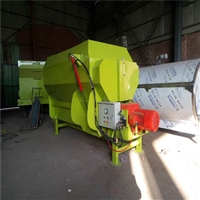
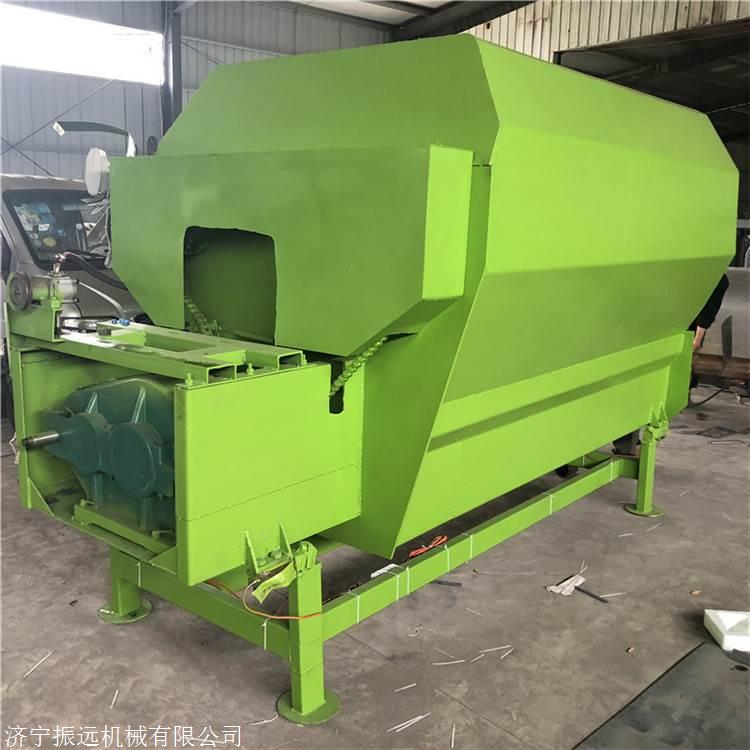
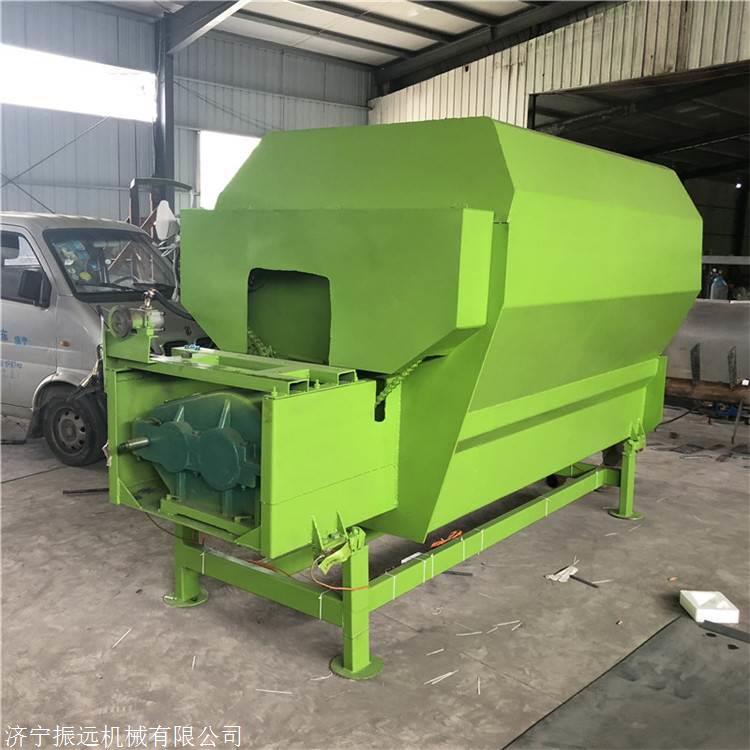
Heilongjiang cattle farm full day grain mixing machine self-propelled TMR mixing machine forage crushing uniform mixer
Category:
agriculture/agricultural machinery/Animal husbandry machinery
Model:
Brand:
Zhenyuan Machinery
Retail Price
Negotiable
重量
kg
- Product Description
-
Description :
Editor's note: This article is from the WeChat official account "RET Ruiixin" (ID: retweixin),. At the end of 2016, RET Ruiyide China Commercial Real Estate Research Center selected 1390 pop-up stores as research samples nationwide. Through detailed data analysis, it comprehensively studied the origin, development, and impact of the pop-up store model in China. Once the report was released, it caused a strong response. The report shows that the Chinese pop-up store industry has entered the "fast lane" since 2015, with a compound annual growth rate exceeding. Now, half of 2017 has passed, and "flash mobs" have transformed from fresh faces to familiar old friends. This year, more brands have joined the ranks of flash mobs. In this colorful time, what tactics did they use to stand out? Playing with creativity, promoting new products, developing technology, and collaborating, the methods are becoming increasingly diverse and the dimensions are becoming more and more extensive. Only those who can't think of it can achieve it. In the flash mob competition, independent new brands, well-known mass market brands, e-commerce, and even * * products have all flooded in. But in fact, this is an unpredictable game, and there is no doubt that these innovative ideas are helping brands overcome the dangerous period of aesthetic fatigue, taking on the heavy responsibility of offline feedback online, foreshadowing the direction of physical commerce from mainly selling goods to moving towards experiential personalized services around marketing. Xiao Rui reviewed the flash mob trend that has swept the world since 2017 and selected several cases worth paying attention to. At the end of the day, it's still a competition of creativity. Brands can only break free from the constraints of shelves and play transformation magic when opening pop-up stores. Unleashing those imaginative but impractical ideas in pop-up stores not only satisfies consumers' personalized experience needs, but also fully demonstrates the brand's avant-garde and fashionable marketing design philosophy. VETEMENTS "Dry Cleaning Shop" has never been disdainful of following the rules. VETEMENTS opened a pop-up store called "DRYCLEANING" in Los Angeles, USA in February this year. The manufacturing and design are always smooth sailing, and it is easy to play with pop-up creativity. At first glance, this' dry cleaning shop 'looks like the one we often go to, but in fact, it is the transformed version of Maxfield, a well-established trendy store in Los Angeles. One to one realistic detail restoration and construction, VETEMENTS's "serious and playful" approach is the reason why consumers are loyal to paying. You can see that all the new clothes in the store are wrapped in transparent dry cleaning plastic bags, with designed receipts hanging at the seal. There is an automatic track transported from New York in the center of the store, and these new products are all hung on iron frames. On site, a limited edition series of products can be purchased, including a $330 T-shirt and a $875 hoodie. In addition, 10 hole leather boots co branded with * * workwear shoe brand Dr. Martens are also available for sale. Commedes Garcons' "Black Market" Kawakubo Rei, as the pioneer of the pop-up model, opened a brand guerrilla pop-up store as early as 2004, creating a sales myth. She continues to bring fresh ideas to brand enthusiasts. On March 29th of this year, Rei Kawakubo and Commedes Garcons opened a pop-up store called "Black Market BLACKMARKET" underground in GYRE, Omotesando, Tokyo. This store lasts for a month and has not disclosed much information before that day. There are still a large number of brand fans coming one after another. Around the name "Black Market", the store was made into a large black box with a specially designed inverted "blackmarket" logo printed on the "outside of the box". The interior of the store is also predominantly black: black dolls and black products, instantly attracting attention at a glance. Not only is the store design unique, but the products sold are also extremely rare. These over 30 products, including 15 carefully selected replicas of 90s items, are all highlight designs in the product history of Commedes Garcons, revered by brand fans as "masterpieces". **Chanel's Coco Caf é, a limited time coffee shop, has opened from Singapore, Toronto, Tokyo to Shanghai, allowing consumers to get up close and personal with the once lofty "Coco * *". Here, Xiao Rui no longer delves into it. It can be seen that the flash stores of Chanel, which are popular on the Internet, take advantage of the way consumers use "social currency" to return on the Internet, and show different faces through the marketing methods of layout. How have brands and e-commerce platforms, which are already highly influential and attract customers, played this year? LVxSupreme's pop-up stores with thousands of visitors have arrived in every city, including Beijing, Los Angeles, London, Paris, Miami, Seoul, Sydney, Tokyo, and other eight cities. They opened on June 30th local time and will end on July 13th. There is no new idea from VETEMENTS and Commedes Garcons in terms of store creativity, but because it is already a hot topic, it has attracted thousands of fans to queue up all night in these cities to buy T-shirts ranging from over 4000 yuan per piece to suitcases worth over 400000 yuan. The astonishing price is not an exaggeration upon careful consideration, as this collaboration was unexpected by both fans. And among these people, some came purely for this series, while others aimed for the opportunity of "reselling". Beijing, which is rare as a place, has welcomed a large number of fans to support it. Because a first come, first served queuing system was adopted instead of the lottery system in Japanese regions, we can see the queues of "scalpers". After the on-site purchase restriction of one person with multiple cards was changed to one person with one card, it caused dissatisfaction among the "scalpers" in the queue, causing chaos at the scene and leading to an early end. Wal Mart wants you to see the "Fresh" Wal Mart's offline flash grocery store in Manhattan, New York. With the theme of "freshness" marketing, we aim to attract people not only through screens, but also by personally entering the store to see the ingredients sold by the brand. The pop-up stores launched in collaboration with the retail concept space Story have also been designed with a "fresh" appearance, mainly in green and wood colors, selling various fresh produce, kitchen seasonings, and food. In addition, technology based kitchen products have also been launched, such as beverage refrigerators with speakers and mixers, smart ovens connected to mobile phones and built-in lenses, etc., with an average price of around $38. The other two highlights of this pop-up store are the application of technology to collect data and organize related activities. It is said that thermal sensing technology has been applied inside the floor to monitor the flow of people in different areas, and through data analysis, to improve the display. And launched activities and lectures, inviting chefs, restaurant owners, and even stylists to share content not limited to cooking and blending alcoholic beverages in the kitchen, but also different aspects of lifestyle and entrepreneurial thinking, aiming to showcase innovative ideas in online fresh food e-commerce. The trend of VR, a must-have new technology for flash mobs in 2017, and the trend of flash mobs are advancing simultaneously in the retail industry. During this period, experiencing the combination of brand and high technology in limited stores is a new way to enhance the experience, and the application of technology is not limited to this. GentleMonsterxNordstrom, a fashion VR department store in the United States, started a pop-up program in 2013 and has collaborated with brands such as Aesop, WarbyParker, Vans, AlexanderWang, and Nike. At the beginning of this year, they teamed up with the creative and fashionable Korean eyewear brand GentleMonster to create a pop-up store. This pop-up store was jointly designed and built by both parties, with GentleMonster showcasing 40 pairs of men's and women's eyeglass frames each, and also launching 6 pairs of limited edition glasses. To promote this pop-up store, Nordstrom has introduced 360 degree video virtual technology. All friends who visit GentleMonster's Seoul flagship store can experience the charm of VR technology. Consumers can use this device to experience GentleMonster's flagship stores in Seoul and Shanghai. Buick launched a new concept together with the new car. The construction of this glass house took a month, using lightweight, recyclable green building materials, powered by solar photovoltaic panels, and a house rainwater collection system to recycle domestic water. Four different housing scene modes are available indoors, supporting whole house intelligent voice control and remote monitoring through an app. At the same time, the new VELITE 5 extended range hybrid car is placed next to the house, launched with the idea of "very clean and close to human life". This special room is available for occupancy, and Buick received approximately 13000 occupancy requests within a month. This marketing approach also demonstrates Buick's intention to create a different brand concept. We need a sense of ceremony in our daily lives to commemorate special moments, and flash mobs are like a certain sense of ceremony that a brand brings to consumers, launching new ideas and creativity, while also capturing consumers' curiosity and closeness. Utilize people's fascination with fleeting novelty and occasionally add a different seasoning. Let's continue to look forward to the upcoming pop-up stores and see what fun ideas will emerge.
Editor's note: This article is compiled from Medium by Jimmy Song, with the original title 'The TruthaboutSmart Contracts'. Just like "blockchain," "AI," and "cloud," "smart contracts" are also a popular new concept nowadays. Imagine, what could be better than being certain that a contract will be executed as agreed in the future without any judicial intervention? The promise of smart contracts includes: contracts can be automatically, trustlessly, and fairly executed during the process of contract formulation, performance, and enforcement, eliminating intermediaries or eliminating the need for lawyers. I can understand why smart contracts are being hyped up. After all, if we don't have to worry about whether the other party will fulfill the contract as agreed, the efficiency of many things will be greatly improved. Speaking of which, what exactly is a smart contract? Is this a concept derived from Ethereum? Is this the way future contracts will be made? In this article, I will explore the various details of smart contracts and the accompanying "engineering reality" issues (spoiler: it is not simple and difficult to guarantee). What is a smart contract? A normal contract is an agreement between two or more parties that binds them to something that will happen in the future. For example, Alice may pay Bob some money to use Bob's house (also known as rent). Charlie may agree to repair any future damage to Denise's car, in return for Denise paying Charlie a monthly fee (also known as car insurance). The difference between so-called "smart" contracts is that all terms of the contract are evaluated and executed by computer code, which makes it unnecessary to have any credit endorsement. Therefore, if Alice agrees to pay Bob 500 to purchase the sofa, the delivery period will be 3 months. By using computer code, it can be determined whether certain terms of the contract are valid (whether Alice has paid Bob or not)? Has the 3-month delivery period expired? )And execute the contract (deliver the sofa under custody to Alice); Neither party has the right to retract the contract. The key feature of smart contracts is that their execution does not rely on any credit endorsement. That means you don't need to rely on third parties to enforce the terms. There is no need to rely on the other party's consistent words and actions in fulfilling the contract, nor is there a need to rely on lawyers and legal systems to correct things when problems arise in contract execution; Smart contracts can timely and objectively execute various matters agreed upon in the contract. Smart contracts are very 'stupid'. Using the word 'smart' means that these contracts have some innate intelligence. And then things were not like that. The so-called "smart" part is that the execution of the contract does not rely on the cooperation of any party. Compared to asking tenants who owe rent to vacate the house, a "smart" contract will directly lock tenants who have not paid on time outside the house. The unconditional execution of contractual consequences is the reason why smart contracts appear powerful, rather than their innate intelligence. A true smart contract should consider all justifiable situations, focus on the spirit of the contract, and attempt to make fair judgments even in very uncertain conditions. In other words, a true smart contract is like a very good judge. On the contrary, smart contracts in reality are very unintelligent. It is actually based solely on rules and strictly follows them, without taking into account any secondary factors or the spirit of the rule of law. In other words, since smart contracts do not rely on any credit endorsement, it also means that there cannot be any ambiguity in the formation of the contract. This raises the next question. It is very difficult to draft smart contracts due to the extensive promotion of Ethereum, which leads people to mistakenly believe that smart contracts only exist on Ethereum. However, this is not the case. Since the beginning of 2009, * * has had a widely used language called Script to draft smart contracts. In fact, the existence of smart contracts can be traced back to 1995, before * *. **The difference between the smart contract language and the Ethereum version is that the Ethereum language has Turing completeness. That is to say, Ethereum's Solidity language allows for more complex contracts at the cost of increased analysis difficulty. The complexity of this language has brought about some significant consequences. Although complex contracts may allow for more complex situations, they are also difficult to guarantee security. Even for ordinary contracts, the difficulty of implementation will increase due to the increase in complexity; Because complexity brings more uncertainty and explanatory space. With smart contracts, ensuring security means handling all possible ways in which contracts may be executed and ensuring that contract execution is in line with the intent of the drafter. Executing in a context with Turing completeness is extremely tricky and difficult to analyze. Safely executing Turing complete smart contracts is equivalent to proving that a computer program is error free. We know this is very difficult because almost all existing computer programs have defects to varying degrees. Considering the fact that it takes years of learning and very rigorous assessments to be competent in writing ordinary contracts. The writing of smart contracts requires at least equivalent skills, but currently there are still contracts written by many beginners who do not know how to ensure their security. This can be clearly seen from many flawed smart contracts currently in use. **The solution is simply to abandon Turing completeness. This makes the contract easier to analyze, as the possible outcomes of the contract are easier to list and check. The solution of Ethereum is to entrust the responsibility of ensuring security to the drafters of smart contracts. The drafters of the contract should ensure that the contract is executed according to their intentions. Smart contracts are not real contracts (at least in Ethereum). Although theoretically it is a good idea to leave the responsibility of ensuring contractual integrity to the drafter, in practice this has already resulted in some serious centralization consequences. Ethereum was initiated from the perspective of 'code is law'. That is to say, in Ethereum, contracts are the ultimate authority and no one can veto them. This viewpoint expresses to smart contract developers that they must rely on themselves. If you mess up your smart contract, then in a sense, you are blaming yourself. When the DAO event occurred, it resulted in a crash. DAO stands for Decentralized Autonomous Organization, which created a fund on Ethereum to showcase what the platform can do. Users can deposit funds into DAO and receive returns based on DAO investment returns. Investment decisions will be made through decentralized crowdsourcing. DAO raised approximately $150 million at a value of $20. The above things may seem beautiful, but the thousand mile dike has collapsed in the ant nest. Because the nature of the code was not well protected, someone eventually came up with a way to * * access all the funds of DAO. Many people refer to those who steal DAOs as "* *". In this sense, this' * * 'has found a way to extract funds from the contract in a way that the smart contract drafter did not consider, which is a real example. But in a broader sense, this person cannot be called * * at all, he is just someone who is profiting from flaws in smart contracts. This is not much different from how thoughtful Certified Public Accountants (CPAs) exploit tax loopholes to save taxes for their clients. Afterwards, Ethereum decided to no longer consider code as law and will return all funds deposited into the DAO. In other words, the drafters and investors of smart contracts did some foolish things, and the developers of Ethereum decided to rescue them. The impact of this incident is fully documented. The Ethereum Classic platform was thus born, retaining the DAO and continuing the principle of 'code is law'. In addition, developers have started to avoid using smart contracts with Turing complete properties of Ethereum diagrams, as it proves difficult to guarantee. The current ERC20 and ERC721 standards are frequently used smart contract templates in Ethereum. It should be emphasized that both contracts can be written without any Turing completeness. Smart contracts are just anonymous digital bearer instruments used for digitization. Even without Turing completeness, smart contracts still sound good. After all, who likes to have to go to court to get what should belong to them? Isn't it easier to achieve this using smart contracts compared to regular contracts? For example, can't the real estate industry benefit from smart contracts? Alice can prove that she owns the house, and Bob can pay for and receive it. Without ownership issues, machines can execute contracts quickly and without trust, without the need for judges, administrative agencies, or property insurance. Sounds great, doesn't it? There are two questions here. Firstly, it is not really impossible for a centralized organization to be responsible for executing smart contracts. You still need to trust this centralized organization to execute the contract. Trust free is a key feature of smart contracts, so centralized execution mechanisms render them meaningless. To make smart contracts truly trust free, you need a truly decentralized platform. The second question is raised here. In a decentralized environment, smart contracts can only effectively replace regular contracts when there is a clear connection between the digital version and the entity. That is to say, as long as the digital version of the house changes ownership, its physical form must also change ownership. The digital world needs to connect with the material world. This is called the 'oracle problem'. When Alice transfers the house to Bob, the smart contract needs to know that she has actually transferred the house to Bob. There are several ways to achieve this, but they all have the same basic problem. That is, there is a trusted third party verifying the occurrence of transfer behavior in the real world. For example, a house can be represented as an irreplaceable token on Ethereum. Alice can transfer the house to Bob through Atomic Swap to obtain a certain amount of * *. The problem is that Bob needs to believe that this token actually represents the house. There must be some testing criteria here to ensure that the transfer of the token representing the house actually means the legal transfer of the actual ownership of the house. Furthermore, even if the authorities acknowledge that the token actually represents the house, what would happen if the token were stolen? Does the house now belong to a thief? What should I do if my token is lost? Can't the house be sold anymore? Can the token representing the house be reissued? If possible, who should execute it? In the context of decentralization, linking digital with physical assets is a tricky problem, whether it's fruits, cars, or houses. Physical assets are subject to the jurisdiction of * * or other institutions in your area, which means that in addition to the smart contracts you create, they also need to trust something else. This means that ownership in smart contracts does not necessarily equal ownership of the same thing in the real world, and will face trust issues like regular contracts. Smart contracts that require trust from third parties to fulfill no longer have the * * function (or advantage) of not needing to trust anyone. Even digital assets such as e-books, health records, or movies will encounter the same problem. The 'rights' of these digital assets are ultimately determined by other authoritative institutions, and testing standards need to be trusted. From this perspective, the testing criteria are only a simplified version of judges in reality. In addition to relying solely on machines to fulfill contracts and simplifying enforcement rules, the complex task you actually face is to use code to consider all possible scenarios of the contract as well as subjective and human judgment risks. In other words, signing a 'smart' contract means you need to write complex code while also trusting someone or organization. **The contract subject that does not require testing criteria is digital anonymous bills. Essentially, both parties to the transaction not only need to be digitized, but the contract subject must also be an anonymous bill. That is to say, the ownership of the token cannot have a dependency relationship outside of the smart contract signing platform. Only when the title of the smart contract is a digital anonymous bill, can the smart contract be executed on a trustless basis. I really hope that smart contracts can be more practical than they currently appear. Unfortunately, our human understanding of contracts contains a large number of assumptions and case law that do not require clear explanation. In addition, it has been proven that utilizing Turing completeness is a simple way to disrupt smart contracts and lead to unexpected behavior. We should label smart contract platforms that do not possess Turing completeness, rather than those that do. The DAO incident also proves the existence of a contractual spirit that is faintly believed in and helps resolve disputes, which is beyond our imagination. Smart contracts are simply too easy to mess up, difficult to guarantee, difficult to widely achieve trustless and rely too much on external things to make them suitable for most scenarios. The scenario where smart contracts have the characteristic of no need for trust is digital anonymous bills based on decentralized platforms. Produced by the compilation team. Editor: Hao Pengcheng
Blender is a type of construction machinery mainly used for mixing building materials such as cement, sand and gravel, and various dry mortar. This is a machine with blades that rotates in a cylinder or tank, stirring and mixing various raw materials into a mixture or suitable viscosity. There are many types of mixers, including forced mixers, single shaft mixers, double shaft mixers, and so on.
Editor's note: This article is from "Finance and Economics", written by Zhou Jia,. November 23rd this year is Black Friday in the United States, marking the official start of the Christmas shopping season and a highly valued, busy, and usually discounted day for retailers across the country. However, coinciding with the arrival of the Arctic cold wave, the weather in the northeastern United States, including New York, Connecticut, and New Jersey, was cold, with temperatures around minus 5 degrees Celsius, seriously affecting people's enthusiasm for offline shopping at department stores. At 1:50 pm local time in the United States, financial reporters saw a long queue of only about meters in front of Penney Department Store at a large shopping center in Trumbell, Connecticut, far shorter than the 400 meter long crowd last year. The department store distributes free vouchers ranging from $10 to $500 to customers every year when it opens, on a first come, first served basis. Each customer can only receive one voucher, which always attracts a lot of people to queue up. Ashley, who lives in Easton, is a member of the shopping queue. She told financial reporters that the whole family came today, but her husband and children hid in the car because they were afraid of the cold. I arrived around 13:25, and there were fewer people this year. When I came last year, the queue was already at the entrance of the nearby Macy's department store, "Ashley said. The free strategy stimulates sales, and the "Black Friday" in the United States is comparable to China's "Double Eleven". "Black Friday" is considered a good opportunity to grab low-priced goods and Christmas gifts for shopping. In the United States, during the long weekend after Thanksgiving, a large number of merchants sell their products at a discount, leading to a year-end sales peak. This year's Macy's opened at 5pm on Thanksgiving (Thursday), and the company's sales strategy is quite unique. They have prepared many "free" products, and customers can receive a full refund with an invoice upon purchase. This year's "free" goods mainly include electric slow cookers, pillows, cups, watches, pearl earrings, perfume, etc. We just came to take a look, but we're not planning to come in the future. We found that the people who came here to grab free products are all 'professional' buyers. We couldn't find anything free. They snatched everything as soon as they came in, "a man in his 30s told reporters. I can buy other discounted products online. There's no need to come over. "The man only bought a blender worth $7.99. The financial journalist walked around the mall and found long queues at each checkout counter, but the speed of the queue was particularly slow. Because Connecticut prohibits businesses from requiring customers to return invoices in exchange for refunds, Messi's stores in Connecticut must return the payment to customers at checkout, which not only increases the workload of salespeople, but also renders the restriction that a family is only allowed to purchase one "free" item invalid. Many families choose to pay separately or queue up repeatedly in order to obtain more "free" goods, resulting in an increasing length of queues. However, the store's strategy of selling on the spot and offering free refunds can make its performance look "good". In the financial statements, although the "free" products of Macy's did not generate any net income between one in and one out, they still increased the department store's sales. For example, selling a pillow priced at 20 yuan to customers increases sales revenue by $20. The $20 refunded to customers is included in the cost of sales expenses and does not directly reduce sales revenue. Online sales continue to rise. Bob Fitch and his wife, who live in Connecticut, spent Thanksgiving at home with their two daughters this year. Feiqi is a manager of a high-tech company, and his wife works in marketing for a European company in the United States. They told financial reporters, 'Children have always been accustomed to watching the turkey cooked on Thanksgiving afternoons, smelling the aroma and looking forward to the holiday dinner. In the past, everyone gathered at home for Thanksgiving, and no stores would open on Thursdays. We still maintain tradition to commemorate Thanksgiving.' Feiqi said, 'Now everyone can buy things online, use mobile apps to even open the computer, and when sitting at home with children around the fireplace to warm up, they can buy their Christmas gifts. There is really no need to go out shopping without dinner just to grab some special offers that are only available in small quantities in stores.'. Physical retailers in the United States have long realized that online sales are the trend, no longer struggling to compete with online e-commerce, but actively embracing this new business model to increase their sales. This Thanksgiving, all traditional retailers, except for a few limited edition special offers to attract customers, launched the same products online. After experiencing several website crashes, major companies' websites have passed the test of this year's "Black Friday". The news of Amazon website crashing in the early hours of Black Friday in 2011 is still fresh in my memory, and Macy's had a similar situation in previous years. Last year, Lowes, a retailer that entered the "online war" relatively late, was clearly not prepared and its website also crashed at one point. According to Adobe Analytics Market Data Cloud, as of 8pm Eastern Time on November 22, Thanksgiving Day, online sales have reached $4.1 billion, an increase of 23% compared to the same period last year. The sales revenue from shopping through smartphones increased by 28.6% compared to last year. Adobe Analytics statistics cover 80 of the online stores in the United States. Among the many e-commerce platforms for Thanksgiving this year, the website transaction volume of electrical appliance store BestBuy is * *, followed by Macy's department store. All Black Friday discount items at Macy's this year started at 10pm local time on Wednesday before Thanksgiving. Wal Mart and Penny's physical stores will not open until the afternoon of the next day. However, online products have also been on sale since 12:00 a.m. on Thanksgiving Day on Thursday. All discount products are the same as physical stores. The reporter saw on the Macy's website that as a discounted product of "Black Friday", the air fryer is only $7.99, while the vacuum cleaner, which was originally priced at $162.99, is discounted by only $78.99, which is indeed attractive. The holiday consumption season has just begun, and the sales on Black Friday in the United States are far inferior to Taobao's "Double Eleven". This year's Singles' Day, Alibaba achieved a sales revenue of 213.5 billion yuan (30.7 billion US dollars), once again setting a historical record. However, Black Friday in the United States is just the beginning of the holiday consumption season from Thanksgiving to Christmas. Thanksgiving falls on the fourth Thursday of November every year, and because November falls on November 1st, this year's holiday consumption season is historically long. After spending on Thanksgiving and the following weekends, people will also welcome "Cyber Monday" when they return to the office on Monday. At that time, websites that focus on electronic technology products will launch discounts to attract people who return to the office to continue shopping. According to a survey report by the National Retail Federation (NRF), holiday spending this year, including November and December, is expected to increase by 4.3% to 4.8% compared to the same period last year, reaching $717.5 billion to $720.9 billion. Due to a healthy economy and strong consumer confidence, we believe that holiday spending this year will continue to reflect the growth of the past year, "said Matthew Shay, CEO and CEO of NRF." We are optimistic that the pace of economic activity will continue to accelerate by the end of this year
AfterSalesService :
Key words:- Cattle farm full day grain mixing mixer
More Products