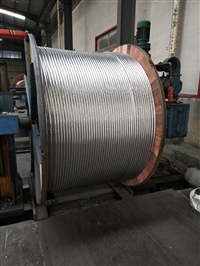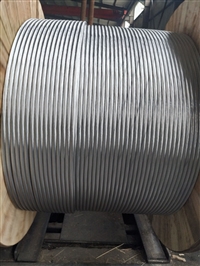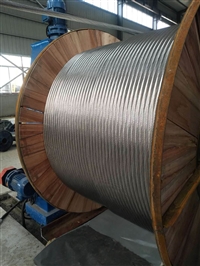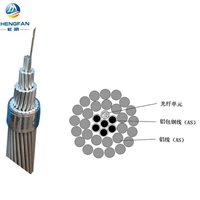
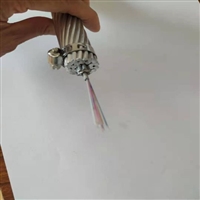
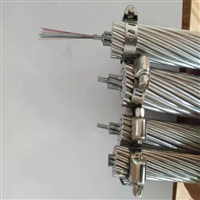
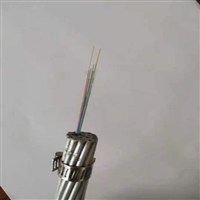
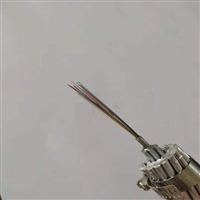
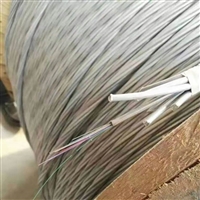
OPGW optical cable OPGW-24B1-150 specification OPPC optical cable
Category:
Electrical Engineering/Wire and cable/Fiber optic cable
Model:
OPGW-24B1-150
Brand:
Zheng Fan
Retail Price
12.50USD
重量
kg
- Product Description
-
Description :
OPGW fiber optic cable OPGW-24B1-150 offers competitive prices with large quantities
Introduction to the main functions of OPGW
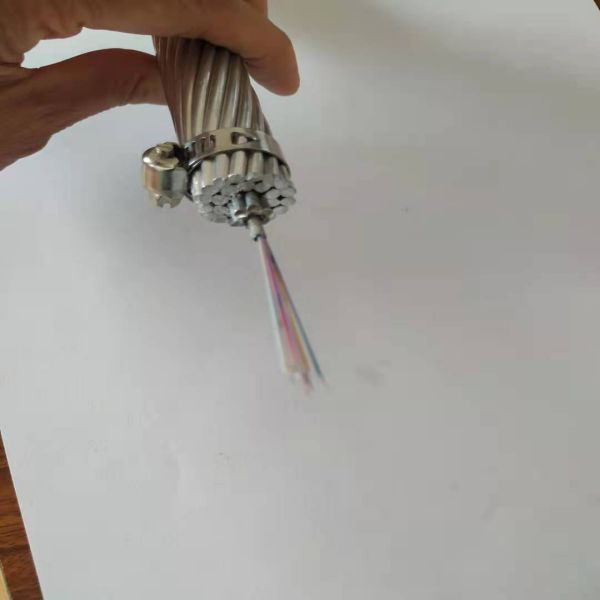
OPGW optical cable, also known as Optical Fiber Composite Overhead Ground Wire. Placing optical fibers in the ground wire of overhead high-voltage transmission lines to form an optical fiber communication network on the transmission lines, this structural form combines the dual functions of ground wire and communication, and is generally referred to as OPGW optical cable. Due to its anti electromagnetic interference and light weight, optical fibers can be installed on the top of transmission line towers without considering issues such as mounting position and electromagnetic corrosion. Therefore, OPGW has significant characteristics such as high reliability, superior mechanical performance, and low cost. This technology is particularly suitable and economical for new installation or replacement of existing grounding wires. Fiber optics utilizes the difference in refractive index between the core and cladding materials to transmit light energy through optical fibers, which has become a major revolution in the history of communication. Fiber optic cables are lightweight and compact, and have been adopted by power systems to transmit dispatch calls, remote signals, relay protection, television images, and other information between substations and central substations. In order to improve the stability and reliability of fiber optic cables, foreign countries have developed a structure that combines fiber optic cables with transmission lines, overhead ground wires, and power cables. OPGW optical cable is more reliable, stable, and sturdy due to the metal wire wrapping. As the overhead ground wire and optical cable are combined into one, it not only shortens the construction period but also saves construction costs compared to using other types of optical cables. In addition, if OPGW made of aluminum clad steel wire or aluminum alloy wire is used, it is equivalent to setting up a good conductor overhead ground wire, which can achieve various benefits such as reducing the potential supply current of transmission lines, reducing power frequency overvoltage, improving the interference and dangerous impact of power lines on communication lines, etc.
OPGW optical cables are mainly used on 500KV, 220KV, and 110KV voltage level lines. Due to factors such as power outages and safety, they are often applied on newly built lines.
The applicable characteristics of OPGW are:
(1) Lines with high voltage exceeding 110kV have a large span (usually above 250M);
(2) Easy to maintain, easy to solve for line crossing problems, and its mechanical characteristics can meet the requirements for large line crossings;
(3) The outer layer of OPGW is metal armor, which has no effect on high-voltage corrosion and degradation;
(4) OPGW must be powered off during construction, and the losses caused by power outages are significant. Therefore, OPGW should be used in the construction of new high-voltage lines above 110kV; (5) In the performance indicators of OPGW, the larger the short-circuit current, the more good conductors are needed for armor, which correspondingly reduces the tensile strength. However, in the case of a certain tensile strength, to increase the short-circuit current capacity, the only way is to increase the metal cross-sectional area, resulting in an increase in cable diameter and weight, which poses a safety issue for the strength of the transmission tower
2: Issues to be noted during OPGW construction
The OPGW optical cable adopts tension traction pay off. The optical cable reel is placed on a pay off rack or cable reel car with a rotating shaft. After passing through the tension pay off machine, the non twisted traction steel wire rope is first manually laid out. The OPGW is connected by a torque reducer, anti twist whip, and traction net sleeve, and then threaded into the pulleys of each tower in the tension section to reach the traction machine. For the renovation project of old line communication, if the OPGW is pulled by the replaced old ground wire, all ground wire joints must be connected in series in advance; Replace all old ground wires with untwisted steel wire ropes for more reliable and rapid traction.
The entire deployment process must always maintain smooth communication, and the tension machine and traction machine must obey unified dispatch and command to ensure balanced force distribution of OPGW. OPGW has been designed and installed correctly. Generally, the length of each OPGW fiber optic cable is about 3 kilometers, and the connection point is usually installed on a tension tower or corner tower. Each fiber optic cable must be installed in the designated section and reserved for connection. OPGW must not be cut arbitrarily, and the end must be protected, sealed, waterproof, and moisture-proof before connection.
The traction tension is generally controlled at 300-500kgf, and the traction machine should be slowly started to 5 meters per minute. If the situation is normal, it can be gradually increased to 30 meters per minute in a balanced manner. It is necessary to ensure that the length of the cable on each rack is completed every day to prevent the optical cable in the traction from slipping or being artificially damaged overnight or being left for a long time. Nylon rope must be used to fix the OPGW on the pulley to prevent OPGW from sliding and fiber fatigue damage at the contact point with the pulley.
To prevent excessive lateral pressure on the OPGW optical cable at the head and tail towers, the distance between the traction machine and the starting tower should be 3-4 times the tower height, and the angle between the lead direction and the tower perpendicular should be greater than 600. If this cannot be met, pulley blocks must be used.
When crossing and releasing cables, check all preparations according to the construction plan, including power outage matters, protective frames, arrangement of supervisory personnel, electrical inspection, and grounding protection. For extraordinary needs that require reinforcement and protection, temporary cables are not allowed to be tied to one of the main materials of the cross arm and tower body.
When some OPGW optical cables are manually laid, it is convenient to lay them at both ends. The cable reel can be placed in the middle of the laying section, with one end placed first; To prevent twisting, place the other end in the shape of a large "8" on the ground and then lay it out; In mountainous areas with large elevation differences, cable reels are placed on the higher side.
During deployment, the OPGW is released from the cable reel to maintain a relaxed arc shape, preventing phenomena such as looping, surges, hooks, and surface wear during traction. Under the command of a dedicated person, maintain smooth communication, promptly handle any non-compliance with quality standards, and prohibit untrained personnel from taking up their posts or working without contact. OPGW fiber optic cable OPGW-24B1-150 offers competitive prices with large quantities
AfterSalesService :
Key words:- OPGW optical cable
More Products