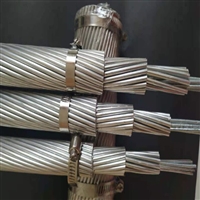
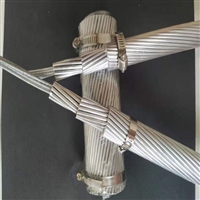
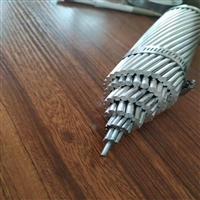
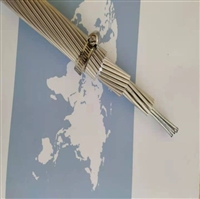
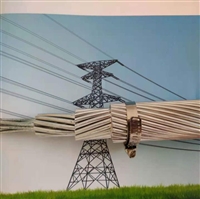
JL/G1A-120/25 Luoyang Steel Core Aluminum Stranded Wire Manufacturer for Power Transmission and Transformation
Category:
Electrical Engineering/Wire and cable/Bare wire
Model:
JL/G1A-120/25-7/7
Brand:
Zheng Fan
Retail Price
9.99USD
重量
kg
- Product Description
-
Description :
JL/G1A-120/25 Luoyang Steel Core Aluminum Stranded Wire Manufacturer for Power Transmission and Transformation
Application and details of steel cored aluminum stranded wire:
Tensile strength of single wire
The single wire tensile strength test should be conducted on the single wire selected from the stranded wire, and the sample should be straightened without stretching or damaging the sample during operation. ten
GB/T 1179—2017
The cross-sectional area of a single wire should be measured using the diameter measurement method specified in 6.6.1.3, and then the straightened single wire should be installed on a suitable tensile testing machine and gradually subjected to a load. The movement speed of the clamp should not be less than 25 mm/min, nor more than 100 mm/min.
The fracture load divided by the cross-sectional area of the single wire should not be less than 95% of the corresponding tensile strength before twisting (5% loss is considered due to the decrease in tensile strength caused by the processing and twisting of the single wire during the twisting process).
resistivity
If necessary, the resistivity of the single wire should be measured on the selected single wire from the stranded wire. The sample should be manually straightened and measured according to the method specified in GB/T 3048.2-2007. The test results should meet the requirements of the corresponding single wire standard. Except for galvanized steel stranded wire, resistivity measurement is generally not required for all galvanized steel wires.
Surface condition
The surface of the stranded wire should meet the requirements of 5.3. 6.6.7 Pitch to diameter ratio and twist direction
The pitch to diameter ratio of each layer of twisted wire should be the ratio of the measured pitch to the outer diameter of that layer.
The measured values should meet the requirements of 5.4. In addition, attention should be paid to the twisting direction of each layer, which should also comply with the requirements of 5.4.
7.1 Packaging
During normal loading, unloading, transportation, and storage, wires should be properly packaged to prevent damage.
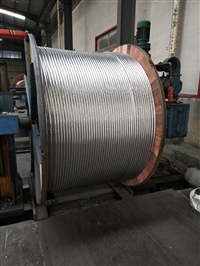
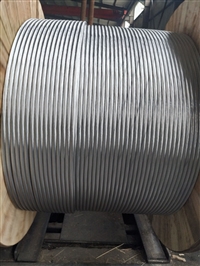
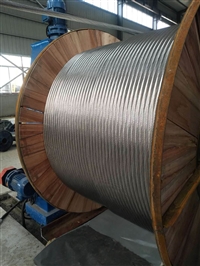
The wires should be delivered in reels, with the distance between the outermost layer and the edge of the cable reel side panel not less than 30 mm, and properly packaged. The two wires connected together should have at least half of the single wire cut at a distance of not less than 15 cm from the connection point, and the fracture should be tightly tied.
The delivery tray shall comply with the provisions of JB/T 8137-2013 (all parts), or may be agreed upon by the supply and demand parties through mutual agreement. Short section wires are allowed to be delivered in loops, and each loop should be tied at least three times and properly packaged.
7.2 Each coil or turn of wire should be labeled with:
Each coil or turn of wire should be labeled with the following information:
a) Manufacturer name, manufacturer serial number (if any); b) Wire model, nominal cross-section, and number of single wires;
eleven
GB/T 1179—2017
c) Shipping, rotation direction, or line marking; d) The marking that the spool cannot be placed flat during transportation; e) The length of each wire from outside to inside, m; f) Gross weight and net weight, kg;
g) Manufacturing date: Year/Month;
h) This standard is numbered GB/T 1179-2017.

Model:
The model of steel cored aluminum stranded wire is represented as LGJ; The model of aluminum stranded wire is represented as LJ3. Standard adopted:
Steel cored aluminum stranded wire adopts the following standards
3.1 GB1179-83 "Aluminum Stranded Wire and Steel cored Aluminum Stranded Wire";
3.2GB3428-82 "Galvanized Steel Wire for Steel cored Aluminum Stranded Wire"
3.3 TB1008-99 "Code for Design of Railway Electric Power"
3.4 GB/T1179-1999 "Round Wire with Same Core Stranded Hollow Wire" 3.5 GB/T17048-1997 "Hard Aluminum Wire for Overhead Stranded Wire"
4. Main technical parameters:
4.1 Galvanized steel wire in steel core aluminum stranded wire shall comply with the provisions of GB3428-82 "Galvanized Steel Wire for Steel Core Aluminum Stranded Wire" and Appendix D of GB1179-83
4.2 Aluminum wire should comply with the requirements of GB/T1179-1. "Round Wire with Same Core Twisted Frame Empty Wire" in terms of material. LY9 electrical round aluminum wire should be used, with a resistivity of 9g not exceeding 0.028264.2m/m and a tensile strength of 4.3. Physical parameters of aluminum stranded wire
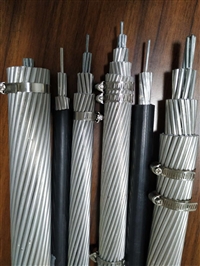
LGJ is the symbol for steel cored aluminum stranded wire, where L is the abbreviation for aluminum wire, G is the abbreviation for steel core, and J is the abbreviation for stranded wire. 300/50 refers to the nominal cross-sectional area of the wire being 300 square millimeters for aluminum and 50 square millimeters for steel; The structure of the wire consists of 26 aluminum wires with a diameter of 3.83 square millimeters and 7 steel wires with a diameter of 2.98 square millimeters; The calculated cross-section of aluminum is 300 square millimeters, the calculated cross-section of steel is 48.8 square millimeters, and the total calculated cross-section is 348 square millimeters; For transmission lines above 10kV, aluminum clad steel stranded wire (LGJ) is commonly used as the conductor in China, which wraps the steel wire with aluminum wire. The steel wire is used to transmit current, while the aluminum wire is used to reduce corona and other losses. The cross-sectional area of the conductor gradually increases according to different voltages. For example, currently in China, the conductors for high voltage 500kV transmission lines generally use LGJ-300/50 conductors.
Steel cored aluminum stranded wire has the characteristics of simple structure, easy installation and maintenance, low line cost, large transmission capacity, and is conducive to laying in special geographical conditions such as crossing rivers and valleys. It has good conductivity and sufficient mechanical strength, high tensile strength, and the tower distance can be enlarged. Therefore, it is widely used in overhead transmission and distribution lines of various voltage levels.
JL/G1A-120/25 Luoyang Steel Core Aluminum Stranded Wire Manufacturer for Power Transmission and Transformation
Packaging and transportation:
Steel cored aluminum stranded wire should be delivered in reels, with the distance between the outermost layer and the edge of the cable reel side panel not less than 30mm, and properly packaged. The two twisted wires connected together during packaging should have at least half of the aluminum wire cut at the connection point, and the two sides of the connection point should be firmly tied. The cable reel shall comply with the provisions of GB4005-83 "Delivery reels for wires and cables". Short stranded wires are allowed to be delivered in loops, and each loop should be tied at least three times and properly packaged. The product should be inspected and qualified by the manufacturer before leaving the factory, and each product leaving the factory should be accompanied by a quality inspection certificate.
Steel cored aluminum stranded wires are arranged in a criss crossing manner on transportation vehicles such as vehicles and ships. The cable reels must be placed steadily, and both sides must be firmly fixed to the transportation vehicle with steel wire ropes. The bottom of the cable reels should be plugged with triangular wedges to prevent them from shaking, colliding, or tipping over during transportation. When transporting large cable reels, attention should be paid to selecting road transportation equipment. If using heavy-duty trucks for transportation, the height of the truck should comply with the height restrictions of bridges, culverts, etc. on the traffic road. If the limit is exceeded, a dedicated trailer can be used to reduce the transportation height. When the cable reel rolls on the ground, it must be rolled in the direction indicated by the arrow on the side of the cable reel. Rolling in the opposite direction will cause the cable to unwind and loosen. For cables without protective plates, the two side plates must protrude more than 10cm from the outer layer of the cable when rolling. During rolling, hard objects should be prevented from pressing under the cable reel to avoid damaging the cable. When rolling the cable reel, it should be controlled within a small distance range, and special equipment such as forklifts or cranes should be used for long-distance movement.
AfterSalesService :
Key words:- aluminum conductor steel reinforced (ACSR)
More Products