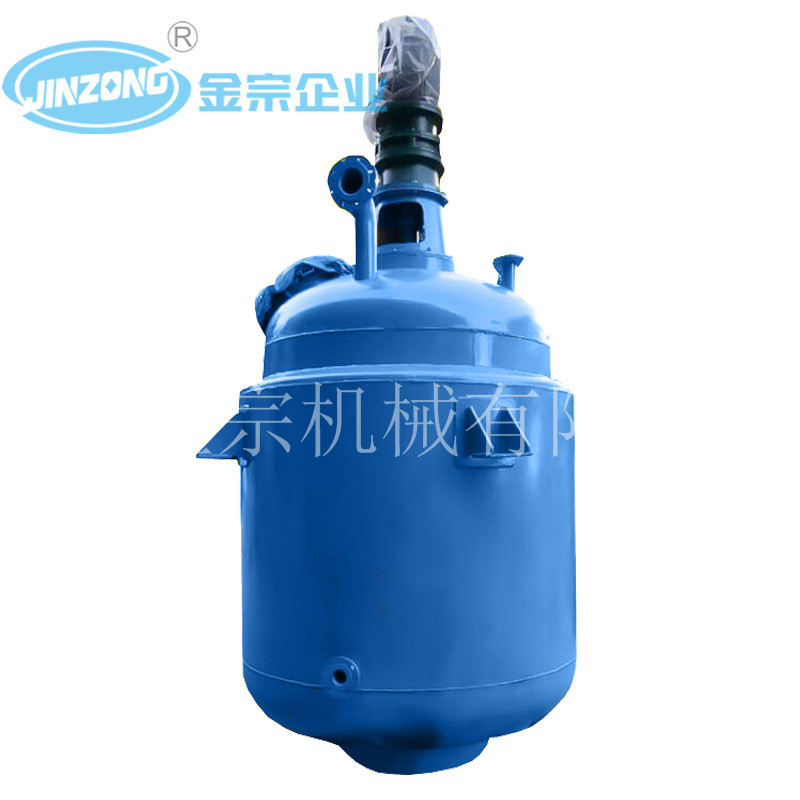


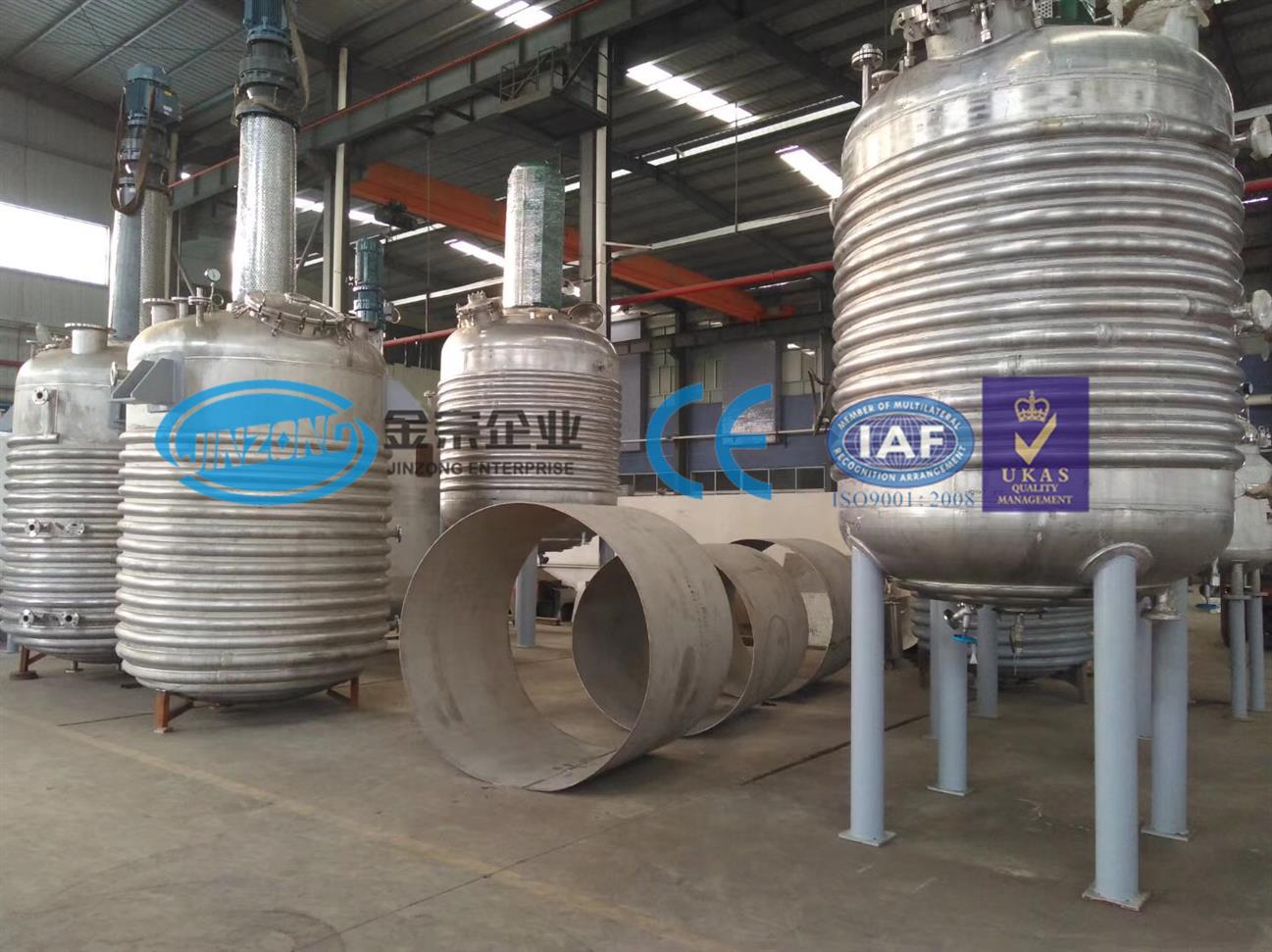
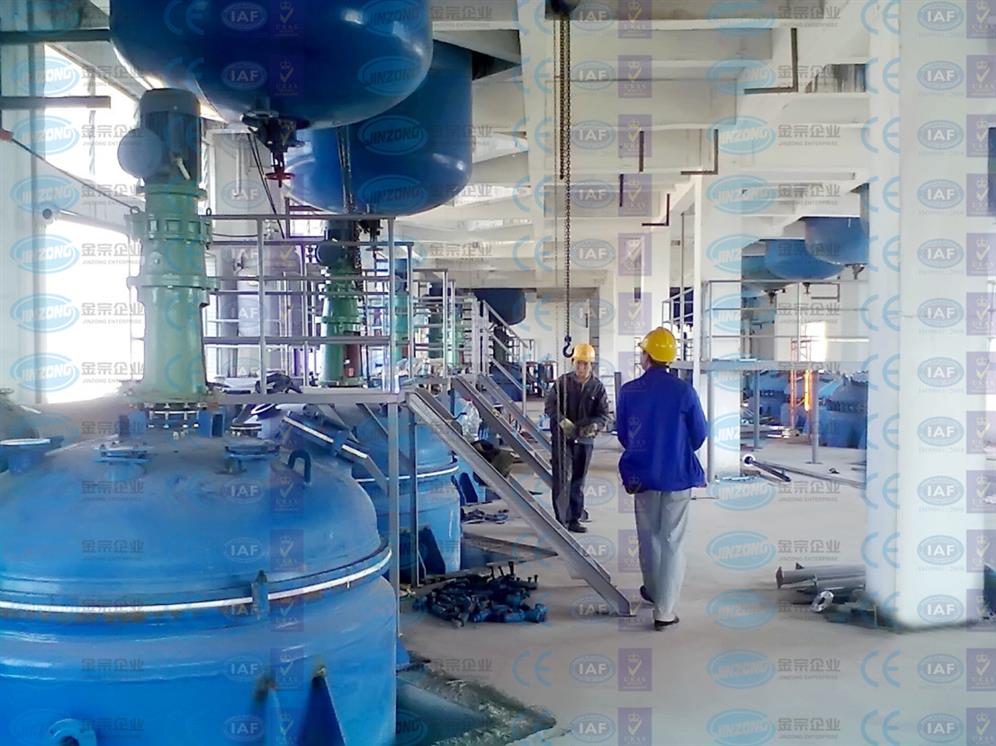
Resin production equipment from reaction kettle manufacturers is widely used and durable
Category:
chemical industry/Reaction equipment/Reaction kettle
Model:
Brand:
Jinzong Machinery
Retail Price
Negotiable
重量
kg
- Product Description
-
Description :
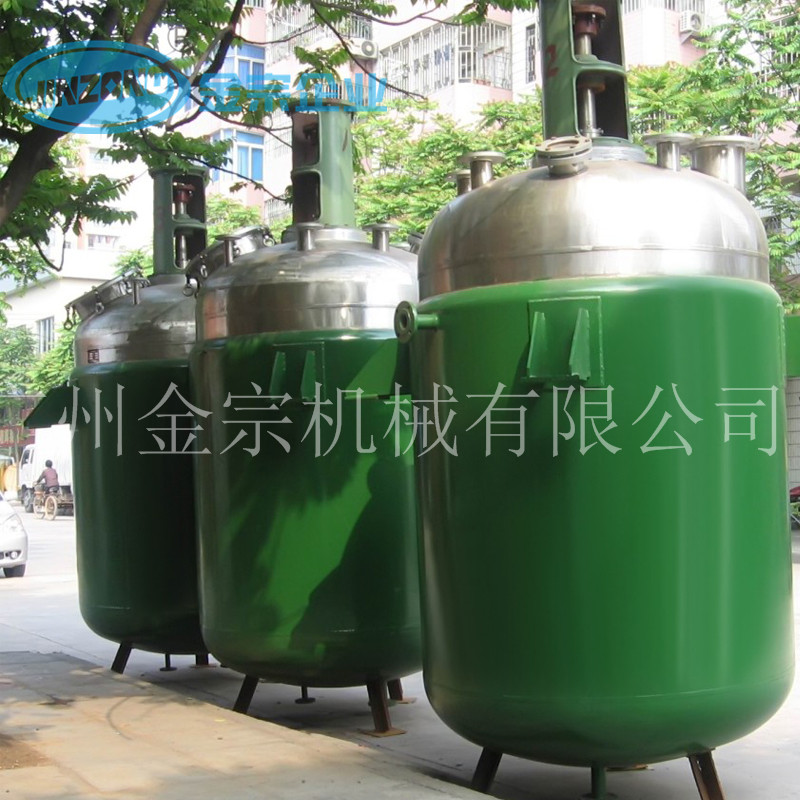
Regular attention should be paid to the working condition of the entire equipment and reducer when maintaining the stainless steel reactor. If the reducer lubricating oil is insufficient, it should be replenished immediately. The electric heating medium oil should be replaced every six months. Safety valves, pressure gauges, distillation holes, electric heating rods, electrical instruments, and other parts such as the jacket and pot cover should be regularly inspected. If there is a malfunction, they should be replaced or repaired immediately. When the equipment is not in use, it is necessary to thoroughly clean the inner and outer walls of the container with warm water, regularly scrub the pot body, keep the exterior clean and the inner pot bright, and achieve durability.
When using a stainless steel reactor, the refrigerant inlet valve must be closed, the remaining refrigerant in the pot and jacket must be drained, and then the material must be input. The mixer should be started, and then the steam valve and electric power supply should be turned on. After reaching the desired temperature, the steam valve and electric power supply should be turned off first. After 2-3 minutes, the mixer should be turned off. After processing is completed, the remaining condensed water in the pot and jacket should be drained, and the sticky material should be washed away as soon as possible with warm water. Then, the inner wall of the container should be thoroughly cleaned with 40 ℃ -50 ℃ alkaline water, and rinsed with clean water. Especially when there is no material (heat absorbing medium) in the stainless steel reactor pot, the steam valve and electric power supply should not be turned on. Pay special attention to the use of steam pressure. Do not exceed the rated work pressure.
Reaction vessels are widely used in petroleum, chemical, rubber, pesticide, dye, medicine, food, and are pressure vessels used to complete processes such as vulcanization, nitration, hydrogenation, alkylation, polymerization, and condensation, such as reactors, reaction pots, decomposition pots, polymerization pots, etc; Materials generally include carbon manganese steel, stainless steel, zirconium, nickel based (Hastelloy, Monel, Inconel) alloys, and other composite materials.
AfterSalesService :
Key words:- Reactor manufacturer