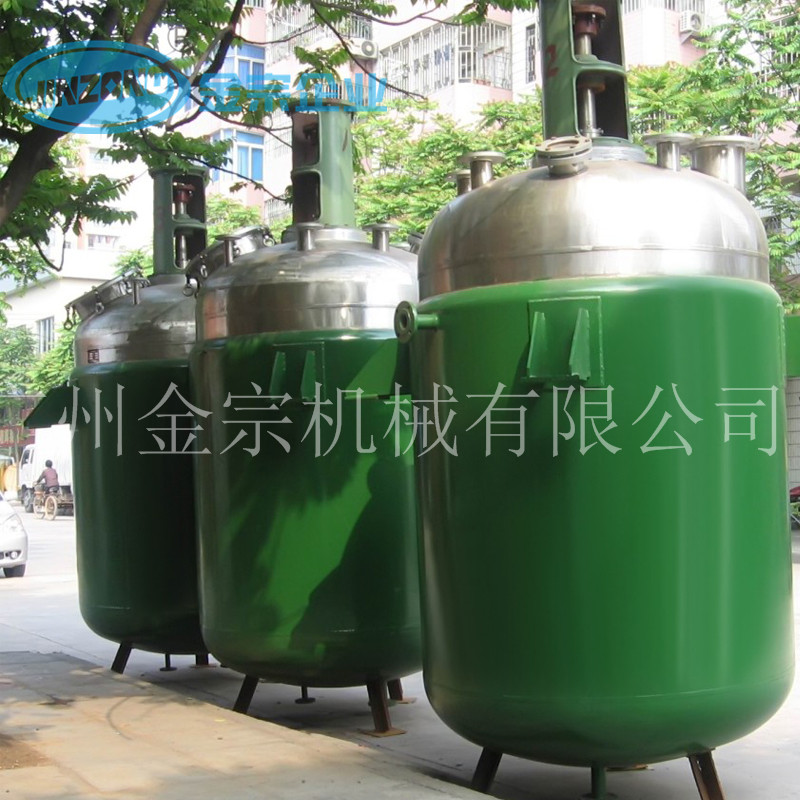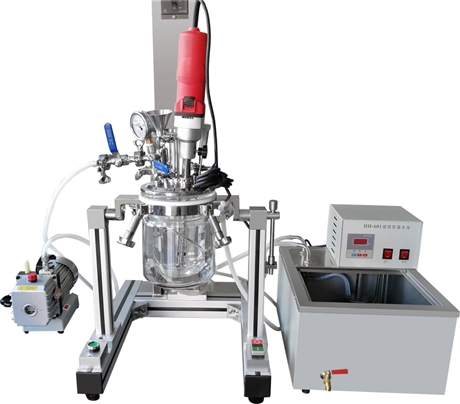


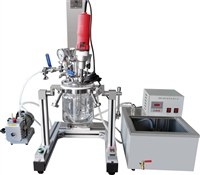
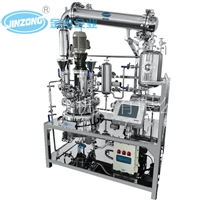
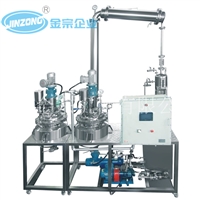
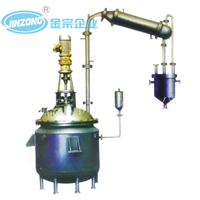
Laboratory reaction kettle resin production equipment with excellent technology and performance
Category:
chemical industry/Reaction equipment/Reaction kettle
Model:
YFA
Brand:
Jinzong Machinery
Retail Price
20,000.00USD
重量
kg
- Product Description
-
Description :
When using a stainless steel reactor, the refrigerant inlet valve must be closed, the remaining refrigerant in the pot and jacket must be drained, and then the material must be input. The mixer should be started, and then the steam valve and electric power supply should be turned on. After reaching the desired temperature, the steam valve and electric power supply should be turned off first. After 2-3 minutes, the mixer should be turned off. After processing is completed, the remaining condensed water in the pot and jacket should be drained, and the sticky material should be washed away as soon as possible with warm water. Then, the inner wall of the container should be thoroughly cleaned with 40 ℃ -50 ℃ alkaline water, and rinsed with clean water. Especially when there is no material (heat absorbing medium) in the stainless steel reactor pot, the steam valve and electric power supply should not be turned on. Pay special attention to the use of steam pressure. Do not exceed the rated work pressure.
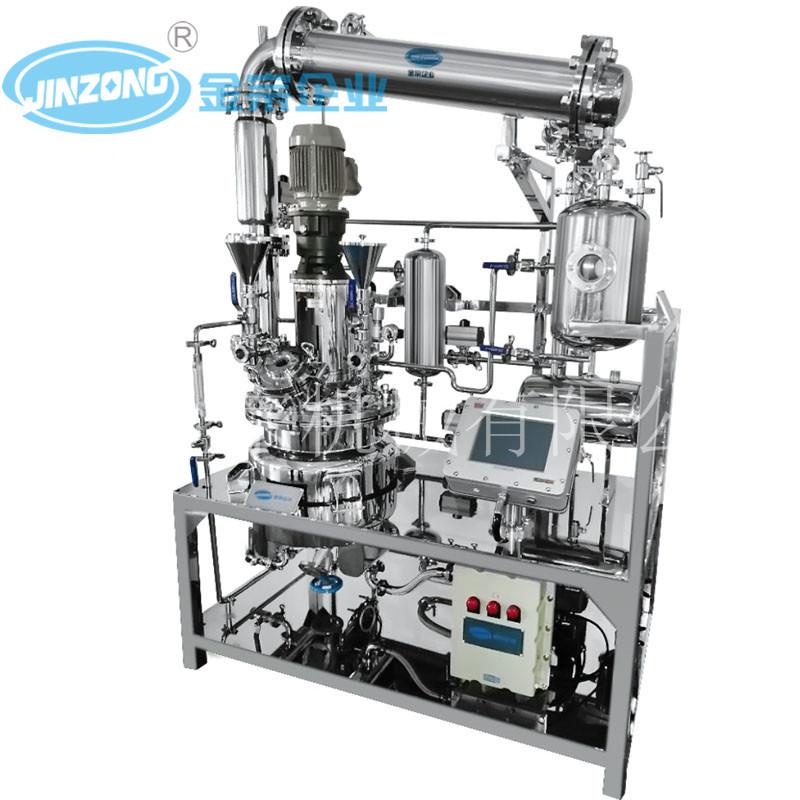
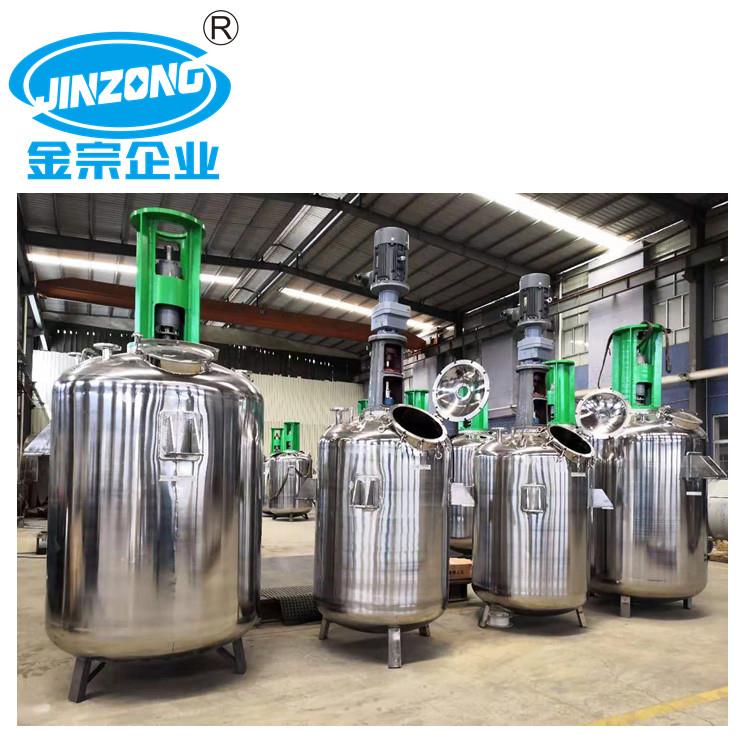
Stainless steel reaction vessels have the characteristics of rapid heating, high temperature resistance, corrosion resistance, hygiene, no environmental pollution, no need for boiler automatic heating, and easy use. They are widely used in petroleum, chemical, rubber, pesticide, dye, medicine, food, and are used to complete processes such as vulcanization, nitration, hydrogenation, alkylation, polymerization, and condensation. The premise is to fully mix the reactants. For physical changes such as heating, cooling, liquid extraction, and gas absorption, stirring devices are required to achieve good results. We can also design and process external coil reaction vessels for customers.
The atmospheric pressure stainless steel electric heating reaction kettle has the characteristics of rapid heating, high temperature resistance, corrosion resistance, hygiene, no environmental pollution, electric heating stainless steel reaction kettle, no need for boiler automatic heating, convenient use, and low price. Widely used in industries such as chemical, pharmaceutical, and food, the material is made of 304 stainless steel.
Attention to the use of reaction kettle
A reactor is a type of reaction equipment that must be operated carefully, otherwise it may be damaged due to various reasons, leading to production stoppage. There are many aspects to pay attention to when operating a reactor.
Firstly, it is necessary to strictly operate the reactor according to the rules and regulations.
Secondly, before operation, carefully check for any abnormalities. During normal operation, do not open the upper cover or touch the wiring terminals on the board to avoid electric shock; It is strictly prohibited to operate under pressure; During the nitrogen pressure test, carefully observe the changes in the pressure gauge. Once the test pressure is reached, immediately close the nitrogen valve switch; The heating rate should not be too fast, and the pressurization should also be carried out slowly, especially the stirring speed, which is only allowed to increase slowly.
Afterwards, when the kettle body is heated to a higher temperature, do not come into contact with the kettle body to avoid; After the experiment, the temperature should be lowered first. Do not cool quickly to prevent damage caused by excessive temperature and pressure differences. At the same time, it is necessary to unplug the power supply in a timely manner.
At the same time, attention should be paid to maintenance of the reaction kettle after use, so that the high-pressure kettle can have a better service life.
The broad understanding of a reaction kettle is a stainless steel container with physical or chemical reactions. The structural design and parameter configuration of the container are carried out according to different process conditions. The design conditions, process, inspection, manufacturing, and acceptance need to be based on relevant technical standards to achieve the heating, evaporation, cooling, and low-speed mixing reaction functions required by the process. Pressure vessels must comply with the GB150 {Steel Pressure Vessels} standard, and atmospheric pressure vessels must comply with the NB/T47003.1-2009 {Steel Welded Atmospheric Pressure Vessels} standard. The pressure requirements during the reaction process also vary in terms of the design requirements for the container. Production must strictly follow the corresponding standards for processing, testing, and trial operation. Stainless steel reaction vessels vary according to different production processes, operating conditions, etc. The design structure and parameters of reaction vessels are different, that is, the structural style of reaction vessels is different, and they belong to non-standard container equipment.





AfterSalesService :
Key words:- Laboratory Reactor