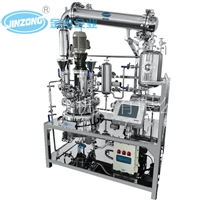
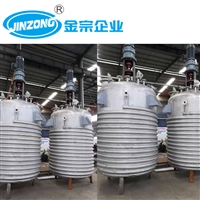
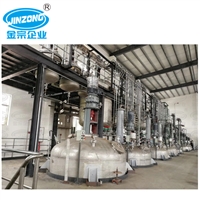
Jacketed reaction kettle PU kettle is widely used and durable
Category:
chemical industry/Reaction equipment/Reaction kettle
Model:
JZ-100/50000
Brand:
Jinzong Machinery
Retail Price
20,000.00USD
重量
kg
- Product Description
-
Description :
Installation and operation specifications for reaction kettle
1. The high-pressure reactor should be placed indoors. When equipping multiple high-pressure reactors, they should be placed separately. Each operating room should have an exit directly leading to the outside or passage, and the equipment grounding point should be ensured to have good ventilation.
2. When installing the kettle cover, it is necessary to prevent the sealing surfaces between the kettle body and the kettle cover from colliding with each other. Carefully place the kettle lid in a fixed position on the kettle body, and when tightening the main nut, it must be tightened diagonally and symmetrically in multiple steps. Apply even force and do not allow the kettle lid to tilt to one side to achieve a good sealing effect.
3. At the joint of the positive and negative nuts, only the positive and negative nuts are allowed to be rotated, and the sealing surfaces of the two circular arcs must not be rotated relative to each other. When all nut pattern connections are assembled, lubricating oil should be applied.
4. The needle valve system is sealed with a thread. Simply rotate the valve needle gently and press the cover tightly to achieve a good sealing effect.
5. Rotate the rotating body on the kettle by hand to check if it operates flexibly.
6. The controller should be placed flat on the operating platform, with a working environment temperature of 10-40 ℃ and a relative humidity of less than 85%. The surrounding medium should not contain conductive dust or corrosive gases.
7. Check whether the movable parts and fixed contacts on the panel and back panel are normal, remove the cover, and check whether the connector contacts are loose, whether there is damage or rust caused by poor transportation and storage.
8. The controller should be reliably grounded.
9. Connect all wires, including power lines, electric furnace lines between the controller and the kettle, motor lines, temperature sensor and speedometer wires.
10. Close the "power" air main switch on the panel, and the digital display should show.
11. Set various parameters (such as upper limit alarm temperature, working temperature, etc.) on the digital display, then press the "heating" switch to turn on the electric furnace, and the indicator light on the "heating" switch will light up. Adjust the "pressure adjustment" knob to adjust the heating power of the electric furnace.
12. Press the "Mixing" switch to power on the mixing motor, and the indicator light on the "Mixing" switch will light up. Slowly turn the "Speed Control" knob to make the motor rotate slowly, observe whether the motor is rotating in the forward direction, and when there is no error, stop the machine, hang the belt, and restart.
13. After the operation is completed, it can be cooled naturally, cooled with water, or placed on a bracket for air cooling. After the temperature drops, release the pressurized gas inside the kettle to reduce the pressure to atmospheric pressure (the pressure gauge shows zero). Then, loosen the main nut symmetrically and evenly, remove the main nut, and carefully remove the kettle cover and place it on the bracket.
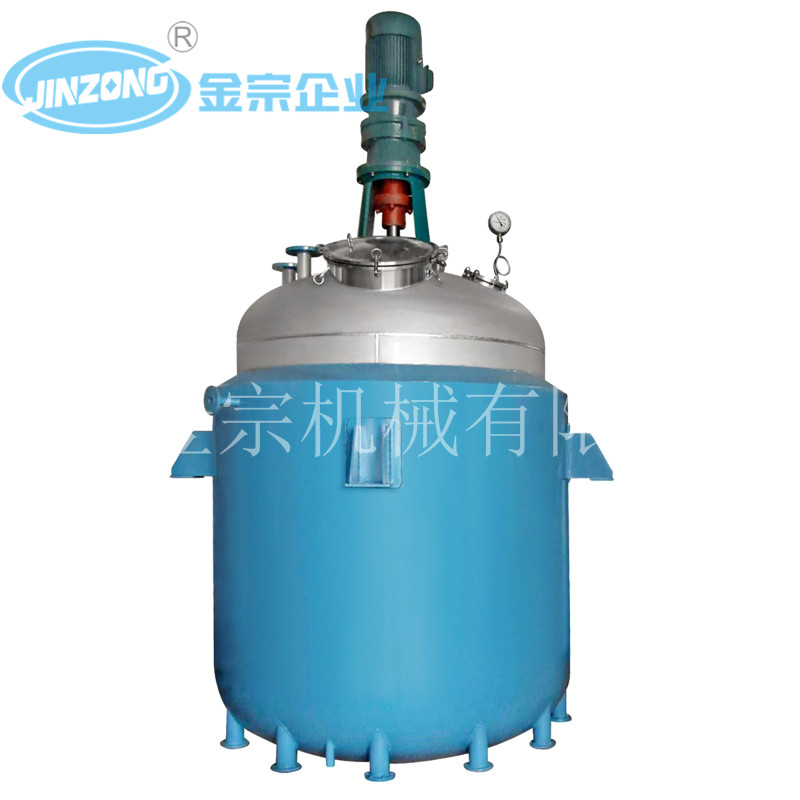
When using a stainless steel reactor, the refrigerant inlet valve must be closed, the remaining refrigerant in the pot and jacket must be drained, and then the material must be input. The mixer should be started, and then the steam valve and electric power supply should be turned on. After reaching the desired temperature, the steam valve and electric power supply should be turned off first. After 2-3 minutes, the mixer should be turned off. After processing is completed, the remaining condensed water in the pot and jacket should be drained, and the sticky material should be washed away as soon as possible with warm water. Then, the inner wall of the container should be thoroughly cleaned with 40 ℃ -50 ℃ alkaline water, and rinsed with clean water. Especially when there is no material (heat absorbing medium) in the stainless steel reactor pot, the steam valve and electric power supply should not be turned on. Pay special attention to the use of steam pressure. Do not exceed the rated work pressure.
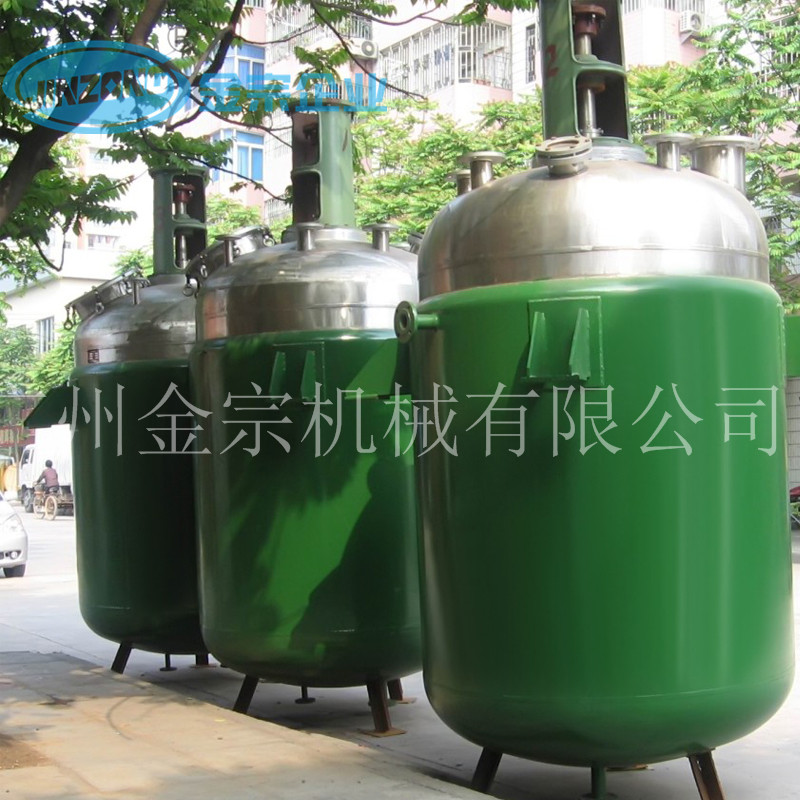
Stainless steel reaction vessels have the characteristics of rapid heating, high temperature resistance, corrosion resistance, hygiene, no environmental pollution, no need for boiler automatic heating, and easy use. They are widely used in petroleum, chemical, rubber, pesticide, dye, medicine, food, and are used to complete processes such as vulcanization, nitration, hydrogenation, alkylation, polymerization, and condensation. The premise is to fully mix the reactants. For physical changes such as heating, cooling, liquid extraction, and gas absorption, stirring devices are required to achieve good results. We can also design and process external coil reaction vessels for customers.
The atmospheric pressure stainless steel electric heating reaction kettle has the characteristics of rapid heating, high temperature resistance, corrosion resistance, hygiene, no environmental pollution, electric heating stainless steel reaction kettle, no need for boiler automatic heating, convenient use, and low price. Widely used in industries such as chemical, pharmaceutical, and food, the material is made of 304 stainless steel.
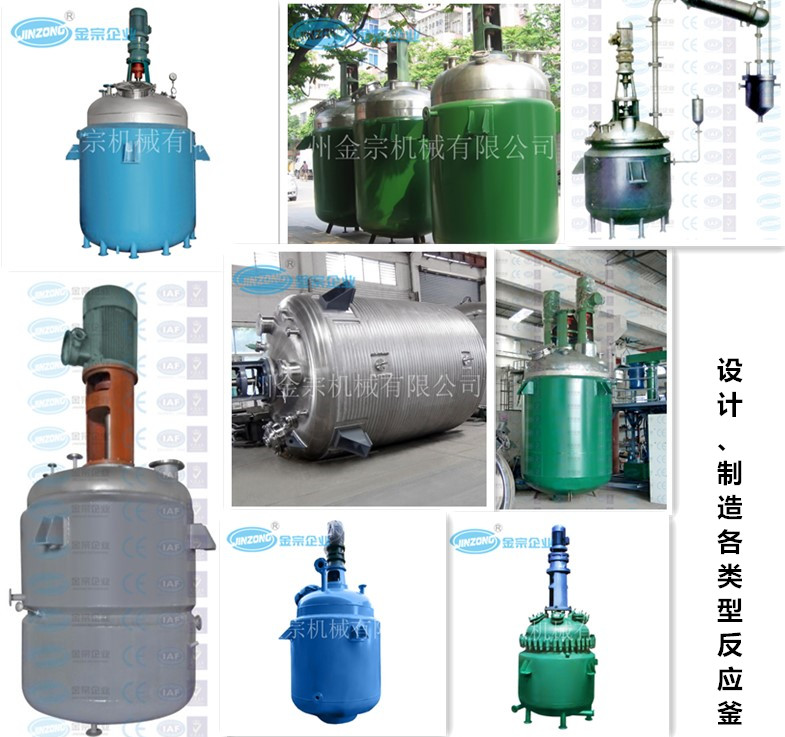
The heat transfer jacket of the reactor is generally made of ordinary carbon steel. It is a container that is placed outside the reactor cylinder to form a sealed space, which is simple and convenient. The jacket is equipped with inlet and outlet ports for steam, cooling water or other heating and cooling media.





AfterSalesService :
Key words:- Jacketed reactor