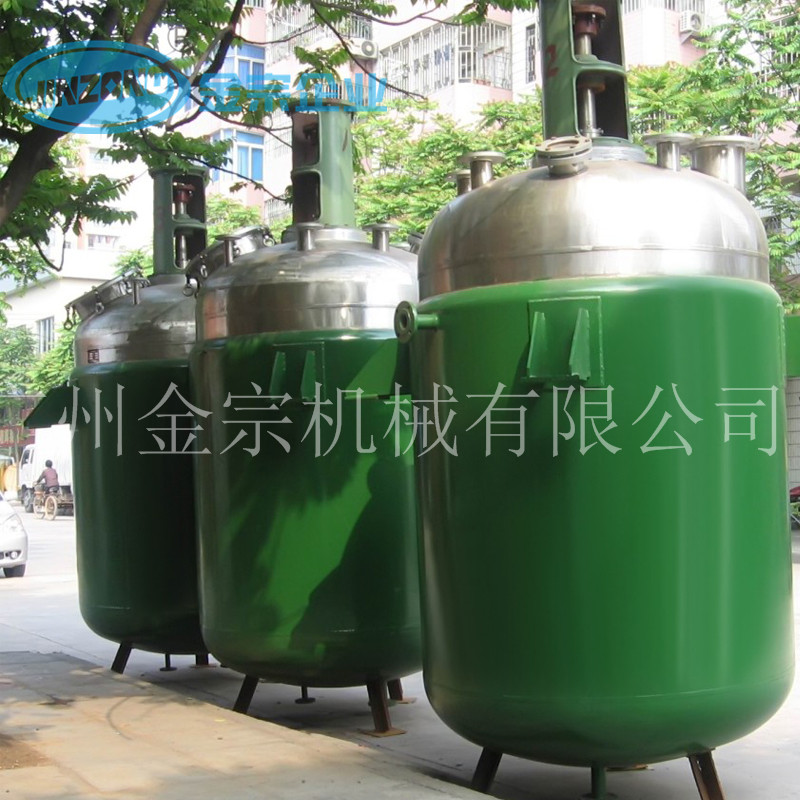
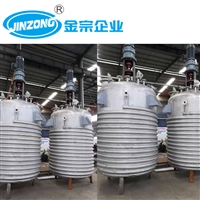
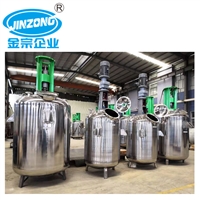
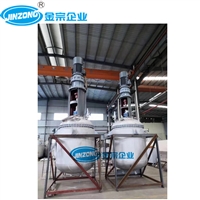
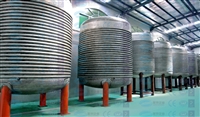
Shenzhen reaction kettle PU kettle has excellent craftsmanship and outstanding performance
Category:
chemical industry/Reaction equipment/Reaction kettle
Model:
YFA
Brand:
Jinzong Machinery
Retail Price
20,000.00USD
重量
kg
- Product Description
-
Description :
Installation and operation specifications for reaction kettle
1. The high-pressure reactor should be placed indoors. When equipping multiple high-pressure reactors, they should be placed separately. Each operating room should have an exit directly leading to the outside or passage, and the equipment grounding point should be ensured to have good ventilation.
2. When installing the kettle cover, it is necessary to prevent the sealing surfaces between the kettle body and the kettle cover from colliding with each other. Carefully place the kettle lid in a fixed position on the kettle body, and when tightening the main nut, it must be tightened diagonally and symmetrically in multiple steps. Apply even force and do not allow the kettle lid to tilt to one side to achieve a good sealing effect.
3. At the joint of the positive and negative nuts, only the positive and negative nuts are allowed to be rotated, and the sealing surfaces of the two circular arcs must not be rotated relative to each other. When all nut pattern connections are assembled, lubricating oil should be applied.
4. The needle valve system is sealed with a thread. Simply rotate the valve needle gently and press the cover tightly to achieve a good sealing effect.
5. Rotate the rotating body on the kettle by hand to check if it operates flexibly.
6. The controller should be placed flat on the operating platform, with a working environment temperature of 10-40 ℃ and a relative humidity of less than 85%. The surrounding medium should not contain conductive dust or corrosive gases.
7. Check whether the movable parts and fixed contacts on the panel and back panel are normal, remove the cover, and check whether the connector contacts are loose, whether there is damage or rust caused by poor transportation and storage.
8. The controller should be reliably grounded.
9. Connect all wires, including power lines, electric furnace lines between the controller and the kettle, motor lines, temperature sensor and speedometer wires.
10. Close the "power" air main switch on the panel, and the digital display should show.
11. Set various parameters (such as upper limit alarm temperature, working temperature, etc.) on the digital display, then press the "heating" switch to turn on the electric furnace, and the indicator light on the "heating" switch will light up. Adjust the "pressure adjustment" knob to adjust the heating power of the electric furnace.
12. Press the "Mixing" switch to power on the mixing motor, and the indicator light on the "Mixing" switch will light up. Slowly turn the "Speed Control" knob to make the motor rotate slowly, observe whether the motor is rotating in the forward direction, and when there is no error, stop the machine, hang the belt, and restart.
13. After the operation is completed, it can be cooled naturally, cooled with water, or placed on a bracket for air cooling. After the temperature drops, release the pressurized gas inside the kettle to reduce the pressure to atmospheric pressure (the pressure gauge shows zero). Then, loosen the main nut symmetrically and evenly, remove the main nut, and carefully remove the kettle cover and place it on the bracket.
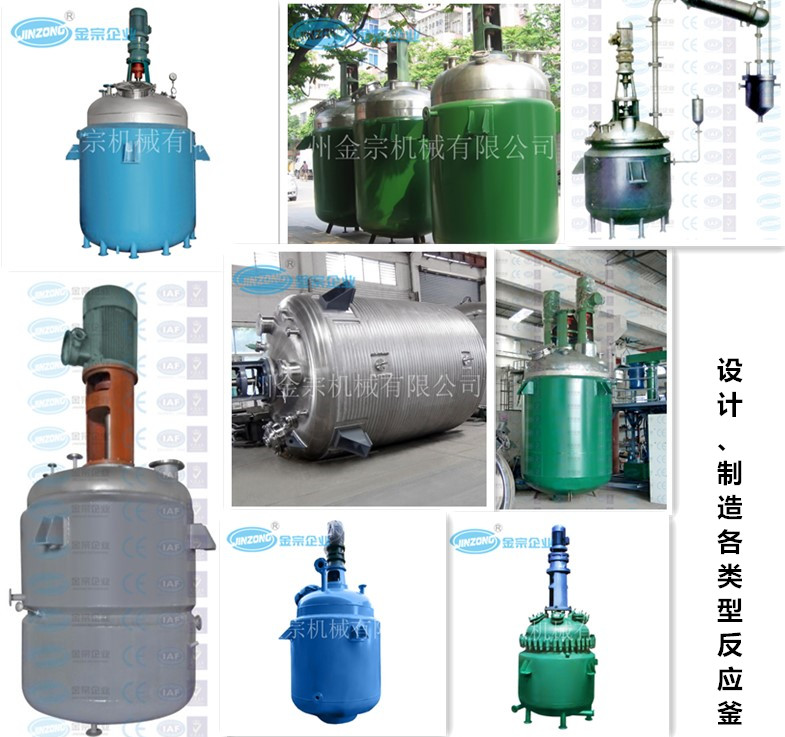
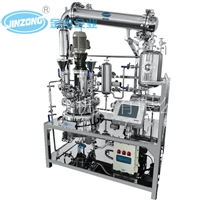
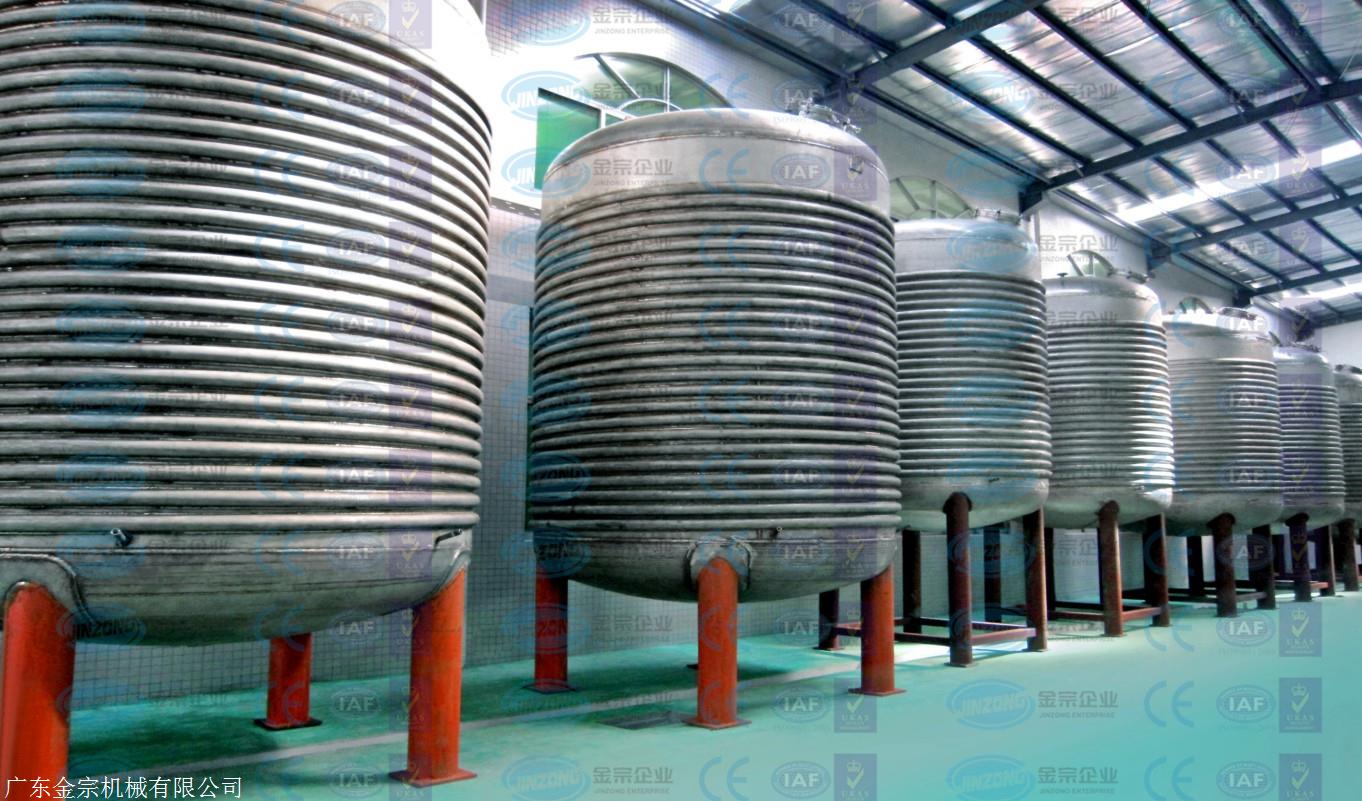
Stainless steel reaction vessels have the characteristics of rapid heating, high temperature resistance, corrosion resistance, hygiene, no environmental pollution, no need for boiler automatic heating, and easy use. They are widely used in petroleum, chemical, rubber, pesticide, dye, medicine, food, and are used to complete processes such as vulcanization, nitration, hydrogenation, alkylation, polymerization, and condensation. The premise is to fully mix the reactants. For physical changes such as heating, cooling, liquid extraction, and gas absorption, stirring devices are required to achieve good results. We can also design and process external coil reaction vessels for customers.
The atmospheric pressure stainless steel electric heating reaction kettle has the characteristics of rapid heating, high temperature resistance, corrosion resistance, hygiene, no environmental pollution, electric heating stainless steel reaction kettle, no need for boiler automatic heating, convenient use, and low price. Widely used in industries such as chemical, pharmaceutical, and food, the material is made of 304 stainless steel.
Attention to the use of reaction kettle
A reactor is a type of reaction equipment that must be operated carefully, otherwise it may be damaged due to various reasons, leading to production stoppage. There are many aspects to pay attention to when operating a reactor.
Firstly, it is necessary to strictly operate the reactor according to the rules and regulations.
Secondly, before operation, carefully check for any abnormalities. During normal operation, do not open the upper cover or touch the wiring terminals on the board to avoid electric shock; It is strictly prohibited to operate under pressure; During the nitrogen pressure test, carefully observe the changes in the pressure gauge. Once the test pressure is reached, immediately close the nitrogen valve switch; The heating rate should not be too fast, and the pressurization should also be carried out slowly, especially the stirring speed, which is only allowed to increase slowly.
Afterwards, when the kettle body is heated to a higher temperature, do not come into contact with the kettle body to avoid; After the experiment, the temperature should be lowered first. Do not cool quickly to prevent damage caused by excessive temperature and pressure differences. At the same time, it is necessary to unplug the power supply in a timely manner.
At the same time, attention should be paid to maintenance of the reaction kettle after use, so that the high-pressure kettle can have a better service life.
The broad understanding of a reaction kettle is a stainless steel container with physical or chemical reactions. The structural design and parameter configuration of the container are carried out according to different process conditions. The design conditions, process, inspection, manufacturing, and acceptance need to be based on relevant technical standards to achieve the heating, evaporation, cooling, and low-speed mixing reaction functions required by the process. Pressure vessels must comply with the GB150 {Steel Pressure Vessels} standard, and atmospheric pressure vessels must comply with the NB/T47003.1-2009 {Steel Welded Atmospheric Pressure Vessels} standard. The pressure requirements during the reaction process also vary in terms of the design requirements for the container. Production must strictly follow the corresponding standards for processing, testing, and trial operation. Stainless steel reaction vessels vary according to different production processes, operating conditions, etc. The design structure and parameters of reaction vessels are different, that is, the structural style of reaction vessels is different, and they belong to non-standard container equipment.





AfterSalesService :
Key words:- Shenzhen Reactor