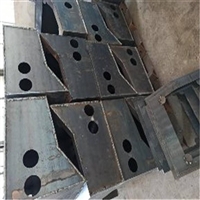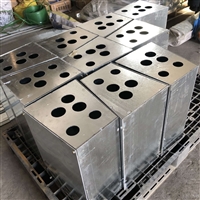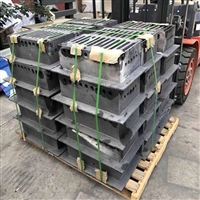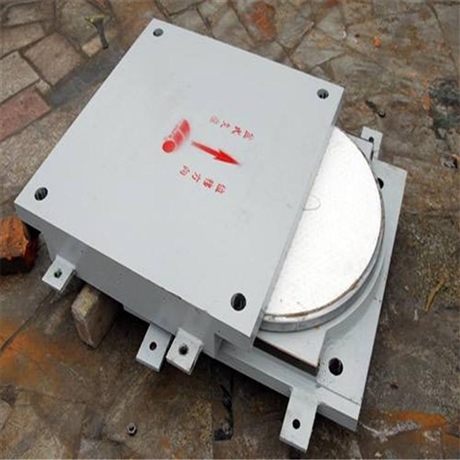



Haichen supplies finished bridge hinge bearings, finished truss bearings, finished seismic isolation hinge bearings, finished fixed shock absorption bearings. Welcome to inquire
Category:
Rubber and plastic/Industrial rubber products/Industrial rubber products
Model:
Brand:
Haichen
brand:
Haichen
material:
natural rubber
type:
Rubber bearings
shape:
irregular
Scope of Application:
Bridge and building seismic reduction
purpose:
Earthquake resistant and seismic resistant
color:
multicolored
grade:
01
Is it imported:
No
Item Number:
01
product grade:
Level 1
Product Specifications:
Complete specifications
manufacturer:
Hengshui, Hebei
Retail Price
410.00USD
重量
kg
- Product Description
-
brand Haichen
material natural rubber
type Rubber bearings
shape irregular
Scope of Application Bridge and building seismic reduction
purpose Earthquake resistant and seismic resistant
color multicolored
grade 01
Is it imported No
Item Number 01
product grade Level 1
Product Specifications Complete specifications
manufacturer Hengshui, Hebei
Description :
Isolation bearings refer to the supporting devices set up in structures to meet isolation requirements. They add isolation layers between the upper structure and the foundation, install rubber isolation bearings, and provide a soft connection with the ground. Through this technology, about 80% of the energy generated by earthquakes can be offset. For example, laminated rubber bearings (also known as seismic isolation rubber bearings, laminated rubber pads, etc.). It is a structural component with low horizontal stiffness and high vertical stiffness, which can withstand large horizontal deformations and can be used as part of a load-bearing system. This seismic technology comes from the development of engines.
background
The traditional seismic technology is to firmly connect the upper structure and foundation of the building together, that is, to make the house stronger, using thicker steel bars and more concrete pouring, but this seismic effect is not ideal. Isolation bearings add isolation layers between the upper structure and the foundation, and install rubber isolation bearings to provide a soft connection with the ground. Through this technology, about 80% of the energy from earthquakes can be offset. This seismic resistance technology originates from the engine, and it was the designers who developed solid rocket engines who developed this technology.
Introduction
Since the 1960s and 1970s, people have compared seismic isolation bearings
We conducted comprehensive research and experiments, and carried out experiments in practical engineering, and conducted extensive tracking observations. There are mainly two aspects to the research on seismic isolation components: on the one hand, actively exploring new materials, new processes, and developing various seismic isolation components; On the other hand, research on the application of seismic isolation bearings in engineering practice, and consider their seismic isolation performance and engineering cost issues.
They can be used as individual components or in combination, sometimes depending on the requirements of the building's function. The support isolation device mainly bears the load of the upper structure of the building, while the shock absorber damper mainly controls the horizontal deformation generated by the isolation bearing to not exceed the limit specified in the specifications, reducing the shaking of the upper structure of the building, and can be reset at the end of the earthquake.
Exquisite performance
Durability of isolation bearings
For the durability of laminated rubber bearings. We can obtain it through some experiments, such as heating rapid test. During the use of buildings, they are constantly subjected to vertical loads and are also affected by external factors such as temperature changes, air oxidation, and normal small vibrations. Therefore, the durability of rubber isolation bearings should require their materials to have good properties and meet the requirements of building design.
When designing the isolation layer, personnel should pay attention to the environment of the isolation building site, the properties of the isolation bearing material, and the deformation of the bearing during earthquakes, and comprehensively consider the durability of the isolation bearing. [
Fire resistance of seismic isolation bearings
When the isolation bearing is subjected to fire or high temperature, the rubber has flammability and is easily deformed by heat, while the steel plate in the isolation bearing has good thermal conductivity. So, in the event of a fire or high temperature on the isolation bearing, the rapid thermal conductivity of the steel plate will accelerate the damage of the rubber. Therefore, when we apply rubber based seismic isolation bearings, their fire resistance should also be taken seriously. [2]
Support type
Rubber type
Rubber isolation bearings are composed of multiple layers of steel plates alternately stacked with rubber. The steel plates serve as the reinforcing material for the rubber bearings, changing the characteristic of low vertical stiffness of the rubber body, allowing it to reduce horizontal seismic effects and withstand large vertical loads. Due to the insufficient energy dissipation of rubber as an elastic material, a lead core is added to the support. Lead core rubber isolation bearings can not only bear the vertical load of the entire upper structure, extend the structural period, but also provide a certain degree of damping, so that the seismic force of the lower structure, namely the piers and abutments, can be redistributed, and the displacement of the isolation layer will not be very large, which has a good isolation effect. At the same time, lead rubber isolation bearings have a certain initial horizontal stiffness, which can resist the effects of loads and braking loads.
Construction requirements for rubber isolation bearings:
The currently used laminated rubber bearings are made by combining the advantages of steel plates and rubber. The use of seismic isolation bearings in buildings will increase the seismic resistance of the building structure under horizontal and vertical earthquakes, torsion, and other effects.
In order to provide the laminated rubber bearing with an appropriate damping ratio and a certain lateral stiffness. When manufacturing laminated rubber bearings, lead rods are placed in the middle, and some adhesive materials are added in the middle, or a suitable amount of graphite is added to the rubber to make high damping rubber.
In the event of a major earthquake, in order to prevent lateral displacement from exceeding the allowable value of the support displacement, attention should be paid to the setting of lateral protection devices in the design; Rubber bearings have good aging resistance, oxidation resistance, and performance.
4. There are connecting plates at the upper and lower ends of the isolation bearing, which can connect the isolation bearing with the foundation and upper structure as a whole.
slide
Sliding isolation refers to the installation of sliding materials such as low friction coefficient materials such as graphite, sand, talc powder, etc. in the isolation layer, so that the foundation can only transmit limited seismic forces to the upper structure, thus protecting the upper structure. The dynamic characteristic of sliding isolation is that the natural period of the entire system before sliding is the same as the structural period. Once sliding occurs, the stiffness of the isolation layer becomes very small, and the natural period of the entire system becomes large. Therefore, theoretically speaking, sliding isolation can avoid the resonance effects caused by the majority of seismic waves. In addition, the frictional force of the isolation layer does work, which can consume the vibration energy of the structure, increase the damping of the structure, and reduce the seismic response of the structure.
composite type
Due to the lack of self resetting ability of sliding friction bearings, uncontrollable displacement may occur during large earthquakes; Although laminated rubber bearings have self resetting ability, their damping is limited and they have no advantage in dissipating seismic energy. Therefore, composite seismic isolation systems with both reset capability and energy dissipation characteristics are favored by researchers and engineers. The currently used composite seismic isolation bearings include parallel use of rubber bearings and sliding bearings, parallel use of rubber bearings and dampers, as well as composite seismic isolation devices that have both elastic horizontal restoring force and damping.
AfterSalesService :
Key words:- Finished hinge bearings for bridges
More Products