


Time of use electricity pricing strategy for energy storage systems
Category:
Electrical Engineering/CNC and instrumentation/Data collector
Model:
acrel
Brand:
Acrel
brand:
Acrel
model:
acrel
type:
system integration
Power supply method:
AD/DC220V
Control method:
discrete signal
function:
collect
Retail Price
3,000,000.00USD
重量
kg
- Product Description
-
brand Acrel
model acrel
type system integration
Power supply method AD/DC220V
Control method discrete signal
function collect
Description :
Time of use electricity pricing strategy for energy storage systems
In the new power system, energy storage will become a crucial part, which is a necessary guarantee for the consumption of new energy such as distributed photovoltaics and wind power, as well as the safety of the power grid. It will be widely used on the power source side, power grid side, and user side. The Basic Rules of the Electricity Market (Draft for Comments) and the supportive policies introduced by various regions have brought new hope to the expansion of energy storage business models. The electricity market will increase the arbitrage space between peak and valley, coupled with electricity subsidies, which will significantly shorten the investment payback period of energy storage projects. According to calculations, the duration of energy storage projects before the electricity reform is 8-10 years; After the electricity reform and local electricity subsidies, some areas can achieve two charges and two discharges per day, and the energy storage project period can be shortened to 4-6 years. Commercial energy storage has become profitable, which will encourage capital to enter and form a virtuous cycle in the industry.
There are multiple profit models for energy storage in different stages, mainly including the following: helping power operators and end users reduce costs and increase efficiency in power generation, transmission, and distribution; Delaying infrastructure investment; Through peak valley price arbitrage, participation in virtual power plant demand response and other auxiliary service markets, capacity leasing, electricity markets, and other methods.
2.1 Power side
Peak shaving of electricity: energy storage is used to achieve peak shaving and valley filling of electricity load, that is, power plants charge batteries during periods of low electricity load and release stored electricity during periods of high electricity load.
Provide capacity: By storing energy, provide power generation capacity to cope with peak loads and improve the operational efficiency of traditional generator sets.
Renewable energy grid connection: Energy storage is installed in wind and solar power stations, and based on power station output prediction and energy storage charging and discharging scheduling, the random, intermittent, and fluctuating renewable energy generation output is smoothly controlled to meet grid connection requirements.
Peak shaving of renewable energy generation: storing the abandoned wind and solar power of renewable energy and transferring it to other periods for grid connection to improve the utilization rate of renewable energy.
Profit model: Improve power generation efficiency to increase revenue; Reduce wind and solar power curtailment and improve power generation efficiency; Peak valley price arbitrage.
1. Overview of Integrated Smart Energy System
The cloud platform is a set of platforms based on the Ankeri IoT data center, which has established the uplink and downlink data standards and provides Internet users with energy IoT data services. Users only need to purchase Ankerui IoT sensors and transformers, and install them themselves. Whether it is IoT instrument direct transmission or uploading through the gateway, they can use their mobile phones to scan the code to obtain the required industry data services.
system architecture
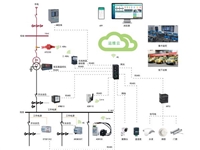
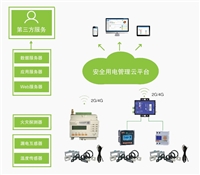
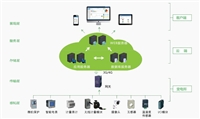
 The Acrel EIoT energy IoT cloud platform adopts a layered and distributed structure, mainly composed of three parts: the perception layer (terminal collection devices), the network layer (communication management terminals), and the platform layer (energy IoT cloud platform).
Perception layer: Various sensors connected to the network, including multifunctional meters, prepaid meters, multi loop meters, IoT meters, IoT water meters, electric vehicle charging stations, car charging stations, street light controllers, etc. Network layer: Intelligent gateway, collects data from the perception layer, performs protocol conversion and storage, and uploads the data to the energy IoT cloud platform. Platform layer: includes application servers and data servers, which can implement applications on PC or mobile devices.

Platform Architecture
 Platform Features
1. Energy supply
Power collection and reading function module

Intelligent operation and maintenance function module

2. Energy management
Safe electrical function module

Power Quality Function Module

3. Equipment management
Intelligent lighting function module

Prepaid water and electricity function module

Car/electric scooter charging operation function module

4. Energy analysis
Energy management functional module

Value added service function module
(1) Industrial configuration

(2) 3D visualization

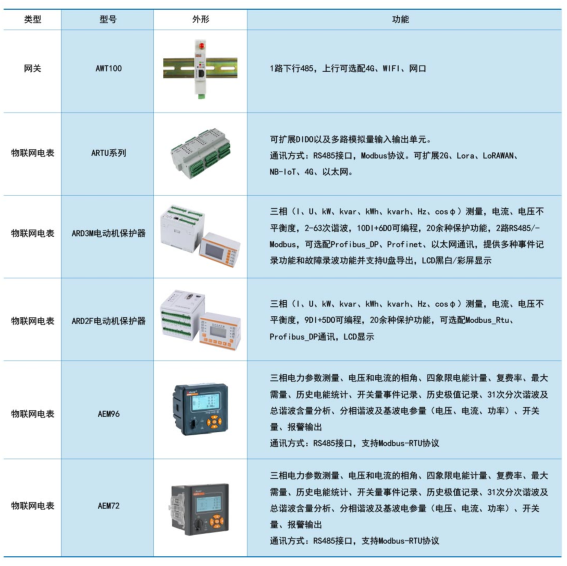
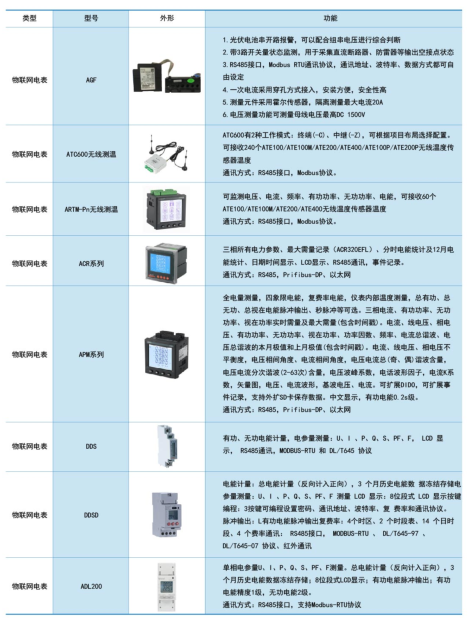
Equipment selection

Time of use electricity pricing strategy for energy storage systems
3 Grid side
Relieve power grid congestion: Install energy storage systems upstream of the transmission line. When a line blockage occurs, the energy that cannot be transmitted can be stored in energy storage devices. When the line load is less than the line capacity, the energy storage system will discharge back to the line.
Delaying the expansion and upgrading of transmission and distribution equipment: In transmission and distribution systems with loads close to equipment capacity, energy storage systems can be used to effectively improve the transmission and distribution capacity of the power grid through smaller installed capacity, thereby delaying the construction of new transmission and distribution facilities and reducing costs.
Profit model: Improve transmission and distribution efficiency, delay investment.
2.4 User side
Capacity management: Industrial users can use energy storage systems to store energy during low demand periods and discharge during peak loads, thereby reducing overall load and achieving the goal of reducing capacity electricity bills.
Capacity leasing: Energy storage power stations are leased to new energy service providers. Currently, the rental fee range for energy storage capacity in China is 300-350 yuan/kW · year. The specific pricing is negotiated between the project revenue of the energy storage power station and the new energy power station, and then both parties sign a long-term leasing agreement.
Spontaneous self use of electricity: Household and commercial users who install photovoltaics can better utilize photovoltaic electricity by configuring energy storage, improve the level of spontaneous self use, and reduce electricity costs.
Peak valley price arbitrage: In the electricity market where peak valley prices are implemented, energy storage systems are charged at low prices and discharged at high prices to achieve peak valley price arbitrage and reduce electricity costs.
Profit model: Reduce capacity electricity bills, save electricity costs, and arbitrage peak valley price differences.
AfterSalesService :
Key words:- Time of use electricity pricing strategy for energy storage systems
More Products