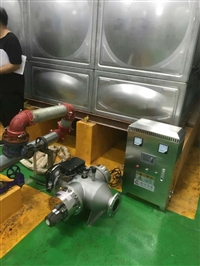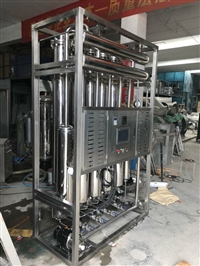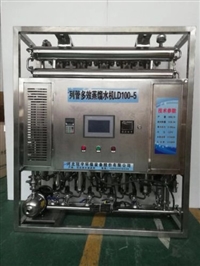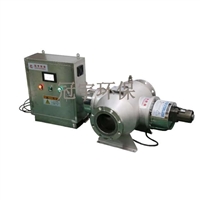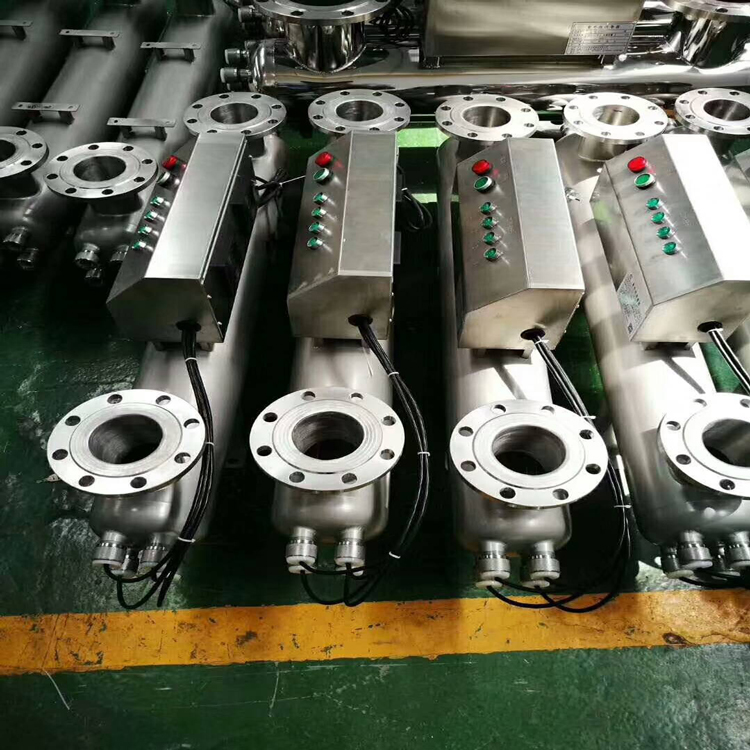


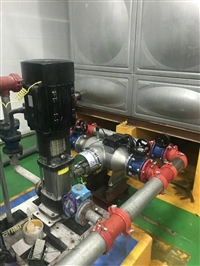
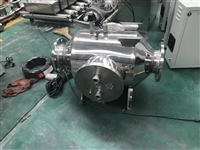

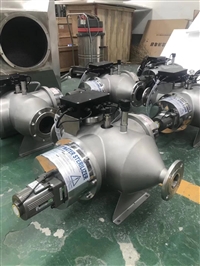

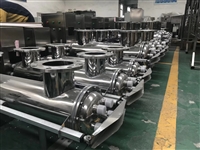
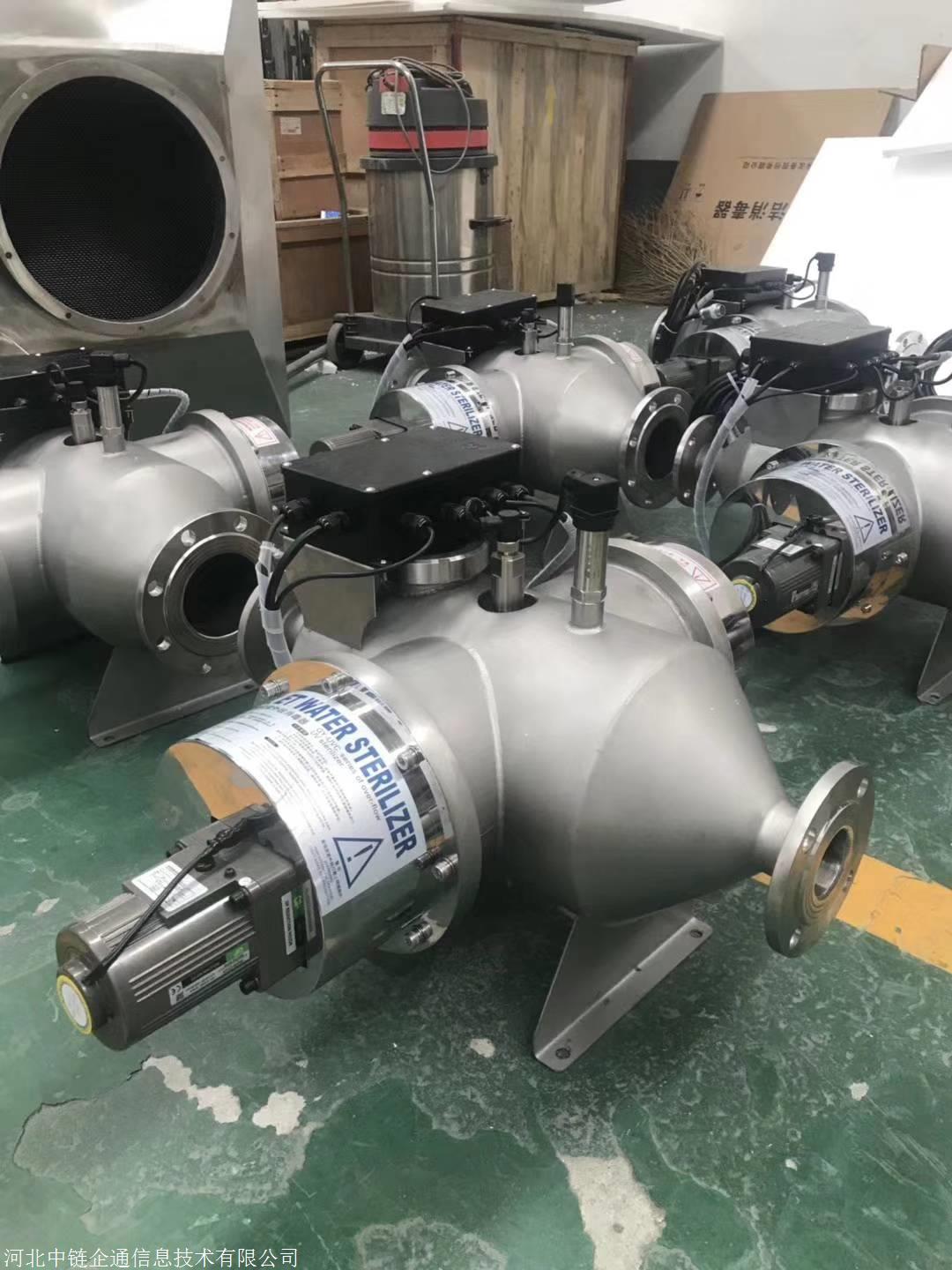
Swimming pool circulating water treatment and disinfection equipment
Category:
Environmental Protection/Raw water treatment equipment/Water sterilization and disinfection equipment
Model:
GYZ-UUVC-1.0
Brand:
Guanyu
Retail Price
8,888.00USD
重量
kg
- Product Description
-
Description :
The advantages of swimming pool circulating water treatment and disinfection equipment products include a wide range of sterilization and disinfection: the output wavelength range of the medium voltage ultraviolet lamp tube of the medium voltage ultraviolet sterilization system is wide, between 230nm and 370nm, which can kill all bacteria and viruses and permanently inactivate chlorine resistant microbial tissues, such as Legionella pneumophila, Escherichia coli, Pseudomonas aeruginosa, Cryptosporidium, Amoeba, and bacteria. Strong sterilization effect: While damaging the DNA structure of microorganisms, it also decomposes them into small fragments. It is precisely because of this medium pressure ultraviolet sterilization characteristic that swimming pool circulating water treatment and disinfection equipment can avoid the occurrence of photoreactivity and dark repair of DNA in microorganisms. Therefore, it can have a long-term inactivation effect on microorganisms without revival reaction or microbial rebound phenomenon. No secondary pollution: No toxic or harmful by-products are produced during the disinfection process, the composition and properties of the disinfected water are not changed, and there is no secondary pollution to the water body and surrounding environment. Decompose residual chlorine and degraded chemical chlorine in water: When using a medium pressure ultraviolet sterilizer for water disinfection, it can reduce the chlorine content in the water, reduce disinfection by-products, and make the water environment healthier. Medium pressure ultraviolet radiation has the ability to degrade chlorinated compounds, including monochloramine, dichloroamine, trichloroamine, etc., effectively preventing the production of carcinogenic substance trihalomethanes and eliminating the impact of chlorinated compounds on the human body. Low cost of use: Due to the improvement of technology, medium voltage ultraviolet disinfection technology not only has the highest disinfection efficiency among all disinfection methods, but also has simple operation and maintenance, low operating costs, and can reach 4 cents per ton of water at a processing capacity of one thousand tons. Easy installation and operation: The medium voltage ultraviolet disinfection system is designed modularly, easy to install, suitable for complex installation site conditions, and does not damage the equipment, pipelines, and building structures on site. The design of a closed system can be directly installed in pipelines, and the swimming pool circulating water treatment and disinfection equipment can be installed horizontally and vertically. Small footprint and no noise: The medium pressure ultraviolet disinfection equipment that processes 10000 tons of clean water per day only requires 6 square meters of operating space. Continuous high water disinfection: Currently, ultraviolet disinfection technology has reached a daily processing capacity of 1.5 million tons of water in practical applications. If needed, it can be even larger, which is not easy to achieve with chlorine addition, dechlorination, and ozone disinfection methods. Wide application fields: Medium pressure ultraviolet disinfection equipment can be applied in the catering industry, swimming pools, wastewater, wastewater reuse, and offshore oil and gas, meeting the disinfection requirements of various industries. Circulating water treatment and swimming pool water treatment are divided into physical and chemical processes, both of which are indispensable in the process of swimming pool water treatment. The physical process is the purification of swimming pool water through the filtering effect of circulating water treatment equipment. The chemical process refers to the addition of chemical agents to disinfect, flocculate, and remove algae while the pool water is circulating, and then the physical process is used to make the pool water clean and hygienic. These two processes must be carried out simultaneously to ensure that the water quality of the pool meets national standards, thereby enabling your swimming pool to pass the inspection of the health and epidemic prevention department smoothly. The important thing is that people who exercise at the swimming pool can truly achieve their fitness goals without being infected with diseases.
The water circulation in the swimming pool is mainly divided into the following three situations:
Parallel flow: pumping water from the bottom of the pool through the water system and then sending it into the pool from the pool wall.
Reverse flow: pumping water from the overflow ditch on the pool surface through the water system and sending it into the pool from the bottom.
Mixed flow: Both of the above situations exist.
Among them, downstream construction is commonly used because it is relatively simple, while upstream construction is complex, but the water treatment is clean and the water quality is good.
Disinfection of swimming pool water is a very important issue. If the disinfection equipment for circulating water treatment in swimming pools is not solved properly, the swimming pool may become a place for spreading diseases. The water temperature in the swimming pool is suitable for the growth of pathogenic bacteria such as typhoid fever, paratyphoid fever, dysentery, hepatitis, acute conjunctivitis, and pustular disease. Hepatitis virus and encephalitis virus often spread diseases through water. The disinfection of swimming pool water generally should meet the following requirements: 1. The disinfection method adopted must have strong sterilization effect, which can quickly and massively kill bacteria, that is, eliminate 99.9% of microorganisms within 30 seconds;
The sterilization effect should have a reasonable duration to effectively control the new pollution brought into the pool by swimmers; The mucous membranes and skin of swimmers must be non irritating and not cause any unpleasant odors in the air; Swimming Pool; The dosage must be easy to control and able to quickly determine the amount and effectiveness of the medication in water using simple methods; While considering all relevant factors, it is necessary to have reasonable economic viability in terms of basic investment and transportation costs.
The commonly used method is chlorine disinfection. Chlorine in water can produce hypochlorous acid, which diffuses to the surface of bacteria and enters the interior of cells. Within the bacteria, the oxidation of chlorine atoms breaks down a certain enzyme system, leading to bacterial death.
An important feature of chlorine disinfection is that an appropriate amount of residual chlorine can be maintained in the disinfected pool water as needed, so as to continuously disinfect the pool water that is constantly contaminated by human body during use. The residual chlorine content in general swimming pool water is required to be 0.4-0.6mg/1. In addition, in order to ensure the efficiency of disinfectants and prevent corrosion of equipment and swimming pool surfaces, it is required that the relative acidity or pH value of the water in the swimming pool be maintained at 7.4-7.6.
The commonly used chlorine disinfection methods include hypochlorite. The superiority lies in its simplicity, low cost, and ability to kill many bacteria, pathogens, viruses, and parasitic eggs. It plays a key role in preventing the spread of cholera and typhoid fever. However, toxic substances that are prone to leakage must be stored and used safely. Sodium hypochlorite solution is a commonly used strong bactericidal agent, high-efficiency oxidant, and excellent bleaching agent, which has been widely used in various fields in China. Compared with other disinfectants, sodium hypochlorite has a broad-spectrum, efficient, and rapid disinfection effect, and is safe, non-toxic, and has no toxic side effects on the human body. It has a wide range of uses and is an ideal, easy to produce, and safe disinfectant product among chlorine based disinfectants in China. Its effective chlorine content is 12.5% -13.5%, and it is very unstable, easily decomposed, and cannot be stored for a long time.
The evaluation of disinfectants should comprehensively consider their bactericidal ability and stability in water. For the four commonly used disinfectants in water treatment, namely chlorine dioxide, sodium hypochlorite, chloramine, and ozone, in terms of bactericidal ability, ozone>chlorine dioxide>sodium hypochlorite>>; chloramines; In terms of stability, chloramine>sodium hypochlorite>chlorine dioxide>>; Ozone. From this, it can be seen that sodium hypochlorite is a disinfectant with excellent and stable disinfection effect. It can be used not only for various water disinfection treatments, but also for other sanitary disinfection. Comparison of Characteristics between Sodium Hypochlorite Generator and Several Disinfectants:
1. Sodium hypochlorite has a high solubility in water and evaporates very little during disinfection. The disinfection equipment for swimming pool circulating water treatment can hardly smell any odor. When using disinfection, if the operation is not appropriate, some chlorine gas will escape from the water, causing a strong odor and requiring a certain amount of time to stop the pool for exhaust and ventilation. Sodium hypochlorite disinfection does not require stopping the pool, which prolongs the opening time and allows for disinfection while swimming, with high flexibility, good randomness, and fewer constraints.
2. Difficulty in transportation and storage, as well as being a highly toxic substance, pose a great danger to humans and animals, especially for personnel who operate for a long time and are prone to bronchitis and bronchitis.
3. Sodium hypochlorite has significant effects on oxidation, decolorization, deodorization, and deodorization, and can significantly change the color and odor of water without reacting with ammonia, nitrogen, and nitrogen-containing organic compounds. Sodium hypochlorite is a strong oxidant that does not undergo substitution reactions with organic compounds in water to produce organic chlorides such as chloramines and chlorophenols. Has a strong oxidative degradation effect on carcinogens and organic toxins in water.
4. Sodium hypochlorite has a broad-spectrum and high efficiency in sterilization, with strong killing ability against viruses, spores, etc. It has a low dosage, short contact time, and good effect. Practice has proven that sodium hypochlorite is highly suitable for disinfecting swimming pool water, killing various viruses, bacteria, microorganisms, and other microorganisms transmitted through the water supply.
5. Sodium hypochlorite has the ability to kill and inhibit the growth of algae in water. After adding sodium hypochlorite, it can quickly kill the proliferating algae.
6. The sodium hypochlorite generator produces liquid, so it has good stability, is safe, has no hidden dangers, is easy to add, and is easy to achieve fixed ratio addition. However, chlorine dioxide generators produce gas with poor stability, making it difficult to control the dosage; If there is a malfunction during the dosing process, there is also a risk of explosion.
7. The technical indicators of sodium hypochlorite generators have national standards, while chlorine dioxide generators are non-standard products, and users cannot conduct quality inspections on the purchased equipment.
8. The chlorine dioxide generator produces comprehensive disinfectant gas by electrolyzing saturated saline solution. Experiments have shown that the chlorine dioxide gas content is relatively low, accounting for only 8-10%. The chlorine dioxide generator also uses diaphragm electrolysis, and the filtration diaphragm is a permeable membrane that is prone to clogging and needs to be replaced frequently. During the electrolysis process, it is also necessary to manually drain alkali and dilute the electrolyte. The sodium hypochlorite generator is a membrane free electrolysis, without the need for membrane replacement, and does not require alkaline or diluted electrolyte discharge, resulting in low labor intensity for workers.
swimming pool
9. The addition of chlorine dioxide is carried out using water as a transport carrier to the water to be disinfected, which is undoubtedly a great waste of water resources. Sodium hypochlorite can be directly added without the need for water as a carrier.
10. The cost of treating one ton of water with sodium hypochlorite is about 0.02 yuan, while the cost of treating one ton of water with chlorine dioxide is about 0.05 yuan.
In short, for swimming pool water disinfection, using sodium hypochlorite disinfection method is an ideal choice for disinfectant products as it is efficient, low consumption, safe and reliable.
Folding pool water coagulation treatment
The "Swimming Pool Water Quality Standards" stipulate that the turbidity of swimming pool water shall not exceed 5 degrees. Swimming pool water is turbid due to sediment, clay, algae, microorganisms, and certain organic matter. In order to reduce the turbidity of the pool water, coagulation treatment must be carried out by adding coagulants to the water, which adsorb small particles of turbid substances in the water, condense them into larger particles, and then produce sediment. The sediment is discharged from the pool through a filter.
Folding pool water algae removal treatment
The water temperature in swimming pools is generally between 20 ℃ and 30 ℃, which is very suitable for the reproduction and growth of algae, such as periodic algae removal treatment. The pool water will turn dark green, and in severe cases, it will increase the turbidity of the pool water, turn black at the bottom, and produce a foul odor. In this case, the following steps need to be taken for treatment: adding disinfectant, adding algaecide, adding flocculant, and strengthening circulation.
Folding water quality standards
As a water sport, it cannot be separated from the control, monitoring, and treatment of swimming pool water quality. The swimming pool circulating water treatment and disinfection equipment requires good sensory properties of the pool water, no pathogenic microorganisms in the water, and no chemical substances in the water that may harm human health, ensuring the safety and reliability of swimming pool water quality. The implementation of the "Swimming Pool Water Quality Standards" (CJ 244-2007) will play an important role in the hygiene management of swimming venues in China, preventing the spread of diseases, and ensuring the health and safety of swimmers. At the same time, it will provide technical guarantees for the water quality standards of various international swimming competitions held in China in the future, making China's swimming pool water quality standards in line with developed countries, and playing a very positive role in the smooth holding of the Beijing Olympics.
In this standard, several main principles are followed, especially regarding the determination of water quality indicators, which should have sufficient basic data and feasible testing methods. The water quality limit should ensure good sensory quality, prevent the outbreak of waterborne infectious diseases and other health hazards, and also consider other treatment technologies and laboratory testing costs. The swimming pool circulating water treatment and disinfection equipment should be in line with China's national conditions and operable. Swimming pool water is relatively easy to treat, and its water treatment is divided into two parts: circulating water treatment and overflow reuse water treatment.
The following process flow is generally adopted. For the circulating water of the original swimming pool, it is treated by directly filtering and adding disinfectant. The disinfectant used is sodium hypochlorite disinfectant, which is prepared and provided on site by a sodium hypochlorite generator. As long as the design of the circulation pipeline is flawless and avoids wasting water caused by system defects, the overflow water in the swimming pool can only be within the normal range. For normal swimming pool overflow water, if it needs to be treated, coagulation treatment should be carried out first, then filtered and pumped by the swimming pool circulating water pump, and then disinfected with medication before entering the swimming pool. The filter material of the main circulation filter tank is generally quartz sand, which has a long service life and good algae filtration effect.
AfterSalesService :
Key words:- Swimming pool circulating water treatment and disinfection equipment