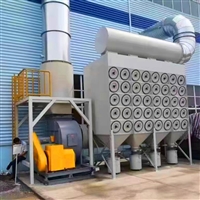
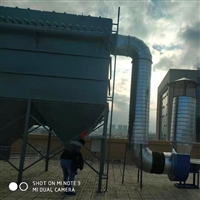
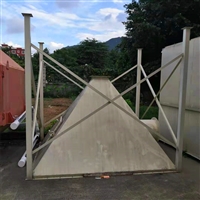

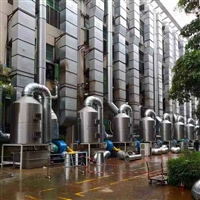
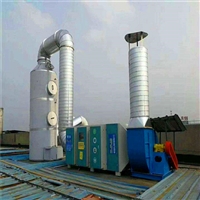
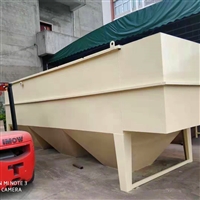
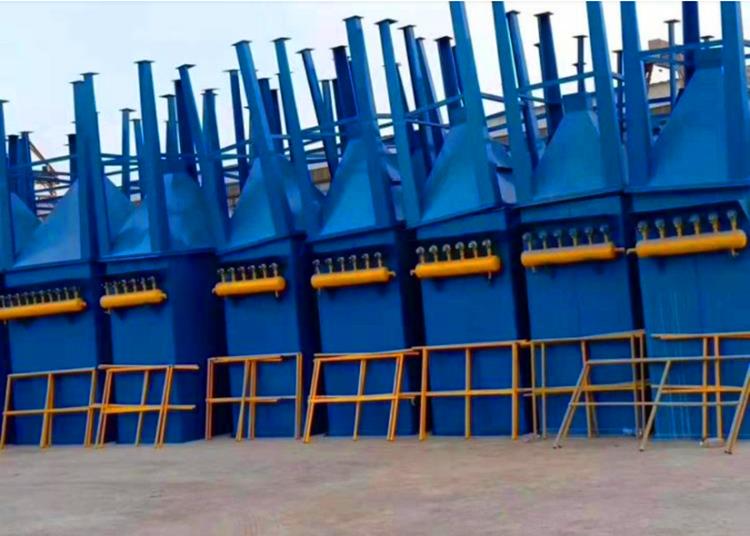
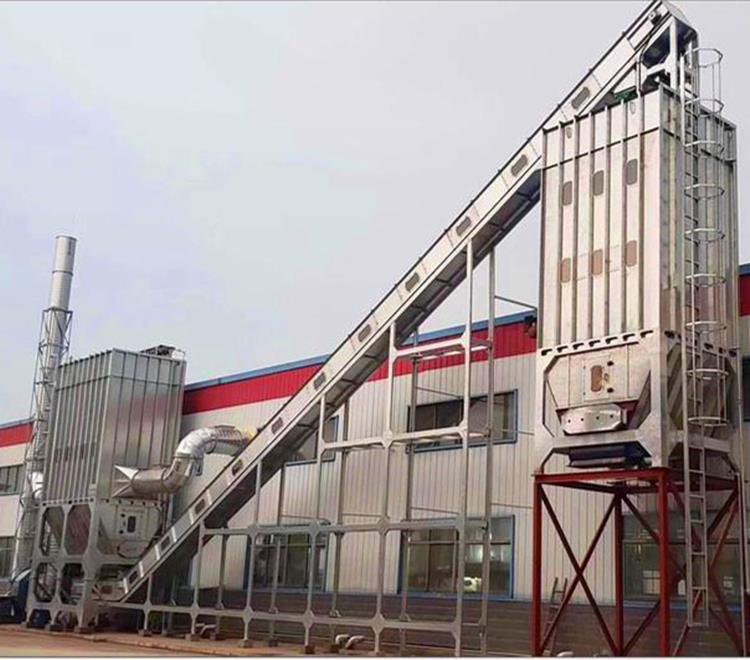
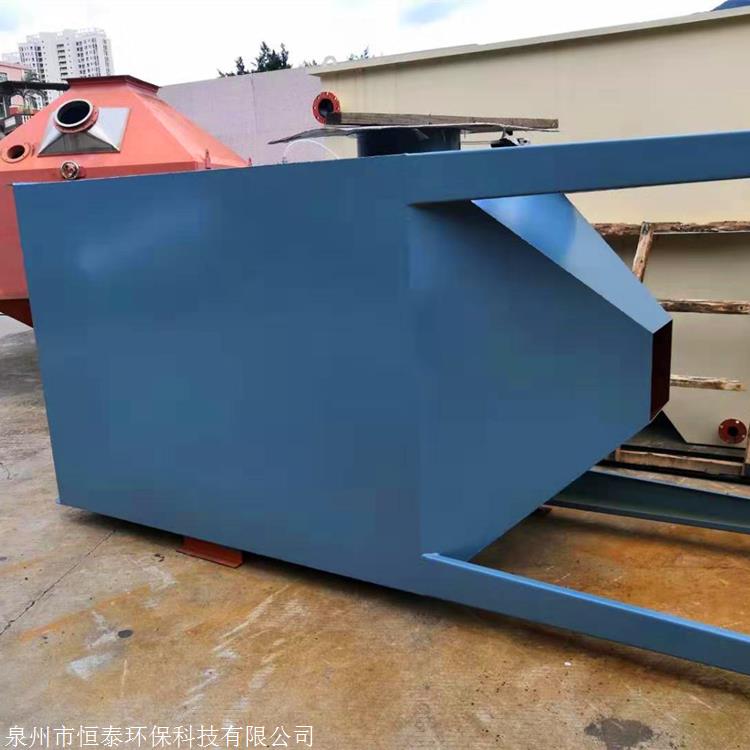
Manufacturer supplies bag cyclone dust collector equipment Quanzhou bag dust collector equipment
Category:
Environmental Protection/Air purification equipment/Desulfurization and dust removal equipment
Model:
BDCCQ-615
Brand:
Hengtai Environmental Protection
Retail Price
5,697.00USD
重量
kg
- Product Description
-
Description :

Product Maintenance
Regularly check the operation of control valves, pulse valves, and timers.
The failure of the pulse valve rubber diaphragm is a common fault in bag filters, which directly affects the dust cleaning effect. This device belongs to the external filter type, with a skeleton inside the bag. It is necessary to check whether the parts that fix the filter bag are loose and whether the tension of the filter bag is appropriate. Is the support frame smooth to prevent wear and tear on the filter bag. Compressed air is used for dust removal. Therefore, it is required to remove oil mist and water droplets, and the oil-water separator must be cleaned regularly to prevent malfunction of the moving mechanism and blockage of the filter bag.
Whether the air volume and pressure and temperature at each testing point are consistent with the design.
The installation status of the 3 filter bags, whether there are any occurrences of bag dropping, loosening, wear, etc. after use, can be judged by visually observing the emissions of the chimney after operation.
4. Prevent condensation
During use, it is necessary to prevent the gas from cooling below the dew point in the bag chamber, especially when using a bag filter under negative pressure. Due to the frequent leakage of air into the outer shell, the gas temperature in the bag chamber is lower than the dew point, causing the filter bag to become damp. This results in dust not being loose but sticking to the filter bag, blocking the fabric holes and causing dust removal failure. This leads to excessive pressure drop in the dust collector, making it unable to continue operating, and some bags may become stuck and unable to remove dust.
To prevent condensation, it is necessary to maintain the temperature of the gas in the dust collector and its system at 25-35 ℃ above its dew point (such as the dew point temperature of 58 ℃ for kiln mill integrated machines, and the operating temperature should be above 90 ℃), in order to ensure the good use effect of the filter bag.


Overview of the Development of Dust Removal Equipment Industry Dust removal equipment is mainly used in industries with severe dust pollution, such as cement, steel, non-ferrous metals, electricity, machinery, chemical industry, and waste incineration. The changes in the total output value of the dust removal equipment industry are closely related to the domestic and international economic development environment, as well as the development status of downstream industries. In recent years, the total output value (sales revenue) of dust removal equipment in China has fluctuated, increasing from 13.998 billion yuan in 2005 to 29.007 billion yuan in 2008, with an average annual compound growth rate of 27.49%. In 2009, affected by the international crisis, the growth rate of industries such as cement, steel, non-ferrous metals, and machinery in China fell sharply, and some industries even experienced negative growth in output value, resulting in a temporary slight decline in the total output value of China's dust removal equipment industry.
classification
According to the national standard of "Classification and Specification Performance Representation Method for Bag Dust Collectors", bag dust collectors are divided into five categories. The cleaning method is the main indicator for classifying bag filters:
(1) Mechanical vibration category
A bag filter that uses mechanical devices (including manual, electromagnetic, or pneumatic devices) to vibrate the filter bag and clean the dust. There are two types of bag filters: non compartment structures suitable for gap work and compartment structures suitable for continuous work.
(2) Split room blowback type
The bag filter adopts a compartment structure and uses valves to switch the airflow from compartment to compartment. Under the action of reverse airflow, it forces the filter bag to shrink or swell and clean the dust.
(3) Spray nozzle reverse blowing type
A bag filter (both non chamber structures) that uses a high-pressure fan or compressor to provide reverse airflow, which is then blown back through a moving nozzle to deform, shake, and penetrate the filter material for dust cleaning.
(4) Vibration, Backblowing and Combination Class
A bag filter (both with compartment structure) that combines mechanical vibration (including electromagnetic vibration or pneumatic vibration) and reverse blowing for dust cleaning.
(5) Pulse jet type
A bag filter that uses compressed air as the cleaning power and utilizes a pulse blowing mechanism to instantly release compressed air, inducing several times the secondary air to enter the filter bag at high speed, causing the filter bag to swell rapidly, and relying on impact vibration and reverse airflow to clean the dust.

AfterSalesService :
Key words:- bag filter