
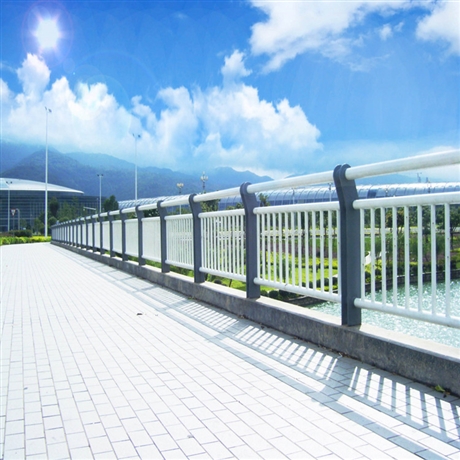



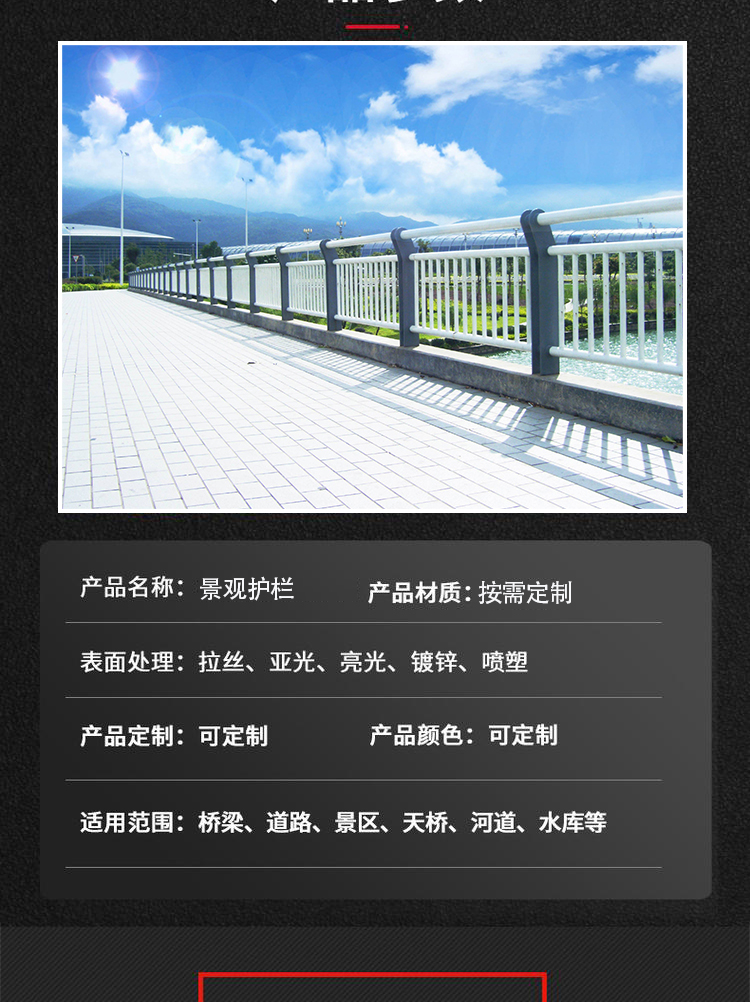
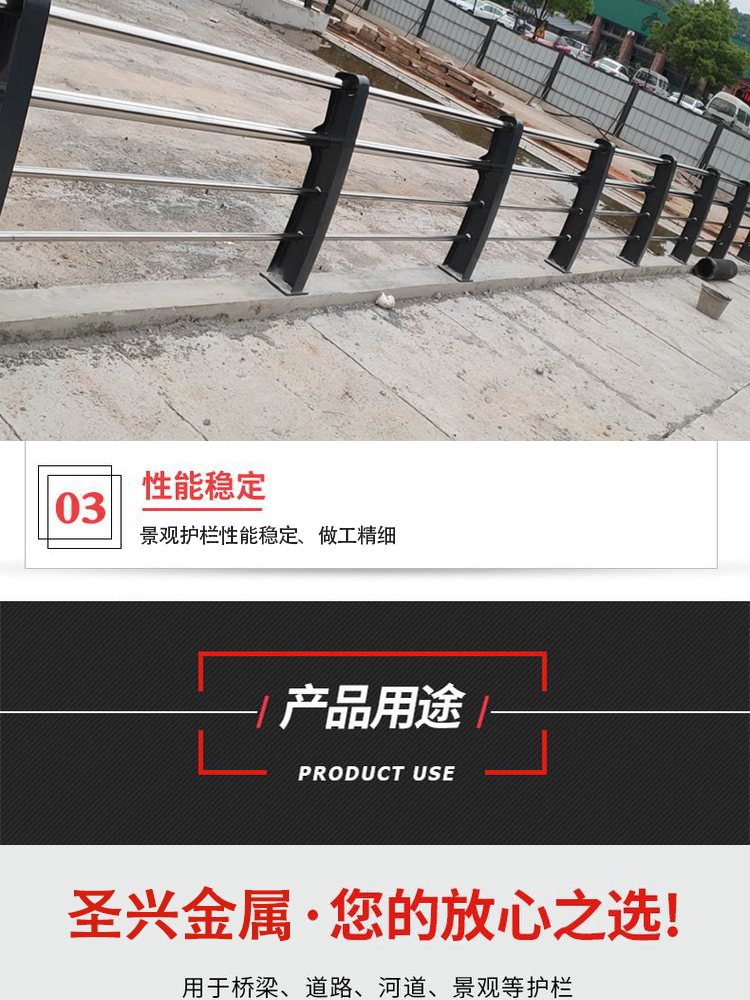
Manufacturer wholesale hot-dip galvanized spray painted bridge guardrail anti-collision guardrail bridge anti-collision guardrail price details table
Category:
Security/Traffic safety equipment/Guardrail and guardrail net
Model:
three hundred and four
Brand:
Shengxing
model:
three hundred and four
type:
guardrail
Decorative features:
Transparent scenery
appearance:
framework
surface treatment:
galvanizing
wire diameter:
3.0-6.0
mesh:
50-150
manufacturer:
Shengxing Metal
Retail Price
110.00USD
重量
kg
- Product Description
-
model three hundred and four
type guardrail
Decorative features Transparent scenery
appearance framework
surface treatment galvanizing
wire diameter 3.0-6.0
mesh 50-150
manufacturer Shengxing Metal
Description :
Manufacturer wholesale hot-dip galvanized spray painted bridge guardrail anti-collision guardrail bridge anti-collision guardrail price details table

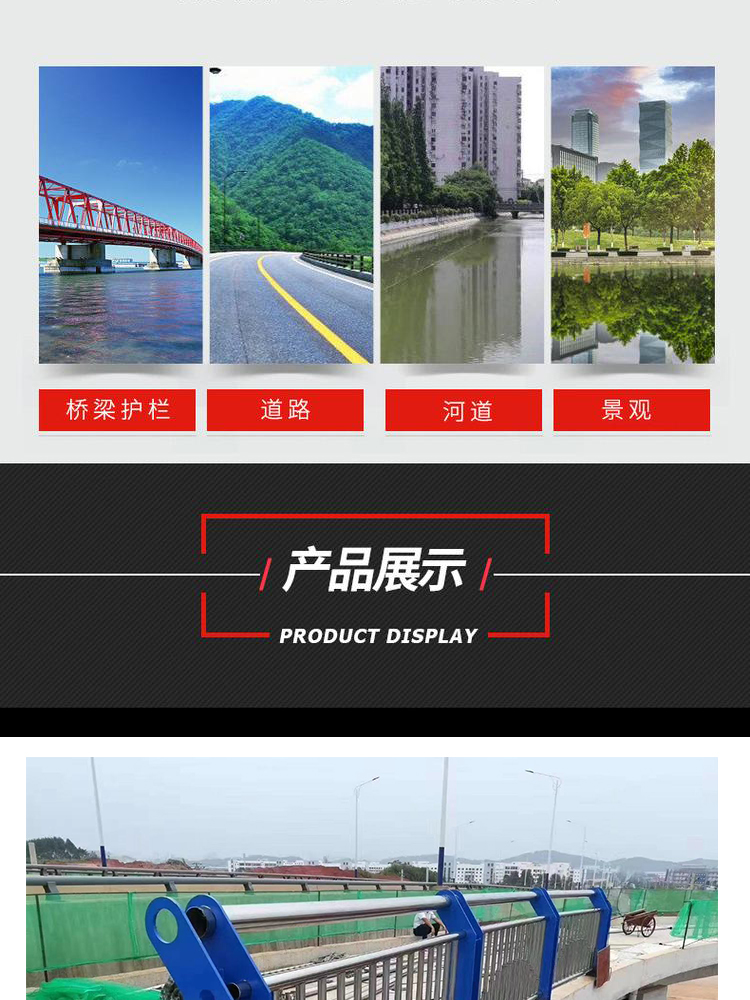
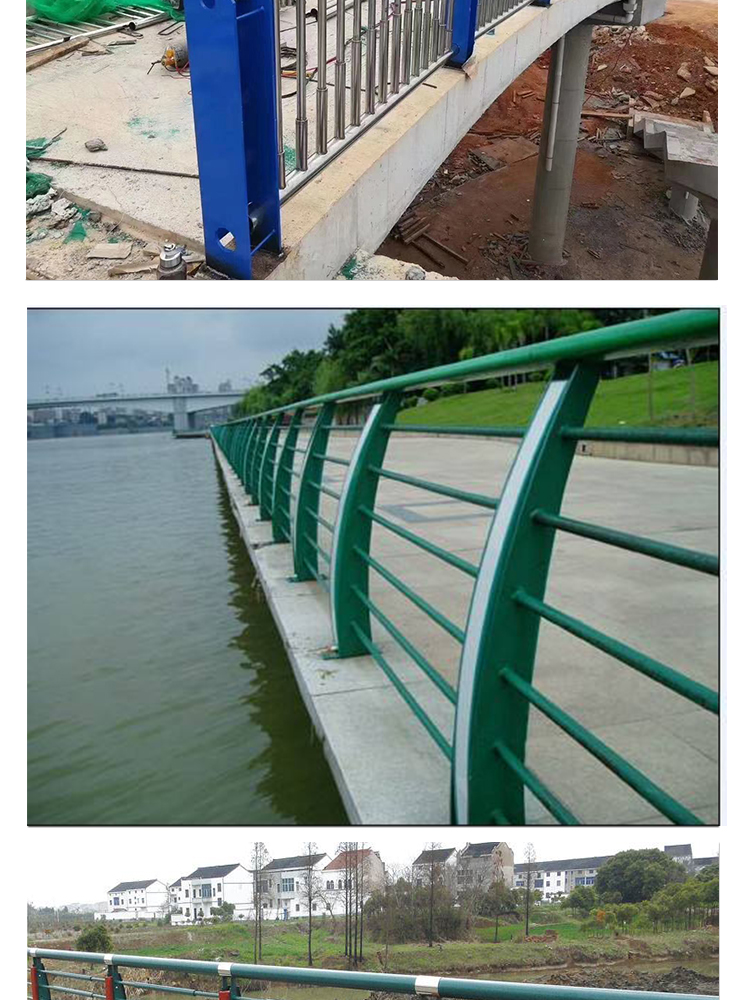
The railing, formerly known as Langan or Goulan, is a safety facility on bridges and buildings. Railings play a role in separating and guiding in use, making the boundaries of the divided area clear and distinct. A well-designed railing has great decorative significance. There are railing like components on the ritual vessels of the Zhou Dynasty. During the Han Dynasty, the most common type of railing was the horizontal lattice style. During the Six Dynasties period, hook and loop design was prevalent. The corner of the railing can be seen in the Yungang Grottoes and Dunhuang murals, as well as in the construction of lookout posts or the twisting of search poles. The wooden railings of the Yuan, Ming, and Qing dynasties were relatively slender, while the stone railings gradually moved away from the shape of wooden railings and tended towards heaviness. After the end of the Qing Dynasty, Western classical proportions, scales, and decorative railing forms entered. The materials and shapes of modern railings are more diverse.





AfterSalesService :
Key words:- Bridge guardrail
More Products


