
High efficiency oxidation desulfurizer for industrial waste gas treatment, specifically designed for ambient temperature precision removal of hydrogen sulfide
Category:
fine chemicals /Water treatment chemicals/Deoxidizer
Model:
Nothing
Brand:
Shanxi Zeqiang Science and Trade Co., Ltd
appearance and form:
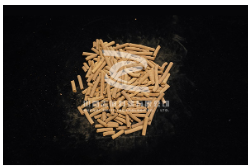
Black/dark brown cylindrical particles
Working sulfur capacity:
≥15%
penetration sulfur capacity:
≥20%
bulk density:
0.7-0.9 g/cm³
Radial compressive strength:
≥80 N/cm
Applicable temperature range:
20-80℃
Export hydrogen sulfide index:
≤10 mg/m³
main carrier:
Activated alumina/activated carbon
Retail Price
10,000,000.00USD
重量
kg
- Product Description
-
appearance and form Black/dark brown cylindrical particles
Working sulfur capacity ≥15%
penetration sulfur capacity ≥20%
bulk density 0.7-0.9 g/cm³
Radial compressive strength ≥80 N/cm
Applicable temperature range 20-80℃
Export hydrogen sulfide index ≤10 mg/m³
main carrier Activated alumina/activated carbon
Description :
Oxidative desulfurizer is a chemical additive used for gas purification, mainly to solve the problem of excessive sulfide such as hydrogen sulfide in industrial production processes. It converts hydrogen sulfide in the gas phase into elemental sulfur or sulfate through redox reactions, thereby fixing it in the pores of the desulfurizer. This product is widely used in the purification process of biogas, natural gas, coke oven gas, refinery gas, and synthetic ammonia feed gas. It is suitable for fixed bed desulfurization devices at room temperature and pressure, and can effectively protect subsequent catalysts and equipment from sulfur corrosion, ensuring the long-term stable operation of the production system.
The oxidative desulfurizer usually uses activated alumina, activated carbon, or molecular sieve as carriers, loaded with various metal oxides as active components. The appearance is mostly dark brown or black cylindrical particles, with good mechanical strength and wear resistance. Typical technical indicators include: sulfur capacity (working sulfur capacity) typically between 15% -30%, with a penetration sulfur capacity of over 20%; The bulk density is about 0.7-0.9g/cm ³; Radial compressive strength greater than 80N/cm; The porosity is maintained at 45% -55% to ensure gas flux. The product complies with the HG/T series of chemical industry standards and undergoes strict activation treatment before leaving the factory to ensure high initial activity and fast reaction speed. It can achieve deep desulfurization at lower air velocities and the export hydrogen sulfide content can be reduced to below 10mg/m ³ or even ppb level.
When selecting, it is important to consider the operating temperature, pressure, and gas composition. Oxidative desulfurizer is suitable for ambient temperature (20-80 ℃) environment. If the operating temperature exceeds 100 ℃, high-temperature resistant special desulfurizer should be selected. For gas sources containing a large amount of organic sulfur (such as COS, CS2), ordinary oxidation desulfurizers have limited effectiveness and need to be used in conjunction with hydrolysis catalysts or composite desulfurizers. Compared with wet desulfurization, dry oxidation desulfurizer is more suitable for fine desulfurization scenarios with small and medium gas volume and low sulfur content; Compared with zinc based desulfurizers, it has lower cost and no risk of heavy metal pollution, but attention should be paid to preventing excessive bed temperature rise from causing sintering. When purchasing, the loading amount should be calculated based on the expected sulfur load, and sufficient reserve factors should be reserved.
During installation and use, it is necessary to ensure that the bottom support grid of the desulfurization tower is intact. Before loading, dust should be removed by sieving, and the dilute phase dense phase loading method should be used to avoid particle breakage and bridging. During the initial operation, it is necessary to control the intake speed to prevent local hotspots caused by violent reactions. During daily maintenance, it is necessary to regularly monitor the concentration of hydrogen sulfide at the inlet and outlet, as well as the pressure difference in the bed. When the sulfur content at the outlet exceeds the standard or the pressure difference significantly increases, it indicates that the desulfurizer is saturated and needs to be replaced or regenerated. Some models support air regeneration, but strict control of oxygen content and temperature is required to prevent spontaneous combustion. Waste desulfurizer belongs to general industrial solid waste or hazardous waste (depending on its specific composition), and its disposal must comply with local environmental regulations. It is strictly prohibited to dump it at will.
AfterSalesService :
Key words:
More Products