
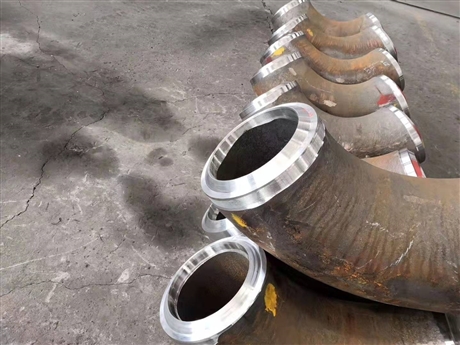

20 # steel 90 degree seamless elbow high-pressure pipeline connection, corrosion-resistant and wear-resistant
Category:
building materials/Pipe fittings/elbow
Model:
108*5
Brand:
Houxin
Material:
20 # Carbon Steel
angle:
90 degrees
manufacturing process:
Seamless hot pushing/cold drawing
Execution Standard:
GB/T12459-2017
Operating temperature:
-20℃~450℃
connection method:
butt welding
Surface Treatment:
Sandblasting anti rust paint/black paint
Detection method:
Ultrasonic/Magnetic Particle Testing
bend radius:
Long radius (R=1.5D)/Short radius (R=1.0D)
Application Fields:
Petroleum/Chemical/Power/Boiler
Retail Price
10,000,000.00USD
重量
kg
- Product Description
-
Material 20 # Carbon Steel
angle 90 degrees
manufacturing process Seamless hot pushing/cold drawing
Execution Standard GB/T12459-2017
Operating temperature -20℃~450℃
connection method butt welding
Surface Treatment Sandblasting anti rust paint/black paint
Detection method Ultrasonic/Magnetic Particle Testing
bend radius Long radius (R=1.5D)/Short radius (R=1.0D)
Application Fields Petroleum/Chemical/Power/Boiler
Description :
90 degree seamless elbow is a key fitting used in pipeline systems to change the direction of fluid flow. It is mainly used to connect two pipes with the same or different nominal diameters, making the pipeline turn at a 90 degree right angle. This category is made of high-quality 20 # carbon steel seamless steel pipes, which are formed through hot pushing or cold drawing processes. The overall structure has no welds and has the characteristics of high strength, high pressure resistance, and excellent impact resistance. Compared to welded elbows, seamless elbows eliminate weak areas in the weld seam, significantly reducing the risk of leakage. They are widely used in fluid transportation systems under high temperature and high pressure conditions such as petroleum, chemical, power, boilers, and ships, ensuring the safety and stability of pipeline operation.
The 90 degree seamless elbow complies with GB/T12459-2017 "Types and Parameters of Steel Butt Welding Pipe Fittings" and GB/T13401-2017 standards, and the material meets the requirements of 20 # steel in GB/T699-2015 Technical Conditions for High Quality Carbon Structural Steel. Typical specifications cover various pipe diameters from DN15 to DN600, with wall thickness grades including Sch20, Sch40, Sch80, Sch160, and XXS, which can be selected according to design pressure requirements. The surface is usually sandblasted for rust removal and coated with anti rust paint, or treated with galvanizing or black paint as required. Before leaving the factory, the product needs to undergo ultrasonic testing, magnetic particle testing, and hydrostatic testing to ensure that there are no defects such as cracks, folds, or delamination. The dimensional tolerance is controlled within the allowable range of national standards to ensure the accuracy of on-site assembly and welding.
When selecting, it is necessary to specify the nominal diameter (DN), outer diameter series (A series or B series), wall thickness grade, and operating temperature range of the pipeline. 20 # steel is suitable for non corrosive media with working temperatures between -20 ℃ and 450 ℃, such as steam, water, oil, etc. If the medium has strong corrosiveness or the working temperature exceeds this range, it is recommended to use seamless elbows made of stainless steel (such as 304, 316L) or alloy steel (such as 15CrMo, 12Cr1MoV) materials. In addition, it is important to distinguish between long radius elbows (R=1.5D) and short radius elbows (R=1.0D). Long radius elbows have low fluid resistance and are suitable for most conventional pipelines; Short radius elbows take up less space and are suitable for situations where installation space is limited, but they have high local resistance and need to be selected in conjunction with hydraulic calculations.
When installing a 90 degree seamless elbow, it is necessary to ensure that the pipe mouth is aligned and the welding groove angle meets the requirements of the welding process evaluation. The welding process usually uses argon arc welding as the base and manual arc welding as the cover. During the welding process, it is necessary to control the interlayer temperature and perform heat treatment if necessary after welding to eliminate residual stress and prevent crack formation. In daily maintenance, the outer wall of the elbow should be regularly inspected for signs of corrosion, deformation, or leakage, especially in areas where the back of the elbow is severely eroded. For high-temperature and high-pressure pipelines, it is recommended to measure the wall thickness and conduct metallographic analysis on the elbows during the maintenance cycle to evaluate their remaining lifespan. When the wall thickness is found to have decreased beyond the design allowable value or there are macroscopic cracks, it should be replaced in a timely manner to avoid pipe bursting accidents.
AfterSalesService :
Key words:
More Products