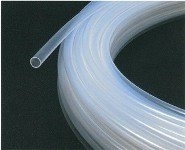

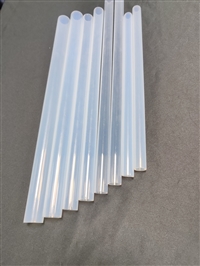
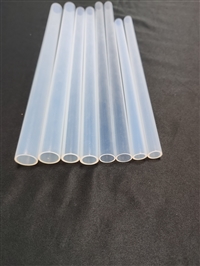
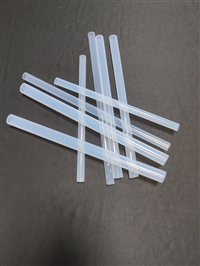
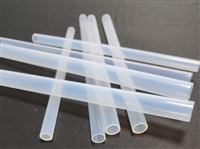
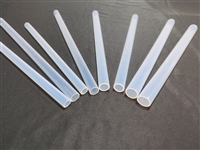
PFA tube
Category:
Rubber and plastic/Plastic pipe/Other plastic pipes
Model:
2*4,4*6,6*8
Brand:
Dankai
Retail Price
10,000,000.00USD
重量
kg
- Product Description
-
Description :
1、 What is PFA
PFA is a relatively new type of fluoroplastic in China, with strict processing conditions but excellent performance. It is mainly used in the chemical industry with high temperature and corrosion resistance, as well as the fluoroplastic wire and cable industry.
PFA in PTFE is a type of PTFE fluororesin, which is a copolymer of tetrafluoroethylene and perfluoroalkoxy vinyl ether, also known as soluble polytetrafluoroethylene or perfluoroalkoxy resin,
A copolymer of a small amount of perfluoropropyl perfluorovinyl ether and polytetrafluoroethylene.
2、 Characteristics of PFA hoses
PFA PTFE pipes have excellent chemical corrosion resistance, are resistant to all chemicals, have the lowest friction coefficient among plastics, and have good electrical performance.
PFA has similar physical, electrical, and chemical properties to polytetrafluoroethylene. PFA is a thermoplastic that can be melt processed. PFA pipes have excellent stress cracking resistance and bending life, but their permeability is not as good as PTFE. PFA tubes have a low metal ion content and can maintain strong mechanical strength and burst pressure at higher temperatures. Its chemical purity meets FDA requirements and can withstand temperatures up to 260 ℃.
3、 What are the specifications of PFA pipes
Common specifications available in stock: inner diameter * outer diameter (unit: mm) Other specifications can be customized
Metric: 2 * 4 3 * 5 4 * 6 5 * 7 6 * 8 * 10 8 * 12 9 * 12 10 * 12 12 * 14 * 16 * 18 18 * 20
Imperial system: 1/8 inch (1.6 * 3.2), 1/4 inch (3.96 * 6.35), 3/8 inch (6.35 * 9.525), 1/2 inch (9.5 * 12.7), 3/4 inch (15.88 * 19.05), 1 inch (22.2 * 25.4);
Can produce specifications, inner diameter 0.5mm to 200mm, wall thickness 0.12mm to 3m
4、 PFA application:
1. Suitable for producing corrosion-resistant parts, wear-resistant parts, seals, insulation parts, and medical device components.
2. High temperature wire and cable insulation layer, anti-corrosion equipment, sealing materials, pump valve bushings, and chemical containers.
Molding performance: 1. Crystalline material with low moisture absorption. It can be processed into products using the usual thermoplastic processing methods.
3. Poor fluidity and easy decomposition, producing corrosive gases during decomposition. It is advisable to strictly control the molding temperature not to exceed 475 degrees, and the mold should be heated to 150-200 degrees. The pouring system should have low resistance to material flow.
4. Translucent granules, injection molding, extrusion molding. The molding temperature is between 350-400 degrees Celsius, and temperatures above 475 degrees Celsius can easily cause discoloration or bubble formation. Also note that demolding may be difficult.
5. Due to the corrosive effect of molten materials on metals, molds require chrome plating treatment for long-term production.
PFA, FEP, and PTFE have similar chemical properties, but Dankai FEP can only be used below 200 degrees Celsius, and PTFE cannot be injection molded.AfterSalesService :
Key words:
More Products