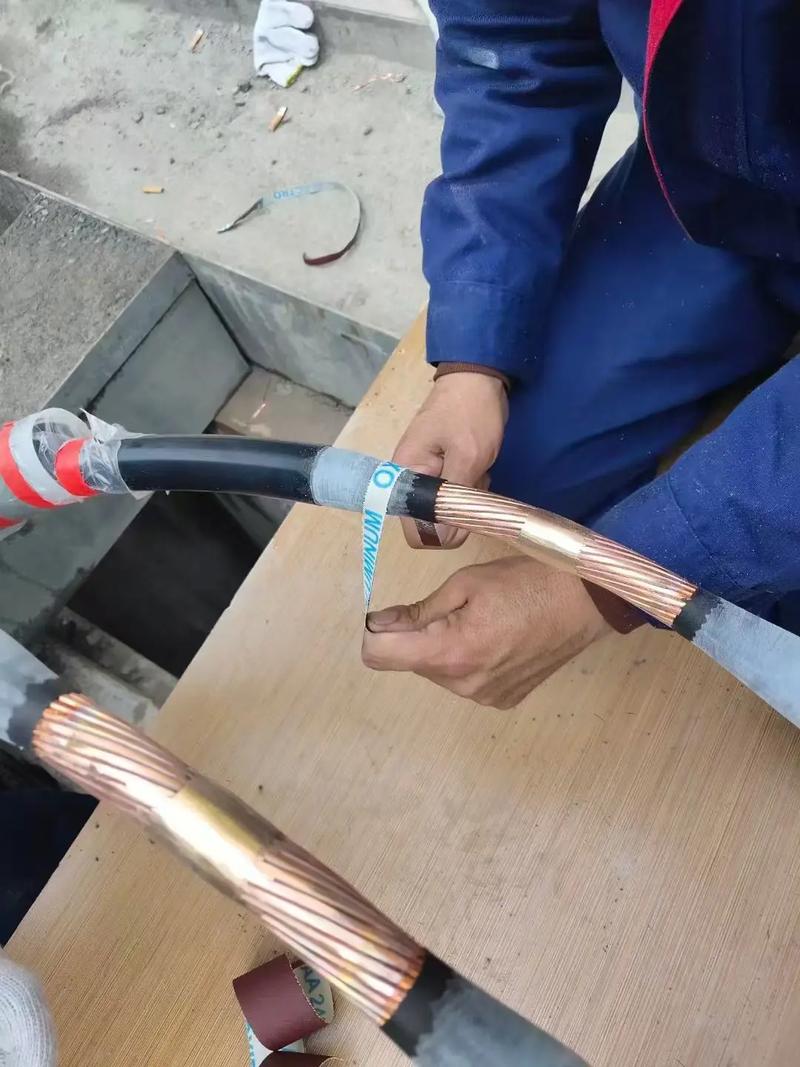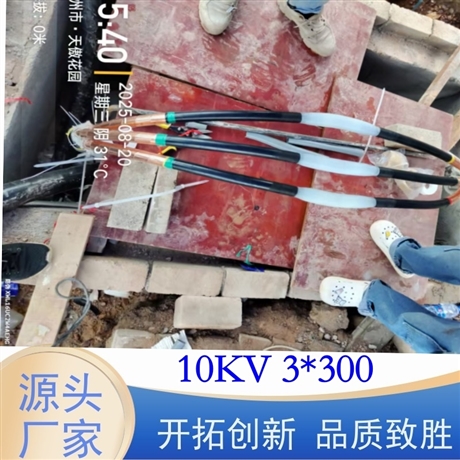

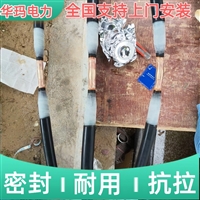
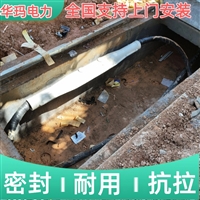
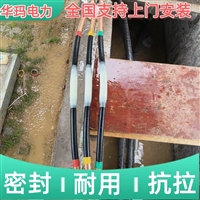
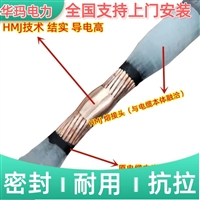
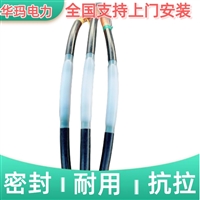
HMJ-3 * 300 insulation recovery intermediate connection accessories for Huama 1-35kV high-voltage cable fusion joint
Category:
Electrical Engineering/Wire and cable/Cable accessories
Model:
HMJ-3*300
Brand:
Huama
Rated voltage:
26/35kV
Applicable cable cross-section:
300mm²
core count:
3-core
Conductor material:
Copper
insulating material:
Ethylene propylene rubber/silicone rubber
Execution Standard:
GB/T 12706.4
Operating temperature:
-40℃~90℃
Partial discharge capacity:
≤10pC
sealing performance:
IP68
tensile strength:
≥20MPa
Retail Price
19,000.00USD
重量
kg
- Product Description
-
Rated voltage 26/35kV
Applicable cable cross-section 300mm²
core count 3-core
Conductor material Copper
insulating material Ethylene propylene rubber/silicone rubber
Execution Standard GB/T 12706.4
Operating temperature -40℃~90℃
Partial discharge capacity ≤10pC
sealing performance IP68
tensile strength ≥20MPa
Description :
The intermediate joint of a high-voltage cable is a key power accessory used to connect two high-voltage power cables, restore the insulation layer, shielding layer, and conductor continuity of the cable. The Huama high-voltage cable intermediate joint is designed specifically to meet the needs of segmented cable connection or fault repair in long-distance power transmission, and is suitable for cross-linked polyethylene insulated cables with voltage levels of 35kV and below. Its core function is to ensure that the electrical performance of the connection is consistent with that of the main cable, withstand system operating voltage and short-term overvoltage, and have excellent mechanical protection capabilities to ensure the stable operation of the power grid under complex working conditions. It is an indispensable component in power infrastructure and maintenance.
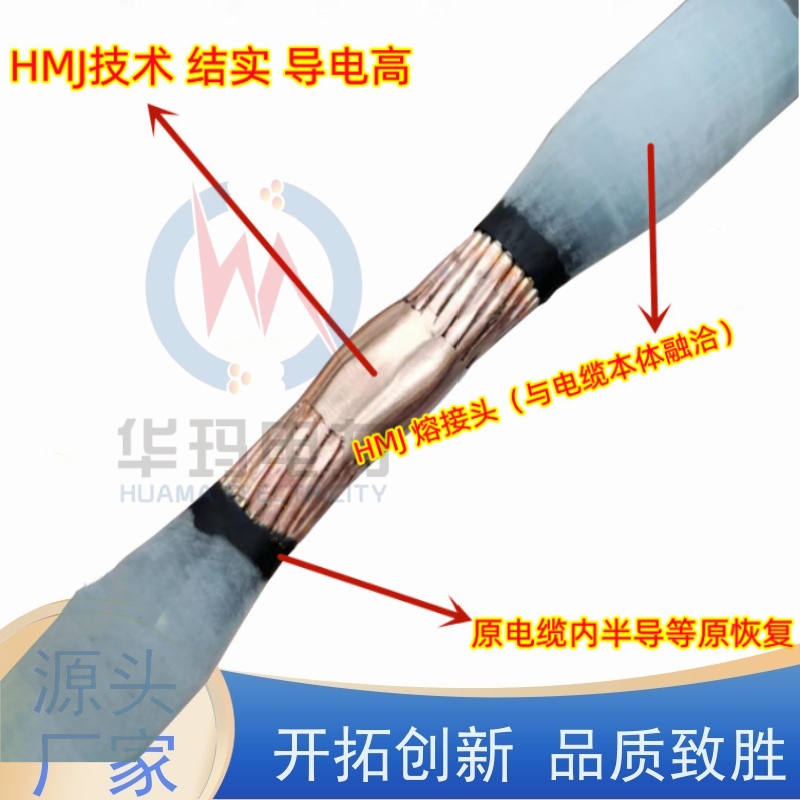
The intermediate joint of this model of high-voltage cable adopts mature cold shrinkage or prefabricated process structure (depending on the series), and the main insulation material is usually high-quality ethylene propylene rubber or silicone rubber, which has excellent dielectric strength and aging resistance. The conductor connection part adopts high-strength copper fittings, ensuring low resistance contact through crimping or welding. Equipped with a non-conductive shielding layer externally to achieve uniform electric field distribution and prevent partial discharge. The product complies with national and international standards such as GB/T 12706.4 and IEC 60502-4. Before leaving the factory, it undergoes strict partial discharge testing, AC withstand voltage testing, and sealing testing to ensure long-term insulation reliability in humid and corrosive environments, meeting the stringent technical requirements of high-voltage power transmission.
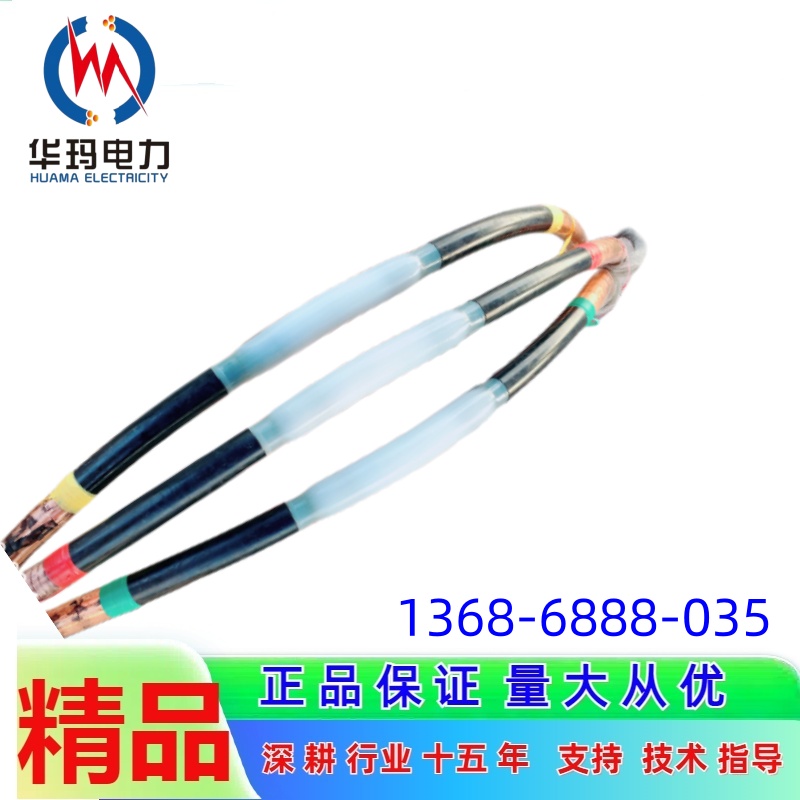
When selecting intermediate joints for high-voltage cables, it is necessary to strictly check the voltage level, conductor cross-section, and insulation type of the cable. This HMJ-3 * 300 specification is specifically designed for three core cables with a conductor cross-section of 300 square millimeters. When purchasing, it is necessary to confirm whether the outer diameter of the cable is within the applicable range of the joint. If the cable cross-section does not match or there is a significant difference in insulation layer thickness, forced installation is strictly prohibited, otherwise it may cause electric field distortion and breakdown. Unlike terminal heads, intermediate joints need to be buried underground or placed in cable trenches, thus requiring higher waterproof sealing performance. For large section cables, it is recommended to choose a style with reinforced mechanical protection shell to resist soil pressure and external impact, ensuring long-term safe operation.

The installation of high-voltage cable intermediate joints requires the operation of personnel with professional qualifications, and the key lies in the precise control of the stripping size and the cleaning treatment of the insulation surface. During construction, specialized tools should be used to remove the semiconducting layer to avoid damaging the main insulation, and stress control glue should be applied to smooth out the electric field gradient. After the connection is completed, it is necessary to perform overall sealing treatment to prevent moisture from entering and causing insulation to become damp. In daily maintenance, the temperature at the joint should be regularly monitored, and infrared thermometers should be used to identify potential overheating hazards; In the preventive testing of cable lines, the focus is on detecting the partial discharge and DC leakage current at the joint location. Once abnormal fluctuations are detected, power outages should be promptly carried out for maintenance to avoid large-scale power outages caused by single point faults.
AfterSalesService :
Key words: